Stable pH is essential for fish, shrimp, plants, and beneficial bacteria, but test strips can be difficult to read and inconsistent over time. The right digital tester makes routine checks faster and easier.
We compared 10 pH meters for aquariums, from affordable pocket pens to waterproof testers, combination meters, and passive alert systems, with attention to accuracy, calibration, probe design, and everyday usability.
Best 10 Ph Meters for Aquariums Picks for 2026
Best Value Handheld
Apera PH20 Waterproof pH Tester

- Automatic calibration and temperature compensation
- Waterproof, portable kit with buffers and case
- Up to 2,000 hours of continuous operation
Best For: Routine aquarium water checks on a budget
Best Combo Monitor
Digital pH & Temperature Aquarium Meter

- Shows pH and temperature on one LCD
- Up to three-point automatic calibration
- Replaceable pH probe for easier maintenance
Best For: Combined fish-tank pH and temperature checks
Best Precision Tester
Apera PH60 Replaceable-Probe Kit

- ±0.01 pH accuracy across a wide range
- One- to three-point automatic calibration
- Replaceable glass probe and complete kit
Best For: Precise, repeatable aquarium water testing
Best Continuous Indicator

- Continuously monitors freshwater pH
- Needs no tests or strips
- Lasts up to six months
Best For: Low-maintenance, always-visible freshwater monitoring
Best for Easy Setup
Aquarium pH & Temperature Meter

- 0–14.0 pH range with 0.01 resolution
- Measures pH and temperature together
- Includes ATC, buffer powders, and BNC probe
Best For: Aquarium owners wanting combined pH and temperature monitoring
Best Portable Testing Set

- Measures pH across a 0–14 range
- Adds TDS, EC, and temperature testing
- Includes case and three calibration buffers
Best For: Portable freshwater aquarium and pool water testing
Best Multi-Parameter Pen

- Measures pH, TDS, EC, and temperature
- Shows pH and ppm simultaneously
- Includes ATC and a sponge cap for the probe
Best For: Aquarium and hydroponic users needing several readings in one device
Best Multi-Function Kit
GuDoQi 4-in-1 pH, TDS, EC & Temperature Meter
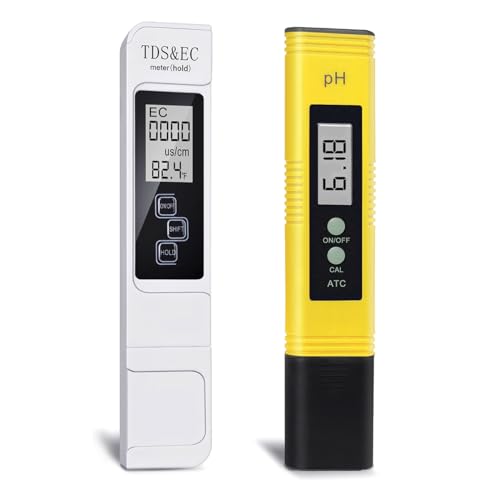
- Measures pH, TDS, conductivity, and EC
- 0.01 pH resolution with stated ±0.01 accuracy
- Automatic temperature compensation and calibration
Best For: Aquarium owners who also test hydroponic, pool, RO, or drinking water
Best Pocket Option
Pre-Calibrated Digital Aquarium pH Meter
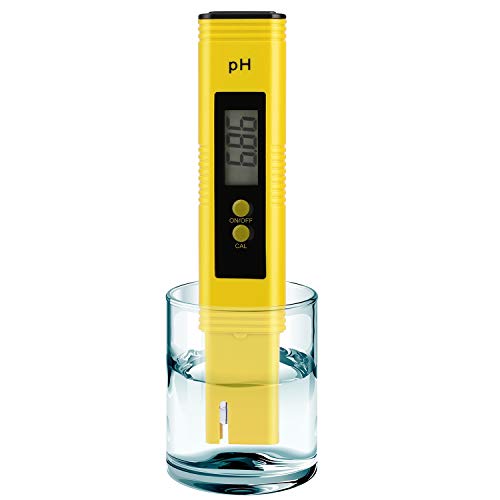
- Pre-calibrated for immediate use
- 0.01 resolution and 0–14 pH range
- Compact pen design for portable testing
Best For: Beginners needing quick, portable pH-only aquarium checks
Best for Low-Light Testing
Ammsia 3-in-1 pH, TDS & Temperature Meter

- Shows pH, TDS, and temperature simultaneously
- Supports one-point or three-point calibration
- Backlit display and automatic temperature compensation
Best For: Users needing combined readings in aquariums or dim testing areas
Best Value Handheld – Apera PH20 Waterproof pH Tester
APERA INSTRUMENTS AI209 Value Series PH20 Waterproof pH Tester Kit, ±0.1 pH Accuracy
Check Price On AmazonFor aquarium owners who want dependable handheld ph meters for aquariums, the Apera PH20 combines waterproof construction, automatic calibration, and temperature compensation in a compact kit. Its ±0.1 pH accuracy, stable-reading recognition, and included calibration buffers make routine water checks straightforward.
Best For: Aquarium keepers seeking an easy-to-use, portable meter for regular freshwater testing.
Pros:
- Automatic calibration with buffer recognition
- Automatic temperature compensation from 32–122°F
- Waterproof design with a rugged carrying case
- Up to 2,000 hours of continuous operation
Cons:
- Offers ±0.1 pH accuracy rather than the finer precision of premium models
- Requires periodic calibration and electrode care
The PH20 is a practical value choice when convenience and portability matter more than laboratory-level precision. Its included buffers and long battery life help make it well suited to recurring aquarium maintenance.
Best Combo Monitor – Digital pH & Temperature Aquarium Meter
This digital combo meter is one of the more convenient ph meters for aquariums because it displays pH and temperature together. It offers automatic buffer recognition, up to three-point calibration, automatic temperature compensation, and a large LCD with backlight.
Best For: Fish tank owners who want pH and temperature readings from one compact device.
Pros:
- Measures pH from 0.0 to 14.0 with ±0.1 accuracy
- Displays pH and temperature together
- Supports one-touch, up to three-point automatic calibration
- Includes a replaceable pH probe and permanent temperature probe
Cons:
- Listed response time is up to five minutes
- Requires four AA batteries
- Battery life is listed at approximately three months
The PHM-295 emphasizes convenience, especially for users who prefer simultaneous temperature and pH monitoring. Its replaceable pH probe can also make ongoing maintenance more cost-effective.
Best Precision Tester – Apera PH60 Replaceable-Probe Kit
For aquarists prioritizing precision, the Apera PH60 is a strong option among ph meters for aquariums, with ±0.01 pH accuracy and a wide -2.00 to 16.00 range. It adds automatic temperature compensation, multi-point calibration, and a replaceable glass probe for long-term use.
Best For: Experienced aquarium keepers who want finer readings and a replaceable probe.
Pros:
- Provides ±0.01 pH accuracy
- Supports one- to three-point automatic calibration
- Includes automatic temperature compensation and stable-reading reminders
- Complete kit includes solutions, storage supplies, batteries, and a case
Cons:
- Higher-precision operation requires careful calibration and storage
- Automatic power-off occurs after eight minutes without operation
- More equipment than needed for users seeking basic spot checks
The PH60 is the most precision-focused handheld option in this group. Its replaceable probe and complete calibration kit make it a particularly capable choice for consistent, detailed water monitoring.
Best Continuous Indicator – Seachem pH Alert
The Seachem pH Alert takes a different approach from handheld ph meters for aquariums: it continuously monitors freshwater pH without test strips or separate testing steps. Its compact plastic sensor is designed to remain in the aquarium and lasts up to six months.
Best For: Freshwater aquarium owners who want an always-visible pH indication rather than periodic digital measurements.
Pros:
- Continuously monitors freshwater pH
- Requires no tests or strips
- Designed to last up to six months
- Compact, lightweight design
Cons:
- For freshwater use only according to the supplied notes
- Does not provide the numeric accuracy or calibration features of handheld meters
pH Alert is best viewed as a low-maintenance monitoring aid rather than a precision testing instrument. It suits aquarists who value continuous awareness and minimal upkeep.
Best for Easy Setup – Aquarium pH & Temperature Meter
For aquarium keepers who want to track two essentials with one device, this pH and temperature meter offers a practical option. It measures pH from 0–14.0 with 0.01 resolution and uses automatic temperature compensation to help produce readings across different water temperatures.
Best For: Aquarium owners who want combined pH and temperature monitoring, along with support for pools, hydroponics, and other water-testing tasks.
Pros:
- Measures pH and temperature in one handheld monitor.
- Provides a 0–14.0 pH range with 0.01 resolution.
- Includes ATC, three buffer powders, and automatic calibration-data saving.
- Uses four AA batteries and enters power-saving mode after about five minutes.
Cons:
- Requires four alkaline AA batteries.
- Calibration is still needed when the meter requires recalibration, such as after extended inactivity.
Its BNC probe, included calibration materials, and temperature monitoring make it a well-equipped choice for routine aquarium water checks. The larger monitor format may appeal to users who prefer a dedicated display over a compact pen-style tester.
Best Portable Testing Set – VIVOSUN pH, TDS & EC Meter
This VIVOSUN set suits aquarium users who want more than a basic pH reading. Alongside a 0–14 pH meter, it includes a 3-in-1 TDS tester for checking TDS, EC, and temperature, with a protective case for portable storage.
Best For: Home users who want portable pH, TDS, EC, and temperature testing for aquariums and pools.
Pros:
- Offers a full pH measurement range of 0–14.
- Includes separate TDS, EC, and temperature measurement functions.
- Has a lightweight handheld design and protective case.
- Comes with three calibration buffers.
Cons:
- The supplied notes state that it cannot test seawater.
- TDS meter accuracy is listed as ±2%, rather than a single exact value.
With two meters in the package, this is a flexible pick for aquarium maintenance and general water testing. It is especially useful when TDS or EC readings matter alongside pH, but saltwater aquarium owners should note the stated seawater limitation.
Best Multi-Parameter Pen – 4-in-1 Digital pH Tester
This GIDIGI tester is designed for users who want several water measurements in one device. It checks pH, TDS, EC, and temperature, and its display can show pH and ppm together for faster monitoring of aquarium or hydroponic water.
Best For: Aquarium and hydroponic users who want simultaneous pH and ppm information from a multifunction water tester.
Pros:
- Combines pH, TDS, EC, and temperature testing.
- Displays pH and ppm together for convenient monitoring.
- Provides ATC from 0–50°C for more consistent readings.
- Includes a sponge cap to help keep the electrode moist between uses.
Cons:
- Its pH resolution is 0.1, lower than meters offering 0.01 resolution.
- The listed temperature range reaches 60°C, but ATC is specified only from 0–50°C.
The broad set of measurements makes this a convenient all-purpose tool for aquarium and hydroponic water checks. Its illuminated display and electrode-moisture cap add practical usability, while the 0.1 pH resolution may be less suitable for users seeking the finest pH increments.
Best Multi-Function Kit – GuDoQi 4-in-1 pH, TDS, EC & Temperature Meter
If you want more than a basic pH reading, this GuDoQi kit is one of the more versatile pH meters for aquariums. It combines pH, TDS, conductivity, EC, and temperature-related functions in a compact testing set, with automatic temperature compensation and calibration support.
Best For: Aquarium owners who also test hydroponic systems, pools, RO water, or drinking water.
Pros:
- Measures pH across a 0–14 range with 0.01 pH resolution and stated ±0.01 accuracy.
- Also measures TDS, conductivity, and EC, providing broader water-quality information.
- Includes automatic temperature compensation and an auto-calibration function.
- Hold and unit-conversion buttons simplify reading and switching between modes.
Cons:
- The multi-function controls may be more than needed for users seeking only aquarium pH readings.
- The notes recommend calibrating the pH meter before every use.
Choose this model if you value a broad water-testing toolkit in one small package. Its combination of aquarium suitability, temperature compensation, and TDS/EC readings makes it practical for users managing several types of water.
Best Pocket Option – Pre-Calibrated Digital Aquarium pH Meter
This compact pen-style tester is a straightforward choice among pH meters for aquariums. It arrives pre-calibrated, uses a simple immerse-and-wait testing process, and is small enough to carry for routine checks at home or away.
Best For: Beginners and aquarium keepers who want a portable pH-only tester for quick checks.
Pros:
- Pre-calibrated for use directly out of the box.
- Offers 0.01 resolution, stated ±0.01 accuracy, and a 0–14 pH range.
- Pocket-size design is convenient for storage, travel, and outdoor testing.
- Simple operation requires turning it on, immersing the probe, gently stirring, and waiting for stabilization.
Cons:
- It is designed for pH testing rather than broader measurements such as TDS or temperature.
- For best accuracy, the notes indicate that readings can vary with water conditions and environment, and recalibration may be appropriate.
This is a sensible pick when portability and ease of use matter more than extra testing modes. Its pre-calibrated setup can shorten the learning curve, while the included calibration procedure supports ongoing maintenance.
Best for Low-Light Testing – Ammsia 3-in-1 pH, TDS & Temperature Meter
For aquarium users who want pH, TDS, and temperature readings together, this 3-in-1 model is a practical option among pH meters for aquariums. Its backlit display, automatic temperature compensation, and selectable calibration modes are designed to make routine water checks easier.
Best For: Aquarium, hydroponic, and home users who need combined readings or test water in dim areas.
Pros:
- Displays pH, TDS, and temperature simultaneously on one screen.
- Uses 0.01 pH resolution and a premium electrode for stated stable, accurate readings.
- Supports either quick one-point calibration or more precise three-point calibration.
- Built-in automatic temperature compensation covers 32°F–140°F, and the backlit display helps in low light.
Cons:
- Its expanded features may be unnecessary if you only need occasional pH measurements.
- The supplied notes do not specify a pH measurement range or accuracy tolerance beyond 0.01 resolution.
This model stands out for convenience: simultaneous readings reduce mode switching, while the backlight is useful in grow tents, basements, or nighttime testing. It is a strong fit for users who want more context than pH alone.
How We Picked the Best Ph Meters for Aquariums
We focused on the features that matter during regular aquarium maintenance: stated measurement accuracy, calibration support, display readability, waterproofing, probe durability, temperature measurement, and overall ease of use. We also included different testing styles, from handheld digital pens to continuous or passive monitoring options.
Because product specifications and included accessories can vary, check the current listing for calibration solutions, storage caps, batteries, replacement probes, and warranty coverage before buying.
Quick Comparison
| Meter type | Best for | Main advantage | Potential limitation |
|---|---|---|---|
| Basic digital pH pen | Routine testing | Low cost and compact size | Requires calibration and care |
| Waterproof pocket tester | Frequent aquarium checks | Better handling around water | Probe maintenance is still necessary |
| pH and temperature meter | Fish tanks with temperature-sensitive livestock | Two readings in one test | More components to manage |
| pH, TDS, EC, and temperature meter | Aquariums plus hydroponics or water testing | Versatile multi-parameter monitoring | Extra readings may be unnecessary for simple tanks |
| Passive alert monitor | Visual trend checks | No batteries or calibration routine | Less precise than a calibrated digital meter |
Key Buying Factors for Ph Meters for Aquariums
Accuracy and Resolution
For most home aquariums, a meter with stated accuracy around ±0.1 pH is adequate for routine checks. Higher-resolution models can show hundredths of a pH unit, but resolution is not the same as true accuracy. Consistent calibration and proper storage often matter more than the last displayed decimal.
Calibration and Maintenance
Choose a model with simple two- or three-point calibration if you need dependable readings across a broad range. Calibration solutions are consumable, and pH probes should not be allowed to dry out. Rinse the probe with clean water after use, avoid wiping the glass bulb aggressively, and follow the manufacturer’s storage instructions.
Probe Design and Waterproofing
A waterproof housing is useful when testing directly beside or inside a tank. Replaceable probes can improve long-term value, especially for aquarists who test frequently. A BNC-connected probe may be more convenient for some setups but usually takes more space than a pocket pen.
Useful Extra Measurements
Temperature is a practical addition because pH readings and fish health are affected by water conditions. TDS and EC functions are more useful for planted tanks, remineralized water, shrimp systems, or hydroponic applications than for basic freshwater monitoring.
Who Should Buy Which Ph Meters for Aquariums?
- Occasional aquarium testers: Choose an affordable digital pH pen or a simple alert monitor if you mainly need quick reassurance.
- Dedicated freshwater or saltwater aquarists: A waterproof pocket tester with reliable calibration is the best general-purpose choice.
- Users managing temperature-sensitive livestock: Select a pH and temperature combination meter to reduce separate measurements.
- Planted-tank and multi-use households: A meter combining pH with TDS, EC, and temperature offers broader utility.
- Heavy users and maintenance professionals: Prioritize replaceable probes, clear calibration procedures, and accessible replacement parts over the lowest purchase price.