The best conductivity meters for water make it easier to evaluate dissolved minerals, nutrient strength, salinity, and overall water quality. The right model depends on whether you are testing drinking water, hydroponic solutions, pools, or laboratory samples.
We compared these 10 options for measurement range, accuracy, readability, durability, supported units, and practical features so you can choose a meter that fits your testing routine.
Best 10 Conductivity Meters for Water Picks for 2026
Best Value EC/TDS Meter
HM Digital COM-80 Hydro Tester

- Measures EC and TDS on four scales
- 1 ppm/µS resolution and ±2% accuracy
- ATC, data hold, and auto-off included
Best For: Indoor nutrient testing and routine water checks
Best for Hydroponics
Bluelab Truncheon Digital Nutrient Meter

- Measures EC, CF, and two TDS scales
- Waterproof with automatic temperature compensation
- Factory calibrated and includes a five-year warranty
Best For: Hydroponic nutrient mixing and reservoir checks
Best Premium Pocket Tester
Apera Instruments EC60 Conductivity Tester

- Measures EC, TDS, salinity, and temperature
- ±1% full-scale accuracy with auto calibration
- Waterproof body and replaceable probe
Best For: Portable, multi-mode conductivity testing
Best Compact Analog Meter
Myron L 512M5 DS Conductivity Meter

- 0–5,000 µM/µS conductivity range
- Automatic compensation from 10–71°C
- Shock-resistant meter and long battery life
Best For: Dedicated conductivity measurements with simple operation
Best Everyday Pick
3-in-1 TDS, EC & Temperature Meter
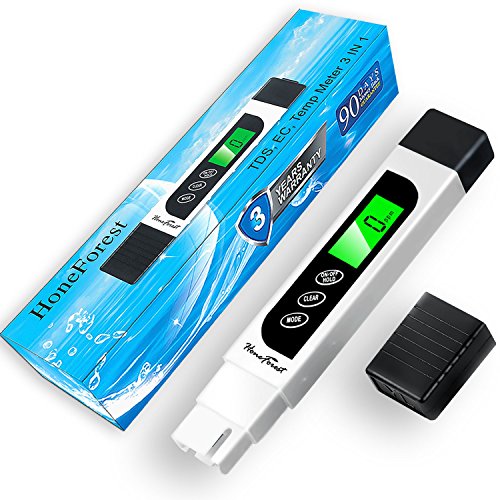
- Measures TDS, EC, and temperature
- Backlit display with auto-lock readings
- Useful for home, aquarium, and RO/DI checks
Best For: Routine household and hobby water testing
Professional Multi-Parameter Pick
AZ-86031 5-in-1 Water Quality Meter

- Supports pH, EC, TDS, salinity, and DO
- Accepts multiple interchangeable probes
- Large LCD displays multiple parameters
Best For: Professional aquaculture, lab, and water-treatment testing
Hydroponic Grower Pick

- Reads EC, CF, and two PPM scales
- Automatic temperature compensation
- Waterproof and factory calibrated
Best For: Hydroponic nutrient and indoor-plant monitoring
Versatile Home Testing Pick

- Measures pH, TDS, EC, and temperature
- Includes case and calibration buffers
- Portable design for home water testing
Best For: Home users testing aquariums, pools, and hydroponic water
Pool-Service Specialist

- Tests TDS and NaCl up to 5,000 ppm
- Includes automatic temperature compensation
- Designed for frequent pool and spa testing
Best For: Saltwater pools, spas, and professional pool maintenance
Easy-Read Multipurpose Option

- Measures TDS, EC, and dual-scale temperature
- Features a large backlit LCD
- Suitable for RO/DI, drinking water, pools, and aquariums
Best For: Households wanting simple, readable water-quality checks
Best Value EC/TDS Meter – HM Digital COM-80 Hydro Tester
The HM Digital COM-80 is a practical choice among conductivity meters for water when you need quick EC and TDS readings for nutrient testing. It measures up to 5,000 ppm TDS, offers multiple EC and TDS scales, and includes automatic temperature compensation.
Best For: Indoor nutrient testing and routine EC/TDS checks where a simple, compact meter is preferred.
Pros:
- Measures both EC and TDS across four selectable scales.
- Provides 1 µS/ppm resolution with stated ±2% readout accuracy.
- Includes automatic temperature compensation, data hold, auto-off, and a low-battery indicator.
Cons:
- Its 0–5,000 ppm TDS range may not suit higher-range applications.
- Uses three LR44 batteries.
With a fast 0.5-second response and water-resistant design, the COM-80 is a straightforward everyday tester. It is best suited to users who want basic EC/TDS functionality rather than advanced calibration features.
Best for Hydroponics – Bluelab Truncheon Digital Nutrient Meter
The Bluelab Truncheon is designed for growers who need to monitor nutrient strength while mixing tanks or checking reservoirs. As one of the more purpose-built conductivity meters for water, it displays EC, TDS, and CF readings and arrives factory calibrated.
Best For: Hydroponic gardens, growing tents, and nutrient-reservoir monitoring.
Pros:
- Measures 0.2–3.6 EC, 2–36 CF, and multiple TDS ranges.
- Fully waterproof and equipped with automatic temperature compensation.
- No calibration is required out of the box, and it includes a case and AA batteries.
- Backed by a five-year limited warranty with proof of purchase.
Cons:
- Probe care kit is sold separately.
- It is focused on nutrient conductivity rather than a broader set of water parameters.
The button-free, auto-off design keeps routine testing simple, while the waterproof construction suits hands-on grow-room use. Its specialized measurement scales make it particularly convenient for users already working with hydroponic nutrient systems.
Best Premium Pocket Tester – Apera Instruments EC60 Conductivity Tester
The Apera Instruments EC60 is a versatile pick among conductivity meters for water, combining conductivity, TDS, salinity, and temperature readings in a waterproof pocket design. Its replaceable sensor, automatic calibration, and customizable TDS factor make it useful for more demanding testing routines.
Best For: Users who want accurate, portable EC testing with selectable TDS and salinity modes.
Pros:
- Offers stated ±1% full-scale accuracy and automatic one- to three-point calibration.
- Switches between EC, TDS, and salinity, with a customizable 0.40–1.00 TDS factor.
- Features automatic temperature compensation from 0–50°C and a replaceable probe.
- Includes calibration solutions, bottles, batteries, lanyard, and carrying case.
Cons:
- Its temperature compensation range is limited to 0–50°C.
- Uses four AAA batteries.
With an IP67 waterproof, floatable body and a backlit dual display, the EC60 is well equipped for portable field or indoor testing. The replaceable probe and included calibration supplies also support longer-term use.
Best Compact Analog Meter – Myron L 512M5 DS Conductivity Meter
The Myron L 512M5 DS is a compact conductivity meter for water that keeps operation focused on a 0–5,000 µM/µS range. It adds automatic temperature compensation across 10–71°C and uses a shock-resistant taut-band meter for a durable, straightforward readout.
Best For: Users who prefer a compact, dedicated conductivity meter with long battery life.
Pros:
- Measures conductivity from 0 to 5,000 µM/µS.
- Automatically compensates for temperatures from 50–160°F.
- Uses one 9-volt battery supplied with an expected life exceeding 2,000 tests or one year.
- Features a 2½-inch shock-resistant taut-band meter.
Cons:
- It is a dedicated conductivity meter rather than an EC/TDS combination tester.
- The supplied notes do not list digital display, data-hold, or calibration features.
The 512M5 DS favors rugged simplicity over multifunction operation. Its broad temperature-compensation range and stated battery life make it a sensible option for users who want dependable conductivity readings without extra modes.
Best Everyday Pick – 3-in-1 TDS, EC & Temperature Meter
For basic conductivity meters for water tasks, this compact tester combines EC, TDS, and temperature readings in one portable device. Its backlit display, automatic reading lock, and simple stir-and-read operation make it practical for checking drinking water, RO/DI systems, aquariums, hydroponics, pools, and spas.
Best For: Home water checks and routine RO/DI, aquarium, hydroponic, pool, or spa monitoring.
Pros:
- Measures TDS, electrical conductivity, and temperature.
- Backlit LCD and auto-lock function support easier reading.
- Automatic shutoff helps conserve battery power.
- Includes a portable leather bag for storage and carrying.
Cons:
- Battery powered, so replacement batteries are part of ongoing use.
- Designed as a handheld tester rather than a multi-probe professional meter.
This is a convenient choice when you want quick conductivity and dissolved-solids readings without a more complex setup. The broad application range and compact design make it especially suitable for regular household and hobby use.
Professional Multi-Parameter Pick – AZ-86031 5-in-1 Water Quality Meter
Among conductivity meters for water, the AZ-86031 stands out for users who need more than EC or TDS alone. With the appropriate probes, it can measure pH, conductivity, TDS, salinity, dissolved oxygen, and temperature, making it suited to demanding water-quality work.
Best For: Aquaculture, laboratories, swimming pools, water treatment businesses, and other professional measuring environments.
Pros:
- Supports pH, conductivity, TDS, salinity, dissolved oxygen, and temperature measurements.
- Can use different probes or attach up to three probe types at once.
- Color-coded connectors simplify probe matching.
- Large LCD can display multiple parameters simultaneously.
Cons:
- Its 5.3-pound package weight and multi-probe design are less portable than a basic pen tester.
- Probe-dependent functions make setup more involved.
- The supplied notes do not list the included probe configuration.
This meter is a better fit for users managing several water-quality variables than for quick household screening. Its expandable probe system offers flexibility, but the professional design may be more equipment than casual users need.
Hydroponic Grower Pick – Bluelab Conductivity Pen
The Bluelab PENCON is a focused conductivity meter for water and nutrient solutions, especially where growers need repeatable readings during feeding. It reports EC, CF, PPM 500, or PPM 700, includes automatic temperature compensation, and arrives factory calibrated for immediate use.
Best For: Hydroponic growers and indoor-plant users monitoring nutrient strength in water.
Pros:
- Measures EC, CF, PPM 500, and PPM 700 in selectable units.
- Automatic temperature compensation supports consistent readings.
- Waterproof, floating design is built for repeated use.
- Includes an AAA battery and carries a one-year repair or replacement warranty with proof of purchase.
Cons:
- Regular cleaning is recommended to maintain accurate readings.
- The separate probe-care kit is not included.
- It focuses on conductivity and nutrient measurements rather than a broad set of water parameters.
For plant feeding, this pen offers a straightforward workflow and useful unit flexibility without requiring initial calibration. Its waterproof construction and temperature compensation further support frequent grow-room use.
Versatile Home Testing Pick – VIVOSUN pH, TDS & EC Meter
For shoppers comparing conductivity meters for water, the VIVOSUN combines EC and TDS testing with pH and temperature readings. Its handheld design, automatic temperature compensation, and included calibration buffers make it practical for routine testing at home, in aquariums, pools, and hydroponic setups.
Best For: Home users who want one compact kit for pH, TDS, EC, and temperature testing.
Pros:
- Measures pH, TDS, EC, and temperature.
- Offers a 0–9990 ppm and 0–9990 µS/cm measurement range.
- Includes a protective case and three calibration buffers.
Cons:
- Cannot test seawater.
- Plastic construction may be less suited to demanding professional environments.
This is a flexible choice when pH testing matters alongside conductivity and TDS. It is especially convenient for users managing several types of water-quality checks with one portable kit.
Pool-Service Specialist – Myron L 5125TD DS Pool Meter
For pool-focused conductivity meters for water, the Myron L 5125TD DS is built around TDS and sodium chloride testing. Its integrated sample cup, automatic temperature compensation, and professional-oriented construction support fast, repeatable checks for saltwater pools, spas, and electrolysis systems.
Best For: Pool owners, service technicians, and professionals monitoring TDS and salt levels.
Pros:
- Measures TDS and NaCl from 0–5000 ppm.
- Provides ±2% full-scale accuracy with a built-in calibration check.
- Integrated sample cup and sensors simplify testing.
- 9V battery supports up to 2,000 tests.
Cons:
- Focused on pool-related TDS and NaCl testing rather than pH measurement.
- Heavier and less broadly multifunctional than basic pocket testers.
This meter makes the most sense when salt and dissolved-solids monitoring are the priority. Its straightforward sample-cup design and long battery capacity are useful for frequent pool maintenance.
Easy-Read Multipurpose Option – MEXYBE 4-in-1 TDS & EC Meter
The MEXYBE 4-in-1 is a user-friendly option among conductivity meters for water, combining EC and TDS readings with Celsius and Fahrenheit temperature displays. Its backlit screen, hold function, auto-lock, factory calibration, and broad application range suit drinking water, RO/DI systems, aquariums, pools, and hydroponics.
Best For: Households wanting an easy-to-read tester for drinking water, filtration systems, and general water checks.
Pros:
- Measures TDS, EC, and temperature in both °C and °F.
- Large backlit LCD and included TDS chart improve usability.
- Factory calibrated with hold, auto-lock, and two-minute auto-off functions.
- Measures TDS across a 0–9999 ppm range.
Cons:
- Does not include pH testing.
- The supplied notes do not specify a numerical accuracy percentage.
Choose this model if readability and simple operation matter more than pH measurement. It offers broad household coverage and useful features for checking filters, aquariums, pools, and tap or bottled water.
How We Picked These Conductivity Meters for Water
We focused on meters that measure electrical conductivity (EC), with several models also reporting total dissolved solids (TDS), temperature, salinity, pH, or dissolved oxygen. Our comparison considers stated accuracy, measurement range, resolution, waterproofing, calibration flexibility, display clarity, and how well each meter suits its intended environment.
Because conductivity readings vary with temperature and dissolved substances, we also considered automatic or manual temperature compensation, unit options, and whether the meter is designed for quick field checks or more repeatable professional testing.
Quick Comparison
| Best For | What to Prioritize | Useful Features |
|---|---|---|
| Drinking water checks | Simple TDS and EC readings | Temperature display, easy calibration |
| Hydroponics | Reliable EC range and nutrient units | CF, EC, and ppm scales; waterproof body |
| Pool and saltwater testing | Salinity or NaCl support | Wide range, durable construction |
| Professional testing | Accuracy, repeatability, and calibration | Stable readings, replaceable probes, documented specifications |
| Multi-parameter testing | Broad water-quality coverage | pH, EC, TDS, temperature, salinity, or DO in one device |
Key Buying Factors for Conductivity Meters for Water
Range and Resolution
Choose a range that covers your expected readings without sacrificing resolution. Low-mineral drinking water may benefit from fine resolution, while nutrient solutions, pools, and brines require a higher upper limit. A meter showing EC and TDS is useful, but confirm which conversion scale it uses because ppm 500 and ppm 700 do not produce identical results.
Accuracy and Calibration
Look for a stated accuracy appropriate to your application and a straightforward calibration process. For routine comparisons, a basic pocket tester may be sufficient. Critical water treatment, laboratory, or commercial work calls for better documented accuracy, stable readings, and regular calibration with suitable standards.
Temperature Compensation and Units
Conductivity changes with temperature, so automatic temperature compensation can make readings easier to compare. Make sure the meter supports the units you use, such as microsiemens, millisiemens, EC, TDS, ppm, CF, or salinity.
Build Quality and Maintenance
A waterproof housing is valuable for fieldwork and hydroponics, but it does not eliminate maintenance. Rinse the probe after use, prevent samples from drying on the sensor, and follow the manufacturer’s storage and calibration instructions. For frequent testing, consider probe replacement costs and battery access.
Who Should Buy Which Conductivity Meters for Water?
Choose a compact TDS/EC tester for occasional drinking-water checks or basic household comparisons. Hydroponic growers should favor models with EC, CF, and multiple ppm scales. Pool owners need a meter that supports salinity or NaCl readings and tolerates repeated field use. Buyers who need pH, dissolved oxygen, or other parameters may prefer a multi-function water-quality meter, while laboratories and treatment professionals should prioritize calibration control, accuracy documentation, and long-term serviceability.