Portable dissolved oxygen meters make it easier to measure oxygen levels in water without transporting samples back to a laboratory. The right model can improve testing speed, repeatability, and field convenience.
This roundup compares 10 options across optical and probe-based designs, measurement ranges, compensation features, durability, and portability so you can choose with greater confidence.
Best 10 Portable Dissolved Oxygen Meters Picks for 2026
Best Budget Pick
Milwaukee MW600 Economy Portable DO Meter

- Measures 0.0–19.0 mg/L with 0.1 mg/L resolution
- Two-point manual calibration and automatic temperature compensation
- Includes 3-meter polarographic probe cable
Best For: Classroom, aquaculture, and basic water analysis
Best Low-Maintenance Kit
Apera AI480 DO850 Optical Meter

- Optical sensor avoids solution refills and frequent membrane changes
- Automatic saturated-air and zero-oxygen calibration
- Includes 10-foot probe and rugged carrying case
Best For: Demanding field environments and convenient routine testing
Best Professional Platform
YSI Pro20 DO/Temperature Meter

- One Touch Cal calibrates in about three seconds
- Graphical backlit display and glow-in-the-dark keypad
- IP67 housing supports lab and field use
Best For: Professional testing with interchangeable probe configurations
Best Complete Field Kit
Extech DO210 Water Quality Meter

- Measures DO, oxygen saturation, and temperature
- Adjustable altitude and salinity compensation
- Includes 13-foot probe cable and replacement supplies
Best For: Portable water-quality testing across varied conditions
Field-Tested Choice

- Three-second One Touch Cal operation
- Automatic barometric pressure compensation
- Stores 50 data sets
Best For: Field and laboratory users wanting fast, simple measurements
Complete Kit Pick
APERA AI485 DO8500 Optical Meter
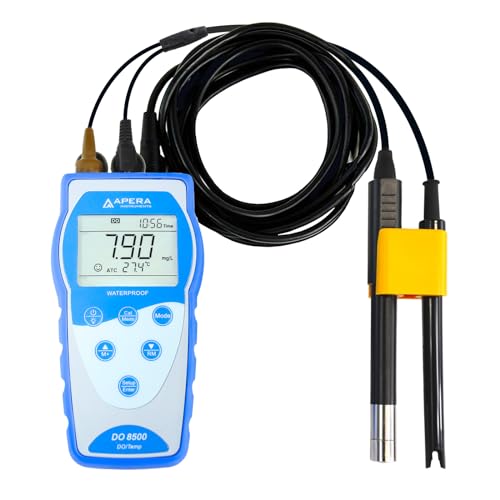
- Optical DO sensor with low maintenance
- Compensates for salinity, temperature, and air pressure
- Stores 500 groups with USB output
Best For: Technical users wanting a complete, data-focused kit
Versatile Value Option

- Measures 0-40 mg/L or 0-300% DO
- Automatic temperature compensation
- Includes spare caps, electrolyte, and batteries
Best For: Routine water, aquarium, aquaculture, and brewing checks
Best Waterproof Pen Meter

- IP65-rated for wet environments
- Automatic temperature compensation
- Includes spare probe heads and case
Best For: Aquariums, fieldwork, labs, and wastewater checks
Best Connected DO Kit
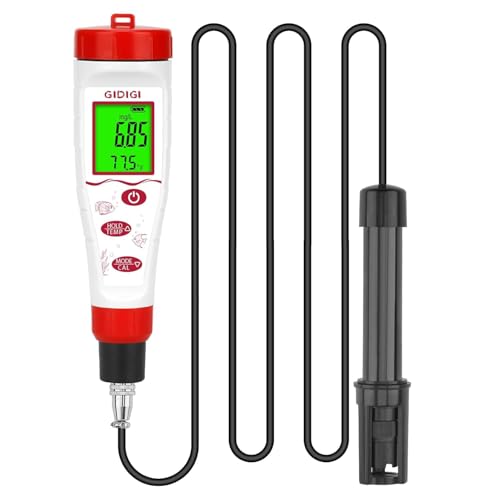
- 3-meter electrode cable
- Bluetooth app for compensation and data
- Includes calibration accessories
Best For: Aquaculture, ponds, rivers, and app-based logging
Best Optical DO Meter
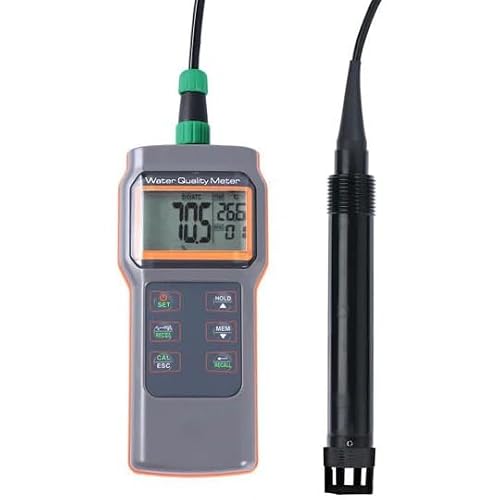
- No probe maintenance or polarization time
- Large LCD with DO and temperature
- Manual salinity and pressure compensation
Best For: Aquaculture, brewing, and professional water monitoring
Best Budget Pick – Milwaukee MW600 Economy Portable DO Meter
The Milwaukee MW600 is a straightforward choice for buyers seeking portable dissolved oxygen meters for education, aquaculture, water analysis, or environmental work. It measures 0.0–19.0 mg/L with 0.1 mg/L resolution and uses two-point manual calibration.
Best For: Students, aquaculture users, and basic field or classroom water testing.
Pros:
- Portable design with an LCD display.
- Two-point manual calibration supports routine setup.
- Automatic temperature compensation from 0 to 30°C.
- Includes a polarographic probe with a 3-meter cable and screw-on membrane cap.
Cons:
- Manual calibration is less convenient than automatic calibration.
- Temperature compensation is specified only from 0 to 30°C.
- Accuracy is listed as ±1.5%.
The MW600 keeps the feature set focused and practical, making it a sensible entry-level option when portability and basic DO measurement matter more than advanced automation.
Best Low-Maintenance Kit – Apera AI480 DO850 Optical Meter
The Apera Instruments AI480 DO850 is a convenient option among portable dissolved oxygen meters, using an optical DO sensor designed to reduce routine maintenance. Its kit format also makes it useful for users who want the probe, calibration accessories, and carrying case together.
Best For: Field users who prioritize low maintenance, long probe reach, and weather-resistant equipment.
Pros:
- Optical sensor requires no solution refill or frequent membrane changes.
- Automatic calibration supports saturated-air and zero-oxygen points.
- IP67 waterproof and dust-proof structure.
- Includes a 10-foot optical probe, calibration cap, and rugged carrying case.
Cons:
- The complete kit weighs 3 pounds.
- Requires three AA batteries.
- The supplied probe cable may be longer than needed for compact workspaces.
With optical sensing and an included carrying case, the AI480 DO850 is geared toward hassle-free testing where reduced sensor upkeep and a longer reach are valuable.
Best Professional Platform – YSI Pro20 DO/Temperature Meter
The YSI Pro20 is a lab-and-field handheld option for buyers comparing portable dissolved oxygen meters for more structured testing workflows. Its One Touch Cal feature calibrates the meter within three seconds, while the graphical backlit display and glow-in-the-dark keypad support field use.
Best For: Professional users who need a rugged meter that can support lab or field probe configurations.
Pros:
- Measures dissolved oxygen and temperature.
- One Touch Cal provides calibration in about three seconds.
- IP67 impact-resistant and waterproof housing.
- Supports field cables with polarographic or galvanic probes and lab cable-probe assemblies.
Cons:
- Cables and probes are sold separately.
- Additional configuration choices may increase setup cost and complexity.
- The listed unit weighs 2.4 pounds.
The Pro20 stands out as a flexible platform rather than an all-in-one kit. It is especially appealing when fast calibration, rugged construction, and interchangeable lab or field setups are priorities.
Best Complete Field Kit – Extech DO210 Water Quality Meter
The Extech DO210 is a practical all-in-one choice among portable dissolved oxygen meters for water-quality work. It measures DO concentration, oxygen saturation, and temperature, while altitude and salinity compensation help adapt readings to different testing conditions.
Best For: Field users who want a ready-to-carry kit with compensation settings and replacement supplies.
Pros:
- Measures 0–20.0 mg/L DO, 0–100% saturation, and 0–50°C water temperature.
- Provides automatic temperature compensation plus adjustable altitude and salinity compensation.
- Includes a probe with a 13-foot cable, spare membranes, electrolyte, battery, and soft case.
- Offers Min/Max and Data Hold functions.
Cons:
- Uses a polarographic probe that requires membrane and electrolyte supplies.
- The soft carrying case may provide less protection than a hard case.
- The specified temperature range is 0–50°C.
The DO210 is well suited to mobile water-quality checks because it combines broad compensation controls with a long cable and the consumables needed to get started.
Field-Tested Choice – YSI Pro20 Handheld DO Meter
For buyers comparing portable dissolved oxygen meters for laboratory or field use, the YSI Pro20 emphasizes quick operation and straightforward data handling. Its One Touch Cal feature completes dissolved oxygen calibration in about three seconds, while automatic barometric pressure compensation helps simplify measurements.
Best For: Field and laboratory users who want fast calibration, basic onboard storage, and a readable display.
Pros:
- One Touch Cal enables DO calibration with the press of a button.
- Automatic barometric pressure compensation.
- Stores up to 50 data sets.
- Graphic backlit display and glow-in-the-dark keypad.
Cons:
- Sold as the meter only, according to the product title.
- Its listed storage capacity is limited to 50 data sets.
The Pro20 is a practical choice when speed and simple field operation matter more than an extensive included kit or high-capacity data management.
Complete Kit Pick – APERA AI485 DO8500 Optical Meter
The APERA AI485 DO8500 stands out among portable dissolved oxygen meters for users who want an optical sensor and a complete testing setup. It includes automatic compensation for salinity, temperature, and air pressure, plus GLP data management and storage for 500 groups of data.
Best For: Technical users who need optical DO measurement, broader compensation features, and a ready-to-carry kit.
Pros:
- Optical DO sensor is designed for reliable, low-maintenance measurement.
- Automatic compensation for salinity, temperature, and air pressure.
- GLP data management with storage for 500 groups.
- Includes a 10-foot optical probe, salinity probe, calibration cap, and rugged carrying case.
Cons:
- At 3 pounds, it is heavier than some handheld meter options.
- Requires three AA batteries.
With its optical probe, expanded data storage, USB output, and included accessories, the DO8500 is the most fully equipped option here for organized, repeatable testing.
Versatile Value Option – Yewhick DO9100S Meter
The Yewhick DO9100S is one of the more broadly oriented portable dissolved oxygen meters in this roundup, covering aquarium, aquaculture, brewing, wastewater, and educational applications. It measures dissolved oxygen from 0 to 40 mg/L or 0.0 to 300.0%, includes automatic temperature compensation, and comes with calibration supplies and replacement membrane caps.
Best For: Users seeking a versatile meter for water, aquarium, aquaculture, brewing, or general process checks.
Pros:
- Measures dissolved oxygen in both mg/L and percentage formats.
- Built-in temperature sensor with automatic temperature compensation from 0 to 50°C.
- Two-point automatic calibration at 0% and 100%.
- Includes electrolyte, calibration powder, six spare membrane caps, and extra batteries.
Cons:
- Uses three LR44 batteries, rather than larger standard cells.
- Uses a polarographic probe that requires electrolyte and membrane maintenance.
This is a flexible, accessory-rich option for routine water testing, especially when a wide application range and included replacement supplies are more important than advanced data storage.
Best Waterproof Pen Meter – Compact DO Testing
If you need portable dissolved oxygen meters for aquariums, fieldwork, or wastewater checks, this Sper Scientific pen-style model emphasizes convenient one-hand operation and wet-environment durability. It measures dissolved oxygen from 0–20 mg/L, oxygen in air from 0–100%, and temperature simultaneously.
Best For: Aquariums, hatcheries, environmental testing, laboratories, and wastewater monitoring where a compact waterproof meter is useful.
Pros:
- IP65-rated construction suits wet testing conditions.
- Automatic temperature compensation supports readings from 32–122°F (0–50°C).
- Includes spare probe heads, electrolyte solution, batteries, and a carrying case.
Cons:
- The 0–20 mg/L dissolved oxygen range may be limiting for applications requiring a broader range.
- Its pen-style display may be less convenient for users who prefer a large-screen meter.
This is a practical choice when portability, included accessories, and waterproofing matter most. Data hold plus maximum and minimum recall add useful convenience for routine measurements.
Best Connected DO Kit – Deep-Water Monitoring
This GIDIGI model is among the more flexible portable dissolved oxygen meters for users who need readings in deeper water or want to manage results digitally. It offers mg/L and saturation modes, a 3-meter electrode cable, automatic temperature compensation, and app-based salinity and pressure compensation.
Best For: Lakes, rivers, large ponds, aquaculture systems, hydroponics, fish tanks, wastewater work, and users who want Bluetooth data storage and sharing.
Pros:
- The 3-meter electrode cable helps reach deeper or more distant water.
- Bluetooth app support enables salinity and barometric-pressure compensation plus data management.
- Includes a replaceable membrane cap, electrolyte, and zero-oxygen water for calibration.
Cons:
- At 1.46 pounds, it is less lightweight than a simple pen-style meter.
- Some advanced compensation and data features require using the phone app.
Choose this kit if reach and connected recordkeeping are higher priorities than the smallest possible package. The backlit display, data lock, and included calibration supplies make it suitable for more involved monitoring routines.
Best Optical DO Meter – Low-Maintenance Accuracy
For users comparing portable dissolved oxygen meters for aquaculture, brewing, or environmental work, this Sper Scientific optical model stands out for low-maintenance operation. It measures 0.0–20.0 mg/L or 0.0–200.0% dissolved oxygen, with automatic temperature compensation and manual salinity and pressure compensation.
Best For: Aquaculture, brewing, wastewater treatment, and professional water-quality monitoring where reduced probe upkeep is valuable.
Pros:
- Optical measurement requires no probe maintenance or polarization time.
- Large LCD simultaneously shows dissolved oxygen and temperature.
- Supports two-point DO calibration plus salinity and pressure compensation.
- Includes an optical probe, six AAA batteries, hard case, and manual.
Cons:
- Salinity and pressure compensation are manual rather than automatic.
- Its professional feature set may be more than needed for occasional basic testing.
This is the strongest fit for buyers who want a more streamlined optical workflow and clear readings without polarization delays. Its broad percentage range and included hard case also support frequent field or facility use.
How We Picked the Best Portable Dissolved Oxygen Meters
We focused on meters that are practical for field, laboratory, aquaculture, wastewater, and environmental testing. The selection includes optical and electrochemical designs, basic handheld testers, pen-style meters, and more advanced kits with automatic compensation. We considered measurement range, resolution, calibration options, probe design, temperature compensation, salinity and pressure compensation, waterproofing, display readability, and the likely cost of ownership.
A meter with a broad range is not automatically the best choice. Accuracy, maintenance requirements, response time, calibration workflow, and the type of water being tested can matter more than headline specifications.
Quick Comparison
| Best for | What to prioritize |
|---|---|
| Routine field checks | Rugged housing, simple calibration, clear display, and long battery life |
| Aquaculture and pond monitoring | Reliable temperature compensation, suitable range, and convenient probe maintenance |
| Laboratory or demanding field work | Optical sensing, strong repeatability, data handling, and compensation for salinity and pressure |
| Occasional testing | Low purchase price, straightforward controls, and affordable replacement parts |
Key Buying Factors for Portable Dissolved Oxygen Meters
Sensor Technology
Electrochemical probes can be cost-effective and responsive, but they typically require membrane and electrolyte maintenance. Optical sensors generally reduce routine upkeep and do not consume oxygen during measurement, which can be useful for slow-moving or low-oxygen samples. Check the replacement sensor or cap cost before buying.
Range, Resolution, and Accuracy
Match the measurement range to your application. Freshwater checks may need a different specification than wastewater, aquaculture, or saline environments. Resolution describes the smallest displayed increment, while accuracy indicates how close the reading should be to the true value; both are important when comparing models.
Compensation and Calibration
Temperature compensation is essential because dissolved oxygen solubility changes with temperature. Salinity and atmospheric-pressure compensation can also improve results in coastal, marine, high-altitude, or process-water applications. Look for calibration options that fit your workflow, such as air-saturation, zero-oxygen, or manual two-point calibration.
Portability and Durability
For outdoor use, prioritize waterproofing, a readable screen, glove-friendly controls, probe-cable length, and protection from drops and splashes. A longer cable can help with tanks and sampling points, while a pen meter is easier to carry for quick checks.
Who Should Buy Which Portable Dissolved Oxygen Meters?
Choose a basic handheld or pen-style unit if you need occasional readings and value low cost and simple operation. A traditional probe meter is a sensible fit for users who want a familiar, serviceable design for routine water-quality work. Choose an optical model when reduced maintenance, stable readings, and easier long-term testing are more important than the lowest initial price.
For professional aquaculture, environmental monitoring, or laboratory work, prioritize automatic temperature, salinity, and pressure compensation, dependable calibration, replacement-part availability, and a probe designed for your sampling conditions. Before ordering, confirm whether the listing includes the probe, calibration accessories, carrying case, and batteries—some otherwise similar meters are sold as meter-only packages.