Accurate dissolved oxygen readings help aquarium keepers, pond owners, and aquaculture operators protect aquatic life and troubleshoot water-quality problems. The right meter can make routine testing faster and more consistent than relying on visual signs or occasional test kits.
Our selection of the best dissolved oxygen meters under $200 includes portable digital meters, smart models, probe-based testers, and a chemical test kit. The key differences are measurement range, calibration support, probe maintenance, portability, and ease of use.
Best 10 Dissolved Oxygen Meters Under 200 Picks for 2026
Best Bluetooth DO Meter
Portable Dissolved Oxygen Testing
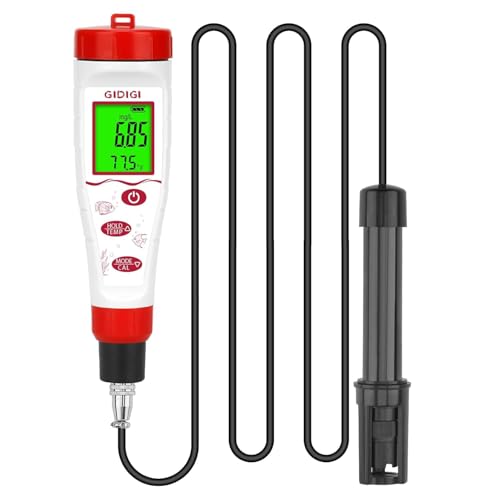
- mg/L and saturation modes
- 3-meter cable for deep-water testing
- App compensation and data storage
Best For: Aquaculture, ponds, brewing, and field monitoring
Best Budget DO Test Kit

- Includes 60 dissolved oxygen tests
- 0–15 ppm measuring range
- For freshwater and marine applications
Best For: Aquariums, ponds, and occasional testing
Best Multiparameter DO Meter

- Tests DO, pH, salt, EC, and temperature
- App data storage and compensation
- Includes calibration supplies and six membranes
Best For: Aquaculture, labs, and comprehensive water analysis
Best Complete DO Kit
Replaceable-Probe Oxygen Meter
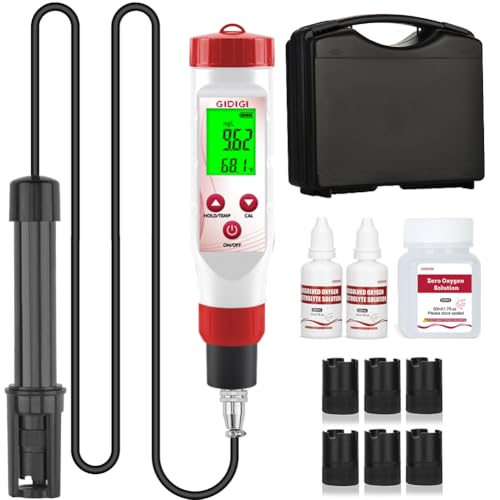
- Measures mg/L and saturation percentage
- Includes six membranes and calibration supplies
- 1.2-meter cable with backlit display
Best For: Aquaculture, wastewater, brewing, and lab testing
Best Value Range

- 0–40 mg/L and 0–300% measurement modes
- ATC with built-in temperature sensor
- Includes calibration supplies and spare caps
Best For: Routine aquarium, pond, brewing, and aquaculture testing
Best Smart Features

- Bluetooth app stores up to 1,000 readings
- Salinity, altitude, and temperature compensation
- Protective case with calibration accessories
Best For: Logged field testing, ponds, aquariums, and saltwater applications
Best for Deep Water
DO Meter with Long Probe Cable

- 4.92-foot probe cable for deeper sampling
- 0–40 mg/L and 0–300% modes
- Backlit display and ATC for field use
Best For: Lakes, rivers, large ponds, and outdoor water monitoring
Flexible Hydroponic Monitoring

- 3.6-foot probe for deeper tanks and ponds
- App stores up to 1,000 readings
- Salinity and altitude compensation
Best For: Hydroponics, aquaponics, ponds, and aquariums needing reach and data logging
Calibration-Focused Choice

- Reinforced probe with replaceable membrane cap
- App handles compensation and data records
- Includes six spare membrane caps
Best For: Aquaculture, aquariums, education, and users prioritizing calibration support
Wide-Range Value Pick

- Measures dissolved oxygen from 0–40.0 mg/L
- Automatic temperature compensation
- Includes calibration powder and six covers
Best For: General aquarium, pond, pool, aquaculture, and research testing
Best Bluetooth DO Meter – Portable Dissolved Oxygen Testing
If you need dissolved oxygen meters under 200 for fieldwork or aquarium monitoring, this portable tester offers mg/L and saturation readings in a compact format. Its 3-meter electrode cable is particularly useful when testing deeper ponds, tanks, lakes, or rivers.
Best For: Aquaculture, koi ponds, brewing, hydroponics, wastewater checks, and outdoor water-quality monitoring.
Pros:
- Measures dissolved oxygen in both mg/L and percentage saturation modes.
- Automatic temperature compensation plus app-based salinity and altitude compensation.
- Long 3-meter electrode cable supports deeper-water testing.
- Includes membrane caps, electrolyte, and zero-oxygen water for calibration.
Cons:
- Bluetooth app functions are needed for manual salinity and altitude compensation.
- The longer cable may be more than needed for small aquariums.
This is a versatile choice when reach, data management, and adjustable compensation matter. The backlit display, data hold, and included calibration supplies add practicality for both indoor and outdoor use.
Best Budget DO Test Kit – 60-Test Water Quality Kit
Monitor DISSOLVED Oxygen Test KIT (60 Tests) - Monitor Aquarium and aquaculture Water Quality
Check Price On AmazonFor shoppers comparing dissolved oxygen meters under 200, this test kit is a simple, economical alternative to an electronic meter. It provides up to 60 tests for checking oxygen levels in aquarium, pond, groundwater, drinking-water, and aquaculture applications.
Best For: Aquarium owners, fish and shrimp keepers, reef tanks, ponds, and occasional water-quality checks.
Pros:
- Provides 60 dissolved oxygen tests per kit.
- Measures from 0 to 15 ppm with 0.5 ppm resolution.
- Designed for both freshwater and marine water applications.
- Compact and lightweight at 6.3 ounces.
Cons:
- Does not provide digital readings, automatic temperature compensation, or data storage.
- Its 0.5 ppm resolution is less detailed than many digital meters.
This kit makes sense when you want an affordable way to perform repeated dissolved oxygen checks without maintaining an electronic probe. It is best suited to routine monitoring rather than advanced field measurement or data logging.
Best Multiparameter DO Meter – YINMIK Smart 6-in-1 Tester
Among dissolved oxygen meters under 200, the YINMIK stands out for buyers who also need broader water-quality data. In addition to dissolved oxygen, it measures pH, salt, conductivity, and temperature, with app support for compensation and storing, sharing, or printing results.
Best For: Aquaculture farms, laboratories, aquariums, pools, koi ponds, brewing, and industrial water checks.
Pros:
- Combines DO, pH, salt, conductivity, and temperature testing in one device.
- Measures dissolved oxygen from 0–20 mg/L or 0–200% saturation.
- Supports 100% and zero-point calibration with included solutions and membranes.
- Stores, shares, and prints data through its smart-app workflow.
Cons:
- At 4.22 pounds, it is substantially heavier than the simpler handheld options.
- Its many functions may be unnecessary for users who only need dissolved oxygen readings.
- Manual salinity and altitude compensation requires app input.
This is the most capable option for users managing several water parameters at once. The complete accessory set and protective case support ongoing testing, though the larger kit is better suited to serious monitoring than quick occasional checks.
Best Complete DO Kit – Replaceable-Probe Oxygen Meter
This dissolved oxygen meter is a practical pick for buyers seeking dissolved oxygen meters under 200 with a ready-to-use maintenance kit. It supports both mg/L and percentage saturation readings, includes automatic temperature compensation, and has a 1.2-meter cable for extended reach.
Best For: Aquaculture, wastewater treatment, brewing, laboratories, education, and pond or river monitoring.
Pros:
- Offers mg/L readings from 0–40.0 and saturation readings from 0–300.0%.
- Automatic temperature compensation helps stabilize readings across temperature changes.
- Includes six replaceable membrane caps, two electrolytes, and zero-oxygen water.
- Backlit display, data hold, and switchable temperature units improve usability.
Cons:
- Its 1.2-meter cable has less reach than the 3-meter cable on some competing models.
- It is designed around dissolved oxygen testing rather than multiparameter measurement.
The included consumables make this a convenient option for repeated testing and routine probe maintenance. Choose it when you want broad DO ranges and field-friendly features without needing pH, conductivity, or salinity measurements built into the same meter.
Best Value Range – Yewhick DO Meter with ATC
If you need dissolved oxygen meters under 200 for routine aquarium, pond, brewing, or aquaculture checks, this Yewhick model offers a broad 0–40 mg/L measurement range, automatic temperature compensation, and a practical accessory package.
Best For: Aquariums, koi ponds, brewing, aquaculture, and general water-quality testing.
Pros:
- Measures dissolved oxygen in both mg/L and percentage modes, with a 0–40 mg/L range.
- Built-in temperature sensor and automatic temperature compensation support consistent readings from 0–50°C.
- Includes electrolyte, calibration materials, six spare membrane caps, and extra LR44 batteries.
- Two-point automatic calibration and a large LCD make routine testing straightforward.
Cons:
- Uses a polarographic probe that requires membrane and electrolyte maintenance.
- The included LR44 batteries are small, and the 1.1-meter cable may be limiting for deeper water.
Its combination of range, automatic compensation, long claimed battery life, and replacement supplies makes it a sensible all-around option for regular water testing.
Best Smart Features – YINMIK Portable DO Meter
Among dissolved oxygen meters under 200, the YINMIK stands out for Bluetooth connectivity and data storage. It is designed for users who want portable testing plus app-based records for ponds, aquariums, field work, or laboratory-style monitoring.
Best For: Users who need logged readings, compensation settings, and portable testing in freshwater or saltwater environments.
Pros:
- Measures dissolved oxygen from 0–30 mg/L and 0–300%, with 0.01 mg/L resolution and 1% resolution.
- Bluetooth app connectivity can store up to 1,000 readings and display changes through Excel.
- Supports automatic temperature compensation plus salinity and altitude settings through the app.
- Comes in a protective portable case with calibration materials, storage and testing caps, and electrolyte.
Cons:
- Its 0–30 mg/L range is narrower than some alternatives rated to 40 mg/L.
- App-based features add setup requirements compared with a basic standalone meter.
- The kit weighs 1.76 pounds, making it less lightweight than simpler handheld options.
The YINMIK is the strongest fit here when recordkeeping and environmental compensation matter more than having the widest measurement range.
Best for Deep Water – DO Meter with Long Probe Cable
For dissolved oxygen meters under 200 used in lakes, rivers, or larger ponds, this model’s 4.92-foot probe cable provides useful reach. It also combines dual oxygen units, automatic temperature compensation, and a backlit display for flexible field or indoor testing.
Best For: Deep-water sampling, outdoor monitoring, aquaculture, wastewater work, brewing, and educational testing.
Pros:
- The 1.5-meter cable makes it easier to test deeper water without being limited by a short probe lead.
- Offers 0–40 mg/L and 0–300% saturation measurement modes with switchable Celsius/Fahrenheit temperature display.
- Automatic temperature compensation supports more stable readings across changing conditions.
- Includes six membrane caps, two electrolytes, and zero-oxygen water for calibration and maintenance.
Cons:
- The 1.5-pound unit is less compact than lightweight handheld meters.
- Probe maintenance still requires replacing membranes and replenishing electrolyte.
- The supplied notes do not mention Bluetooth connectivity or app-based data logging.
Choose this meter when probe reach is a priority. Its long cable and complete maintenance kit make it particularly practical for field sampling and larger bodies of water.
Flexible Hydroponic Monitoring – Long-Probe DO Meter
If you need dissolved oxygen meters under 200 for deeper tanks, ponds, or hydroponic systems, this EZTOCH meter emphasizes flexible placement and connected data tracking. Its 3.6-foot probe cable, backlit display, and app-based storage make it practical for routine checks in indoor and outdoor water setups.
Best For: Hydroponics, aquaponics, aquariums, koi ponds, saltwater tanks, and aquaculture users who want a long probe and app connectivity.
Pros:
- Long 3.6-foot electrode cable can reach deeper tanks and outdoor ponds.
- YINMIK app stores up to 1,000 readings and supports high/low value alerts.
- Supports automatic temperature, salinity, and altitude compensation through the app.
- Backlit screen is easier to read in bright or dim conditions.
Cons:
- Using compensation features requires entering salinity and altitude values in the app.
- App connection may be unnecessary for users who only want basic spot readings.
This is a strong choice when access to deep or awkwardly placed water matters. Choose it over a simpler meter if stored readings, alerts, and compensation settings are useful to your routine.
Calibration-Focused Choice – Smart Aquarium DO Kit
Among dissolved oxygen meters under 200, this UIUZMAR kit stands out for its reinforced polarographic probe, app controls, and included replacement parts. It is designed for users who want repeatable testing and a clearer maintenance path for aquarium, aquaculture, pond, or educational work.
Best For: Aquarium keepers, koi pond owners, fish farmers, educators, field biologists, and users testing wastewater or brewing applications.
Pros:
- Replaceable PTFE membrane cap and reinforced polarographic probe support ongoing use.
- App provides automatic temperature compensation plus manual salinity and barometric-pressure settings.
- Supports saturated-air and zero-oxygen calibration with an automatic identification program.
- Includes six spare membrane caps, electrolytes, and calibration supplies.
Cons:
- Calibration is part of the routine: slope calibration is recommended before each use.
- Some compensation and data-management functions depend on the mobile app.
The included consumables make this a practical long-term kit rather than a bare meter. It is especially appealing if calibration guidance, replaceable components, and app-based record keeping matter more than the simplest possible workflow.
Wide-Range Value Pick – 0–40 mg/L DO Meter
For shoppers comparing dissolved oxygen meters under 200, this meter offers a broad 0–40.0 mg/L measurement range and a straightforward LCD interface. Automatic temperature compensation, included calibration supplies, and a compact design make it suited to general water testing without app dependence.
Best For: Aquariums, ponds, pools, aquaculture, research, and users who need a wider-than-standard dissolved oxygen range.
Pros:
- 0–40.0 mg/L range extends beyond the commonly listed 0–20.0 mg/L range.
- Automatic temperature compensation operates from 0–50°C.
- Includes electrode filling fluid, anaerobic water calibration powder, and six protective covers.
- LCD display, low-battery indicator, and eight-minute auto shutoff simplify operation.
Cons:
- No backlight, so the display may be less convenient in dim conditions.
- Membrane sleeves may need replacement if readings or calibration become inaccurate.
- Uses three LR44 batteries.
This is the most direct option of the three for users who value a wide measurement range and basic standalone operation. Its lack of a backlight is worth considering if you frequently test in low-light locations.
How We Picked the Best Dissolved Oxygen Meters Under 200
We focused on products priced for budget-conscious buyers while looking for practical features such as readable displays, useful dissolved oxygen ranges, automatic temperature compensation, calibration support, replaceable or serviceable probes, and portable designs. We also included a test kit because some users prefer a low-tech backup or do not need electronic equipment.
Because product configurations can vary, check the current listing for included accessories, probe style, calibration solutions, batteries, and warranty coverage before ordering. A low purchase price is less useful if essential maintenance supplies are difficult to replace.
Quick Comparison
| Type | Best For | Main Advantage | Watch For |
|---|---|---|---|
| Digital DO meter | Routine aquarium and pond checks | Fast, repeatable readings | Calibration and probe care |
| Smart portable meter | Users who want convenient monitoring | Modern controls and portability | App or accessory compatibility |
| Long-cable meter | Ponds, tanks, and hard-to-reach areas | Greater sampling flexibility | Storage and cable durability |
| Color-change test kit | Simple occasional testing | No batteries or electronics | Less convenient and more subjective |
Key Buying Factors for Dissolved Oxygen Meters Under 200
Measurement Range and Resolution
Most general-purpose models cover freshwater applications with ranges reaching approximately 40 mg/L. Higher resolution can help when comparing small changes, but accuracy and proper calibration matter more than a crowded display.
Temperature Compensation
Look for automatic temperature compensation, often labeled ATC, if water temperature changes frequently. Temperature affects dissolved oxygen readings, so compensation can make testing more consistent. Salt compensation is useful for brackish or marine applications, but verify the meter’s supported range.
Probe Maintenance
Digital meters require more care than chemical kits. Confirm whether the probe uses a replaceable membrane or cap, whether filling fluid is included, and how the sensor should be stored. Follow the manufacturer’s cleaning and calibration instructions to avoid misleading results.
Portability and Sampling Distance
A compact meter suits aquariums and routine checks, while a long probe cable is more practical for ponds or large tanks. Consider waterproofing, display readability, cable length, and battery access before choosing a field model.
Who Should Buy Which Dissolved Oxygen Meters Under 200?
Aquarium owners: Choose a straightforward digital meter with ATC for regular tank checks, or a test kit for occasional low-cost screening.
Pond owners: Prioritize a portable meter with a longer probe cable, clear display, and durable construction. Testing at multiple depths can reveal oxygen differences that a surface sample misses.
Aquaculture users: Favor a model with dependable calibration, a serviceable probe, broad range, and repeatable readings. Salt compensation may be important for brackish or marine systems.
Infrequent testers: A chemical kit can be economical and simple, while a digital meter is the better long-term choice for frequent monitoring and trend tracking.