Choosing among dissolved oxygen meters is easier when you focus on measurement range, calibration, temperature and salinity compensation, probe design, and day-to-day durability.
This roundup compares 10 options for aquarium owners, pond keepers, aquaculture operators, and professionals who need practical water-quality readings in 2026.
Best 10 Dissolved Oxygen Meters Picks for 2026
Best Educational Value
Milwaukee MW600 Portable DO Meter

- 0.0–19.0 mg/L range with 0.1 mg/L resolution
- Two-point manual calibration and ATC
- 3-meter polarographic probe cable
Best For: Classrooms, aquaculture, and basic water analysis
Best Connected Features
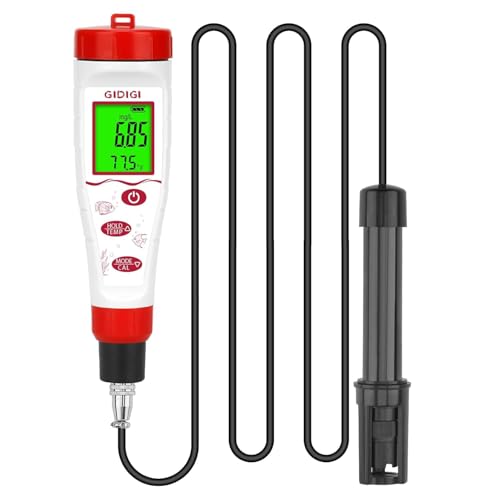
- mg/L and percentage saturation modes
- Bluetooth app for compensation and data sharing
- 3-meter cable with backlit LCD
Best For: Aquaculture, ponds, hydroponics, and data-focused testing
Best Field Kit
Extech DO210 Water Quality Meter

- Measures DO, saturation, and temperature
- Altitude and salinity compensation
- Includes 4-meter cable and spare membranes
Best For: Field sampling and environmental water-quality monitoring
Best Data Capacity
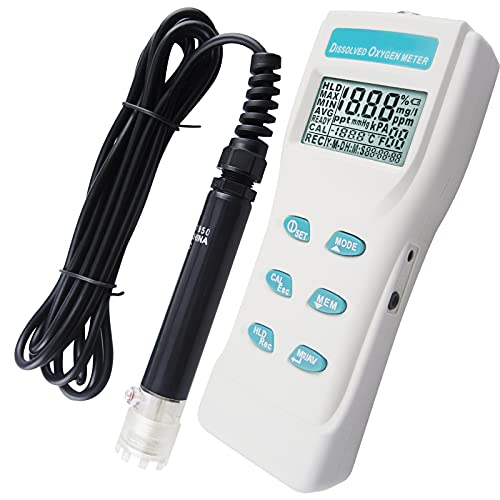
- Measures DO, temperature, salinity, and pressure
- 99-reading memory with data hold
- Includes 11.48-foot cable and carrying case
Best For: Aquaculture, aquarium testing, and stored field measurements
Best Value DO Meter
Yewhick 0–40 mg/L Dissolved Oxygen Meter

- Measures 0–40 mg/L or 0–300% DO
- Automatic temperature compensation and two-point calibration
- Includes spare membranes, electrolyte, and extra batteries
Best For: Routine aquarium, pond, aquaculture, and brewing water checks
Most Versatile DO Meter
GIDIGI 6-in-1 Water Quality Tester
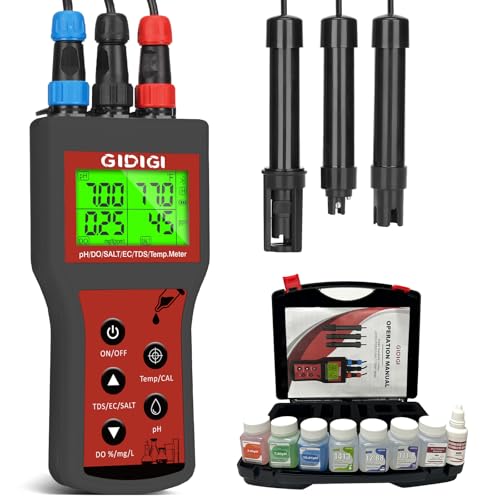
- Measures DO, pH, salinity, TDS, EC, and temperature
- Bluetooth data logging, printing, and sharing
- Includes rugged case, calibration solutions, and replacement membranes
Best For: Multi-parameter testing in ponds, aquariums, hydroponics, and pools
Best for Field Accuracy

- 0.01 mg/L resolution across a 0–20 mg/L range
- Manual pressure and salinity compensation with automatic temperature compensation
- IP65 housing, backlit display, and rechargeable battery
Best For: Aquaculture, sewage treatment, and field water-source monitoring
Best Smart Portable Pick
YINMIK Smart Dissolved Oxygen Meter

- 0–30 mg/L range with mg/L and percentage modes
- Bluetooth app stores up to 1,000 readings
- Includes case, probe cable, calibration supplies, and compensation settings
Best For: Connected pond, aquarium, aquaculture, and field monitoring
Best Extended-Range Value

- Measures dissolved oxygen from 0.0 to 40.0 mg/L
- ATC works across 0–50°C
- Includes calibration powder, filling fluid, and six probe covers
Best For: Broad-range aquarium, pond, pool, aquaculture, and research testing
Best for Hydroponics
EZTOCH Pond and Aquarium DO Meter

- 3.6-foot probe cable reaches deep tanks and ponds
- Backlit display works in bright or dim conditions
- App stores 1,000 readings and supports range alerts
Best For: Hydroponic reservoirs, aquaponics, ponds, and deeper tanks
Best Educational Value – Milwaukee MW600 Portable DO Meter
If you need straightforward dissolved oxygen meters for classroom demonstrations, aquaculture, or routine water analysis, the Milwaukee MW600 focuses on essential DO testing in a portable format. It measures 0.0–19.0 mg/L with 0.1 mg/L resolution and includes two-point manual calibration.
Best For: Educational settings, aquaculture, and basic environmental or water analysis.
Pros:
- Portable design with an LCD display
- Two-point manual calibration
- Automatic temperature compensation from 0 to 30°C
- 3-meter polarographic probe cable
Cons:
- Manual calibration requires more user involvement
- Automatic temperature compensation is specified only through 30°C
- Does not list salinity or altitude compensation
The MW600 is a practical entry-level choice when core dissolved oxygen measurement matters more than advanced data features. Its included long probe cable is useful for basic field and tank work.
Best Connected Features – GIDIGI Digital DO Tester
The GIDIGI is one of the more feature-oriented dissolved oxygen meters in this roundup, combining mg/L and saturation readings with automatic temperature compensation. Bluetooth app connectivity adds salinity and barometric-pressure compensation, plus data storage and sharing.
Best For: Aquaculture, ponds, hydroponics, brewing, and users who want app-based data management.
Pros:
- Measures both mg/L and percentage saturation
- Automatic temperature compensation
- App connectivity for salinity and altitude compensation
- 3-meter cable, backlit display, and included calibration accessories
Cons:
- App connectivity is needed for the listed salinity and barometric-pressure adjustments
- More setup may be involved than with a basic meter
- Specific measurement accuracy is not provided in the supplied notes
Choose the GIDIGI when flexible compensation and recordkeeping are priorities. Its long cable and backlit screen also support outdoor or deeper-water measurements.
Best Field Kit – Extech DO210 Water Quality Meter
The Extech DO210 is a well-equipped option among dissolved oxygen meters for field water-quality work. It measures DO, oxygen saturation, and temperature, while adjustable altitude and salinity compensation help adapt readings to different environments.
Best For: Field sampling, environmental monitoring, and users who want a complete portable kit.
Pros:
- Measures 0–20.0 mg/L DO, 0–100% saturation, and temperature
- Automatic temperature compensation through the probe
- Adjustable altitude and salinity compensation
- Includes a 4-meter cable, spare membranes, electrolyte, battery, and carrying case
Cons:
- Uses a polarographic probe that requires membrane and electrolyte maintenance
- Does not list internal data memory
- Temperature range is limited to 0–50°C
With its long cable, replacement membranes, and carrying case, the DO210 is especially convenient for mobile testing. Min/max and data-hold functions add useful support during field measurements.
Best Data Capacity – Multi-Parameter DO Test Kit
This multi-parameter tester stands out among dissolved oxygen meters for its broad measurement range and built-in data functions. It displays dissolved oxygen, temperature, barometric pressure, and supports manual salinity adjustment, with memory for up to 99 readings.
Best For: Aquaculture, aquarium and fish-tank testing, environmental work, and users who need stored readings.
Pros:
- Displays DO in percentage and ppm/mg/L formats
- Measures temperature, salinity, and barometric pressure
- Stores up to 99 readings and includes a data-hold function
- Includes probe, batteries, membranes, electrolyte, and carrying case
Cons:
- Salinity compensation is manual rather than automatic
- Sensor maintenance requires membranes and electrolyte
- The supplied notes do not specify measurement accuracy
The 8403-style kit is a strong fit when you need more than a single DO reading. Its memory, broad parameter coverage, long 11.48-foot cable, and included accessories make it suitable for organized testing across multiple locations.
Best Value DO Meter – Yewhick 0–40 mg/L Dissolved Oxygen Meter
If you need straightforward dissolved oxygen meters for aquariums, ponds, aquaculture, brewing, or wastewater checks, this Yewhick model offers a broad 0–40 mg/L range alongside percentage readings. Its built-in temperature sensor and automatic temperature compensation are useful for routine field and tank testing.
Best For: Aquarium, koi pond, aquaculture, brewing, and general water-quality checks where a wide DO range and included maintenance supplies are helpful.
Pros:
- Measures dissolved oxygen from 0–40 mg/L or 0–300%.
- Includes automatic temperature compensation from 0–50°C and a built-in temperature sensor.
- Two-point automatic calibration, large LCD, and a 1.1 m probe cable simplify routine testing.
- Includes electrolyte, calibration powder, six spare membrane caps, and extra LR44 batteries.
Cons:
- Uses small LR44 batteries rather than a rechargeable battery.
- The polarographic probe requires membrane and electrolyte maintenance.
This is a practical choice for users who want a relatively wide measurement range and a generous accessory bundle without adding separate temperature equipment. The automatic shutdown and included spares also support regular, ongoing use.
Most Versatile DO Meter – GIDIGI 6-in-1 Water Quality Tester
Among dissolved oxygen meters, the GIDIGI stands out for measuring more than DO alone. It displays dissolved oxygen, pH, salinity, TDS, EC, and temperature together, while Bluetooth data logging and compensation controls make it suited to users managing changing pond, aquarium, hydroponic, or pool conditions.
Best For: Users who want one portable instrument for dissolved oxygen plus broader water-quality monitoring across aquariums, ponds, hydroponics, pools, and field work.
Pros:
- Displays six parameters: DO, pH, salinity, TDS, EC, and temperature.
- Bluetooth supports data logging, printing, and sharing through the app.
- Provides automatic temperature compensation plus salinity and altitude adjustments.
- Includes calibration solutions, six replacement DO membranes, eight AAA batteries, and a rugged case.
Cons:
- Its DO range tops out at 20 mg/L, narrower than some dedicated meters.
- Using the broader feature set and app may involve more setup than a single-purpose DO tester.
- Probe membranes and multiple calibration steps require ongoing maintenance.
The GIDIGI is the strongest fit when dissolved oxygen is only one part of the testing job. Its multi-parameter display, compensation features, and portable case add flexibility, though users seeking only DO readings may not need its extra functions.
Best for Field Accuracy – LOHAND LH-D701 DO Meter
For buyers prioritizing resolution and environmental adjustments, the LOHAND LH-D701 is a more specialized option among dissolved oxygen meters. It measures DO, saturation, and temperature while adding manual atmospheric-pressure and salinity compensation for aquaculture, sewage, and water-source monitoring.
Best For: Field and professional water-quality work requiring fine 0.01 mg/L resolution, compensation controls, and a durable handheld design.
Pros:
- Offers a 0.00–20.00 mg/L range with 0.01 mg/L resolution and stated accuracy of ±0.3 mg/L.
- Measures dissolved oxygen concentration, saturation, and temperature.
- Combines automatic temperature compensation with manual pressure and salinity compensation.
- IP65 protection, backlit display, data saving, and a rechargeable lithium-polymer battery support field use.
Cons:
- Its 20 mg/L maximum range is narrower than the Yewhick model’s range.
- Pressure and salinity compensation require manual adjustment.
- At 2.76 pounds, it may be less convenient for lightweight carry than smaller meters.
The LH-D701 is a compelling pick when measurement resolution, environmental compensation, and ruggedness matter more than a broad maximum range. Its included long electrode cable and maintenance accessories make it ready for varied water-testing locations.
Best Smart Portable Pick – YINMIK Smart Dissolved Oxygen Meter
If you need dissolved oxygen meters for ponds, aquariums, aquaculture, or field testing, the YINMIK combines a broad measurement range with app connectivity. It measures dissolved oxygen in mg/L or percentage mode, includes temperature readings, and supports salinity and altitude compensation through the app.
Best For: Koi ponds, aquariums, saltwater tanks, aquaculture, environmental monitoring, and users who want stored readings.
Pros:
- Measures 0–30 mg/L with 0.01 mg/L resolution and also offers percentage mode.
- Bluetooth app stores up to 1,000 readings and displays changes through Excel.
- Portable case, long 3.6-foot electrode cable, backlit display, and included calibration supplies.
- Supports automatic temperature, salinity, and altitude compensation.
Cons:
- Requires app setup for salinity and altitude compensation features.
- Uses three LR44 batteries.
- Its included case and accessories make it less compact than a basic handheld meter.
The YINMIK is the most feature-rich option here for users who want portable testing plus digital recordkeeping. Its one-point calibration approach can simplify routine testing, while zero-oxygen calibration remains available for readings below 2 mg/L.
Best Extended-Range Value – ATC Dissolved Oxygen Meter
For straightforward dissolved oxygen meters with an expanded range, this model measures from 0.0 to 40.0 mg/L and includes automatic temperature compensation. Its simple LCD, calibration powder, and replacement-oriented probe accessories make it practical for routine aquarium, pond, pool, and research testing.
Best For: Users who need a broad measurement range and a simple handheld meter for aquariums, ponds, aquaculture, pools, or general research.
Pros:
- 0.0–40.0 mg/L range supports applications beyond the common 0.0–20.0 mg/L range.
- Automatic temperature compensation operates from 0–50°C.
- Includes six probe protective covers, electrode filling fluid, and anaerobic-water calibration powder.
- Auto power-off after eight minutes and a low-battery indicator help manage battery use.
Cons:
- The display has no backlight, which may be less convenient in dim conditions.
- Calibration requires preparing anaerobic water with the supplied powder.
- The notes recommend replacing the membrane sleeve if readings or calibration become inaccurate.
This is a sensible choice when measurement range matters more than app features or a backlit screen. It keeps operation relatively simple while providing ATC and the supplies needed for ongoing probe maintenance and calibration.
Best for Hydroponics – EZTOCH Pond and Aquarium DO Meter
This dissolved oxygen meter is designed for water systems where probe reach and visibility matter. The 3.6-foot electrode cable helps access deeper tanks and ponds, while the backlit display and YINMIK app connection support testing in bright outdoor conditions, dim areas, and data-tracked growing systems.
Best For: DWC and other hydroponic reservoirs, aquaponics, ponds, aquariums, saltwater tanks, and deeper outdoor installations.
Pros:
- Long 3.6-foot probe cable reaches deeper tanks, reservoirs, and ponds.
- Backlit screen improves readability in bright or dim lighting.
- App stores up to 1,000 values and can flag readings outside user-set maximum and minimum limits.
- Supports ATC plus salinity and altitude compensation through the app.
Cons:
- Using the app is necessary for stored data, alert ranges, and compensation adjustments.
- The longer cable and included electronics make it less minimal than a basic handheld tester.
- The supplied notes do not specify the meter’s numeric measurement range or resolution.
Choose this model when access and monitoring workflow are priorities. Its long probe is particularly useful for DWC reservoirs and outdoor ponds, while the app-based limits can help users notice oxygen conditions that need attention.
How We Picked These Dissolved Oxygen Meters
We selected products representing a range of use cases, prices, and feature sets, from compact handheld testers to more capable portable instruments. We looked for clearly stated oxygen ranges, resolution, automatic temperature compensation (ATC), salinity settings, calibration methods, memory, cable length, and included accessories. Because probe care strongly affects accuracy, we also considered whether each meter provides useful maintenance supplies such as filling solution, membranes, or calibration guidance.
Specifications can vary by seller and package, so confirm the current listing before purchase. A meter’s stated accuracy is also dependent on correct calibration, clean water-contact surfaces, suitable storage, and a properly maintained probe.
Quick Comparison
| Best For | Features to Prioritize | Most Suitable Type |
|---|---|---|
| Home aquariums and ponds | Simple calibration, ATC, readable display | Compact handheld meter |
| Aquaculture and frequent testing | Reliable probe, salinity compensation, memory | Portable DO meter with data functions |
| Field sampling | Long cable, rugged housing, battery life | Waterproof or durable portable unit |
| Budget testing | Basic range, replacement-probe availability | Economy digital tester |
Key Buying Factors for Dissolved Oxygen Meters
Measurement Range and Resolution
Freshwater applications commonly fall within a range around 0 to 20 mg/L, while broader-range instruments can be useful for unusual conditions, process water, or additional flexibility. Resolution describes how finely the display changes; it does not guarantee equivalent accuracy.
Calibration and Compensation
Look for straightforward air, water, or zero-oxygen calibration procedures. ATC helps account for temperature changes, while salinity compensation matters for saltwater aquariums, estuaries, and marine systems. Some meters require manual salinity entry rather than measuring it automatically.
Probe Care and Cable Design
Polarographic probes may require warm-up time and regular filling-solution or membrane maintenance. Galvanic probes are often more convenient for occasional testing but still need proper storage. A longer cable helps with tanks, ponds, and sampling containers, but it can be harder to manage and more vulnerable to tangling.
Data Features and Usability
Memory, data hold, a backlit or high-contrast display, and simple controls can make repeated testing much easier. Check battery type, water resistance, replacement parts, and whether the package includes calibration accessories.
Who Should Buy Which Dissolved Oxygen Meters?
Choose a basic handheld tester if you mainly check a home aquarium, small pond, or occasional water sample and want uncomplicated operation. Choose a meter with ATC and salinity compensation for saltwater systems or changing outdoor conditions. Choose a model with memory and a longer probe cable for repeated pond, aquaculture, or field measurements. Choose a broader-range instrument when your testing conditions may exceed ordinary freshwater levels. For laboratory-grade work or regulated monitoring, verify calibration documentation and accuracy requirements before relying on any consumer portable meter.