A refrigerated circulating bath is a workhorse for labs that need reliable temperature control, steady flow, and repeatable results. From benchtop testing to instrument cooling, the right model can make setup simpler and performance more consistent.
In this roundup, we focus on 10 options with different capacities, temperature ranges, and controller styles so you can match the bath to your workflow and budget.
Best 10 Refrigerated Circulating Bath Picks for 2026
High-Capacity Precision Pick
Cole-Parmer Refrigerated Circulating Bath, -30°C, 15 L
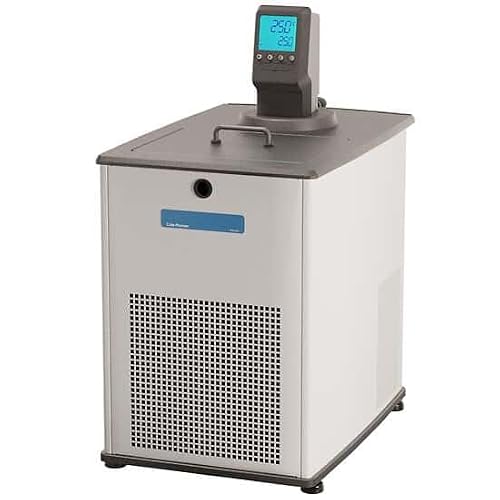
- PID algorithms for temperature control
- 15 L tank with 13.5 LPM force pump flow
- High-temp, over-temp, and low-liquid safety
Best For: larger-volume labs needing stable control and strong circulation
Control-Forward Lab Upgrade
PolyScience MX20R-30-A11B Refrigerated Circulating Bath

- MX Temperature Controller with large display
- 180° swivel controller and Lid Dock system
- Large openings and easy-to-clean surfaces
Best For: labs that prioritize easy control, cleaning, and workflow
Compact Low-Temp Performer
Cole-Parmer Refrigerated Circulating Bath, -20°C, 7 L

- 7 L reservoir for smaller setups
- Heating and cooling from -20°C or -30°C to 135°C
- Includes lid, fitting kit, cord, and guides
Best For: smaller labs needing a compact, accessory-rich bath
Feature-Rich Small Bath
PolyScience MX07R-20-A11B Refrigerated Circulating Water Bath

- 7 L capacity in a compact format
- Readable MX controller with English display
- Chemical-resistant DuraTop and WhisperKool system
Best For: small-lab users wanting readable controls and a durable surface
Premium Benchtop Option
POLYSCI 7L Refrigerated Bath, 240V

- 7L refrigerated/heating bath with external circulation
- Touch-pad display with swivel 180 controller
- DIN 12876-1 Class I safety for non-flammable media
Best For: Labs needing a compact, digitally controlled circulating bath
Low-Temperature Value Pick
6L Refrigerated Circulator Chiller

- 0.1℃ resolution with microcomputer control
- Safety alarms for overheating, over-current, and limits
- Includes transformer for 110V to 220V use
Best For: Labs needing low-temperature control with built-in safety protection
US Power Pick
POLYSCI 7L Refrigerated Bath, 120V

- 120V/60Hz version of the POLYSCI bath
- Closed-loop external circulation support
- Touch-pad control with 3.75" display
Best For: Labs that need a 120V refrigerated circulating bath
Dual-Circulation Pick
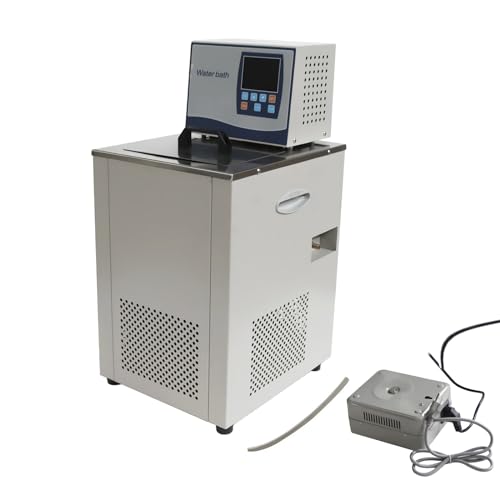
- 6L tank with stainless steel baffle groove for steadier temperatures
- PID digital control with alarm function for easier operation
- Internal and external circulation modes for flexible lab use
Best For: Small labs needing a quiet, flexible refrigerated circulating bath
Precision Control Choice
±0.01°C Refrigerated Circulator
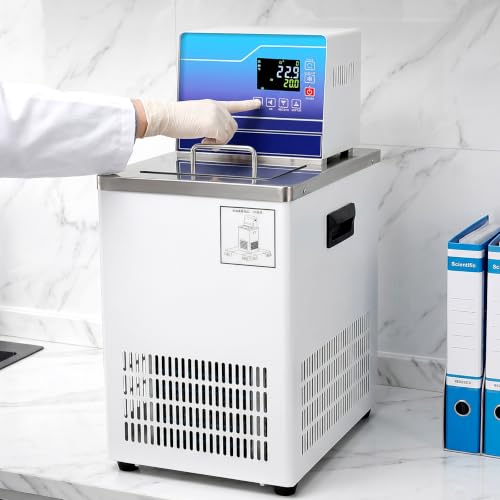
- ±0.01°C stability with PID control and PT100 sensor
- Internal and external loop operation for flexible cooling setups
- 304 stainless tank and enclosed compressor support continuous use
Best For: Labs needing high-precision closed-loop cooling and stable long runs
User-Friendly Lab Option
6L Refrigerated Circulating Bath

- 0.1°C digital resolution with microcomputer temperature control
- Overheat, overcurrent, and alarm protection for safer use
- Large opening and drain valves improve access and maintenance
Best For: General lab work where easy operation and safety features matter
High-Capacity Precision Pick – Cole-Parmer Refrigerated Circulating Bath, -30°C, 15 L
If you need a refrigerated circulating bath for larger-volume work, this Cole-Parmer model is built around temperature stability and stronger circulation. Its PID algorithms are designed to optimize heating and cooling, while the force pump flow and high-temperature safety features support more controlled day-to-day operation.
Best For: Labs that want a 15 L refrigerated circulating bath with broad temperature control and strong pump flow.
Pros:
- PID algorithms help maintain the desired temperature more consistently.
- Heating and cooling range reaches from -20°C or -30°C up to 135°C.
- Force pump flow is rated at 13.5 LPM on 120V.
- Includes user-settable high-temperature safety plus over-temperature and low-liquid-level protection.
Cons:
- At 130 pounds, it is a heavy unit to move or reposition.
- Cooling capacity is listed for specific tank sizes, so performance depends on application.
This is a practical choice when control and capacity matter more than portability. The 15 L tank and built-in safety features make it a solid fit for demanding circulating bath setups.
Control-Forward Lab Upgrade – PolyScience MX20R-30-A11B Refrigerated Circulating Bath
This refrigerated circulating bath is aimed at labs that value usability as much as temperature control. The MX Temperature Controller, swivel 180° display, and large bath openings make it easier to operate and clean in busy settings.
Best For: Labs that want a 20 L refrigerated circulating bath with a feature-rich controller and easy maintenance.
Pros:
- MX Temperature Controller includes large, intuitive displays.
- Swivel 180° controller helps with flexible viewing and operation.
- Large bath openings and easy-to-clean surfaces simplify upkeep.
- Lid Dock lid stowing system and Dura Top chemical-resistant deck add convenience.
Cons:
- The supplied notes emphasize usability more than detailed cooling performance specs.
- At over 62 kg, it is not a lightweight option.
For teams that want a refrigerated circulating bath with straightforward controls and lab-friendly design, this PolyScience model stands out. It looks especially well suited to users who prioritize day-to-day handling and cleaning.
Compact Low-Temp Performer – Cole-Parmer Refrigerated Circulating Bath, -20°C, 7 L
If you want a smaller refrigerated circulating bath with solid temperature range, this 7 L Cole-Parmer unit is built for controlled heating and cooling from -20°C or -30°C up to 135°C. It also includes the practical accessories needed for external applications and startup.
Best For: Smaller labs that need a 7 L refrigerated circulating bath with included setup accessories.
Pros:
- Compact 7 L reservoir fits smaller-scale applications.
- Heating and cooling range reaches from -20°C or -30°C to 135°C.
- Force pump flow is rated at 13.5 LPM on 120V.
- Includes reservoir lid, fitting kit, power cord, and quick-start materials.
Cons:
- Cooling capacity is listed at 200W for 7 L at 20°C, so it is best matched to its rated size.
- At 68 pounds, it still has substantial weight for a smaller bath.
This model is a sensible pick when footprint and included accessories matter. It keeps the core temperature-control features while staying in a more compact 7 L format.
Feature-Rich Small Bath – PolyScience MX07R-20-A11B Refrigerated Circulating Water Bath
This refrigerated circulating bath is a compact 7 L option with a strong focus on control and usability. The MX controller, whisper-quiet cooling system, and chemical-resistant top deck make it a practical choice for general lab workflows.
Best For: Users who want a 7 L refrigerated circulating bath with a readable controller and chemical-resistant work surface.
Pros:
- Large universal icon and English display improve readability.
- WhisperKool Environmental Control System supports quieter operation.
- Cool Command modulated refrigeration system adds controlled cooling.
- DuraTop insulating, chemical-resistant top deck improves durability.
Cons:
- Capacity is limited to 7 L, so it is not intended for larger baths.
- The notes do not list detailed pump-flow or cooling-capacity figures.
For smaller applications, this PolyScience bath offers a balanced mix of control and durability. It is a good fit when you want a straightforward refrigerated circulating bath with a user-friendly display and sturdy top deck.
Premium Benchtop Option – POLYSCI 7L Refrigerated Bath, 240V
This refrigerated circulating bath is a solid fit when you need both heating and cooling in a compact 7L platform. It includes closed-loop external circulation, a touch-pad controller with a 3.75″ display, and automatic performance optimization, making it a practical choice for controlled lab workflows that need stable temperature management from -20° to 170°C.
Best For: Labs that want a compact refrigerated circulating bath with external circulation and digital control.
Pros:
- Closed-loop external circulation capability for connected setups
- Intuitive 3.75″ touch display with swivel 180 rotating controller
- Automatic performance optimization and 1-point calibration capability
- Complies with DIN 12876-1 Class I safety requirements for non-flammable working media
Cons:
- 240V/50Hz electrical setup may not suit all labs
- 7L capacity is compact rather than high-volume
- Cooling capacity is listed at 200 W at 20°C, so it is best matched to moderate demands
Overall, this model emphasizes control, safety, and external circulation in a bench-friendly footprint. If your priority is a dependable refrigerated circulating bath with straightforward digital operation, it offers a well-rounded feature set.
Low-Temperature Value Pick – 6L Refrigerated Circulator Chiller
If you need a refrigerated circulating bath for low-temperature work, this 6L laboratory chiller circulator is built around microcomputer temperature control and a wide -30℃ to 100℃ range. It also includes a transformer for 110V to 220V use, plus practical features like a larger opening, drainage valves, and multiple heat dissipation holes for easier day-to-day operation.
Best For: Labs looking for an affordable low-temperature circulating bath with broad temperature control and safety features.
Pros:
- Microcomputer-based control with 0.1℃ digital resolution
- Over-heating, over-current, and upper/lower limit alarm protections
- Transformer included for 110V to 220V conversion
- Large opening, drainage valves, and extra heat dissipation holes for convenience
Cons:
- Uses a transformer, which adds another component to manage
- 6L capacity may be limiting for larger-volume needs
- Item weight is listed at 113 pounds, so it is not especially portable
This model stands out for temperature precision and protective features, especially if you want a refrigerated circulating bath that covers both cooling and warming duties. It is best suited to labs that value practical operation over premium touchscreen styling.
US Power Pick – POLYSCI 7L Refrigerated Bath, 120V
This refrigerated circulating bath mirrors the features of the 240V model but is set up for 120V/60Hz power, which makes it a better match for many U.S. lab environments. It offers the same 7L working volume, closed-loop external circulation, touch-pad control, and temperature range from -20° to 170°C for general lab heating and cooling tasks.
Best For: Labs that want the POLYSCI platform in a 120V configuration for standard bench use.
Pros:
- 120V/60Hz power configuration for easier U.S. integration
- Closed-loop external circulation capability
- Intuitive 3.75″ display with swivel 180 rotating controller
- DIN 12876-1 Class I safety compliance for non-flammable working media
Cons:
- 7L capacity is compact for higher-volume applications
- Cooling capacity is listed at 200 W at 20°C
- External circulation pressure and flow limits may be modest for some setups
For buyers who need a refrigerated circulating bath in a 120V format, this version keeps the core POLYSCI controls and safety features intact. It is a sensible fit when compatibility with standard lab power matters as much as temperature control.
Dual-Circulation Pick – 6L Lab Chiller Circulator
This refrigerated circulating bath is built for labs that need stable cooling, simple temperature control, and both internal and external circulation in a compact 6L format. Its PID controller, digital display, and silent circulating pump make it a practical fit for routine experiments where consistent bath temperature matters.
Best For: Small lab setups that need a quiet refrigerated circulating bath with internal and external loop support.
Pros:
- 6L working tank with stainless steel baffle groove for more stable bath temperature.
- PID automatic control system with digital display for precise temperature control.
- Supports both internal circulation and external circulation for wider experimental use.
- Cooling fan and quiet circulating pump help improve running stability.
Cons:
- 110V model may limit use depending on your lab power setup.
- Best suited to smaller-volume work because of the 6L tank size.
Overall, this unit focuses on straightforward temperature stability and flexible circulation rather than advanced extras. It is a solid fit for general lab cooling tasks where reliability and easy operation are more important than large capacity.
Precision Control Choice – ±0.01°C Refrigerated Circulator
For buyers who want tighter control from a refrigerated circulating bath, this 6L chiller emphasizes fast cooling, very fine temperature stability, and closed-loop flexibility. It is designed for continuous use with a fully enclosed compressor, magnetic-drive pump, and internal or external circulation modes.
Best For: Users who need very precise temperature control for rotary evaporators, sample prep, or continuous lab runs.
Pros:
- ±0.01°C stability with PID controller and PT100 sensor for fine temperature control.
- Internal and external loop modes support both bath use and closed-loop cooling.
- Fully enclosed compressor and silent magnetic-drive pump are built for long runs.
- 304 stainless steel tank resists corrosion and supports temperature uniformity.
Cons:
- Below +4°C, it requires a 20-50% glycol/water mix rather than pure water.
- Needs proper ventilation and regular maintenance such as coil cleaning and fluid changes.
- Not suitable for strong acids or halogenated solvents.
This model stands out when accuracy and continuous operation matter more than basic chilling. It is a strong option for controlled lab workflows that need a refrigerated circulating bath with tighter stability than typical units.
User-Friendly Lab Option – 6L Refrigerated Circulating Bath
This refrigerated circulating bath is aimed at users who want a straightforward 6L chiller with strong safety features, a larger opening, and practical drainage access. It uses microcomputer temperature control and a built-in transformer, making it a convenient choice for general lab cooling tasks.
Best For: General lab users who want an easy-to-operate refrigerated circulating bath with good access and safety protections.
Pros:
- Microcomputer-based temperature control with 0.1°C digital resolution.
- Over-heating and over-current protection plus high/low temperature alarms.
- Large opening and drainage valves make operation and draining easier.
- Built-in 110V to 220V transformer adds power-supply flexibility.
Cons:
- Only the supplied notes confirm general lab use, not advanced loop-specific features.
- 6L capacity may be too small for larger-scale workflows.
In practice, this is a user-friendly option for labs that value convenience and safety alongside basic cooling performance. It makes the most sense when you want a dependable refrigerated circulating bath with easy handling rather than specialized high-end features.
How We Picked These Refrigerated Circulating Bath Models
We compared capacity, minimum and maximum temperature range, stability, pump and circulation performance, controller type, and voltage compatibility. We also favored models that make sense for common lab tasks such as sample conditioning, viscometer support, condenser cooling, and general closed-loop thermal control.
Quick Comparison
Broadly, the 10 picks split into three user types: higher-capacity units for more demanding circulation and larger thermal loads, mid-size lab baths for general-purpose work, and compact 6L to 7L options for smaller benchtops or tighter budgets. If your application needs low-temperature performance, pay close attention to the stated minimum temperature and whether that rating applies under load.
Key Buying Factors for a Refrigerated Circulating Bath
Temperature Range and Stability
Start with the coldest temperature your application needs, then check the upper limit if you also need heating. Stability matters just as much as range; tighter control helps reduce drift in sensitive experiments and improves repeatability.
Capacity and Thermal Load
A larger bath can better handle heat from external equipment, but it usually takes more bench space and may cost more. Smaller baths are easier to place and may be ideal if you only need light-duty cooling or short runs.
Controller and Ease of Use
Digital controllers are generally easier to set and monitor, while more advanced controllers can improve precision and workflow consistency. Look for clear displays, simple setpoint changes, and alarms if your lab runs unattended.
Pump, Circulation, and Plumbing
For a Refrigerated Circulating Bath, circulation quality is essential. Make sure the pump output and port setup match your external loop, tubing size, and pressure requirements.
Power and Installation
Check voltage, frequency, and plug requirements before ordering. A strong match here avoids setup delays and ensures the unit is appropriate for your facility.
Who Should Buy Which Refrigerated Circulating Bath?
Choose a larger-capacity bath if you need stronger thermal buffering or plan to cool external equipment with higher heat loads. Pick a compact 6L or 7L unit if bench space is limited or your applications are relatively light. If your work depends on tight control and broad operating range, prioritize stability, controller quality, and a refrigeration system sized for continuous use.
For most buyers, the best Refrigerated Circulating Bath is the one that balances temperature range, real-world stability, and circulation performance with the size and power constraints of the lab.