Choosing a variable speed laboratory rocker is really about matching motion, load capacity, and control to your samples. The right unit can improve mixing consistency without over-agitating delicate materials.
Below, we focus on practical differences that matter in the lab: speed range, platform style, tilt angle, continuous operation, and whether the rocker suits routine bench work or temperature-controlled environments.
Best 10 Variable Speed Laboratory Rocker Picks for 2026
Editor’s Pick
ONiLAB 10-80RPM Digital Rocking Shaker
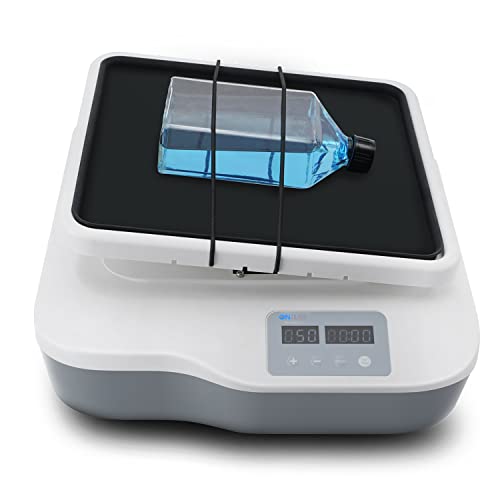
- 10-80 RPM with timed or continuous mode
- Independent LED readouts for speed and time
- 10.6" x 10.6" platform for common lab vessels
Best For: Labs and classrooms needing a simple, stable digital rocker
Large Platform Choice
Benchmark BR2000 2D Bench Rocker

- Variable speed with adjustable tilt
- Large 14" x 12" platform
- Cold room and incubator safe
Best For: Labs needing a larger rocker platform and 2D motion
Quiet Runner
LVDALAB Digital Rocking Shaker

- 10-80 RPM with timed and continuous modes
- Brushless motor runs smoothly and quietly
- Independent LED speed and time displays
Best For: Education and lab work where low-noise rocking matters
Heavy-Duty Pick
Benchmark BR5000 Everlast Platform Rocker

- Variable speed platform rocker design
- Dual platform accessory doubles work surface
- Substantial 22.5 lb item weight
Best For: Labs wanting a sturdier rocker with expandable surface area
Digital Precision Rocker
4E's USA SK308 10kg Lab Rocker

- 10–70 RPM digital control
- 9° rocking angle with 10kg load capacity
- LED time display and brushless DC motor
Best For: Labs needing a durable digital rocker with a wide speed range and higher load capacity.
Benchtop Variable Rocker

- 2 to 30 RPM with manual tilt adjustment
- Two-dimensional motion up to 30°
- Brushless motor and autoclavable mat
Best For: Labs that want a straightforward benchtop rocker with manual controls and a nonslip platform.
Compact 3D Rocker
VISOSCI 0–27 RPM Incubator Shaker

- Stepless 0–27 RPM control
- Compact 9.2" x 6.6" platform
- Made for incubators and cold rooms
Best For: Small labs or temperature-controlled environments needing a compact low-speed 3D rocker.
3D Motion Pick
Benchmark Scientific BenchRocker 3D
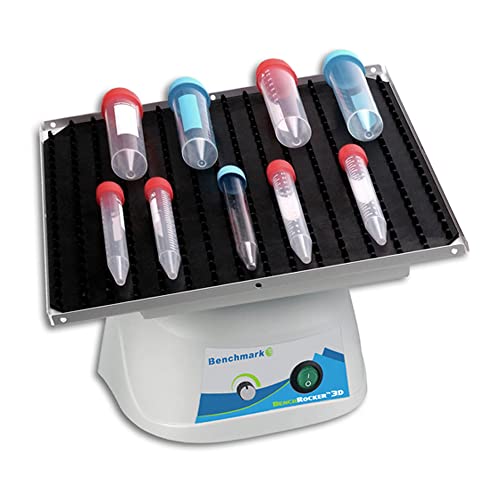
- 2 to 30 rpm variable speed
- 3D motion with 0 to 30° tilt
- Autoclavable nonslip rubber mats
Best For: Cell culture, staining, and general sample mixing
Compact Digital Choice
NE Labs Compact Lab Rocking Shaker
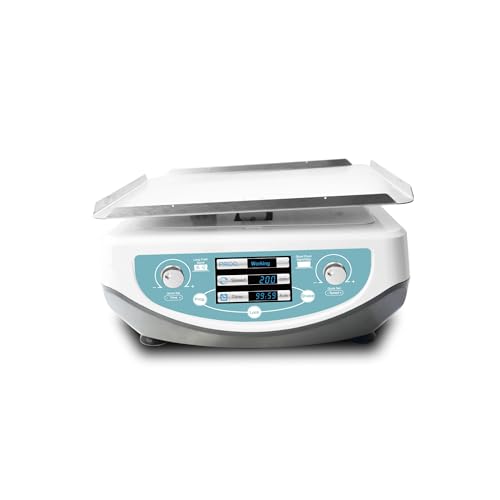
- Stainless steel, easy-clean platform
- Digital speed and time display
- Compact, low-noise stepper motor
Best For: Small labs and incubator use
Reliable Angle Option
SCILOGEX Digital See-Saw Rocker

- 10 to 80 rpm variable speed
- 7° see-saw rocking angle
- Cold room and incubator compatible
Best For: Cell culture, staining, hybridization, and molecular biology
Editor’s Pick – ONiLAB 10-80RPM Digital Rocking Shaker
If you need a variable speed laboratory rocker for everyday bench work, the ONiLAB unit gives you a practical 10-80 RPM range, independent speed and time readouts, and a compact platform that fits common lab vessels. It is a straightforward fit for classrooms and general lab use where easy operation and stable rocking matter.
Best For: Labs and classrooms that want a compact, easy-to-read rocker for mixed sample sizes.
Pros:
- Digital display shows speed and time separately for simple monitoring.
- 10-80 RPM adjustment and continuous or timed operation add flexibility.
- 10.6″ x 10.6″ platform supports micro-centrifuge tubes, petri dishes, microtitre plates, and conical flasks.
- Non-slip rubber mat and foot mat help keep the unit stable during use.
Cons:
- 2 kg load limit may be restrictive for heavier setups.
- Platform size is practical, but not oversized for high-throughput work.
Overall, this model balances usability, stability, and broad vessel compatibility without adding complexity. It is a solid pick if you want a dependable rocker for routine mixing, staining, or classroom demonstrations.
Large Platform Choice – Benchmark BR2000 2D Bench Rocker
The Benchmark Scientific BR2000 is a variable speed laboratory rocker built around a large 14″ x 12″ platform and adjustable tilt, making it useful when you need more usable surface area for routine rocking applications. Its 2D motion and cold room/incubator-safe design make it a practical bench option for controlled environments.
Best For: Users who want a larger work surface and flexible rocking for lab workflows.
Pros:
- Adjustable speed and tilt support a wide range of applications.
- Large 14″ x 12″ work surface gives you more room for samples.
- Dual platform accessory can double the work surface.
- Safe for use in cold rooms and incubators.
Cons:
- 115V power requirement may limit use in some setups.
- No digital time display or advanced timer details are listed in the notes.
This is a strong choice if platform size and environmental compatibility matter more than digital extras. It fits well in labs that need a dependable rocker with room to expand using the dual-platform accessory.
Quiet Runner – LVDALAB Digital Rocking Shaker
If you want a variable speed laboratory rocker that stays compact on the bench, the LVDALAB model offers a 10-80 RPM range, timed or continuous operation, and a 10.6″ x 10.6″ platform for common containers. The low-noise brushless motor and independent LED displays make it a practical pick for lab or school settings.
Best For: Education, research, and general lab mixing where quiet operation is helpful.
Pros:
- 10-80 RPM speed range with continuous or timed mode.
- Brushless DC motor is described as smooth and quiet, with noise at or below 50 dB.
- Independent LED displays show speed and time separately.
- Anti-slip platform and included elastic band help secure containers.
Cons:
- 2 kg load capacity limits heavier sample arrangements.
- Timing range tops out at 19h59min rather than multi-day use.
For day-to-day rocking, staining, and mixing tasks, this unit covers the essentials without taking much bench space. It is especially appealing if you value quieter operation and a simple interface.
Heavy-Duty Pick – Benchmark BR5000 Everlast Platform Rocker
The Benchmark Scientific BR5000 is a variable speed laboratory rocker aimed at users who want a larger, more robust platform rocker for bench workflows. With a dual-platform accessory available and a substantial 24.2-pound package weight, it reads like a sturdier option for labs that prioritize capacity and build over compact size.
Best For: Labs that want a heavier-duty rocker with the option to expand work surface.
Pros:
- Variable speed platform rocker design suits a range of lab tasks.
- Dual platform accessory can double the work surface.
- Made in the United States, which may matter for some buyers.
- Substantial footprint suggests a more robust bench presence.
Cons:
- Large size and 22.5-pound item weight make it less portable.
- No specific speed range or timer details are listed in the notes.
This model is best considered when you need a more substantial rocker and prefer the option to scale up surface area. If portability and detailed digital controls are priorities, a smaller unit may be a better fit.
Digital Precision Rocker – 4E's USA SK308 10kg Lab Rocker
If you want a variable speed laboratory rocker for routine mixing, the 4E’s USA SK308 is built for controlled, general-purpose agitation. Its 9° rocking angle, 10–70 RPM range, and 10kg load capacity make it a practical fit for labs that need flexibility across different vessels and batch sizes.
Best For: Labs needing a durable digital rocker with a wide speed range and higher load capacity.
Pros:
- 10–70 RPM digital speed control with simultaneous LED time display
- 9° rocking angle for thorough sample agitation
- 10kg maximum load capacity with platform
- Brushless DC motor for durability and low maintenance
Cons:
- Not the most compact option at 26 pounds
- May be more rocker than needed for very small sample workflows
This is a strong pick if you want digital control and a heavier-duty platform without moving into specialized or oversized equipment. The anti-slip mat and platform compatibility add everyday practicality for common lab containers.
Benchtop Variable Rocker – Benchmark BR2000 2D Platform
The Benchmark Scientific BR2000 is a variable speed laboratory rocker designed for bench work where simple control matters. With a 2 to 30 RPM range, manual tilt adjustment, and two-dimensional motion, it suits common applications like cell culture, staining, and hematology.
Best For: Labs that want a straightforward benchtop rocker with manual controls and a nonslip platform.
Pros:
- 2 to 30 RPM speed range for gentle rocking tasks
- Manual tilt adjustment from 0 to 30 degrees
- Maintenance-free brushless motor
- Autoclavable rubber mat for a nonslip surface
Cons:
- Lower 4.4 lb total weight capacity than larger models
- Analog controls offer less precision than digital displays
Overall, this rocker is best if you prefer simple operation and don’t need heavy load handling. Its broad platform and adjustable motion make it a dependable fit for everyday lab protocols.
Compact 3D Rocker – VISOSCI 0–27 RPM Incubator Shaker
This variable speed laboratory rocker is aimed at gentle mixing in compact spaces, especially incubators and cold rooms. The VISOSCI 3D shaker offers stepless 0–27 RPM control, a 20° rocking angle, and a small footprint that makes it easy to place on crowded lab benches.
Best For: Small labs or temperature-controlled environments needing a compact low-speed 3D rocker.
Pros:
- Stepless 0–27 RPM speed control for low-speed mixing
- Compact 9.2″ x 6.6″ platform for portable use
- Suitable for incubators, cryogenic chambers, and cold rooms
- Over-current protection and non-slip rubber mat
Cons:
- 2kg max load is best for lighter workloads only
- Smaller platform limits larger batch handling
For light-duty workflows, this model delivers the flexibility of 3D motion in a very space-efficient format. It is especially appealing if you need gentle rotation and safety features in controlled environments.
3D Motion Pick – Benchmark Scientific BenchRocker 3D
If you need a variable speed laboratory rocker for gentle, all-around sample movement, this 3D model is built for bench work like cell culture, staining, and hematology. Its 2 to 30 rpm range, manual tilt adjustment, and three-dimensional gyrating motion make it a flexible option when you want more than a simple back-and-forth rock.
Best For: Labs that want a compact 3D rocker for cell culture, staining, and general sample mixing.
Pros:
- 2 to 30 rpm variable speed range for controlled rocking
- Three-dimensional motion with tilt adjustment from 0 to 30 degrees
- Large platform supports culture plates, media bottles, and Erlenmeyer flasks
- Maintenance-free brushless motor and autoclavable nonslip mats
Cons:
- 4.4 lb platform weight limit may be restrictive for heavier loads
- Analog control knob offers less precision than a digital display
Overall, this BenchRocker is a solid fit if you want a variable speed laboratory rocker with broad motion and simple operation. The combination of 3D movement, adjustable tilt, and easy-to-clean mats makes it practical for routine life science workflows.
Compact Digital Choice – NE Labs Compact Lab Rocking Shaker
This compact variable speed laboratory rocker is designed for labs that need a small footprint without giving up basic control. The stainless steel platform, digital speed and time display, and quiet stepper motor make it a practical choice for everyday rocking in tight workspaces or even inside incubators and greenhouses.
Best For: Small labs and incubator setups that need a compact, low-noise rocker with digital monitoring.
Pros:
- Stainless steel and natural rubber platform is easy to clean and resistant to acid and alkali
- Digital speed and time display helps with monitoring and operation
- Compact footprint fits limited lab spaces and can be placed in incubators or greenhouses
- Quiet stepper motor and continuous running capability
Cons:
- Product notes do not list the speed range or tilt angle
- Smaller platform may be less suited to larger containers
For labs prioritizing quiet operation and space savings, this rocker covers the essentials well. Its digital readout and durable surface make it straightforward for routine use, especially where cleanliness and compact size matter more than advanced motion options.
Reliable Angle Option – SCILOGEX Digital See-Saw Rocker
If you want a variable speed laboratory rocker with a defined rocking angle and more robust lab-oriented features, this see-saw model is a strong fit. It offers 10 to 80 rpm speed control, a 7° rocking angle, and a versatile tray setup with straps and an anti-slip mat for stable mixing in common life science workflows.
Best For: Researchers needing a digital see-saw rocker for cell culture, staining, hybridization, and molecular biology.
Pros:
- 10 to 80 rpm variable speed range for flexible mixing
- 7° rocking angle supports gentle see-saw motion
- Dual LED display shows time and speed for repeatable operation
- Cold room and incubator compatible with tray, anti-slip mat, and straps
Cons:
- Requires more bench space than a compact rocker
- See-saw motion may be less versatile than multi-directional rocking
This model stands out if you value controlled speed, a set rocking angle, and lab-ready stability features. The compatibility with cold rooms and incubators adds flexibility for workflows that need consistent environmental conditions.
How We Picked These Variable Speed Laboratory Rockers
We focused on the features buyers rely on most: adjustable speed range, stable rocking motion, platform size, load capacity, timer or continuous operation, and build quality for repeated daily use. We also looked at whether the unit is suitable for general bench work, low-noise operation, or specialized settings such as cold rooms.
Quick Comparison: What Matters Most
In a Variable Speed Laboratory Rocker, wider speed control is useful when you need gentle agitation for fragile samples or stronger motion for thorough mixing. Platform size and surface style also matter: flat mats are convenient for general containers, while straps or specialized platforms can improve stability for unusual vessels. If your lab runs long protocols, continuous-duty capability is worth prioritizing.
Key Buying Factors for a Variable Speed Laboratory Rocker
Speed Range and Motion
Look for a speed range that fits your applications. Lower minimum speeds help protect sensitive samples, while higher maximum speeds increase mixing efficiency. Also consider whether you need simple rocking, see-saw motion, or 2D/3D movement, since motion style can change results more than speed alone.
Load Capacity and Platform Size
Check both the maximum load and usable platform area. A larger platform is helpful for multiple trays or larger flasks, but only if the motor can handle the weight without losing consistency. For compact benches, smaller rockers may be the better fit.
Timer, Continuous Mode, and Noise
A timer is useful for repeatable protocols, while continuous operation is better for overnight or extended workflows. Low noise is an advantage in shared labs, especially if the rocker runs near desks or in teaching spaces.
Environment and Durability
If you need a Variable Speed Laboratory Rocker for cold rooms or harsh conditions, confirm the unit is rated for that environment. Stainless steel platforms, strong motor systems, and simple controls can improve long-term reliability.
Who Should Buy Which Variable Speed Laboratory Rocker?
Choose a compact, lower-capacity rocker if you primarily work with small samples, tubes, or limited bench space. Pick a larger platform model if you need to handle more containers at once or want better versatility for mixed lab tasks. For routine daily use, prioritize dependable speed control and stable operation. For specialized protocols, focus on motion type, environmental compatibility, and continuous-duty performance.
In short, the best choice is the one that matches your sample size, workload, and operating environment—not just the highest speed rating.