Bright city skies can wash out faint stars, nebulae, and subtle Milky Way detail. The right filter can improve contrast by reducing selected wavelengths from streetlights and other artificial sources.
This roundup compares 10 light pollution filters for astrophotography, from camera-lens natural-night filters to narrowband telescope filters, so you can choose the best match for your equipment, targets, and observing conditions.
Best 10 Light Pollution Filters for Astrophotography Picks for 2026
Best for Wide-Angle Night Photography

- Cuts yellow-orange city-light wavelengths
- 97%+ transmission with multi-coating
- Slim frame for wide-angle lenses
Best For: 67mm camera lenses used for Milky Way, aurora, and urban night scenes
Best Telescope Value
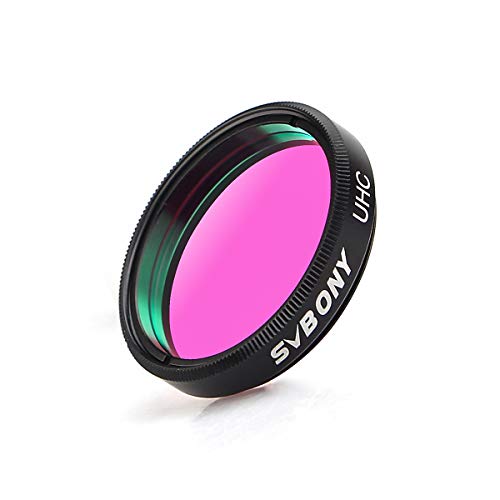
- Targets artificial-light wavelengths
- Improves emission-nebula contrast
- Fits standard 1.25-inch accessories
Best For: City and suburban telescope observation or nebula astrophotography
Best Neutral Color Option
K&F Concept 67mm Natural Night Filter

- Reduces pollution without a stated color cast
- Ultra-slim design helps limit vignetting
- 28-layer coatings resist water, oil, and scratches
Best For: 67mm camera lenses used for natural-looking night and star images
Best for Deep-Sky Imaging

- Transmits OIII and H-alpha emission lines
- Over 94% transmission for nebula contrast
- Designed for compatible color cameras
Best For: Deep-sky nebula imaging from cities or under a full moon
Classic Telescope Contrast
Celestron UHC/LPR 1.25" Filter
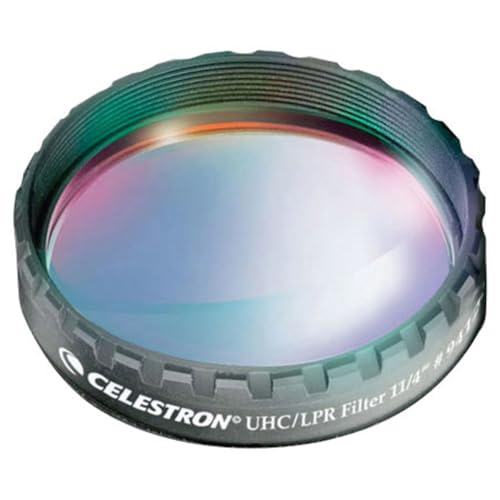
- Reduces selected artificial-light wavelengths
- Enhances nebula contrast and sky darkness
- Multi-coated 1.25-inch optical glass
Best For: Visual telescope observing with 1.25-inch accessories
Fast Magnetic Night Shooting
NiSi JetMag Pro 67MAG Natural Night

- Reduces yellow and orange urban light casts
- Magnetic, tool-free filter changes
- Requires a separate 67MAG adapter ring
Best For: JetMag Pro users shooting urban night scenes and stars
Emission-Line Broadband Control
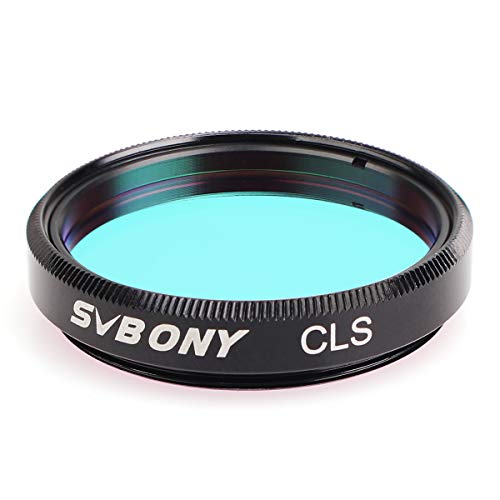
- Advertises 90% nebula-line transmission
- Suppresses specified sodium and mercury lines
- Works with color CCDs and unmodified DSLRs
Best For: Urban deep-sky imaging with 1.25-inch equipment
Best Camera-Threaded Option
K&F CONCEPT 77mm Natural Night Filter
- Reduces light pollution for clearer night skies
- Slim frame helps limit vignetting
- 28-layer coating with no-color-cast optical glass
Best For: 77mm camera lenses used for night-sky and star photography
Best Telescope Choice
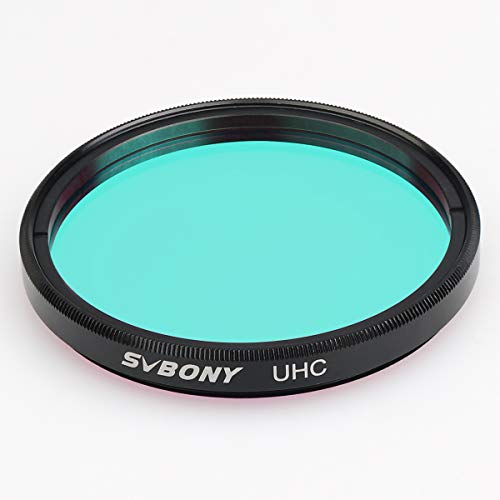
- Designed for contrast and light-pollution reduction
- Fits 2-inch telescope accessories via M48×0.75 threads
- Includes storage box and one-year warranty
Best For: Deep-sky telescope observation and astrophotography in urban or suburban areas
Best for 58mm Camera Lenses
Walking Way Natural Night Filter

- Reduces urban light sources and haze
- Neodymium glass supports clear, natural-looking images
- 28 protective coatings plus a storage case
Best For: 58mm camera lenses used for urban night photography and astrophotography
Best for Wide-Angle Night Photography – Hoya Starscape 67mm
For photographers seeking light pollution filters for astrophotography, the Hoya Starscape 67mm is a practical screw-in option for reducing yellow-orange skyglow from sodium and mercury vapor lighting. Its Didymium glass is designed to improve star-to-sky contrast while preserving landscape color in long exposures and wide-angle setups.
Best For: DSLR and mirrorless photographers using 67mm lenses for Milky Way scenes, auroras, urban night photography, or time-lapse work.
Pros:
- Reduces unwanted yellow-orange wavelengths from common artificial lighting.
- Provides 97%+ light transmission with multi-coating to reduce reflections and flare.
- Slim, lightweight frame is designed to minimize vignetting on wide lenses.
- Supports landscapes and celestial subjects in the same long exposure.
Cons:
- Compatible with cameras and lenses using a 67mm filter thread.
- Designed for camera lenses rather than telescope eyepieces.
The Starscape is a strong choice when you want an easy-to-use lens filter that improves night-sky contrast without requiring a telescope setup. Confirm your lens thread size before buying.
Best Telescope Value – SVBONY 1.25-Inch UHC Filter
The SVBONY UHC is among the more telescope-focused light pollution filters for astrophotography, selectively reducing artificial-light wavelengths to darken the sky background. It is intended to improve the contrast of emission nebulae for observers and astrophotographers working from city, suburban, or even dark-sky locations.
Best For: Telescope users with standard 1.25-inch eyepieces or accessories who want stronger nebula contrast under light-polluted skies.
Pros:
- Helps darken the sky background and improve emission-nebula contrast.
- Can be used for both celestial observation and astrophotography.
- Standard 1.25-inch threaded barrel attaches to compatible eyepieces.
- Optical glass lens and aluminum frame provide a practical telescope accessory.
Cons:
- Limited to telescopes and accessories with a 1.25-inch filter thread.
- Not water resistant.
This filter makes the most sense for telescope owners prioritizing nebula viewing and imaging rather than general-purpose camera-lens photography. Check that your eyepiece or accessory accepts a 1.25-inch filter.
Best Neutral Color Option – K&F Concept 67mm Natural Night Filter
The K&F Concept 67mm Natural Night filter is a useful choice among light pollution filters for astrophotography when maintaining a neutral image is important. Its optical glass is designed to reduce pollution without adding a color cast, while the ultra-slim frame suits both wide-angle and telephoto lenses.
Best For: Camera users with 67mm lenses who want cleaner night skies for star shots and night city scenes while retaining natural-looking color.
Pros:
- Reduces light pollution while aiming to preserve natural color.
- Ultra-slim 0.15-inch frame helps avoid vignetting.
- 28-layer coatings on both sides add water, oil, and scratch resistance.
- AGC optical glass supports high-definition images.
Cons:
- Compatible with cameras using a 67mm lens diameter.
- It is intended for camera lenses, not telescope eyepiece threads.
Choose this model if a slim, weather-resistant design and no-color-cast performance are higher priorities than specialized telescope nebula filtering. Verify the 67mm size matches your lens.
Best for Deep-Sky Imaging – SVBONY SV220 2-Inch Dual-Band
The SVBONY SV220 takes a narrowband approach to light pollution filters for astrophotography, transmitting OIII and H-alpha emission lines while rejecting much of the surrounding skyglow. Its 7nm dual-band design is built for deep-sky imaging with color CMOS, CCD, and digital cameras, including work from bright cities or under a full moon.
Best For: Deep-sky astrophotographers using compatible color cameras and telescopes with a 2-inch, M48-threaded filter system.
Pros:
- Targets OIII at 500.7nm and H-alpha at 656.3nm for nebula imaging.
- Over 94% transmission and out-of-band rejection are designed to improve contrast.
- Useful for imaging from light-polluted cities or under a full moon.
- Waterproof optical glass and an anodized aluminum frame add practical durability.
Cons:
- Not suitable for visual astronomy or solar imaging.
- Cannot be used with smart telescopes or telescopes at focal ratios of f/4 or less.
- Requires compatible 2-inch M48 x 0.75 accessories and cameras.
The SV220 is the most specialized option here: it is best suited to dedicated nebula imaging rather than broad nightscape photography. Carefully check camera, telescope, and focal-ratio compatibility before purchase.
Classic Telescope Contrast – Celestron UHC/LPR 1.25" Filter
For observers comparing light pollution filters for astrophotography, the Celestron UHC/LPR filter is a straightforward 1.25-inch option designed to reduce selected wavelengths from artificial lighting. Its stated purpose is to create a darker sky background and improve nebula contrast for visual telescope use.
Best For: Visual observers using telescopes or cameras with a standard 1.25-inch/31.75mm thread.
Pros:
- Designed to selectively reduce wavelengths associated with artificial light.
- Supports enhanced nebula contrast and a darker sky background.
- Multi-coated optical glass with high transmission coating.
- Backed by a two-year limited warranty.
Cons:
- Limited to 1.25-inch or 31.75mm threaded setups.
- Listed primarily for visual use rather than a specialized imaging workflow.
- Not water resistant.
This is a sensible choice when you want a conventional telescope filter for improving visual nebula contrast under light-polluted skies, especially if your equipment already accepts 1.25-inch filters.
Fast Magnetic Night Shooting – NiSi JetMag Pro 67MAG Natural Night
The NiSi JetMag Pro Natural Night filter suits photographers who want quick, tool-free filter changes while working in urban night scenes or astrophotography. It is designed to reduce yellow and orange casts from artificial lighting, but it requires the separately sold 67MAG magnetic adapter ring.
Best For: Photographers using the NiSi JetMag Pro system for cityscapes, star trails, night landscapes, or celestial subjects.
Pros:
- Reduces unwanted yellow and orange color casts from streetlights and city lighting.
- Magnetic attachment enables fast, tool-free filter swaps.
- Nano-coated optical glass helps reduce reflections and repel water, dust, and oil.
- Ultra-slim aluminum frame is designed to help prevent vignetting.
Cons:
- Requires the separately sold 67MAG magnetic adapter ring.
- Cannot mount directly to a camera lens.
- Designed exclusively for the JetMag Pro magnetic filter system.
This is the most workflow-focused option in the group: a strong fit for compatible camera users who value cleaner night colors and rapid filter changes, provided the required adapter is already available.
Emission-Line Broadband Control – SVBONY CLS 1.25" Filter
The SVBONY CLS filter is aimed at photographers and observers seeking light pollution filters for astrophotography with color CCD cameras or an unmodified DSLR. Its specifications emphasize high transmission of key nebula emission lines while suppressing major artificial-light wavelengths.
Best For: Deep-sky imaging or visual astronomy with compatible 1.25-inch equipment in urban conditions.
Pros:
- Advertises 90% transmission of major nebula emission lines, including Ha, OIII, SII, and H-beta.
- Lists 0.1% transmission for specified artificial-light lines such as sodium and mercury.
- Suitable for color CCD cameras and unmodified DSLRs.
- Ion-assisted coating technology is designed for durability and scratch resistance.
Cons:
- Limited to compatible 1.25-inch filter setups.
- Not water resistant.
- Color and exposure results can vary with the camera and observing conditions.
Among these options, the CLS offers the most detailed emission-line specifications, making it worth considering for users who want a broadband filter explicitly positioned for deep-sky photography and urban light suppression.
Best Camera-Threaded Option – K&F CONCEPT 77mm Natural Night Filter
For photographers comparing light pollution filters for astrophotography, the K&F CONCEPT 77mm filter is a practical choice for compatible camera lenses. It is designed to reduce light pollution while maintaining a clear image with no color cast.
Best For: Night-sky, star, city-sky, and architectural photography with a 77mm lens thread.
Pros:
- Reduces light pollution for clearer night-sky images.
- Ultra-slim 0.15-inch frame helps minimize vignetting on wide-angle and telephoto lenses.
- 28-layer coatings are waterproof, oil-resistant, and scratch-resistant.
- AGC optical glass is designed to preserve high-definition images without a color cast.
Cons:
- Compatible only with lenses using a 77mm filter thread.
- It is a camera-lens filter rather than a 2-inch telescope filter.
This is a strong fit for photographers who want a slim, protective, no-color-cast filter for camera-based night photography, provided the 77mm size matches the lens.
Best Telescope Choice – SVBONY 2-Inch UHC Filter
Among light pollution filters for astrophotography, the SVBONY 2-inch UHC filter is aimed at telescope users who want improved contrast for deep-sky observation and imaging. Its M48×0.75 threaded interface fits compatible 2-inch telescope accessories.
Best For: City and suburban deep-sky observation or astrophotography with 2-inch telescope eyepieces and accessories.
Pros:
- Designed to significantly reduce light pollution and improve image contrast.
- Supports sharp, clear views of deep-sky objects.
- Uses a 2-inch optical-glass filter with an M48×0.75 threaded interface.
- Includes a plastic storage box and a one-year warranty.
Cons:
- Compatible with 2-inch telescope accessories, not standard camera filter threads.
- Listed as having no coating and not being water resistant.
- Its stated transmission does not include H-alpha and higher wavelengths.
This filter makes the most sense for telescope-based users in light-polluted locations who prioritize contrast for deep-sky targets and need a 2-inch threaded accessory.
Best for 58mm Camera Lenses – Walking Way Natural Night Filter
The Walking Way 58mm filter is a straightforward option for photographers seeking light pollution filters for astrophotography with a compatible camera lens. Its neodymium optical glass is designed to reduce urban light sources while maintaining light transmission and natural-looking color.
Best For: 58mm camera lenses used for urban night scenes, star trails, auroras, and astrophotography.
Pros:
- Targets light from streetlamps, neon signs, billboards, and urban haze.
- Neodymium glass is designed to provide clear images without chromatic aberration.
- 28 anti-reflective and protective coatings are water repellent, scratch-resistant, and oil-proof.
- Includes a protective case for storage.
Cons:
- Only fits cameras with a 58mm filter thread.
- The supplied notes contain an inconsistent size reference, so buyers should verify the lens barrel marking before ordering.
Choose this model when the lens uses a confirmed 58mm thread and you want a coated, protective filter for city-based night photography and astrophotography.
How We Picked the Best Light Pollution Filters for Astrophotography
We grouped these options by their intended use, optical design, size, and filtering approach. The selection includes broadband natural-night and didymium filters for general sky imaging, CLS and UHC filters for improved telescope contrast, and a 7nm dual-band filter designed for emission nebulae. We also considered coating claims, available mounting sizes, compatibility with common eyepieces and camera lenses, and whether each filter is better suited to visual observing, imaging, or both.
Filter performance depends heavily on the camera sensor, telescope, target, local lighting, and sky quality. No filter can restore detail lost to clouds, haze, or severe urban glow, so the products below should be viewed as contrast-enhancing tools rather than replacements for a dark site.
Quick Comparison
- Best for camera lenses and general night-sky scenes: Natural-night and didymium filters, such as the HOYA, K&F CONCEPT, NiSi, and Walking Way options.
- Best for visual telescope observing and broad deep-sky use: UHC and CLS filters from SVBONY and Celestron.
- Best for emission nebula astrophotography: A narrow dual-band filter such as the SVBONY SV220 7nm model.
- Best size match: Choose the exact thread or barrel diameter required by your lens, filter holder, eyepiece, or camera adapter.
Key Buying Factors
Filter Type and Target
Broadband filters preserve a more natural-looking sky and are useful for landscapes, star fields, galaxies, and general night-sky photography. UHC and CLS filters provide stronger contrast against common artificial-light bands, but can alter color balance. Narrow dual-band filters are more selective and usually work best with emission nebulae and a compatible color camera.
Size and Compatibility
Verify both diameter and mounting format before buying. A 58mm, 67mm, or 77mm camera filter generally uses a lens thread, while 1.25-inch and 2-inch telescope filters fit eyepieces, filter wheels, or adapters. Step-up rings can expand camera-lens compatibility, but they cannot solve clearance or filter-holder limitations.
Optical Quality and Coatings
Multicoatings can reduce reflections and support better transmission, while clear optical glass helps maintain sharpness. Check whether the filter is intended for visual use, imaging, or both, and expect possible color correction in post-processing when using broadband or CLS designs.
Local Sky Conditions
Filters are most useful when artificial light is the main problem. They are less effective against moonlight, smoke, moisture, and broad-spectrum LED lighting. Capturing calibration frames and testing exposure and white balance will help you evaluate the real-world benefit.
Who Should Buy Which Light Pollution Filters for Astrophotography?
Landscape and wide-field photographers should start with a threaded natural-night or didymium filter that preserves a relatively natural scene. Visual observers seeking stronger contrast on nebulae should consider a UHC model in the correct 1.25-inch or 2-inch format. Deep-sky imagers using a color camera may benefit from a narrow dual-band filter when photographing emission nebulae, while budget-conscious beginners can choose a CLS or entry-level UHC filter to learn how selective filtering affects their targets.
Before ordering, confirm the diameter, thread type, camera or eyepiece compatibility, and intended target list. The best choice is the filter that matches your equipment and sky—not necessarily the one with the narrowest bandpass or strongest advertised reduction.