Choosing the right benchtop dissolved oxygen meter can make a major difference in lab accuracy, water quality testing, and routine process monitoring. The best models balance precision, calibration control, and ease of use.
Below, we focus on 10 practical options for labs, aquaculture, and quality control teams that need reliable dissolved oxygen readings without unnecessary complexity.
Best 10 Benchtop Dissolved Oxygen Meter Picks for 2026
Precision Lab Pick
DO400F Benchtop Dissolved Oxygen Meter
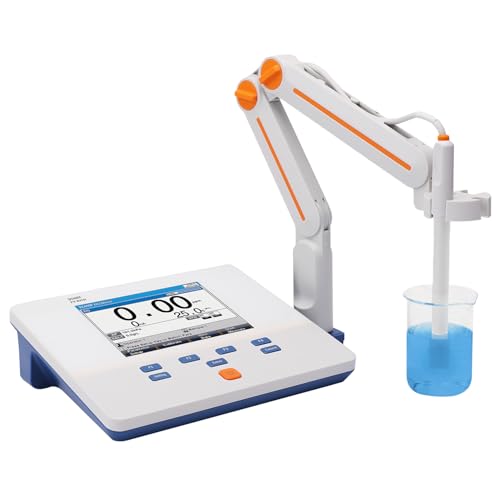
- 0.00-99.99 ppm range with 0.01 ppm resolution
- 5.7-inch LCD with multiple read modes
- 500-set storage with USB/RS-232 output
Best For: Environmental labs and industrial water testing
OUR/SOUR Value Pick
Benchtop DO Meter with TFT Display

- 0.00 to 20.00 mg/L range with 0.01 mg/L resolution
- Supports OUR/SOUR calculations and auto-read
- 7-inch TFT display with 2-point calibration
Best For: Routine lab testing and OUR/SOUR calculations
Low-Maintenance Portable Pick
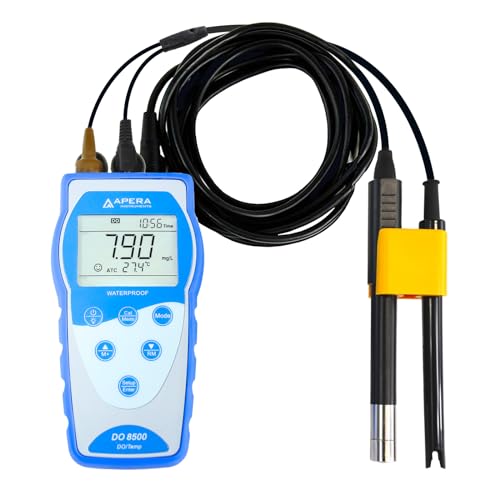
- Optical sensor reduces maintenance needs
- Automatic compensation for salinity, temperature, and air pressure
- 500 groups of storage with USB output
Best For: Portable users who want low-maintenance DO testing
Maintenance-Free Lab Pick

- Fluorescent optical sensing needs no membrane replacement
- Fast, stable detection for continuous monitoring
- 7-inch touchscreen with IP54 protection
Best For: Labs and aquaculture users wanting low-maintenance bench testing
Field-Lab Ready DO Meter
YSI Pro20 Dissolved Oxygen/Temperature Meter

- Quick One Touch Cal in about 3 seconds
- Backlit display with glow-in-the-dark keypad
- IP67 waterproof, impact-resistant build
Best For: Users needing a rugged DO meter for lab and field use
Smart Touchscreen Lab Meter
DO500T Benchtop Dissolved Oxygen Meter
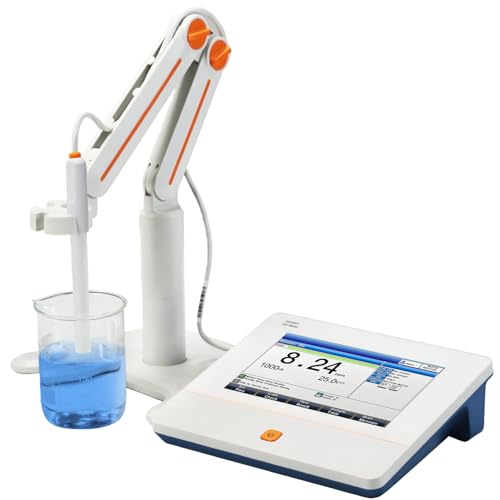
- 0.00-99.99 ppm range with ±0.10 ppm accuracy
- 7.0-inch color touchscreen intelligent OS
- USB/RS-232 data transfer and 1000 data groups
Best For: Labs wanting touchscreen control and strong data management
Multi-Parameter Benchtop Meter

- Optical DO plus pH, conductivity, ORP, and ISE
- Dual inputs and intuitive interface for lab work
- Smart probes store calibration in the probe
Best For: Labs needing one meter for DO and multiple water-quality tests
Portable Starter Pick
Milwaukee MW600 Economy Portable Dissolved Oxygen Meter
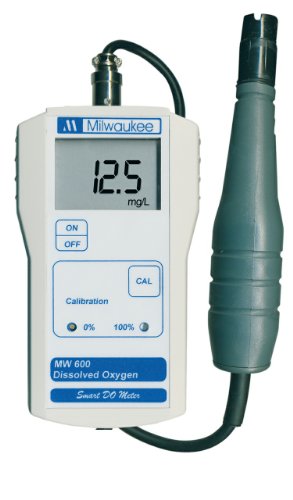
- 0.0 to 19.0 mg/L range with 0.1 mg/L resolution
- Two-point manual calibration and auto temperature compensation
- 3m probe cable for portable water testing
Best For: Educational, aquaculture, and environmental testing
Data-Heavy Lab Choice
Benchtop DO Meter with GLP Storage and USB/RS-232

- Stores 500 GLP-compliant data sets
- USB and RS-232 communication support
- Auto-read, timed-read, and continuous-read modes
Best For: Labs needing storage and connectivity
Precision Lab Upgrade
Benchtop DO Analyzer with Touchscreen and Compensation
- 0 to 20.00 mg/L range with ±0.10 mg/L accuracy
- 7-inch touchscreen and multi-language menu
- 2000-group storage with IP54 dustproof design
Best For: Precision-focused lab and water-quality work
Precision Lab Pick – DO400F Benchtop Dissolved Oxygen Meter
If you need a benchtop dissolved oxygen meter for accurate lab or water-quality work, the DO400F is built around precision and flexibility. It measures from 0.00 to 99.99 ppm with 0.01 ppm resolution, adds automatic and manual temperature compensation, and includes barometric correction to help keep results consistent.
Best For: Environmental labs, industrial water testing, and users who want a highly accurate desktop DO meter with solid data handling.
Pros:
- 0.00-99.99 ppm range with 0.01 ppm resolution and ±0.10 ppm accuracy
- Large 5.7-inch LCD with auto-read, timed-read, and continuous-read modes
- Automatic barometric compensation plus auto/manual temperature compensation
- 500-set storage, USB/RS-232 output, and IP54 waterproof housing
Cons:
- More lab-focused than portable, so it is less suited to field-only use
- Uses a traditional measurement workflow rather than optical sensing
Overall, this is a strong choice if you want a bench instrument that emphasizes measurement control, compensation features, and data management. It fits well in settings where repeatable dissolved oxygen readings matter more than portability.
OUR/SOUR Value Pick – Benchtop DO Meter with TFT Display
This benchtop dissolved oxygen meter is aimed at users who need more than basic DO readings. With a 7-inch TFT display, auto-read locking, and support for OUR/SOUR calculations, it is a practical choice for lab workflows that need dissolved oxygen testing plus simple process calculations.
Best For: Labs and technical users who need a benchtop DO meter for routine measurement, calibration, and OUR/SOUR work.
Pros:
- 0.00 to 20.00 mg/L range with 0.01 mg/L resolution
- 2-point calibration using air-saturated water or zero oxygen solution
- Salinity and barometric pressure compensation to reduce measurement error
- Selectable testing time with beginning/ending DO for OUR/SOUR calculations
Cons:
- No data storage or output features are listed in the supplied notes
- Heavier and more desktop-oriented than portable meters
As a benchtop dissolved oxygen meter, it stands out for calculation support and an easy-to-read display rather than advanced connectivity. That makes it a good fit for routine lab testing where straightforward operation matters.
Low-Maintenance Portable Pick – APERA DO8500 Optical DO Meter
If you want a dissolved oxygen meter that minimizes upkeep, the APERA DO8500 uses an optical sensor instead of a traditional membrane-based setup. It is a portable kit rather than a benchtop dissolved oxygen meter, but it still offers automatic compensation for temperature, air pressure, and salinity, plus easy calibration and data storage.
Best For: Buyers who prioritize low-maintenance optical DO measurement and need a portable kit with data logging.
Pros:
- Optical DO sensor designed for reliable, low-maintenance operation
- Automatic compensation for salinity, temperature, and air pressure
- GLP data management with 500 groups of storage and USB output
- Complete kit includes probe, calibration cap, and carrying case
Cons:
- Not a benchtop dissolved oxygen meter, so it may not suit desktop-only workflows
- Requires AA batteries rather than a fixed bench setup
This model makes sense when maintenance burden is the biggest concern. It is best seen as a portable alternative for users who want dependable dissolved oxygen measurements with less sensor upkeep.
Maintenance-Free Lab Pick – Fluorescent Benchtop DO Meter
This benchtop dissolved oxygen meter is designed for users who want a maintenance-free alternative to traditional probes. Its fluorescent optical technology avoids electrolyte and membrane replacement, while the high-precision bench design, touchscreen interface, and full compensation features make it well suited to repeated water testing.
Best For: Laboratory, aquaculture, and water-monitoring users who want a maintenance-free desktop DO analyzer.
Pros:
- Fluorescent optical technology eliminates membrane and electrolyte replacement
- Fast, stable, high-precision detection for continuous sample monitoring
- Temperature, salinity, and pressure compensation included
- 7-inch color touchscreen with IP54 protection and large data storage
Cons:
- More specialized than basic DO meters, which may be overkill for simple checks
- Focuses on bench use, so it is not meant for portable field sampling
For labs that need less upkeep and steady performance, this is one of the most practical benchtop dissolved oxygen meter options in the group. The maintenance-free sensing approach is its biggest advantage for long-term use.
Field-Lab Ready DO Meter – YSI Pro20 Dissolved Oxygen/Temperature Meter
If you need a benchtop dissolved oxygen meter that can also move into the field, the YSI Pro20 is built for that flexible workflow. It measures dissolved oxygen and temperature, offers a fast One Touch Cal feature, and uses a graphical backlit display with a glow-in-the-dark keypad for easier reading in varied conditions.
Best For: Labs or technicians who want a rugged DO meter that can be used in both lab and field settings.
Pros:
- One Touch Cal calibrates the meter within three seconds
- Graphical, backlit display improves readability
- Glow-in-the-dark keypad helps in low-light use
- IP67 waterproof and impact-resistant construction
Cons:
- Cables and probes are sold separately
- More of a handheld lab/field meter than a true fixed benchtop unit
Overall, this is a practical choice if your dissolved oxygen meter needs to survive regular transport and still deliver quick calibration and clear readings. Its biggest advantage is versatility, while the separate probe requirement means you should plan the full setup before buying.
Smart Touchscreen Lab Meter – DO500T Benchtop Dissolved Oxygen Meter
The DO500T is a benchtop dissolved oxygen meter aimed at streamlined water analysis work. It measures from 0.00 to 99.99 ppm with stated ±0.10 ppm accuracy, and its 7.0-inch color touchscreen OS is designed to manage users, calibration, methods, and data in one place.
Best For: Labs that want a modern touchscreen DO meter with built-in data handling and compensation features.
Pros:
- Wide measurement range up to 99.99 ppm
- 7.0-inch color touchscreen with intelligent OS
- Auto/manual temperature, barometric, and salinity compensation
- Stores 1000 data groups and supports USB/RS-232 transfer
Cons:
- IP54 is suitable for routine lab use, not heavy washdown
- Touchscreen workflow may be more than basic users need
This model stands out if you want a benchtop dissolved oxygen meter with modern interface features and strong data management. It is especially appealing for routine lab environments where calibration reminders, compensation settings, and digital transfer matter.
Multi-Parameter Benchtop Meter – Hach HQ440d Dual Input Meter
If your benchtop dissolved oxygen meter needs to do more than DO alone, the Hach HQ440d is a strong multi-parameter option. It supports optical dissolved oxygen along with pH, conductivity, ORP, and ISE, and its dual-input design is meant to make lab testing more efficient.
Best For: Labs that want a benchtop meter for dissolved oxygen plus several other water-quality parameters.
Pros:
- Supports optical dissolved oxygen plus pH, conductivity, ORP, and ISE
- Dual-input benchtop design improves lab workflow efficiency
- IntelliCAL smart probes store calibration data in the probe
- Bright screen and large font size aid readability
Cons:
- More expensive and capable than a DO-only meter for simple needs
- Includes features beyond dissolved oxygen if you only need one parameter
For labs that need a flexible instrument, this meter offers a broad feature set without sacrificing ease of use. The smart-probe calibration storage and dual inputs make it a polished choice for multi-parameter water analysis.
Portable Starter Pick – Milwaukee MW600 Economy Portable Dissolved Oxygen Meter
If you need a benchtop dissolved oxygen meter alternative that is simple, portable, and practical for basic field or lab checks, the Milwaukee MW600 is built for straightforward dissolved oxygen testing. It offers a 0.0 to 19.0 mg/L range, 0.1 mg/L resolution, and two-point manual calibration, making it a sensible pick for routine water analysis without extra complexity.
Best For: Educational use, aquaculture, water analysis, and environmental testing where portability matters.
Pros:
- Two-point manual calibration helps keep setup simple.
- Automatic temperature compensation from 0 to 30°C supports everyday testing.
- Polarographic probe includes a 3m cable for flexible use.
- Compact portable design is easy to move between work areas.
Cons:
- Not a true benchtop unit, so it lacks the larger workstation style of lab models.
- Manual calibration may be less convenient than fully automatic systems.
- No warranty is listed in the supplied details.
This is a practical, economy-minded dissolved oxygen meter for users who want portability and clear readings over advanced lab automation. It fits well when you want dependable DO measurements for teaching, aquaculture, or environmental work.
Data-Heavy Lab Choice – Benchtop DO Meter with GLP Storage and USB/RS-232
This benchtop dissolved oxygen meter is aimed at users who want a lab-friendly analyzer with data handling and communication features. It supports 500 sets of GLP-compliant data storage, USB or RS-232 communication, and multiple reading modes, making it a strong fit for structured water testing workflows.
Best For: Labs, aquaculture, pools, education, and research teams that need storage and connectivity.
Pros:
- Stores 500 sets of GLP-compliant data.
- Supports USB or RS-232 communication for data transfer.
- Offers auto-read, timed-read, and continuous-read modes.
- IP54 protection helps with dust and splash resistance.
Cons:
- Manual and automatic temperature compensation are helpful, but the product still centers on standard lab workflow rather than advanced automation.
- The supplied notes do not list a measurement range or accuracy.
- The display is large at 5.7 inches, but the overall unit is still designed for bench use rather than portability.
For buyers comparing benchtop dissolved oxygen meter options, this model stands out more for workflow features than raw measurement specs in the supplied details. It is a practical choice when recordkeeping and simple communications matter as much as the reading itself.
Precision Lab Upgrade – Benchtop DO Analyzer with Touchscreen and Compensation
If you want a benchtop dissolved oxygen meter with more lab-style controls, this digital DO water quality analyzer emphasizes precision and compensation features. It measures from 0 to 20.00 mg/L with ±0.10 mg/L accuracy, and it adds automatic temperature compensation along with manual salinity and atmospheric pressure calibration for more adaptable testing.
Best For: Laboratory research, aquaculture monitoring, environmental water checks, and sewage testing.
Pros:
- 0 to 20.00 mg/L range with ±0.10 mg/L accuracy.
- Supports automatic temperature compensation plus manual salinity and pressure calibration.
- 7-inch touchscreen makes data viewing and menu navigation easier.
- Includes 2000-group data storage and IP54 dustproof design.
Cons:
- Manual salinity and atmospheric pressure calibration may take more setup than simpler meters.
- Feature set may be more than needed for basic classroom or occasional testing.
- No communication ports are listed in the supplied notes.
Among benchtop dissolved oxygen meter options, this one is the most feature-rich in the supplied details, especially for users who value touchscreen control and broader compensation tools. It is a strong fit for environments where precision and data capacity matter.
How We Picked These Benchtop Dissolved Oxygen Meters
We prioritized measurement range, stated accuracy, compensation features, display clarity, calibration method, and data handling. For a Benchtop Dissolved Oxygen Meter, those are the features that most directly affect repeatability and day-to-day usability.
We also looked for models that fit different use cases, from straightforward economy units to advanced analyzers with optical sensing, GLP-style recordkeeping, and multi-parameter workflows.
Quick Comparison
In general, the strongest choices for precision-focused labs are the units with automatic temperature, salinity, and barometric pressure compensation, along with digital storage or USB/RS-232 output. If you need a simple bench unit for routine checks, a basic polarographic meter may be enough. If you want lower maintenance, optical or fluorescent sensing is worth a close look.
Key Buying Factors for a Benchtop Dissolved Oxygen Meter
Accuracy and Resolution
Check both the stated accuracy and resolution. High resolution does not always mean high accuracy, but it can help when you need fine measurement steps. Labs doing verification work should lean toward tighter accuracy specs and stable calibration performance.
Compensation Features
Dissolved oxygen readings are affected by temperature, air pressure, and salinity. A good Benchtop Dissolved Oxygen Meter should compensate for these variables automatically or let you input them manually with confidence.
Sensor Type
Polarographic sensors are common and cost-effective, but they may require more upkeep. Optical and fluorescent sensors generally reduce maintenance and can be better for busy labs or field-to-bench workflows.
Workflow and Data Management
Think about how you will record results. Features such as data storage, GLP compliance, and computer connectivity matter if you need traceability, reporting, or recurring testing across multiple samples.
Display and Ease of Use
A clear screen, logical menus, and a stable stand or bench footprint can save time during repetitive testing. Touchscreen models are convenient, but only if the interface remains easy to navigate under lab conditions.
Who Should Buy Which Benchtop Dissolved Oxygen Meter?
Choose a high-precision, feature-rich meter if you need documentation, calibration control, and dependable repeat readings for research, compliance, or QA/QC. Choose an economy model if your testing is routine and budget matters more than advanced data features.
For aquaculture, environmental monitoring, and mixed lab-field use, prioritize compensation features and sensor durability. If low maintenance is the main goal, optical or fluorescent sensing is usually the better long-term fit.