The best light meters for photographers make exposure decisions faster and more consistent, especially when lighting is difficult or a camera’s built-in meter is not enough.
This roundup compares 10 selected meters across incident and reflected readings, flash support, display design, portability, measurement range, and value.
Best 10 Light Meters for Photographers Picks for 2026
Professional Hybrid Meter
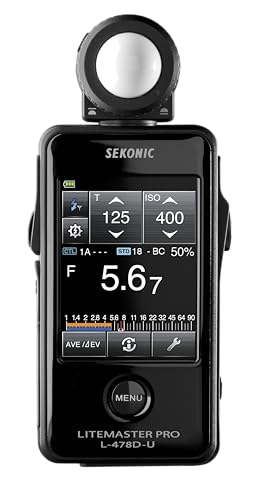
- Touchscreen incident, reflected, ambient, and flash metering
- Cine frame-rate and shutter-angle controls
- Illuminance and luminance measurement modes
Best For: Professional photo, flash, and hybrid video workflows
Compact Film Companion

- 26g body with 30° ambient metering
- Rechargeable battery with over 20 hours of use
- OLED display and depth-of-field calculation
Best For: Portable film-camera and Leica setups
Technical Lux Meter
UNI-T UT383 Digital Illuminance Meter

- Measures up to 199,900 lux or 18,500 foot-candles
- 0.5-second sampling with max, min, and data hold
- Backlit LCD in a compact body
Best For: Checking and comparing lighting intensity
Classic Battery-Free Meter
Sekonic L-398A Studio Deluxe III

- Battery-free amorphous photocell operation
- Analog dial displays aperture and shutter combinations
- Includes multiple light-measurement accessories
Best For: Traditional studio and location metering
Best Wide-Range Meter
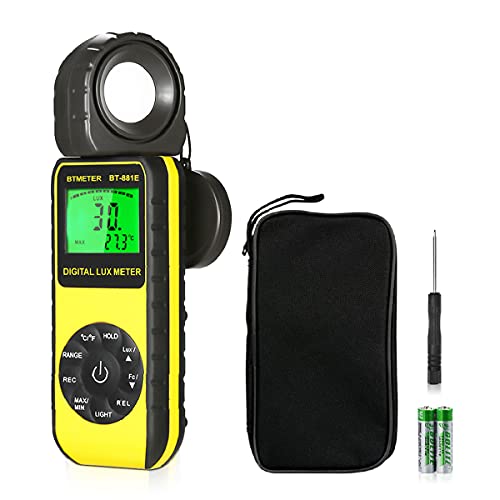
- 0.01–300,000 lux measurement range
- Fast 0.4-second response
- Rotating sensor and 33-reading memory
Best For: General-purpose illuminance checks across studios, homes, plants, and outdoor settings
Best Film-Camera Exposure Meter
LightMate AirPro Exposure Meter

- 35-degree reflective metering angle
- Aperture, shutter, manual, and EV modes
- Rechargeable battery with 20+ hours of use
Best For: Film photographers using Leica and other cameras who want direct exposure controls
Best Simple Rotating-Sensor Meter

- Measures up to 200,000 lux
- 360-degree rotating sensor
- MIN/MAX, hold, and auto-ranging functions
Best For: Straightforward visible-light checks in studios, homes, offices, and schools
Fast Flicker-Ready Meter
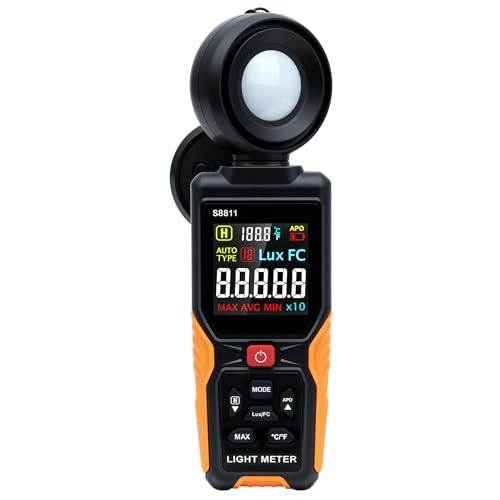
- 8X/s sampling for changing or flickering light
- 270° sensor rotation with an HD color screen
- 0–200,000 lux range with recording functions
Best For: Dynamic LED scenes and awkward shooting positions
Simple Wide-Range Pick
200,000-Lux Digital Illuminance Meter

- Measures up to 200,000 lux with auto-ranging
- Reads lux and FC with hold and Max/Min functions
- Backlit large display and batteries included
Best For: General indoor and outdoor brightness checks
Budget Everyday Option
Backlit 200,000-Lux Light Meter

- 0–200,000 lux range with stated accuracy
- Backlit LCD, hold, and Max/Min readings
- Up to 2X/s sampling with auto shutoff
Best For: Routine photography and indoor brightness checks
Professional Hybrid Meter – LiteMaster Pro L-478D-U
For photographers seeking versatile light meters for photographers, the Sekonic LiteMaster Pro L-478D-U combines touchscreen operation with incident, reflected, ambient, and flash measurement. Its cine controls and technical illuminance and luminance modes also make it suitable for hybrid photo and motion workflows.
Best For: Professional photographers, studio users, and hybrid creators who need advanced exposure and flash analysis.
Pros:
- Measures incident ambient and flash light with flash analysis.
- Touchscreen color display supports fast navigation and clear readings.
- Includes cine frame-rate and shutter-angle controls.
- Offers illuminance and luminance measurement modes.
Cons:
- Advanced features may be more than casual photographers need.
- Optional 5° reflected spot capability requires an additional attachment.
This is the most feature-rich option in the roundup, particularly for photographers balancing flash, ambient light, and video exposure. It uses two included AAA batteries and weighs 8 ounces.
Compact Film Companion – LightMate Lite 2R
The LightMate Lite 2R is a highly portable choice among light meters for photographers, especially for film-camera users. Its 30° metering field, OLED screen, rechargeable battery, and flexible mounting position provide practical exposure assistance without adding much weight.
Best For: Film photographers and Leica users who want a small, rechargeable meter with useful exposure aids.
Pros:
- Ultra-compact 26g design with a large 0.96-inch OLED screen.
- Rechargeable battery provides more than 20 hours of use.
- Supports aperture-priority, shutter-priority, trigger, and average metering.
- Includes exposure compensation, ND compensation, and depth-of-field calculation.
Cons:
- Its 30° field of view is less selective than a dedicated spot meter.
- Its feature set is focused on ambient exposure rather than flash analysis.
With USB-C charging, screen flipping, adjustable brightness, and a movable cold-shoe position, the Lite 2R is designed for photographers who prioritize portability and everyday film-camera compatibility.
Technical Lux Meter – UNI-T UT383 Digital Illuminance Meter
The UNI-T UT383 takes a straightforward approach to light meters for photographers, measuring illuminance in lux or foot-candles rather than calculating camera exposure settings. Its broad range, quick sampling, and compact body make it useful for checking studio, household, office, or location lighting.
Best For: Photographers who need an affordable illuminance meter for evaluating lighting levels across different environments.
Pros:
- Measures from 0 to 199,900 lux or 0 to 18,500 foot-candles.
- Provides 0.5-second sampling with maximum, minimum, and data-hold functions.
- Compact design includes a backlit four-digit LCD.
- Supports overload indication, low-battery alerts, and auto shutdown.
Cons:
- Reports illuminance rather than direct camera exposure settings.
- It is less specialized for incident or flash photography than dedicated photographic meters.
The UT383 is a practical measurement tool when your goal is to compare or document light intensity. Its stated accuracy is ±(4%+8), and it is suitable for photography, studios, offices, and other lighting checks.
Classic Battery-Free Meter – Sekonic L-398A Studio Deluxe III
The Sekonic L-398A Studio Deluxe III offers a tactile alternative to digital light meters for photographers. Its battery-free photocell, incident and reflected capability, swivel head, and full analog dial make it a durable option for photographers and cinematographers who prefer direct, screen-free operation.
Best For: Photographers and cinematographers who value battery-free operation and a traditional analog exposure workflow.
Pros:
- Amorphous photocell operates without batteries.
- Full dial shows aperture and shutter-speed combinations at a glance.
- Swivel head helps position the incident dome during setups.
- Includes lumisphere, lumidisc, lumigrid, high slide, strap, case, and manual.
Cons:
- Analog operation may feel less immediate to users accustomed to digital displays.
- At 11.2 ounces, it is heavier than the compact LightMate option.
The L-398A suits photographers who want a dependable, menu-free meter for studio and field use. Its included accessories expand its incident and reflected-light applications, while the dial provides a clear view of exposure combinations.
Best Wide-Range Meter – BTMETER 881E Luxmeter
For photographers comparing light meters for photographers, the BTMETER 881E is a practical handheld option for checking ambient brightness across a very broad range. Its quick response, rotating sensor, and memory functions make it useful when you need repeatable illuminance readings rather than camera exposure calculations.
Best For: Photographers who also need a general-purpose lux meter for studios, rooms, plants, LEDs, or outdoor light checks.
Pros:
- Measures from 0.01 to 300,000 lux, with foot-candle readings available.
- Provides readings in about 0.4 seconds with 2–3 samples per second.
- 270-degree rotating sensor helps with awkward measuring angles.
- Stores 33 readings and includes a relative measuring mode.
Cons:
- It is an illuminance meter, not a dedicated photographic exposure meter with aperture and shutter controls.
- Its broad measurement range may be more functionality than casual users need.
The 881E stands out when versatility and range matter most. Choose it for measuring actual light levels in varied environments, but look to a dedicated exposure meter if your workflow centers on direct camera settings.
Best Film-Camera Exposure Meter – LightMate AirPro Exposure Meter
Among light meters for photographers, the LightMate AirPro is the most camera-oriented choice in this lineup. It combines a 35-degree reflective metering angle with exposure controls for aperture, shutter speed, ISO, and EV, making it suited to photographers who want a compact meter for Leica and other film cameras.
Best For: Film photographers who want a tactile, rechargeable exposure meter with manual and automatic shooting modes.
Pros:
- Offers 35-degree wide-angle reflective metering with claimed accuracy of ±0.1 EV.
- Supports ISO 1–3200, shutter speeds from 60 seconds to 1/2000s, and apertures from F1 to F28.
- Includes aperture-priority, shutter-priority, manual, and EV modes.
- Metal body, USB-C charging, and more than 20 hours of battery life.
Cons:
- Its feature set is focused on photographic exposure rather than general lux measurement.
- The compact control layout may require learning the multiple dials and indicator options.
The AirPro is the clearest fit for photographers who need exposure guidance at the camera rather than a general brightness tester. Its tactile dials and broad exposure range should appeal especially to film users who value hands-on control.
Best Simple Rotating-Sensor Meter – DANOPLUS Digital Lux Meter
For photographers seeking light meters for photographers that are straightforward to operate, this DANOPLUS handheld lux meter offers automatic range selection and a clearly specified 4-digit display. Its separate 360-degree rotating sensor makes it easier to position the detector toward the light source.
Best For: Photographers and home users who need uncomplicated visible-light measurements in offices, studios, schools, or other indoor spaces.
Pros:
- Measures across four ranges up to 200,000 lux and supports foot-candle units.
- 360-degree rotating sensor can be positioned independently of the display.
- Includes MIN/MAX, data hold, auto-ranging, and low-battery indication.
- Uses a 400–700 nm visible-light spectral range.
Cons:
- It is designed for illuminance measurement rather than direct aperture and shutter recommendations.
- Requires two AAA batteries.
The DANOPLUS is a sensible choice when you want a compact, easy-to-read meter for comparing brightness levels. Its rotating sensor and useful hold and MIN/MAX functions add flexibility without the more specialized controls of a photographic exposure meter.
Fast Flicker-Ready Meter – HD Rotatable Light Meter
For photographers comparing light meters for photographers, the Mcbazel S8811 stands out when quick readings and flexible positioning matter. It samples up to eight times per second, measures up to 200,000 lux, and uses a 270° right-side rotating sensor to help you aim at the light while keeping the display visible.
Best For: Photographers working with changing light, LED sources, or awkward shooting positions.
Pros:
- Fast 8X/s sampling can help capture flickering or changing light.
- 270° rotatable sensor and HD color screen improve viewing flexibility.
- Wide 0–200,000 lux range with data hold, Max/Min/Avg recording, and unit switching.
- Light-source correction coefficients support white, red, and warm LEDs.
Cons:
- Requires three AAA batteries, which are not included.
- Accuracy varies by light source, with the stated ±6% + 5 lux under other visible sources including LED.
- The sensor rotates right-side only.
This is the most feature-rich option in the group for dynamic environments. Its fast sampling and adjustable sensor are particularly useful when a standard meter feels slow or difficult to position.
Simple Wide-Range Pick – 200,000-Lux Digital Illuminance Meter
If you want a straightforward tool among light meters for photographers, this digital illuminance meter covers a broad brightness range while keeping the controls practical. It measures up to 200,000 lux, automatically changes ranges, and supports both lux and foot-candle readings for indoor or outdoor brightness checks.
Best For: Photographers and general users who want a simple, wide-range meter with included batteries.
Pros:
- Measures brightness up to 200,000 lux with automatic range conversion.
- Supports lux and FC units, plus data hold and maximum/minimum readings.
- Large display and backlight aid visibility in different conditions.
- Three AAA batteries are included.
Cons:
- The supplied notes do not specify measurement accuracy.
- Its sampling speed is not stated, so the notes do not establish how it compares in rapidly changing light.
- Auto power-off is included, but the notes do not state whether it can be disabled.
This model is a sensible general-purpose choice when you value a large display, broad range, and basic recording functions over specialized positioning or documented fast sampling.
Budget Everyday Option – Backlit 200,000-Lux Light Meter
For photographers seeking practical light meters for photographers without extra complexity, this Mcbazel meter offers a 200,000-lux range, a backlit LCD, and readings in lux or foot-candles. Its stated accuracy varies by range, and the meter samples up to twice per second for routine brightness checks.
Best For: Everyday photography, indoor measurement, and grow-light or garden brightness checks.
Pros:
- Wide measuring range up to 200,000 lux.
- Stated accuracy of ±3% + 10 digits below 10,000 lux and ±4% + 10 digits above it.
- Backlight, data hold, and maximum/minimum readings support practical use.
- Low-battery indicator and automatic shutoff help with battery management.
Cons:
- Requires three AAA batteries, which are not included.
- Sampling is up to two times per second, slower than the S8811 in this roundup.
- Below approximately 2 lux, it displays 0 by default.
This is a capable everyday meter for users who want clear basic readings and useful hold and limit functions. Keep its approximately 2-lux identification threshold in mind when measuring very dim scenes.
How We Picked the Best Light Meters for Photographers
We grouped these models by the jobs photographers are most likely to ask them to perform: handheld exposure metering, incident-light readings, reflected-light measurement, studio and flash work, and general illuminance testing. We also considered measurement range, sensor design, display readability, controls, power requirements, portability, and whether a meter is intended for photographic exposure or broader lighting diagnostics.
Not every lux meter is a true camera exposure meter. Products marketed primarily as illuminance meters can be useful for evaluating rooms, continuous lights, and set brightness, but they may not provide the aperture, shutter-speed, ISO, incident, or flash functions that dedicated photography meters offer.
Quick Comparison
| Best For | Look For | Strongest Match |
|---|---|---|
| Advanced stills and flash | Incident/reflected modes, flash analysis, touchscreen controls | Sekonic L-478D-U |
| Traditional film workflows | Simple controls, incident/reflected readings, no battery dependence | Sekonic L-398A |
| Compact handheld metering | Small size, clear display, photographic exposure readouts | LightMate Lite 2R |
| Retro-style digital operation | Physical dials, reflective readings, rechargeable battery | LightMate AirPro |
| General brightness measurement | Lux range, rotating sensor, readable LCD or OLED | UNI-T, BTMETER, and Mcbazel models |
Key Buying Factors for Light Meters for Photographers
Incident Versus Reflected Metering
Incident meters measure the light falling on the subject and can produce consistent results across different subject colors and tones. Reflected meters measure light bouncing from the scene and are useful when you cannot stand beside the subject. A versatile photography meter may offer both.
Flash and Cine Features
For studio photographers, flash measurement can save time when balancing multiple lights. Video and cinema users should check for frame-rate and shutter-angle support. These features add value only if they match your workflow, so avoid paying for them if you mainly shoot casual stills.
Range, Accuracy, and Readability
Check the stated lux or exposure range, low-light performance, sampling speed, and display visibility. A backlit OLED or color screen helps in dark studios, while large LCD digits are useful outdoors. A wide measurement range is helpful, but it does not replace photographic exposure modes.
Size, Power, and Controls
Compact meters are easier to carry with a film camera or light stand. Rechargeable models reduce battery costs, while the battery-free Sekonic design suits photographers who value simplicity and long-term reliability. Physical dials offer immediate adjustment; touchscreens provide more options but may require more menu navigation.
Who Should Buy Which Light Meters for Photographers?
- Choose the Sekonic L-478D-U if you need a premium all-purpose meter for incident, reflected, flash, or cine work.
- Choose the Sekonic L-398A if you prefer an analog, battery-free tool for film, portrait, or studio photography.
- Choose the LightMate Lite 2R or AirPro if portability and dedicated photographic controls matter more than advanced flash features.
- Choose a UNI-T, BTMETER, or Mcbazel illuminance meter if your priority is measuring ambient brightness in lux rather than calculating camera exposure.
- Choose a rotating-sensor model when you need flexible positioning for room, product, or lighting inspections.
Before buying, confirm that the meter supports your camera format and shooting method. For serious exposure control, prioritize incident or reflected photography modes; for lighting audits, set design, or general brightness checks, a high-range lux meter may be the more practical choice.