Fast, dependable card readers can significantly reduce the time it takes to move photos, video, and other large files from removable media. The right model also needs to match your card format, host port, and workflow.
We selected 10 high-speed memory card readers spanning compact dual-slot adapters, USB-C hubs, UHS-II models, and multi-format readers. Use the guide below to narrow the choices by speed, compatibility, portability, and value.
Best 10 High Speed Memory Card Readers Picks for 2026
Fast USB-C Pick
Lexar Dual-Slot SD/microSD Reader
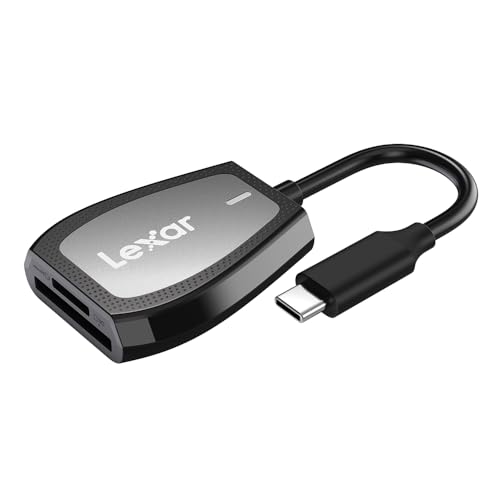
- Read speeds up to 312MB/s
- Dual SD and microSD slots
- USB-C design with LED indicator
Best For: USB-C computers and fast card transfers
USB-A Workhorse

- USB 3.0 speeds up to 5Gbps
- Simultaneous two-card reading and writing
- Broad SD and microSD compatibility
Best For: USB-A laptops, desktops, and card-heavy workflows
UHS-II Speed Choice

- Supports UHS-II SD and microSD cards
- Advertised speeds up to 312MB/s
- Simultaneous two-card transfers
Best For: UHS-II media and USB-C creator workflows
Most Versatile Setup

- SD, microSD, and USB 3.0 ports
- Transfer rates up to 5Gbps
- Aluminum shell with portable cable
Best For: USB-C users needing card slots plus an extra USB port
Versatile 4-Slot Pick
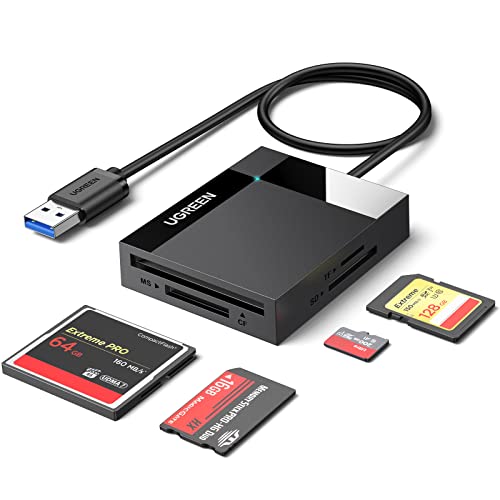
- Reads and writes four cards simultaneously
- Supports SD, microSD, CF, and MS formats
- USB 3.0 transfer rates up to 5Gbps
Best For: Photographers and users managing multiple card formats
Compact USB-C Choice

- USB-C 3.0 transfers up to 5Gbps
- Reads and writes SD and microSD cards together
- Aluminum body with compact travel-friendly design
Best For: USB-C laptops, tablets, and smartphones
Most Format Support

- Seven slots cover major card formats
- Reads and writes up to five cards simultaneously
- USB-A and USB-C connectors included
Best For: Mixed card collections and multi-device setups
Best with Extra Features
Anker PowerExpand Dual-Slot Reader
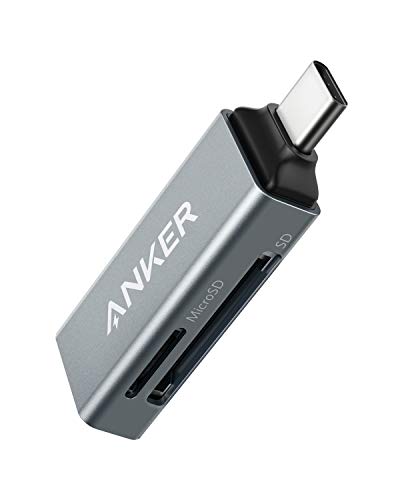
- 5Gbps listed transfer rate
- SD and microSD slots
- Compact 9g design
Best For: USB-C users needing a portable SD and microSD reader
Format Flexibility Pick

- Four card slots
- USB-C plus USB adapter
- Plug-and-play compatibility
Best For: Multi-format card users switching between modern and older devices
Dual-Interface Speed Pick

- 5Gbps listed transfer rate
- Simultaneous SD and microSD access
- USB-C and USB-A headers
Best For: Creators transferring camera files between USB-C and USB-A devices
Fast USB-C Pick – Lexar Dual-Slot SD/microSD Reader
The Lexar Dual-Slot SD/microSD Reader is a strong choice among high speed memory card readers for USB-C computers. It offers advertised read speeds up to 312MB/s, supports two card formats, and includes an activity light for quick status checks.
Best For: USB-C laptop and desktop users who want fast SD and microSD transfers in a compact reader.
Pros:
- Advertised read speeds up to 312MB/s.
- Dual SD and microSD slots support convenient card access.
- USB 3.2 Gen 1 Type-C connectivity, LED activity light, and USB 2.0 compatibility.
- Includes a two-year limited warranty.
Cons:
- Designed for USB-C connectivity, so users with only USB-A ports may need an adapter.
- The 312MB/s figure applies to supported cards and system conditions; UHS-I cards are listed up to 170MB/s.
Choose this Lexar model if you want a compact, USB-C-focused reader with a high advertised speed ceiling and straightforward dual-slot access.
USB-A Workhorse – Anker 2-in-1 SD Card Reader
The Anker 2-in-1 SD Card Reader is a practical option among high speed memory card readers for USB-A laptops, desktops, and compatible mobile devices. Its USB 3.0 interface supports transfer rates up to 5Gbps, while the dual-slot design can read and write two cards simultaneously.
Best For: USB-A users who need broad card compatibility and convenient two-card transfers.
Pros:
- USB 3.0 supports transfer rates up to 5Gbps and works with USB 2.0 and 1.1.
- Can read and write two cards simultaneously.
- Supports SD, microSD, SDHC, SDXC, UHS-I, and several additional card formats.
- Plug-and-play operation requires no extra power supply or drivers on supported systems.
Cons:
- Uses USB Type-A rather than USB-C.
- Its listed card support does not include UHS-II.
This Anker reader suits users who value broad compatibility and a dependable USB-A connection more than the newest USB-C interface.
UHS-II Speed Choice – UGREEN USB-C SD 4.0 Reader
The UGREEN USB-C SD 4.0 Card Reader is built for users comparing high speed memory card readers that support UHS-II media. Its two UHS-II slots handle SD and microSD cards, with advertised transfer speeds up to 312MB/s and simultaneous two-card read and write support.
Best For: Photographers, videographers, and mobile creators using UHS-II SD or microSD cards with USB-C devices.
Pros:
- Supports SD 4.0 UHS-II cards with advertised speeds up to 312MB/s.
- Provides dedicated UHS-II SD and TF/microSD slots.
- Can read and write two cards simultaneously.
- Aluminum housing and braided cable add durability, with a 24-month warranty service.
Cons:
- Requires a compatible USB-C device; Android phones also need OTG support.
- Actual speeds depend on the cards and connected device.
For creators with UHS-II cards, this UGREEN model offers the most specialized speed-focused feature set in this group, along with flexible device compatibility.
Most Versatile Setup – Acer 3-in-1 USB-C Card Reader
The Acer 3-in-1 Card Reader combines SD and microSD slots with an extra USB 3.0 port, making it a flexible option among high speed memory card readers. It supports transfer rates up to 5Gbps, uses a USB-C connection, and has an aluminum shell for portable use.
Best For: USB-C laptop, tablet, and smartphone users who also need a USB-A accessory port.
Pros:
- Three-in-one design includes SD, microSD, and USB 3.0 ports.
- Supports transfer rates up to 5Gbps.
- Works with SD, microSD, SDHC, SDXC, and UHS-I cards across several operating systems.
- Compact aluminum housing and a 15cm cable suit travel and mobile work.
Cons:
- Does not support UHS-II, CF, MS, SDUC, UFS, XQD, or several other listed formats.
- Not compatible with Lightning or USB-A host devices.
- Thick device cases may prevent full insertion.
The Acer is a practical choice when you want more than a basic card reader, especially if an extra USB-A port is useful alongside SD and microSD access.
Versatile 4-Slot Pick – UGREEN 4-Card USB 3.0 Reader
For photographers and other users handling several card formats, this UGREEN model is a practical choice among high speed memory card readers. Its USB 3.0 connection is rated for transfers up to 5Gbps, and it can read and write four different cards simultaneously.
Best For: Photographers, frequent card transfers, and users who need SD, microSD, CF, and MS support in one compact reader.
Pros:
- Supports SD, microSD, CompactFlash, and Memory Stick formats.
- Reads and writes four cards at the same time.
- USB 3.0 offers transmission speeds up to 5Gbps.
- Plug-and-play compatibility with Windows, macOS, Linux, and ChromeOS.
Cons:
- Uses a USB connection rather than USB-C.
- Its four-slot design is larger than a basic single-card reader.
Choose this reader if broad format support and simultaneous card access matter more than having the smallest possible adapter. The 1.7-foot cable and compact body also make it suitable for mobile work.
Compact USB-C Choice – Acer Dual-Slot SD Card Reader
This Acer reader is a compact option for USB-C laptops, tablets, and phones. It supports SD and microSD cards, offers two-card read/write capability, and uses a 5Gbps USB-C 3.0 interface for fast, stable transfers.
Best For: USB-C device owners who transfer files from SD and microSD cards while traveling or working remotely.
Pros:
- Reads and writes two cards simultaneously.
- Supports SD, SDHC, SDXC, microSD, microSDHC, and microSDXC cards.
- USB-C 3.0 connectivity is rated for transfers up to 5Gbps.
- Aluminum housing helps dissipate heat during extended transfers.
Cons:
- Does not support USB-A or Lightning devices.
- Not compatible with CF, MS, XQD, SSD, V90, UHS-II, or several other card types.
- Thick device cases may obstruct full insertion.
The Acer is a focused, travel-friendly pick rather than a universal reader. Its dual slots and USB-C design work well for SD and microSD workflows, provided your device supports USB-C and OTG where required.
Most Format Support – Rocketek 7-in-1 Card Reader
When your memory-card collection includes more than SD and microSD, this Rocketek adapter offers unusually broad coverage. It combines USB-A and USB-C connectors, seven card slots, and up to 5Gbps USB 3.0 transfer speeds.
Best For: Users with mixed card collections, including CF, XD, MS, SD, and microSD formats, who want one reader for multiple devices.
Pros:
- Seven-slot design supports CF, SD, microSD, XD, MS, and related formats.
- Can read and write up to five cards simultaneously.
- Includes both USB-A and USB-C connectivity.
- Compatible with Windows, macOS, Linux, ChromeOS, and Android.
Cons:
- Its multi-slot design may be more than needed for a single-card workflow.
- The supplied notes do not specify a cable length or dimensions.
This is the strongest fit when compatibility is the priority. The dual-connector design improves device flexibility, while simultaneous multi-card access can streamline organizing or transferring files from several sources.
Best with Extra Features – Anker PowerExpand Dual-Slot Reader
If you want a compact option among high speed memory card readers, the Anker PowerExpand provides USB-C connectivity and a 5Gbps listed transfer rate. Its SD and microSD slots make it practical for moving photos, videos, and other files between compatible devices.
Best For: USB-C phone, tablet, and laptop users who mainly work with SD and microSD cards.
Pros:
- Supports a listed 5Gbps data transfer rate.
- Includes separate SD and microSD slots.
- Compact 9-gram design with an 18-month warranty.
- Compatible with a range of USB-C devices and operating systems.
Cons:
- Only offers two card slots.
- Thick device cases may need to be removed for connection.
This is a straightforward choice when portability and USB-C compatibility matter more than support for legacy card formats. Its dual-slot layout covers common SD and microSD workflows without adding much bulk.
Format Flexibility Pick – 4-in-1 USB-C Card Reader
For shoppers comparing high speed memory card readers with broad format support, this 4-in-1 model accepts CF, SD, TF, and MS cards. It includes USB-C connectivity plus a detachable USB adapter, although its listed transfer rate is 480Mbps.
Best For: Users who regularly move files from several card formats across USB-C and USB-A devices.
Pros:
- Four slots support CF, SD, microSD/TF, and Memory Stick formats.
- Dual-connector design works with USB-C and USB devices.
- Plug-and-play operation across Windows, macOS, Android, and iOS.
- Supports common photo and video formats, including JPEG, RAW, H.264, and MPEG-4.
Cons:
- Its listed 480Mbps transfer rate is lower than the 5Gbps rating of the other readers here.
- It does not support Wi-Fi SD cards.
This reader prioritizes versatility over top listed speed. Choose it when CF or Memory Stick support and cross-platform connectivity are more important than maximum transfer throughput.
Dual-Interface Speed Pick – Acer USB-C/USB-A Reader
The Acer ODK4E0 is a practical pick among high speed memory card readers for photographers and creators who use both USB-C and USB-A equipment. It offers a listed 5Gbps transfer rate, dual SD and microSD slots, and simultaneous reading and writing.
Best For: Camera, GoPro, security-camera, and wildlife-monitor users who need fast transfers across USB-C and USB-A devices.
Pros:
- Offers a listed 5Gbps USB 3.0 transfer rate.
- Supports simultaneous reading and writing from SD and microSD cards.
- Dual USB-C and USB-A headers improve device compatibility.
- Compact aluminum design includes protective port covers and an attached cord.
Cons:
- Does not support CFexpress, SIM, XQD, MS, or Memory Stick cards.
- Not compatible with Lightning-port devices.
- Thick cases may prevent full insertion.
This is the strongest fit for users who value speed and flexible computer connections. Its limitations are mainly card-format and port related, so verify your device and media before buying.
How We Picked the Best High Speed Memory Card Readers
We focused on readers that offer useful combinations of transfer speed, card-format support, modern host connectivity, and practical design. The selection includes USB-C and USB-A options, dual-slot readers for SD and microSD cards, UHS-II-compatible models, and multi-card hubs for older or less common formats.
Advertised speeds are theoretical maximums. Actual performance depends on the card, computer or mobile device, cable, file sizes, and the reader’s controller. We therefore considered versatility and compatibility alongside headline bandwidth.
Quick Comparison
| Best For | Reader Type | What to Look For |
|---|---|---|
| Everyday camera transfers | Dual-slot SD/microSD | USB 3.x and simultaneous card support |
| Professional video and photography | UHS-II reader | UHS-II support and a high-speed USB-C connection |
| Older cameras and mixed media | Multi-format hub | CF, MS, xD, MMC, SD, and microSD compatibility |
| Phones and tablets | USB-C adapter | Device compatibility, power requirements, and compact size |
Key Buying Factors for High-Speed Memory Card Readers
Card and Bus Compatibility
Check both the card type and speed class. A UHS-II SD card needs a reader with UHS-II contacts to reach its potential; a basic SD reader may still work but at lower speeds. Also verify whether you need microSD, CF, CompactFlash, Memory Stick, xD, or other legacy formats.
Connection and Real-World Speed
USB-C is convenient for newer laptops, tablets, phones, and cameras, while USB-A remains useful with older computers. USB 3.0 or faster is preferable for large files, but the slowest component in the chain sets the practical limit. For frequent 4K video or RAW photo transfers, prioritize a reader with a clearly stated high-speed interface.
Slot Behavior and Build
Some readers support two cards at once, while others allow only one active slot or are designed to copy between media. Look for clear status indicators, a secure fit, strain relief, and a cable or connector that will not put excessive pressure on your device’s port.
Operating-System and Mobile Support
Windows and macOS support is common, but mobile use can depend on the phone, tablet, file-management app, and available power. If you plan to use a reader with an iPhone, iPad, Android device, or USB-C hub, confirm compatibility before buying.
Who Should Buy Which High Speed Memory Card Readers?
Choose a compact dual-slot USB-C reader if you mainly transfer SD and microSD cards and want a portable everyday tool. Pick a UHS-II model if you use fast professional cards and regularly move large photo or video files. A multi-format hub is the better choice for photographers, technicians, or studios handling older cameras and several media standards. For occasional transfers on a legacy computer, a USB-A reader may offer the simplest compatibility. Finally, mobile creators should favor a small USB-C model with confirmed support for their phone or tablet and enough throughput for their largest files.