Compact network switches make it easy to add wired connections without taking up valuable desk or shelf space. They are useful for home offices, media centers, gaming setups, and small businesses that need dependable Ethernet connectivity.
This roundup compares 10 compact models, including simple unmanaged switches, smart managed options, and a multi-gigabit choice for faster local-network performance.
Best 10 Compact Network Switches Picks for 2026
Best Compact Starter Switch
TP-Link TL-SG105 5-Port Gigabit Switch
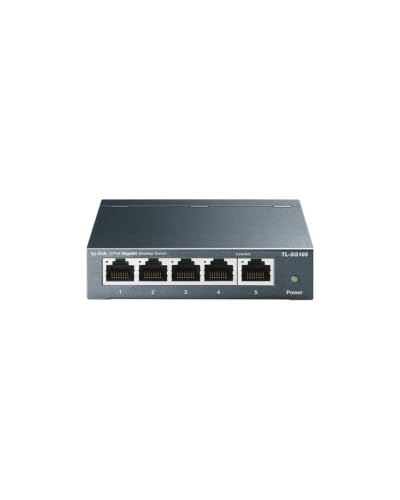
- Five auto-negotiating gigabit ports
- Fanless metal housing
- Plug-and-play setup with QoS
Best For: Quiet, simple wired network expansion
Best Compact Smart Switch
NETGEAR GS305E 5-Port Easy Smart Switch

- Five 1 Gbps Ethernet ports
- VLAN, QoS, and port monitoring
- Silent desktop or wall-mount design
Best For: Small networks needing basic management
Best Compact Multi-Gig Switch
TP-Link TL-SG108S-M2 2.5G Switch

- Eight 2.5G Ethernet ports
- Up to 40 Gbps switching capacity
- Silent, plug-and-play operation
Best For: Multi-gig home, gaming, and workstation networks
Best Compact Managed Backbone
NETGEAR GS308E 8-Port Gigabit Switch

- Eight auto-negotiating gigabit ports
- Up to 64 VLANs plus QoS
- Fanless metal housing with protections
Best For: Managed home and small-business gigabit networks
Best Tiny Plug-and-Play Pick

- Five auto-negotiating Gigabit ports
- Fanless, energy-efficient operation
- Very small and lightweight plastic design
Best For: Simple home and small-office wired network expansion
Best Managed Compact Option
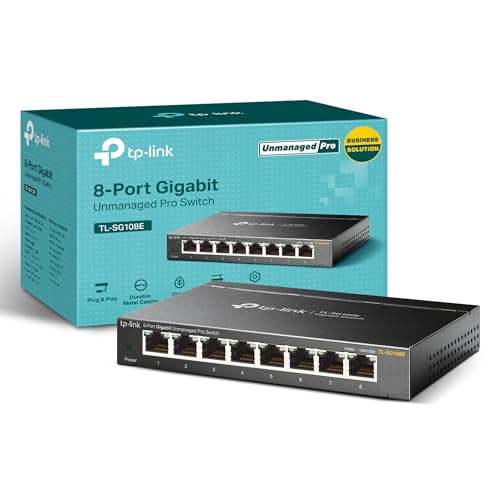
- Eight Gigabit Ethernet ports
- VLAN, QoS, monitoring, and IGMP features
- Metal desktop or wall-mount design
Best For: Small networks needing configurable traffic management
Best Metal Unmanaged Pick

- Five auto-negotiating 1Gbps ports
- Fanless and energy-efficient operation
- Compact metal case with mounting flexibility
Best For: Quiet, simple wired connectivity for homes and offices
Best Compact Plug-and-Play Pick

- Five automatic 10/100/1000 Mbps ports
- Fanless and suitable for desktop or wall mounting
- Plug-and-play design; non-PoE
Best For: Simple home and small-office network expansion
Best Feature-Rich 5-Port Option

- Five auto-negotiating Gigabit ports
- QoS and IGMP snooping for media traffic
- Fanless metal housing with desktop or wall mounting
Best For: Gaming, media streaming, and small office networks
Best for More Wired Devices
TP-Link TL-SG108 8-Port Switch

- Eight 10/100/1000 Mbps Gigabit ports
- Quiet fanless metal construction
- Plug-and-play with automatic power adjustment
Best For: Larger home offices and multi-device setups
Best Compact Starter Switch – TP-Link TL-SG105 5-Port Gigabit Switch
The TP-Link TL-SG105 is a straightforward choice for compact network switches when you need to add wired connections without configuring software. Its five gigabit ports, fanless metal housing, and desktop or wall-mount design suit small home and office networks.
Best For: Quiet, plug-and-play gigabit expansion for homes, workspaces, and small setups.
Pros:
- Five 10/100/1000 Mbps ports support auto-negotiation and Auto MDI/MDIX.
- Fanless metal design provides quiet operation and flexible placement.
- Includes traffic-prioritization features such as 802.1p/DSCP QoS and IGMP Snooping.
Cons:
- Unmanaged design does not provide the VLAN and monitoring controls of a smart switch.
- Five ports may be limiting for larger wired installations.
The TL-SG105 is a practical value pick when simplicity matters more than advanced management. Its durable enclosure and quiet operation make it especially easy to place near a desk, media setup, or small network cabinet.
Best Compact Smart Switch – NETGEAR GS305E 5-Port Easy Smart Switch
The NETGEAR GS305E adds basic network management to the compact network switches category. Its five gigabit ports and Easy Smart interface let small businesses configure VLANs, prioritize traffic, monitor ports, and manage network security.
Best For: Small offices and home networks that need manageable traffic and segmentation controls.
Pros:
- Five 1 Gbps auto-negotiating Ethernet ports support existing Cat5e or Cat6 cables.
- Easy Smart features include VLAN configuration, QoS, port monitoring, and security management.
- Fanless metal design supports silent desktop or wall-mounted operation.
Cons:
- It is intended for use in the U.S. and Canada only.
- Five ports provide less expansion room than eight-port alternatives.
Choose the GS305E when a basic unmanaged switch is too limited but a full enterprise platform would be excessive. It provides useful controls in a small, quiet enclosure while retaining simple gigabit connectivity.
Best Compact Multi-Gig Switch – TP-Link TL-SG108S-M2 2.5G Switch
The TP-Link TL-SG108S-M2 stands out among compact network switches for its eight 2.5-gigabit ports. Auto-negotiation supports 100 Mbps, 1 Gbps, and 2.5 Gbps connections, making it a useful upgrade for Wi-Fi 6 access points, NAS devices, workstations, and gaming systems.
Best For: Multi-gig home networks, workstations, gaming setups, and high-speed storage connections.
Pros:
- Eight 2.5G ports provide up to 40 Gbps of switching capacity.
- Three-speed auto-negotiation supports 100 Mbps, 1 Gbps, and 2.5 Gbps devices.
- Fanless operation, plug-and-play setup, and desktop or wall-mount flexibility.
Cons:
- It is unmanaged, so it lacks VLAN and advanced traffic-management controls.
- The larger eight-port enclosure occupies more space than five-port models.
This is the strongest performance-oriented option in the group for users with multi-gig hardware. It can deliver 2.5 Gbps over existing Cat5e wiring, helping upgrade network speed without immediately replacing cabling.
Best Compact Managed Backbone – NETGEAR GS308E 8-Port Gigabit Switch
The NETGEAR GS308E is designed for buyers who want eight gigabit ports plus practical management features. Among compact network switches, it combines a web-based interface with VLAN support, QoS, IGMP snooping, port mirroring, and built-in protections for organized home and small-business networks.
Best For: Homes, offices, and small businesses needing managed gigabit connectivity and troubleshooting tools.
Pros:
- Eight auto-negotiating 1 Gbps ports work with Cat5e and Cat6 cabling.
- Supports up to 64 VLANs, QoS, IGMP snooping, and port mirroring.
- Fanless metal housing operates silently and includes loop and broadcast-storm protection.
Cons:
- Gigabit ports do not provide the 2.5G speeds available from multi-gig alternatives.
- Managed features require more setup than a basic plug-and-play switch.
The GS308E is a strong fit when eight ports and network organization matter more than maximum link speed. Its browser-based management and stability features give growing networks more control without requiring a complex enterprise switch.
Best Tiny Plug-and-Play Pick – 5-Port Gigabit Switch
For basic home or small-office expansion, this compact network switch adds four available connections through five auto-negotiating Gigabit RJ45 ports. Its small, lightweight, fanless design makes it easy to tuck behind a desk or entertainment center.
Best For: Buyers who want an inexpensive, quiet, and simple way to connect wired devices such as laptops, gaming consoles, and printers.
Pros:
- Five 10/100/1000Mbps ports support Gigabit wired connections.
- Plug-and-play setup requires no software or configuration.
- Compact 2.83 x 3.54 x 0.91-inch body weighs about 2.8 ounces.
- Fanless operation and energy-efficient technology help keep it quiet and economical.
Cons:
- Unmanaged design provides no VLAN, QoS, or monitoring features.
- Plastic housing may feel less durable than a metal switch.
The TP-Link LS1005G is a strong fit when simplicity and minimal desk-space use matter most. It delivers straightforward Gigabit connectivity without adding management features you may not need.
Best Managed Compact Option – 8-Port Easy Smart Switch
This compact network switch is aimed at users who need more than basic port expansion. Along with eight Gigabit ports, it provides Easy Smart management, VLAN support, QoS, monitoring, and other Layer 2 features in a desktop- or wall-mountable metal enclosure.
Best For: Small offices, home labs, and advanced home networks that need traffic segmentation, monitoring, or prioritization.
Pros:
- Eight 10/100/1000Mbps RJ45 ports provide room for multiple wired devices.
- Supports VLANs, QoS, IGMP snooping, port mirroring, loop prevention, and cable diagnostics.
- Sturdy metal case with shielded ports supports desktop or wall-mounted installation.
- Web interface or free software enables network configuration and management.
Cons:
- Larger and heavier than five-port compact alternatives.
- Management features add complexity compared with an unmanaged plug-and-play switch.
The TL-SG108E is the most capable choice in this group for users who expect their network needs to grow. Choose it when eight ports and configurable features justify a larger footprint.
Best Metal Unmanaged Pick – 5-Port Gigabit Switch
The NETGEAR GS305 is a practical choice for compact network switches when you want a simple five-port connection hub with a sturdier enclosure. Its auto-negotiating Gigabit ports, fanless operation, and desktop or wall-mount flexibility suit everyday home and office setups.
Best For: Users who want quiet, low-maintenance wired connectivity in a compact metal chassis.
Pros:
- Five 1Gbps Ethernet ports work with existing Cat5e or Cat6 cables.
- Plug-and-play setup needs no software or configuration.
- Compact metal housing supports desktop or wall-mounted placement.
- Fanless design and IEEE 802.3az energy efficiency support quiet, lower-power operation.
Cons:
- Unmanaged design lacks VLAN, QoS, and network-monitoring controls.
- Its listed regional compatibility is limited to the U.S. and Canada.
The GS305 balances straightforward operation with a metal enclosure and flexible placement. It is a sensible everyday alternative to smaller plastic switches when build feel and mounting options matter.
Best Compact Plug-and-Play Pick – UGREEN 5-Port Gigabit Switch
For a simple expansion of a home office, entertainment setup, or small workspace, this UGREEN model is one of the more compact network switches to consider. Its five Gigabit RJ45 ports, automatic speed adjustment, and unmanaged plug-and-play design make it easy to connect devices without configuration.
Best For: Homes, small offices, and users who want a quiet, space-saving switch with desktop or wall-mount placement.
Pros:
- Five ports support 10/100/1000 Mbps connections with automatic negotiation.
- Fanless design provides quiet operation and reduced energy use.
- Compact desktop form factor with wall-mounting holes.
- Works with Windows, macOS, Linux, Android, and iOS environments.
Cons:
- Unmanaged design offers no advanced configuration controls.
- Does not support Power over Ethernet.
Choose this switch when straightforward wired expansion and flexible placement matter more than advanced network management. It is a practical five-port option for everyday connections to routers, laptops, desktops, and similar devices.
Best Feature-Rich 5-Port Option – D-Link DGS-105 Gigabit Switch
This D-Link switch adds useful traffic-handling features to a compact five-port design. It combines Gigabit auto-negotiating ports with QoS, IGMP snooping, jumbo-frame support, and a fanless metal housing, making it a strong choice among compact network switches for media, gaming, and office setups.
Best For: Users connecting gaming consoles, NAS devices, cameras, mesh nodes, or media equipment who want traffic optimization in a small, quiet enclosure.
Pros:
- Five Gigabit ports support full- and half-duplex operation.
- 802.1p QoS helps prioritize voice, video, and gaming traffic.
- IGMP snooping supports more efficient IPTV and multicast streaming.
- Fanless metal housing supports quiet operation and desktop or wall mounting.
Cons:
- Only five ports are available for connected devices.
- Its traffic features may be unnecessary for very basic networking needs.
The DGS-105 is a good fit when a small switch needs to do more than simply add ports. Energy-efficient operation, surge and ESD protection, and jumbo-frame support further suit media-heavy or frequently used wired networks.
Best for More Wired Devices – TP-Link TL-SG108 8-Port Switch
When five ports are not enough, the TP-Link TL-SG108 provides eight Gigabit RJ45 connections in a sturdy, compact housing. Its plug-and-play operation, fanless design, and automatic power adjustment make it an easy way to expand a wired network without adding configuration work.
Best For: Home offices, workspaces, and entertainment systems that need to connect several Ethernet devices at once.
Pros:
- Eight ports support 10/100/1000 Mbps wired connections.
- Plug-and-play setup requires no configuration.
- Metal housing and shielded ports support durability and heat dissipation.
- Fanless operation is suitable for noise-sensitive rooms.
Cons:
- Unmanaged design does not provide advanced network controls.
- Larger and heavier than the five-port alternatives listed here.
The TL-SG108 is the practical choice when port count is the deciding factor. It offers four more connections than a typical five-port switch while retaining Gigabit performance, quiet operation, and straightforward installation.
How We Picked These Compact Network Switches
We focused on practical features that matter in Compact Network Switches: port count, Ethernet speed, management options, installation flexibility, physical design, and likely use case. The selection includes five- and eight-port models for straightforward expansion, plus smart managed switches for users who want VLAN, QoS, or monitoring controls.
We also considered whether each switch is fanless or otherwise suited to quiet environments, whether its metal enclosure and shielded ports support everyday durability, and how easily it can fit on a desk, shelf, or wall.
Quick Comparison
| Type | Best For | Typical Advantage |
|---|---|---|
| 5-port unmanaged | Basic home and desktop expansion | Simple plug-and-play setup |
| 8-port unmanaged | Media centers and small offices | More wired connections |
| Smart managed | Advanced home or small-business networks | VLAN, QoS, and configuration controls |
| 2.5Gbps multi-gigabit | Fast NAS, Wi-Fi, and local transfers | Higher throughput on compatible devices |
Key Buying Factors for Compact Network Switches
Port Count and Speed
Choose five ports when you only need to connect a few devices, such as a computer, printer, console, and access point. An eight-port model provides more room for cameras, smart-home hubs, televisions, or future expansion. Gigabit Ethernet is sufficient for most internet plans and everyday file sharing, while 2.5Gbps hardware is better for fast local transfers if your router, computer, NAS, and cabling support it.
Unmanaged or Smart Managed
Unmanaged switches require no setup: connect the power adapter and Ethernet cables, and they begin forwarding traffic automatically. Smart managed models take more configuration but can support features such as VLAN segmentation, traffic prioritization, and basic network monitoring.
Size, Noise, and Placement
For a bedroom, office, or media cabinet, a fanless design can eliminate distracting noise. Check the enclosure dimensions and mounting options before buying, particularly if the switch will sit behind a desk or inside a structured wiring cabinet. Shielded ports and a sturdy metal housing can also be useful in busy or interference-prone environments.
Who Should Buy Which Compact Network Switches?
Choose a five-port unmanaged switch for the simplest way to add wired connections to a home office, gaming desk, or entertainment setup. Pick an eight-port unmanaged model when you need additional capacity without configuration. A smart managed switch is the better choice for users managing VLANs, prioritizing voice or video traffic, or building a more organized small-office network. If your equipment supports multi-gigabit Ethernet, the 2.5Gbps option can provide a meaningful upgrade for NAS access and high-speed local networking.
Before ordering, confirm the required port count, cable category, power placement, and speed compatibility across your network. A switch cannot increase an internet connection beyond the speeds supported by the router, devices, and service plan.