The best handheld optical spectroscopes make it easier to inspect gemstone absorption lines, compare light sources, and explore visible spectra without carrying a full laboratory setup.
This roundup compares 10 compact options, including quantitative models, direct-vision instruments, diffraction spectroscopes, and gemology-focused tools. Use the buying guide below to match accuracy, viewing range, focusing, and portability to your work.
Best 10 Handheld Optical Spectroscopes Picks for 2026
Compact Loupe Spectroscope

- Portable 55mm aluminum design
- Built-in jeweler’s eye loupe
- For gems, jewelry, coins, and hobbies
Best For: Portable gem and small-object inspection
Quantitative Range Spectroscope

- 400–700nm measurement range
- ±5.0nm stated accuracy
- 500 lines/mm diffraction grating
Best For: Structured classroom and light-source measurements
Pocket Gem Spectroscope
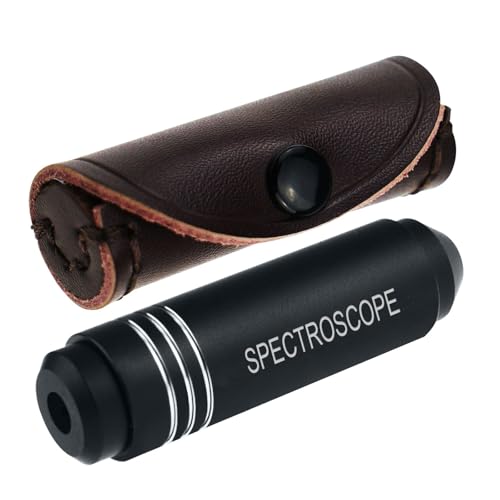
- Pocket-sized 5.5cm design
- Aircraft aluminum construction
- Supports absorption-line gem checks
Best For: Traveling gemologists and gemstone identification
Educational Quantitative Spectroscope
Eisco PH100QA Visible-Spectrum Tool
- 400–700nm visible-light range
- Built-in numeric wavelength scale
- Durable metal construction
Best For: Classroom lessons and basic spectrum experiments
Portable Gem Testing
Adjustable-Focus Handheld Spectroscope

- 400–700 nm visible-spectrum range
- Compact aluminum housing for portability
- Adjustable focus for gemstone inspection
Best For: Portable gemstone and jewelry identification
Classroom Spectrum Measurement
Eisco Direct Vision Spectroscope

- 400–700 nm graduated scale
- Direct viewing of spectrum and scale
- Includes three cuvettes
Best For: STEM and physics demonstrations
Gemologist’s Testing Kit
Diffraction Spectroscope with Dichroscope

- Includes spectroscope and calcite dichroscope
- Pocket-sized diffraction spectroscope
- Supports pleochroism and spectrum checks
Best For: Gemological identification and optical-property testing
Best Adjustable-Focus Pick

- Adjustable manual focus for different gemstone sizes
- 400–700nm range with optical-glass construction
- Compact 40 g design for field or lab use
Best For: Gemologists, students, jewelers, and hobbyists needing portable focus control
Best for Travel-Friendly Gem Analysis
Handheld Full Spectrum Spectrometer

- Prism imaging creates a visible rainbow spectrum
- Adjustable focus for gemstone observation
- Metal body and leather bag support portability
Best For: Traveling gem evaluators, beginners, and professionals
Best Pocket Diffraction Model
TEKCOPLUS Handheld Spectroscope

- 55 mm pocket-sized diffraction spectroscope
- Aircraft-aluminum body with fine optics
- Useful for gems, rocks, coins, stamps, and watches
Best For: Traveling jewelers and enthusiasts prioritizing minimal size and weight
Compact Loupe Spectroscope – 55mm Jewelry & Hobby Tool
For shoppers comparing handheld optical spectroscopes for casual gem, jewelry, coin, stamp, or hobby inspection, this 55mm model emphasizes portability and convenience. Its built-in jeweler’s eye loupe adds magnification for examining small details alongside light spectra.
Best For: Portable inspection of gems, jewelry, rocks, stamps, coins, watches, and antiques.
Pros:
- Compact 55mm size is easy to store and carry.
- Handheld aluminum construction is designed for everyday use.
- Built-in jeweler’s loupe supports closer visual inspection.
Cons:
- Its 1x magnification is limited compared with dedicated higher-power magnifiers.
- The notes do not specify a wavelength range or measurement accuracy.
This is a straightforward choice when portability and gem-related visual inspection matter more than calibrated wavelength measurement. Buyers seeking quantitative spectral readings should consider a model with a stated range and accuracy.
Quantitative Range Spectroscope – EISCO 400–700nm Analyzer
Among handheld optical spectroscopes, the EISCO Premium Quantitative Spectroscope stands out for buyers who want a defined measurement range and readable numeric scale. It covers 400–700nm and is specified for measurements within ±5nm, supporting structured observation of light sources and color spectra.
Best For: Classroom, laboratory, and hobby experiments involving gas tubes, flame tests, basic astronomy, and light-source analysis.
Pros:
- Measures wavelengths across a broad 400–700nm range.
- Specified accuracy of ±5.0nm supports more consistent readings.
- 500 lines/mm diffraction grating is designed for detailed spectra.
- Securely held grating and scale help keep readings legible.
Cons:
- Its 8-inch length and metal enclosure are less pocket-friendly than compact gem tools.
- It uses a corded electric power source, according to the listed details.
This is the strongest fit in the group for users prioritizing quantitative readings and educational experimentation. Its defined specifications make it easier to compare observations than an informal inspection spectroscope.
Pocket Gem Spectroscope – Aluminum Grating Loupe
This pocket-sized option is one of the most travel-oriented handheld optical spectroscopes for gemological work. Its aircraft-aluminum body, compact dimensions, and grating are intended to help users inspect absorption lines and identify gemstones in markets, at trade shows, or during field use.
Best For: Gemstone identification and portable gemological analysis.
Pros:
- Very compact 5.5cm extended length fits easily in a pocket or bag.
- Aircraft aluminum construction is designed for durability.
- Grating helps reveal absorption lines characteristic of different stones.
- Listed uses include identifying diamond stimulants such as YAG and cubic zirconia.
Cons:
- The notes do not provide a wavelength range or numerical accuracy.
- It is specialized for visual gemological analysis rather than general quantitative measurements.
Choose this model when portability and gemstone screening are the priorities. Its absorption-spectrum approach can support quick comparisons, while users needing calibrated numeric data may prefer a quantitative spectroscope.
Educational Quantitative Spectroscope – Eisco PH100QA Visible-Spectrum Tool
The Eisco PH100QA is a practical pick among handheld optical spectroscopes for users who want visual spectra paired with numeric wavelength readings. Its built-in scale covers 400–700nm with listed 5nm accuracy, making it suitable for lessons, experiments, and basic light-source testing.
Best For: Students, educators, hobbyists, and labs examining gas tubes, flame tests, and basic astronomical spectra.
Pros:
- Built-in numeric scale converts observations into wavelength data.
- 400–700nm range covers common visible-light measurements.
- 5nm accuracy supports more controlled experimentation.
- Durable metal construction is suited to repeated classroom or lab use.
Cons:
- At 8 inches long, it is less compact than pocket gem spectroscopes.
- The listed 5nm accuracy is less precise than instruments designed for finer measurement.
This model balances educational usability with basic quantitative capability. It is a sensible choice for visible-spectrum demonstrations and repeatable comparisons, but not for applications requiring laboratory-grade precision.
Portable Gem Testing – Adjustable-Focus Handheld Spectroscope
For shoppers comparing handheld optical spectroscopes, this compact focusing model is designed for gemstone and jewelry work. Its 400–700 nm range, adjustable focus, optical glass prisms, and aluminum housing make it suitable for portable inspection in the field or laboratory.
Best For: Gemstone and jewelry identification by professionals and hobbyists.
Pros:
- Compact, lightweight design is easy to carry.
- Adjustable focal length supports more convenient viewing.
- Optical glass prisms and precision construction are designed for stable performance.
- Heavy-duty aluminum housing improves durability.
Cons:
- Its stated application is focused primarily on gemstones and jewelry.
- The supplied specifications do not describe advanced measurement or recording features.
This is a practical choice when portability and gemstone screening matter most. The adjustable focus adds flexibility, while the durable metal housing suits repeated handling.
Classroom Spectrum Measurement – Eisco Direct Vision Spectroscope
This direct-vision model is a straightforward option among handheld optical spectroscopes for observing and measuring visible spectral lines. Its graduated 400–700 nm scale, metal construction, and included cuvettes make it particularly relevant to STEM and physics demonstrations.
Best For: Educational demonstrations and basic visible-spectrum observation.
Pros:
- Graduated scale covers the visible 400–700 nm range.
- Direct-vision design lets users view the spectrum and scale together.
- Metal construction is suited to classroom handling.
- Includes three cuvettes for practical demonstrations.
Cons:
- At 7 x 4.75 x 1.125 inches, it is less pocket-oriented than smaller models.
- The supplied notes describe basic observation and measurement rather than specialized gem testing.
Choose this spectroscope when an easy-to-follow scale and instructional use are priorities. The direct viewing method is well matched to introductory spectrum experiments and classroom physics activities.
Gemologist’s Testing Kit – Diffraction Spectroscope with Dichroscope
This two-tool set expands the capabilities of handheld optical spectroscopes for gemstone examination. The pocket-sized diffraction spectroscope is intended for quick spectrum analysis, while the heavy-duty calcite dichroscope helps reveal trichroic and pleochroic colors.
Best For: Gemologists and jewelers who want spectrum and pleochroism checks in one kit.
Pros:
- Combines a handheld diffraction spectroscope with a calcite dichroscope.
- Pocket-sized spectroscope supports quick gemstone analysis.
- Dichroscope can reveal trichroic and pleochroic colors.
- Metal dichroscope body is designed for durability and accuracy.
Cons:
- The supplied notes do not specify a wavelength range or graduated scale.
- It is a specialized gemological set rather than a general-purpose educational spectroscope.
This kit is appealing for users who need more than spectral viewing alone. Pairing diffraction analysis with dichroscope observations provides complementary information about gemstone identity and optical properties.
Best Adjustable-Focus Pick – TEKCOPLUS Gem Spectroscope
For shoppers comparing handheld optical spectroscopes, the TEKCOPLUS Gem Spectroscope stands out for its adjustable manual focus and 400–700nm range. Its compact optical-glass and powder-coated aluminum construction suits gemstone testing at home, in a lab, or at an antique fair.
Best For: Gemologists, students, jewelers, and hobbyists who want a portable spectroscope with adjustable focus.
Pros:
- Adjustable focus accommodates various gemstone sizes.
- Optical glass and a prism beam splitter support clear readings.
- Lightweight 40 g design is convenient for travel and field use.
Cons:
- Manual focusing requires user adjustment.
- Its compact size may be less convenient for users wanting a larger viewing instrument.
Choose this model when focus control, portability, and a stated 400–700nm range matter most. It is a practical general-purpose option for gemological observation rather than a feature-heavy laboratory instrument.
Best for Travel-Friendly Gem Analysis – Handheld Full Spectrum Spectrometer
This handheld full spectrum spectrometer is a convenient choice among handheld optical spectroscopes for quick gemstone checks. Its prism combination imaging produces a visible rainbow spectrum, while the metal body, adjustable focus, and included leather storage bag support portable use.
Best For: Beginners and professionals evaluating loose or mounted gemstones at markets, trade shows, and while traveling.
Pros:
- Prism system helps display various wavelengths and spectral patterns.
- Adjustable focus supports practical gemstone observation.
- Compact metal construction is easy to carry in a pocket or bag.
Cons:
- Brand and model documentation are limited in the supplied details.
- The notes do not specify a wavelength range or optical dimensions.
This is a sensible portable pick when ease of carrying and straightforward prism-based gemstone observation are priorities. Buyers seeking extensive technical specifications may prefer a model with more published optical details.
Best Pocket Diffraction Model – TEKCOPLUS Handheld Spectroscope
For buyers seeking one of the most compact handheld optical spectroscopes, this TEKCOPLUS diffraction model measures just 55 mm in length. Its grating-based optics and aircraft-aluminum body are designed for examining spectra from gems and other objects, including rocks, stamps, coins, and watches.
Best For: Jewelers, gem enthusiasts, and travelers who need a pocket-sized diffraction spectroscope for quick inspections.
Pros:
- Extremely compact and lightweight at 0.352 ounces.
- Diffraction technology supports analysis of emitted or absorbed light spectra.
- Aircraft-aluminum construction is durable for portable use.
Cons:
- The supplied details do not list a wavelength range.
- Pocket-sized dimensions may provide less handling room than larger instruments.
This model makes the most sense when portability is the deciding factor. Its diffraction grating and broad stated application range make it useful for quick field observations, though buyers wanting adjustable focus or more specifications should compare alternatives.
How We Picked These Handheld Optical Spectroscopes
We selected products that cover the main use cases for compact spectral inspection: gemstone screening, jewelry evaluation, classroom demonstrations, and basic measurement of visible light. The comparison considers stated wavelength range, accuracy claims, optical design, focusing controls, construction, portability, and included accessories.
Some models are designed primarily for qualitative observation, while quantitative spectroscopes provide clearer measurement-oriented specifications. Because listings and included components can vary, confirm the current description, calibration information, and accessories before ordering.
Quick Comparison
| Best For | Look For | Most Suitable Design |
|---|---|---|
| Gemstone screening | Clear spectral lines, compact body, easy viewing | Handheld diffraction or prism spectroscope |
| Wavelength study | 400–700 nm coverage and stated accuracy | Quantitative spectroscope |
| Routine jewelry work | Adjustable focus and durable construction | Focusing gem spectroscope |
| Teaching and demonstrations | Simple operation and direct-vision viewing | Direct-vision spectroscope |
| Field portability | Small size, case, pouch, or storage bag | Pocket diffraction model |
Key Buying Factors for Handheld Optical Spectroscopes
Optical Range and Accuracy
A stated 400–700 nm range covers much of the visible spectrum and is useful for many gemology and light-source applications. If you need to estimate wavelengths rather than simply observe absorption bands, prioritize a model with a published accuracy specification, such as 5 nm. Treat these instruments as screening or educational tools unless calibration documentation supports more demanding measurements.
Diffraction Versus Prism Design
Diffraction-grating models commonly produce a readable spectrum in a small package and are popular for gemstone inspection. Prism and direct-vision designs can be convenient for demonstrations or quick visual comparisons. The best choice depends on whether portability, spectral separation, or straightforward viewing matters most.
Focus, Handling, and Build
Adjustable focus is valuable when examining different light sources or working at varying distances. A metal case or robust housing can improve durability in a jewelry bench or classroom. For field use, check the overall size and whether a protective case, leather bag, or other storage solution is included.
Use Conditions
Visible spectra are easiest to inspect with a stable, sufficiently bright source and controlled ambient light. A loupe-style instrument may be convenient but can have a smaller viewing area. Compare ergonomics and readability, not just the wavelength specification.
Who Should Buy Which Handheld Optical Spectroscopes?
Gemologists and jewelry professionals: Choose an adjustable-focus diffraction or prism spectroscope that is quick to position and easy to carry between stones.
Students and educators: A direct-vision or straightforward diffraction model offers simple demonstrations without unnecessary measurement complexity.
Users comparing light sources: Favor a quantitative instrument with a stated visible range and accuracy specification.
Field users and collectors: Select a compact model with protective storage and uncomplicated operation. For advanced laboratory analysis, consider a calibrated digital spectrometer instead of relying solely on a handheld optical instrument.