When you regularly transfer photos, video, or project files from more than one card, a reader with multiple simultaneous slots can reduce cable swapping and keep your workflow moving. The best models combine broad format support with dependable USB 3.0 or USB-C performance.
We compared 10 options covering SD, microSD, CompactFlash, CFast, XD, Memory Stick, and other formats. Use the guide below to match slot layout, connectivity, speed, and compatibility to your camera gear and computer.
Best 10 Memory Card Reader with Multiple Simultaneous Slots Picks for 2026
Best All-Around Compatibility
Rocketek 7-in-1 USB 3.0 Card Reader

- Supports seven major card formats
- Reads and writes up to five cards simultaneously
- Plug-and-play with major desktop operating systems
Best For: Mixed-format photography workflows
Best for Multi-Camera Workflows
Cbcuyle 8-in-1 SD and TF Card Reader

- Four SD and four microSD/TF slots
- Simultaneous multi-card reading and writing
- Includes USB-A and USB-C connectors
Best For: SD and microSD-heavy event or content work
Best Compact Universal Pick
UGREEN 4-Slot USB 3.0 Card Reader
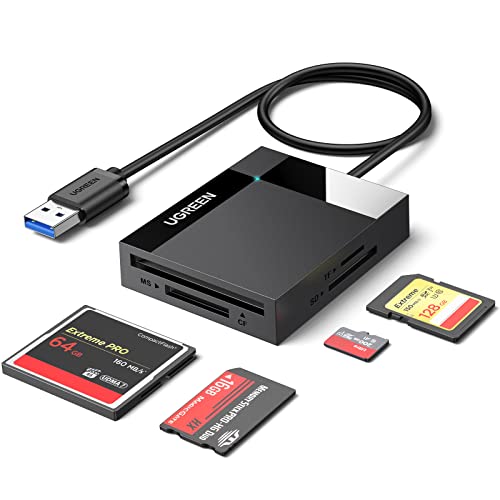
- Supports SD, microSD, CF, and MS cards
- Works with four cards simultaneously
- Compact body with a 1.7-foot cable
Best For: Everyday mixed-card transfers on laptops and desktops
Best USB-C Option
llano 5-in-1 CF and SD Card Reader

- USB-C reader for CF, MS, SD, microSD, and M2 cards
- Reads up to four card types simultaneously
- Supports OTG and includes a 24-month protection plan
Best For: USB-C photography setups with legacy card formats
Best Multi-Format Pick
7-in-1 USB-C and USB-A Card Reader

- Reads and writes up to five cards simultaneously
- Supports CF, SD, microSD, XD, and MS formats
- USB-C and USB-A connectivity with up to 5Gbps transfer
Best For: Users handling several current and legacy card formats
Best Compact Option
Universal 7-in-1 Camera Card Reader

- Reads and writes five cards simultaneously
- USB-C and USB 3.0 Type-A connections
- Compact design with broad card-format support
Best For: Mobile photographers and everyday file management
Best for Multiple SD Cards

- Reads up to four SD or microSD cards at once
- Supports UHS-I and UHS-II memory cards
- USB-C and USB-A connectivity with independent LEDs
Best For: Multi-camera photographers and SD-focused workflows
Best All-Around 5-Slot Pick
5-in-1 USB-C/USB-A Card Reader

- Reads and writes five card types simultaneously
- USB-A and USB-C connectivity with 5Gbps USB 3.0
- Individual LED indicators for each slot
Best For: Mixed camera-card workflows and everyday computer use
Best CFast-Focused Option

- Dedicated CFast 2.0, CF, SD, TF, and XD slots
- Reads and writes five cards simultaneously
- Aluminum body with USB-A and USB-C connectors
Best For: Photographers and videographers using CFast media
Best Maximum-Slot Choice
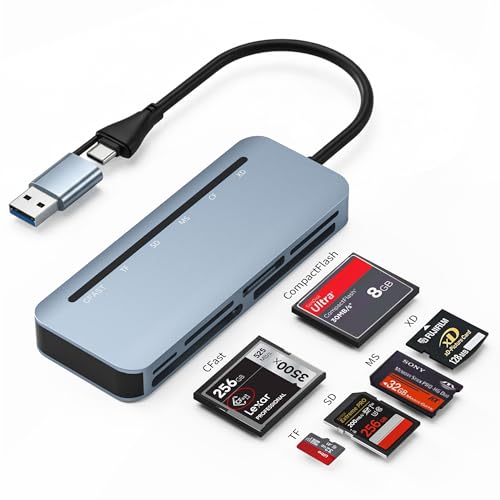
- Reads six card formats simultaneously
- Includes CFast, CF, SD, MicroSD, MS, and xD slots
- Aluminum body with USB-A and USB-C connectivity
Best For: Multi-camera shoots and mixed-format card archiving
Best All-Around Compatibility – Rocketek 7-in-1 USB 3.0 Card Reader
If you need a memory card reader with multiple simultaneous slots, the Rocketek 7-in-1 is a versatile choice for mixed camera-card collections. It supports CF, SD, microSD, MS, M2, MMC, and xD formats, while USB 3.0 provides up to 5Gbps bandwidth for compatible devices.
Best For: Photographers and computer users who work with several different memory-card formats.
Pros:
- Supports a broad range of card types, including CF, SD, microSD, MS, M2, MMC, and xD.
- Can read and write up to five cards simultaneously.
- Plug-and-play compatibility with Windows, macOS, Linux, and Chrome OS.
- Compact design with a removable 13cm USB cable and a two-year warranty.
Cons:
- Uses a USB-A connection rather than USB-C.
- The supplied specifications list seven slots, while simultaneous operation is described as five cards.
This reader stands out for format coverage and flexible simultaneous transfers. It is especially practical for photographers with older and newer cards, provided your computer has a USB-A port or suitable adapter.
Best for Multi-Camera Workflows – Cbcuyle 8-in-1 SD and TF Card Reader
The Cbcuyle is a memory card reader with multiple simultaneous slots built around eight dedicated SD and TF positions. Its four SD slots and four microSD slots let photographers and content creators transfer files from several cards without repeatedly swapping media.
Best For: Events, weddings, travel, and multi-camera shoots using SD and microSD cards.
Pros:
- Provides four SD slots and four microSD/TF slots.
- Supports simultaneous reading and writing across multiple cards.
- USB-A and USB-C connectors support computers, phones, and other compatible devices.
- Aluminum construction helps with heat dissipation during extended transfers.
Cons:
- Does not support CF, MS, M2, or xD formats.
- The USB 3.0 interface offers up to 5Gbps bandwidth, while the listed card speed is up to 104MB/s with compatible UHS-I cards.
With eight slots dedicated to SD and microSD media, this model is highly specialized rather than universally compatible. Its dual connector design and compact aluminum body make it convenient for mobile and desktop workflows.
Best Compact Universal Pick – UGREEN 4-Slot USB 3.0 Card Reader
For shoppers seeking a memory card reader with multiple simultaneous slots without a large footprint, the UGREEN 4-slot reader covers common SD, microSD, CF, and MS formats. Its USB 3.0 interface supports transmission rates up to 5Gbps and simultaneous work with four cards.
Best For: Photographers and mobile workers who need a compact reader for common card formats.
Pros:
- Handles SD, microSD/TF, CompactFlash, and Memory Stick cards.
- Reads and writes four different memory cards at the same time.
- Supports cards up to 2TB and offers plug-and-play operation.
- Works with Windows, macOS, Linux, and Chrome OS.
Cons:
- Has fewer slots and supports fewer formats than some seven- or eight-slot alternatives.
- Uses a USB connection and may require an adapter for USB-C-only devices.
The UGREEN balances useful format coverage with a compact 2.67-by-2.16-by-0.59-inch design and a 1.7-foot cable. It is a sensible everyday option when four simultaneous cards are enough.
Best USB-C Option – llano 5-in-1 CF and SD Card Reader
The llano R305 is a USB-C memory card reader with multiple simultaneous slots for photographers using CF, MS, SD, microSD/TF, and M2 media. It supports simultaneous reading across four card types, although the TF and M2 positions share one channel and cannot be used together at the same time.
Best For: USB-C users who need CF support, OTG access, and batch transfers from several card formats.
Pros:
- Supports CF, MS, SD, microSD/TF, and M2 cards.
- Offers simultaneous reading of up to four card types with cards up to 2TB.
- USB-C, OTG, and plug-and-play operation support compatible phones, laptops, and desktops.
- Includes safety circuitry and a 24-month protection plan.
Cons:
- TF and M2 cards share a channel and cannot be read simultaneously.
- It is not compatible with CFast cards.
- The CF slot uses fine pins that require careful alignment during insertion.
This llano reader is a strong fit for modern USB-C equipment and photographers with varied legacy media. Its shared TF/M2 channel and CFast exclusion are important limitations to check before buying.
Best Multi-Format Pick – 7-in-1 USB-C and USB-A Card Reader
If you need a memory card reader with multiple simultaneous slots and broad format support, this 7-in-1 Rocketek model covers CF, SD, microSD, XD, MS, and related card types. It can read and write up to five cards at the same time, while its USB-C and USB-A connectors support flexible use across computers, tablets, and phones.
Best For: Photographers, creators, and users managing several legacy and current card formats.
Pros:
- Supports a wide range of CF, SD, microSD, XD, and MS formats.
- Reads and writes up to five cards simultaneously.
- Offers USB 3.0 transfer rates up to 5Gbps plus USB-C and USB-A connectivity.
- Plug-and-play design works with Windows, Mac, Linux, Chrome OS, and Android.
Cons:
- Its broad format support may be unnecessary if you only use SD cards.
- The supplied details do not specify UHS-II support.
This is the most versatile option in the group for mixed media collections. Its five-card simultaneous read/write capability and 12-month warranty make it a practical choice for frequent file transfers.
Best Compact Option – Universal 7-in-1 Camera Card Reader
This compact Rocketek reader is a practical memory card reader with multiple simultaneous slots for photographers and everyday file management. It supports SD, CF, microSD, TF, XD, and MS cards, and can read and write five cards at once through USB-C or USB 3.0.
Best For: Travelers and creators who want broad card compatibility in a compact reader.
Pros:
- Handles five cards simultaneously across several card formats.
- Includes both USB-C and USB 3.0 Type-A access.
- Supports transfer rates up to 5Gbps and plug-and-play operation.
- Compact design measures approximately 3.5 by 1.5 by 0.5 inches.
Cons:
- It does not include storage cards.
- Its extensive format support may exceed the needs of basic SD-card users.
With the same five-card simultaneous capability as the first model but a clearly compact design, this reader suits users who move between devices and want to keep their travel setup uncluttered.
Best for Multiple SD Cards – 4-Port Simultaneous SD Reader
For photographers who primarily use SD or microSD media, this UTECHMIX model is a focused memory card reader with multiple simultaneous slots. It can read up to four SD cards at once, or two SD cards plus two microSD cards, helping offload several cameras without repeated swapping.
Best For: Photographers and content creators working with multiple SD or microSD cards.
Pros:
- Reads up to four cards simultaneously.
- Supports combinations of SD and microSD cards using the included adapters.
- Works with USB-C and USB-A devices running Windows, macOS, or Linux.
- Independent LED indicators show card detection and transfer activity.
Cons:
- It does not support CF, XD, or MS cards.
- SD cards are not included.
- The listed data transfer rate is 62MBps, and actual speeds can vary by card and device.
This is the strongest fit for SD-focused workflows, especially multi-camera shoots. UHS-I and UHS-II support, four independent slots, and status LEDs make it more specialized than the broader seven-slot readers.
Best All-Around 5-Slot Pick – 5-in-1 USB-C/USB-A Card Reader
If you need a memory card reader with multiple simultaneous slots, this 5-in-1 model is a practical option for mixed camera-card workflows. It has dedicated SD, CF, Micro SD, XD, and MS slots, supports reading and writing five cards at once, and connects through either USB-A or USB-C.
Best For: Photographers, trail-camera users, and content creators working with several card formats and computers, tablets, or Android devices.
Pros:
- Reads and writes five different cards simultaneously.
- Supports USB 3.0 transfer rates up to 5Gbps.
- Includes both USB-A and USB-C connectors with plug-and-play compatibility.
- Individual LED indicators show each slot’s activity.
Cons:
- It does not include a dedicated CFast slot.
- The supplied details describe a compact plastic-style reader without an aluminum chassis feature.
Choose this reader if visible slot activity and broad legacy-format support matter more than having the newest CFast compatibility. Its dual connectors also make it convenient for moving files between older PCs and newer USB-C devices.
Best CFast-Focused Option – 5-in-1 Aluminum Card Reader
This memory card reader with multiple simultaneous slots is designed for users who need CFast alongside common camera formats. Its five independent slots handle CFast 2.0, CF, SD, TF, and XD cards at the same time, while dual USB-C and USB-A connectors support a range of host devices.
Best For: Photographers and videographers transferring CFast, CompactFlash, SD, microSD, and XD media from laptops, desktops, tablets, or Android devices.
Pros:
- Supports simultaneous reading and writing across five card slots.
- Includes a dedicated CFast 2.0 slot plus CF, SD, TF, and XD slots.
- USB 3.0 provides transfer speeds up to 5Gbps and works with USB 2.0/1.1.
- Aluminum construction is compact, lightweight, and designed to dissipate heat.
Cons:
- It lacks a Memory Stick slot.
- The warranty is listed as one year.
This is the more targeted choice for a CFast-based workflow. The aluminum body and dual-interface design add portability, while the five-slot layout reduces the need to swap cards during production work.
Best Maximum-Slot Choice – 6-in-1 Six-Card Reader
For the highest slot count in this roundup, this memory card reader with multiple simultaneous slots supports up to six cards at once. Dedicated CFast, CompactFlash, SD, MicroSD, MS, and xD slots make it useful for current camera media as well as legacy formats.
Best For: Multi-camera photographers and videographers who need to consolidate CFast, CF, SD, microSD, Memory Stick, and xD cards in one transfer session.
Pros:
- Reads six different card types simultaneously.
- Supports USB 3.0 transfer rates up to 5Gbps and backward compatibility with USB 2.0/1.1.
- Dual USB-C and USB-A connectors work with iPhone 15/16/17, iPad, MacBook, Android, PC, and laptop devices.
- Aluminum alloy housing is compact and intended for heat dissipation and durability.
Cons:
- The listed warranty is six months.
- The supplied details do not mention individual slot activity LEDs.
If six simultaneous cards are more valuable than a longer warranty, this model offers the broadest format coverage of the three. It is particularly well suited to archive work and multi-camera shoots involving both modern and older media.
How We Picked the Best Memory Card Reader with Multiple Simultaneous Slots
We focused on readers that support multiple card formats and are designed to access more than one inserted card at the same time. The selection includes compact adapters, USB-C models, USB-A options, and readers aimed at photographers handling SD, microSD, CF, CFast, XD, or Memory Stick media.
We also considered practical specifications: advertised USB transfer rate, simultaneous read and write claims, connector compatibility, slot variety, portability, and whether the design suits a desktop workflow or travel kit. Because real-world performance depends on the card, computer, files, and USB port, advertised speeds should be treated as ceilings rather than guarantees.
Quick Comparison
- Best for broad format coverage: Choose a 6-in-1 or 7-in-1 reader if you use older formats such as CF, XD, or Memory Stick alongside SD cards.
- Best for several SD-family cards: An 8-in-1 reader with four SD and four TF slots is suited to teams or workflows using multiple full-size and microSD cards.
- Best for four-card transfers: A reader specifically rated for four simultaneous cards can simplify ingest after a photo or video shoot.
- Best for USB-C laptops: Select a USB-C model, or use a reader that includes both USB-C and USB-A connectivity.
- Best for CFast users: Pick a model explicitly supporting CFast 2.0; a standard CompactFlash slot is not automatically compatible.
Key Buying Factors for a Memory Card Reader with Multiple Simultaneous Slots
Slot Compatibility
List every card type used by your cameras, drones, recorders, phones, or legacy devices before buying. SDXC and microSDXC support is important for high-capacity cards, while CF and CFast are different formats that require clearly labeled support. Also check whether adjacent slots can be used together or whether inserting one card disables another.
Simultaneous Access
“Multi-slot” does not always mean every slot can read and write at once. If your workflow depends on parallel transfers, look for explicit simultaneous read and write claims and confirm whether they apply to all slots or only selected combinations. Some readers support multiple cards for copying, while others are intended mainly for switching between media.
Connection and Speed
USB 3.0 and USB 3.2 readers can offer substantially faster transfers than USB 2.0, but the host port and memory card must support comparable performance. USB-C is convenient for newer laptops and tablets; USB-A remains useful for desktops and older computers. A short, detachable, or integrated cable can affect portability and durability.
Build and Everyday Usability
Aluminum housings may improve durability and heat handling, while compact plastic models are often lighter and less expensive. Look for clearly marked slots, activity indicators, stable connectors, and enough spacing to remove cards without disturbing neighboring media.
Who Should Buy Which Memory Card Reader with Multiple Simultaneous Slots?
Photographers with mixed equipment should prioritize broad format support, especially SD, microSD, CF, and legacy slots. Video creators and production teams should favor explicit simultaneous-transfer support and fast USB connectivity. Traveling creators may prefer a compact USB-C reader with the formats they actually use rather than the maximum number of slots.
Users handling many SD or microSD cards should consider the four-SD/four-TF design, while CFast professionals need a reader that names CFast 2.0 compatibility. Finally, check your computer’s ports and operating system before ordering, and avoid paying for formats that are irrelevant to your workflow.