Reliable dissolved oxygen readings help you monitor aquarium health, pond conditions, wastewater, and other aquatic environments. A meter with a replaceable probe can also reduce long-term costs when the sensor wears out.
We compare 10 portable options with features such as automatic temperature compensation, manual calibration, salinity settings, memory, and extended probe cables so you can choose the right fit for your testing routine.
Best 10 Dissolved Oxygen Meters with Replaceable Probe Picks for 2026
Best Long-Reach Value
Portable DO Meter with Bluetooth Logging

- mg/L and percent saturation modes
- Long cable for deeper-water testing
- Includes calibration and replacement supplies
Best For: Ponds, aquariums, hydroponics, brewing, and field testing
Best Simple Professional Pick
Milwaukee MW600 Portable DO Meter

- 0.0–19.0 mg/L measurement range
- Two-point manual calibration
- 3-meter polarographic probe cable
Best For: Education, aquaculture, and routine water analysis
Best for Data Memory
Multi-Parameter DO Meter with 11.48-Foot Cable
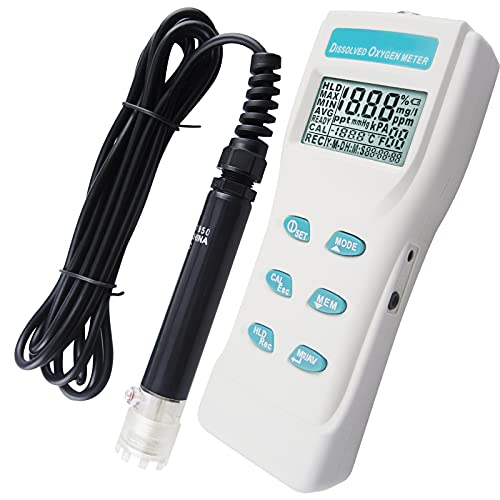
- 11.48-foot probe cable
- 99-reading memory and data hold
- Measures DO, temperature, salinity, and pressure
Best For: Aquaculture, environmental monitoring, and long-distance sampling
Best Replacement-Supply Bundle
Yewhick DO Meter with Spare Membranes

- 0–40 mg/L measurement range
- Two-point automatic calibration
- Six spare membrane caps included
Best For: Aquariums, ponds, aquaculture, brewing, and wastewater testing
Smart Bluetooth Pick

- Measures mg/L and saturation percentage
- Bluetooth storage for up to 1,000 readings
- Includes calibration supplies and carrying case
Best For: Aquariums, ponds, aquaculture, and app-connected monitoring
Deep-Water Monitoring Choice
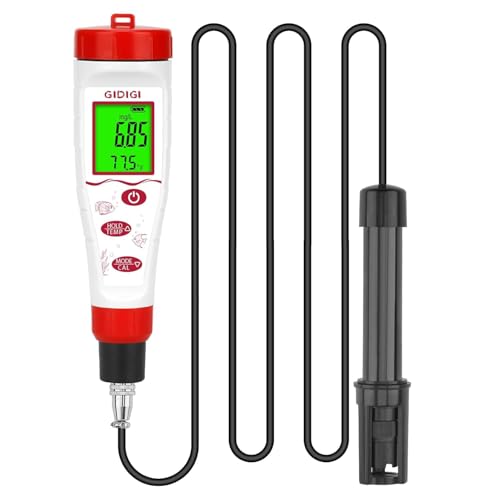
- Includes a 3-meter electrode cable
- Supports ATC and app compensation settings
- Comes with replaceable membrane caps and calibration supplies
Best For: Lakes, rivers, large ponds, and extended-reach testing
Maintenance-Friendly Pick
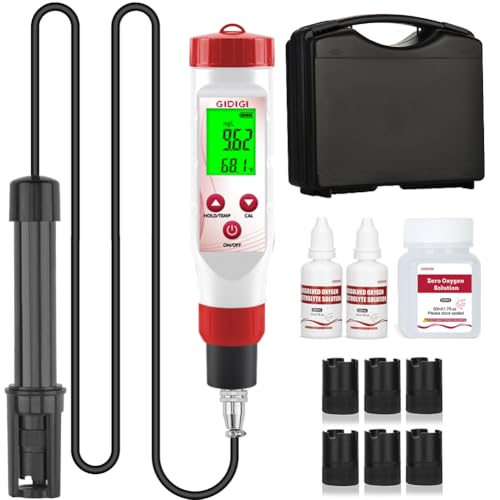
- Includes six replaceable membrane caps
- Offers mg/L and saturation percentage modes
- Adds ATC, backlit display, and data hold
Best For: Routine testing where replacement membranes and supplies matter
Professional Field Meter
LOHAND LH-D701 Dissolved Oxygen Meter

- 0.00–20.00 mg/L range with 0.01 mg/L resolution
- Measures oxygen, saturation, and temperature
- Includes spare membrane parts and 9.84-foot electrode
Best For: Aquaculture, wastewater, and field water-quality monitoring
Deep-Water Testing Pick
40 mg/L Dissolved Oxygen Meter

- 4.92-foot cable for deeper water testing
- Measures up to 40.0 mg/L and 300.0% saturation
- Includes six replaceable membrane caps and calibration supplies
Best For: Lakes, ponds, rivers, aquaculture, and wastewater testing
Simple Aquarium Option

- 0.0–40.00 mg/L range with ATC from 0–50°C
- Backlit display, low-battery alert, and auto shutoff
- Lightweight design for aquariums, ponds, and fish tanks
Best For: Routine home aquarium and pond oxygen checks
Best Long-Reach Value – Portable DO Meter with Bluetooth Logging
If you need dissolved oxygen meters with replaceable probe parts for ponds, tanks, or field testing, this portable model combines a long cable with flexible display modes. It reads in mg/L or percent saturation and includes calibration and maintenance accessories.
Best For: Aquarium, pond, hydroponic, brewing, aquaculture, and outdoor water-quality checks where a longer probe cable is useful.
Pros:
- Displays dissolved oxygen in mg/L and percent saturation.
- Long probe cable supports testing in deeper tanks and outdoor water.
- Includes membrane cap, electrolyte, and zero-oxygen water for calibration and maintenance.
- Offers temperature compensation, manual salinity and altitude adjustments, Bluetooth data logging, and a backlit display.
Cons:
- Salinity and altitude compensation require manual adjustment.
- The supplied notes list different cable lengths in the title and feature details, so buyers should verify the included cable.
This is a versatile choice for users who want a portable meter with replaceable consumable parts, data logging, and enough cable reach for both home and field applications.
Best Simple Professional Pick – Milwaukee MW600 Portable DO Meter
The Milwaukee MW600 is a straightforward option among dissolved oxygen meters with replaceable probe components. Its polarographic probe uses a screw-on cap membrane, while two-point manual calibration and automatic temperature compensation support routine water analysis.
Best For: Educational labs, aquaculture, environmental analysis, and users who prefer a focused DO meter with a 3-meter probe cable.
Pros:
- Measures 0.0–19.0 mg/L with 0.1 mg/L resolution.
- Provides two-point manual calibration.
- Includes automatic temperature compensation from 0 to 30°C.
- Uses a polarographic probe with a 3-meter cable and screw-on cap membrane.
Cons:
- Does not offer the 0–40 mg/L range found on some competing models.
- Manual calibration may take more user involvement than automatic systems.
- Temperature compensation is specified only through 30°C.
Choose the MW600 if you value a recognizable, purpose-built meter for routine testing and do not need expanded salinity, altitude, memory, or Bluetooth features.
Best for Data Memory – Multi-Parameter DO Meter with 11.48-Foot Cable
For buyers comparing dissolved oxygen meters with replaceable probe parts and extended reach, this model adds a long 11.48-foot cable to a broad set of measurement and recording functions. It displays DO, temperature, salinity, and barometric pressure, with memory for up to 99 readings.
Best For: Aquaculture, aquarium, environmental, industrial, and educational users who need long-distance sampling and multiple water-quality parameters.
Pros:
- Measures dissolved oxygen from 0–19.99 ppm or mg/L and 0–199.9% saturation.
- Includes automatic temperature compensation plus manual salinity and pressure-related settings.
- Stores up to 99 readings and includes data hold and selectable auto power-off.
- Comes with membranes, O-rings, electrolyte, batteries, and a carrying case.
Cons:
- Manual salinity and barometric settings require additional setup.
- The Clark-type sensor requires maintenance to support its stated service life.
This is a strong fit when cable length, onboard memory, and multi-parameter display matter more than a compact minimalist design.
Best Replacement-Supply Bundle – Yewhick DO Meter with Spare Membranes
This Yewhick model is a practical choice among dissolved oxygen meters with replaceable probe supplies, especially if you want spare membrane caps included. It measures up to 40 mg/L, uses automatic temperature compensation, and supports two-point automatic calibration.
Best For: Aquariums, koi ponds, aquaculture, brewing, wastewater applications, and users who want extra maintenance parts in the box.
Pros:
- Measures 0–40 mg/L or 0.0–300.0% saturation.
- Uses a built-in temperature sensor and automatic temperature compensation across 0–50°C.
- Provides two-point automatic calibration at 0% and 100%.
- Includes six spare membrane caps, electrolyte, calibration supplies, and extra batteries.
Cons:
- Its 1.1-meter cable is shorter than the longest models in this roundup.
- Uses three LR44 batteries rather than larger commonly used battery formats.
- The supplied notes do not specify data memory or Bluetooth logging.
If replacement membranes and a wide 0–40 mg/L range are priorities, this kit offers useful ongoing-maintenance supplies without requiring a separate accessory purchase at the outset.
Smart Bluetooth Pick – YINMIK Portable DO Meter
For shoppers comparing dissolved oxygen meters with replaceable probe components, the YINMIK stands out as a connected, portable option for pond, aquarium, aquaculture, and field testing. It measures dissolved oxygen in mg/L or percentage mode, with Bluetooth data storage and compensation settings through its app.
Best For: Koi ponds, aquariums, aquaculture, outdoor monitoring, and users who want app-based data management.
Pros:
- Offers 0–30 mg/L and 0–300% measurement ranges with 0.01 mg/L resolution.
- Bluetooth app stores up to 1,000 readings and supports salinity and altitude compensation.
- Includes electrolyte, oxygen caps, zero-oxygen water, carrying case, and a 3.6-foot electrode cable.
- Supports one-point calibration for solutions above 2 mg/L.
Cons:
- App connectivity is needed for salinity and altitude compensation settings.
- Calibration below 2 mg/L requires zero-oxygen solution.
- The supplied notes do not specify the replacement probe price or availability.
This is a well-equipped choice when portability, digital recordkeeping, and flexible compensation settings matter. Its included calibration materials and protective case also make it practical for recurring field or aquarium checks.
Deep-Water Monitoring Choice – GIDIGI Digital DO Tester
The GIDIGI is a practical option among dissolved oxygen meters with replaceable probe accessories, especially when testing water at a distance. Its 3-meter electrode cable, automatic temperature compensation, and Bluetooth app functions suit outdoor monitoring as well as aquarium, brewing, wastewater, and laboratory tasks.
Best For: Lakes, rivers, large ponds, aquaculture, and users needing a long electrode cable with app data handling.
Pros:
- Measures dissolved oxygen in both mg/L and percentage saturation modes.
- Uses a 3-meter electrode cable for deeper or harder-to-reach water.
- Provides automatic temperature compensation plus app-based salinity and barometric-pressure compensation.
- Includes replaceable membrane caps, electrolyte, and zero-oxygen water for calibration.
Cons:
- Salinity and pressure compensation require connecting to the phone app.
- The supplied notes do not state the measurement resolution.
- Replacement membrane caps and calibration materials may need to be ordered separately after the included supplies are used.
The long cable is this model’s clearest advantage for field sampling. It is a strong fit if reach and compensation controls are more important than a compact cable setup, while the backlit display and data-hold function help during hands-on testing.
Maintenance-Friendly Pick – Replaceable Test Kit DO Meter
For buyers specifically seeking dissolved oxygen meters with replaceable probe components, this model emphasizes ongoing maintenance. It includes six replaceable membrane caps, two electrolytes, and zero-oxygen water, along with a 1.2-meter cable, dual measurement modes, and automatic temperature compensation.
Best For: Aquaculture, wastewater treatment, brewing, laboratories, education, and users who want replacement membranes included.
Pros:
- Includes six replaceable membrane caps and two electrolyte supplies.
- Measures 0.0–40.0 mg/L and 0.0–300.0% saturation.
- Automatic temperature compensation supports more stable readings across temperature changes.
- Backlit LCD, data hold, and switchable Celsius/Fahrenheit display support field use.
Cons:
- Its 1.2-meter cable is shorter than the 3-meter cable supplied with the GIDIGI model.
- The supplied notes do not mention Bluetooth connectivity or app-based data storage.
- Replacement membrane caps and electrolyte will eventually require replenishment.
This is the most maintenance-ready option in the group because it arrives with multiple replacement membrane caps and extra electrolyte. Choose it when included consumables and straightforward operation are more useful than wireless data management or maximum cable reach.
Professional Field Meter – LOHAND LH-D701 Dissolved Oxygen Meter
If you need dissolved oxygen meters with replaceable probe components for regular field or laboratory work, the LOHAND LH-D701 offers a broad 0.00–20.00 mg/L range, 0.01 mg/L resolution, and readings for oxygen concentration, saturation, and temperature. Its compensation controls and rugged housing make it a versatile choice for water-quality testing.
Best For: Aquaculture, sewage treatment, environmental monitoring, and users who want a feature-rich portable meter.
Pros:
- Measures dissolved oxygen, saturation, and temperature in one instrument.
- Provides manual atmospheric-pressure and salinity compensation plus automatic temperature compensation.
- Includes a spare membrane head and rubber ring, electrolyte, and a 9.84-foot electrode cable.
- IP65 protection, a backlit LCD, and USB charging support field use.
Cons:
- Its 20.00 mg/L upper range is lower than some competing meters.
- Manual pressure and salinity compensation may require additional setup.
- At 2.76 pounds, it is heavier than the smaller options in this group.
The LH-D701 is the most comprehensive option here for users who value compensation controls, long probe reach, and included replacement membrane parts. It is especially practical for varied water conditions rather than occasional basic checks.
Deep-Water Testing Pick – 40 mg/L Dissolved Oxygen Meter
For shoppers comparing dissolved oxygen meters with replaceable probe supplies, this model stands out for its 4.92-foot cable and high 0.0–40.0 mg/L measurement range. It also supports saturation readings, temperature display, and straightforward maintenance with replacement membrane caps and included electrolyte.
Best For: Deep ponds, lakes, rivers, aquaculture systems, wastewater work, and users needing extended probe reach.
Pros:
- Long 1.5-meter probe cable helps reach deeper water.
- Offers 0.0–40.0 mg/L and 0.0–300.0% saturation measurement modes.
- Includes six replaceable membrane caps, two electrolytes, and zero-oxygen water for calibration.
- Backlit display, automatic temperature compensation, data hold, and switchable temperature units improve usability.
Cons:
- The supplied notes do not specify accuracy or resolution.
- It lacks the stated manual atmospheric-pressure and salinity compensation found on the LOHAND model.
- The longer cable may be unnecessary for small aquariums or shallow containers.
This is the strongest choice when probe reach and a generous oxygen range matter most. The six replacement caps and calibration supplies also make it appealing for frequent testing and ongoing maintenance.
Simple Aquarium Option – ATC Dissolved Oxygen Test Kit
This compact dissolved oxygen meter is a practical entry point for dissolved oxygen meters with replaceable probe maintenance needs. It measures up to 40.00 mg/L, uses automatic temperature compensation from 0–50°C, and is designed for quick checks in aquariums, ponds, fish tanks, pools, and aquaculture setups.
Best For: Aquarium and pond owners who want a lightweight, uncomplicated meter for routine oxygen and temperature checks.
Pros:
- Wide 0.0–40.00 mg/L measurement range with automatic temperature compensation.
- Designed for measuring without removing the electrode’s protective cover.
- Backlit LCD, low-battery indicator, and automatic shutoff support convenient use.
- Lightweight design and included electrode filling fluid make it easy to keep on hand.
Cons:
- The supplied notes do not mention replacement membrane caps or a spare probe component.
- It uses three LR44 batteries rather than a rechargeable battery.
- Its automatic shutoff activates after eight minutes, which may interrupt extended testing.
The compact design and simple controls make this model well suited to routine home aquatic maintenance. Choose it for convenience and portability, but verify replacement electrode or membrane availability if long-term serviceability is a priority.
How We Picked the Best Dissolved Oxygen Meters with Replaceable Probe
We focused on meters that measure dissolved oxygen digitally and are practical for routine field or indoor testing. Selection factors included measurement range, stated resolution and accuracy, automatic temperature compensation, calibration controls, probe design, cable length, display usability, memory, data hold, and included maintenance supplies.
Because probe condition strongly affects readings, we also prioritized models described as having replaceable probes or serviceable electrode assemblies. Buyers should confirm the exact replacement-part availability before ordering, since “replaceable” can refer to a removable probe rather than a widely stocked replacement sensor.
Quick Comparison
| Feature | Why It Matters | Best For |
|---|---|---|
| 0–20 mg/L range | Suitable for common aquarium and pond checks | Routine hobbyist testing |
| 0–40 mg/L range | Provides more headroom for specialized water conditions | Advanced or varied applications |
| ATC | Compensates for temperature effects during measurement | More consistent field readings |
| Manual salinity compensation | Helps account for saltier water | Aquaculture and brackish environments |
| Memory and data hold | Makes readings easier to record and compare | Repeated inspections |
Key Buying Factors for Dissolved Oxygen Meters with Replaceable Probe
Range, Resolution, and Accuracy
Choose a range that covers your expected readings without sacrificing useful resolution. A 0.1 mg/L display resolution is generally adequate for everyday pond and aquarium checks, while tighter resolution and better stated accuracy may matter for laboratory, environmental, or aquaculture work.
Probe Replacement and Maintenance
Check whether the package includes filling solution, membranes, caps, or other consumables. Confirm how the probe is replaced, whether replacement parts are sold separately, and how often calibration or membrane servicing is required. A lower upfront price may not be economical if replacement supplies are difficult to find.
Calibration and Compensation
Two-point calibration can improve confidence across a broader range, while simple manual calibration may be sufficient for occasional use. ATC is valuable when water temperature changes, and salinity compensation is important for brackish or marine testing. Do not assume ATC automatically compensates for salinity.
Handling and Recording Features
For ponds, tanks, and sampling containers, a long probe cable keeps the meter away from the water and makes access easier. Backlit displays, data hold, memory, and rugged cases are useful when readings must be taken outdoors or logged across multiple locations.
Who Should Buy Which Dissolved Oxygen Meters with Replaceable Probe?
Aquarium and pond owners: Look for an easy-to-calibrate meter with ATC, a readable display, and a probe cable long enough for your tank or pond depth.
Aquaculture and brackish-water users: Prioritize salinity compensation, dependable calibration, a suitable measurement range, and readily available replacement probe parts.
Field technicians and frequent testers: Choose a model with memory, data hold, a durable case, a longer cable, and serviceable components to reduce downtime.
Occasional users: A straightforward portable meter with included filling fluid and clear calibration instructions may offer the best balance of cost and usability.