The best engineering building sets turn STEM concepts into something you can build, test, troubleshoot, and improve. This roundup covers approachable construction kits for younger children alongside more advanced robotics, structural engineering, and working engine models.
Use the guide below to compare age suitability, project variety, mechanisms, materials, and learning value before choosing a set for a gift, classroom, or hands-on family activity.
Best 10 Engineering Building Sets Picks for 2026
Best for Structural Discovery
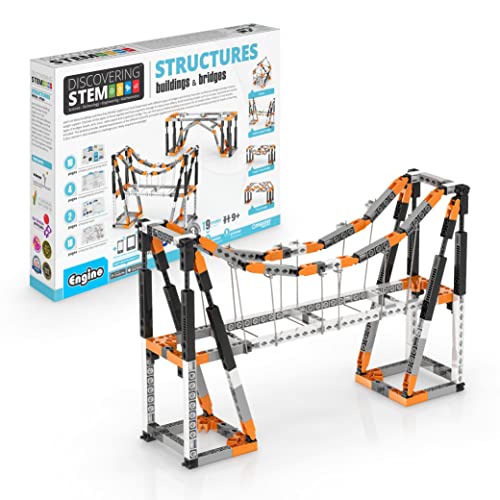
- Build nine building and bridge models
- Includes theory, experiments, and a quiz
- Multi-directional snap-fit ABS components
Best For: Kids ages 9+ interested in structural engineering
Best for Motion-Based Learning
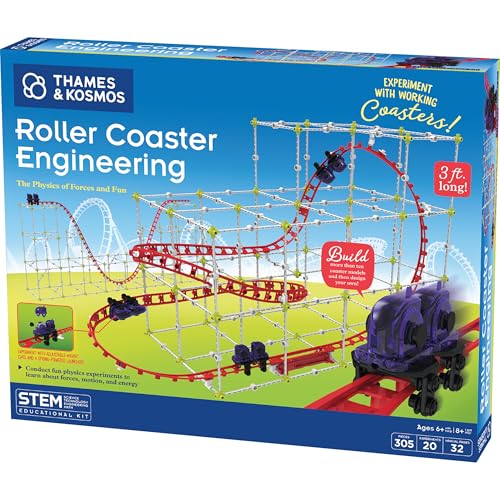
- Build working roller coaster models
- Explore force, motion, and energy
- Includes challenges and a 32-page manual
Best For: Kids ages 6+ who enjoy physics and moving builds
Best for Hands-On Robotics

- Build a water-powered robotic arm
- Six axes and up to 270-degree rotation
- Includes gripper and suction components
Best For: Builders ages 12+ ready for an extended robotics project
Best for Structural Engineering Practice

- Build 20 structural models
- Includes over 285 interchangeable pieces
- Studies load, tension, and compression
Best For: Intermediate builders ages 8–14
Solar STEM Pick

- 190 parts support 12 different builds
- Works with sunlight or strong artificial light
- Clear instructions with increasing challenge
Best For: Kids exploring robots, engineering, and renewable energy
Guided Mechanics Pick

- Build eight physics-driven creatures
- Includes 62 LEGO elements and papercraft
- 64-page book explains key mechanisms
Best For: Kids ages 8–12 learning about motion and mechanics
Advanced Mechanical Pick

- 478-piece motorized V8 engine build
- Transparent cover shows piston movement
- Designed for ages 8+ and adult enthusiasts
Best For: Builders interested in engines, mechanics, and detailed models
Best Starter Set
10-in-1 Engineering Vehicle Building Kit

- Builds 10 vehicle and machine designs
- Includes instructions and storage box
- Designed for hands-on STEM play ages 4–8
Best For: Young children beginning engineering and construction projects
Best Advanced Model
Motorized Inline 4-Cylinder Diesel Engine Kit

- Detailed 1,029-piece engine model
- Rechargeable motor powers moving components
- Designed for teens and adults ages 14+
Best For: Experienced builders and diesel-engine enthusiasts
Best Robotics Project

- Combines wooden construction with electronics
- Introduces circuits and mechanical movement
- No soldering required; needs six AA batteries
Best For: Young makers and students exploring beginner robotics
Best for Structural Discovery – STEM Buildings & Bridges
This Engino set is a strong option for families seeking engineering building sets centered on real structures. Children ages 9 and up can construct nine building and bridge models while exploring structural principles through guided activities.
Best For: Curious kids who enjoy buildings, bridges, and structured STEM projects.
Pros:
- Supports nine models, including houses, pyramids, beam bridges, truss bridges, and suspension bridges.
- Includes instructions, theory pages, experiments, and a quiz for deeper learning.
- Snap-fit components connect in multiple directions for complex 3D builds.
- Designed for ages 9 and up with durable ABS plastic construction.
Cons:
- Its educational structure-focused format may feel less open-ended than a general construction set.
- The listed package contains one set, so expansion options are limited to the included components.
Choose this kit if you want a guided introduction to architecture and structural engineering rather than a simple block-building experience. The included theory and experiments add useful context to each model.
Best for Motion-Based Learning – Roller Coaster Engineering
For children who learn best by testing moving designs, this roller coaster kit brings engineering building sets to life. It combines reusable plastic pieces with hands-on experiments about force, motion, and energy.
Best For: Kids ages 6 and up who like physics, challenges, and working models.
Pros:
- Lets children design and build working roller coaster models.
- Explores force, motion, energy, and related physics concepts through experiments.
- Includes challenges involving roller coasters of different shapes and sizes.
- Comes with a 32-page, full-color manual and reusable building pieces.
Cons:
- The project is focused specifically on roller coaster designs rather than general structures.
- The supplied notes do not indicate that batteries or motorized operation are included.
This is a practical pick for young builders who want immediate feedback from their designs. The working coaster format makes abstract physics concepts easier to observe and discuss.
Best for Hands-On Robotics – Hydrobot Hydraulic Arm
This Hydrobot arm offers a more advanced direction for engineering building sets, combining an extended assembly project with practical lessons in hydraulics and mechanical engineering. It is designed for kids ages 12 and up and requires careful, step-by-step construction.
Best For: Older children who want to build and control a working robotic arm without batteries.
Pros:
- Uses water-powered hydraulics to operate the robotic arm without batteries.
- Features six axes and rotation of up to 270 degrees.
- The gripper can open and close, with suction components available for picking up objects.
- Provides multiple hours of hands-on building and problem-solving.
Cons:
- Recommended for ages 12 and up, making it less suitable for younger builders.
- Assembly requires patience and accurate following of the detailed instructions.
- The supplied instruction manual is in English.
Consider this kit when the goal is a substantial mechanical project rather than a quick construction activity. Its hydraulic controls give builders a tangible way to explore fluid power, movement, and robotics.
Best for Structural Engineering Practice – Bridges & Skyscrapers
This Thames & Kosmos set suits shoppers looking for engineering building sets with broad structural variety. It includes more than 285 interchangeable pieces and supports 20 models that demonstrate how forces and building materials affect designs.
Best For: Intermediate builders ages 8 to 14 who want to study bridges, skyscrapers, and structural forces.
Pros:
- Supports 20 different structural models.
- Explores force, load, compression, tension, and building materials.
- Includes over 285 interchangeable plastic building pieces.
- Comes with a 36-page illustrated experiment and assembly manual.
Cons:
- The listed skill level is intermediate, so it may require more patience than a beginner set.
- Its emphasis on structural models may be less appealing to children seeking character or vehicle builds.
This set is a good fit for methodical learners who enjoy comparing designs and seeing how loads and forces influence structures. The model variety also gives it useful replay value beyond a single build.
Solar STEM Pick – 12-in-1 Solar Robot Kit
For children beginning to explore engineering building sets, the Sillbird 12-in-1 Solar Robot Kit combines hands-on assembly with an introduction to solar power. Its 190 parts support 12 different builds, with clear instructions and progressively challenging models suited to growing skills.
Best For: Kids ages 8 and up who enjoy screen-free STEM projects, robots, and renewable-energy activities.
Pros:
- Offers 12 robot, car, and other models with varied difficulty levels.
- Uses sunlight outdoors or a strong artificial light source indoors.
- Includes a larger solar panel and step-by-step instructions.
- Encourages problem-solving, dexterity, and engineering skills.
Cons:
- Indoor use requires a strong artificial light source.
- The manufacturer recommends it for ages 10 and up, despite the listing’s broader age positioning.
This is a flexible starter option among engineering building sets, especially for children who want several builds from one kit. The solar-powered concept adds educational value, while the range of models can keep the project engaging over time.
Guided Mechanics Pick – LEGO Gear Bots STEM Kit
The Klutz LEGO Gear Bots kit is a compact choice for engineering building sets focused on motion and mechanisms. Children build eight physics-driven creatures using LEGO Technic elements and papercraft, while the included book explains concepts such as axles, cams, and cranks.
Best For: Kids ages 8–12 who prefer guided construction projects with clear STEM explanations.
Pros:
- Builds eight kinetic creatures with working mechanical concepts.
- Includes 62 LEGO elements and 10 sheets of papercraft.
- The 64-page book combines instructions with science content.
- Supports construction, problem-solving, reasoning, and critical thinking.
Cons:
- Uses papercraft as well as interlocking building elements.
- Offers fewer total pieces than larger engineering building sets.
Gear Bots is a strong fit when the learning objective matters as much as the finished models. Its focused set of mechanisms and explanatory book make it easier to connect building with everyday engineering principles.
Advanced Mechanical Pick – Running V8 Engine Model
For older children, teens, and adults seeking more detailed engineering building sets, the WINGIFT V8 Engine kit recreates an eight-cylinder engine with 478 pieces. The motorized model includes moving pistons, a valve train, turbocharger, exhaust system, and transparent cylinder cover for observing its operation.
Best For: Mechanical enthusiasts, model collectors, and families or classrooms exploring engine fundamentals through assembly.
Pros:
- Replicates visible engine features including piston and valve movement.
- Motor and battery box allow the completed model to run.
- Transparent cylinder cover makes the internal motion easier to observe.
- Large 478-piece build supports hands-on problem-solving and creativity.
Cons:
- Requires six AA batteries, which are not included.
- The larger piece count may be more demanding than beginner kits.
- Its engine-focused design may appeal less to children seeking varied models.
This is the most mechanically detailed option in the group and a natural choice for builders interested in how engines work. Its running, transparent design gives the finished model display value as well as educational use.
Best Starter Set – 10-in-1 Engineering Vehicle Building Kit
For younger builders exploring engineering building sets, this 112-piece kit offers 10 vehicle and machine designs, including an excavator, bulldozer, cranes, forklift, and windmill. Illustrated instructions and a storage box make it a practical choice for guided STEM play at home or in a classroom.
Best For: Children ages 4–8 who enjoy construction vehicles and hands-on STEM activities.
Pros:
- Supports 10 different engineering-themed builds.
- Includes step-by-step assembly instructions.
- Comes with a storage box for easier cleanup.
- Encourages problem-solving and hands-on building skills.
Cons:
- Plastic construction rather than metal.
- Some younger children may need help with assembly.
Its range of models and accessible age range make this a versatile introduction to engineering building sets. The moving projects can add extra motivation for children who enjoy seeing their creations work.
Best Advanced Model – Motorized Inline 4-Cylinder Diesel Engine Kit
This 1,029-piece model is one of the more advanced engineering building sets in the roundup, recreating an inline four-cylinder diesel engine with moving pistons, valves, exhaust components, and turbocharger details. A rechargeable USB-powered motor lets builders demonstrate the completed mechanism without batteries.
Best For: Teens and adults interested in mechanical engineering, diesel engines, and display-worthy technical models.
Pros:
- Detailed inline four-cylinder diesel engine design.
- Motorized operation demonstrates moving internal components.
- Includes color, step-by-step instructions.
- Uses durable, non-toxic ABS material.
Cons:
- Recommended for ages 14 and up.
- Its 1,029 pieces require substantial time and patience to assemble.
- USB cable is included, but batteries are not applicable because the motor is rechargeable.
With its high piece count and working mechanical features, this kit is better suited to experienced builders than young children. It combines a challenging construction project with an engaging way to observe engine principles.
Best Robotics Project – DIY Wooden Robot Arm Kit
This robot arm kit brings electronics and mechanical construction together, making it a hands-on option among engineering building sets. Builders assemble wooden parts, motors, a PCB microcontroller board, and wiring, then operate the arm to explore circuits and controlled movement.
Best For: Kids ages 8 and up, teens, families, and students looking for an introductory robotics project.
Pros:
- Combines wood construction with motors, wiring, and a control board.
- Introduces circuits, mechanical movement, and engineering principles.
- Includes an assembly tutorial and requires no soldering.
- Supports problem-solving, patience, and creative skills.
Cons:
- Requires six AA batteries, which are not included.
- Assembly may be challenging for younger builders.
- Wooden components require careful construction and handling.
This is a strong choice when the goal is to move beyond static building and into beginner robotics. The combination of assembly and operation gives the finished project an educational payoff as well as play value.
How We Picked These Engineering Building Sets
We selected sets that offer more than simple assembly. Each product supports practical STEM learning through mechanisms, structural design, robotics, renewable energy, or motorized motion. We also considered the intended age range, project variety, replay value, build complexity, and whether the finished model demonstrates a clear engineering principle.
The list includes guided activity kits for beginners, open-ended construction systems, and detailed mechanical models for older builders. Because difficulty varies significantly, check the recommended age and expected supervision before buying.
Quick Comparison
| Best For | Recommended Type | What to Look For |
|---|---|---|
| Young beginners | Multi-project building kits | Large parts, clear instructions, and short activities |
| Structural design | Bridge and skyscraper sets | Load testing, balance, and reusable components |
| Robotics practice | Robot arm or hydraulic kits | Working controls, durable joints, and accessible mechanisms |
| Advanced builders | Engine and mechanical models | Motorized movement, detailed assemblies, and patience-building complexity |
| Renewable-energy projects | Solar-powered kits | Outdoor usability and multiple build configurations |
Key Buying Factors for Engineering Building Sets
Age, Difficulty, and Supervision
Age labels are useful starting points, but they do not measure every child’s experience. A younger builder may need help sorting parts and following multi-step diagrams, while an experienced child may prefer a kit with fewer fixed instructions. Small components, tools, batteries, and motorized parts can also affect supervision needs.
Project Variety and Replay Value
A kit with several models can provide better long-term value, especially when projects use the same core components in different ways. Look for sets that encourage modifications rather than requiring one permanent build. Activity books, experiment guides, and challenge cards can make open-ended play easier to begin.
Mechanisms and Learning Outcomes
Choose the concept you want the builder to explore. Bridge kits emphasize forces and stability; roller coasters demonstrate momentum and track design; hydraulic arms show pressure and controlled movement; robotics kits introduce joints, gears, motors, and programming or manual control. Working engine models are best for learners who enjoy detailed mechanical assembly.
Parts, Power, and Durability
Confirm whether batteries, tools, glue, or household materials are included. Motorized and solar kits should have secure connections and replacement-friendly parts. For younger users, larger components and sturdy joints usually matter more than a high piece count.
Who Should Buy Which Engineering Building Sets?
Choose a multi-project construction set for a first introduction to engineering or a gift shared between children. Pick a bridge or skyscraper kit for learners interested in architecture, testing, and real-world structures. A hydraulic arm or robot arm is a stronger choice for children who enjoy controls and moving machines.
Solar robot kits suit builders curious about renewable energy and outdoor experiments. Roller coaster sets are ideal for creative problem-solving and repeated redesigns. For teens and adults, engine-building kits offer the most detailed mechanical challenge, while a motorized model adds extra interest after assembly is complete. Match the kit to the builder’s patience, available workspace, and preferred type of hands-on problem-solving rather than choosing solely by piece count.