Model rockets turn lessons in physics, engineering, and project planning into an activity students can build and test themselves. The best kits for homeschool balance age-appropriate assembly, reliable launch components, and enough flexibility to support repeated experiments.
We selected 10 Estes options ranging from classroom bulk packs to complete beginner launch sets, so families can choose a kit that matches their students, budget, and preferred level of hands-on work.
Best 10 Model Rocket Sets for Homeschool Picks for 2026
Classroom Launch Lab

- 12 intermediate kits for group builds
- Up to 1,600 feet with C6-7 engine
- Good for wind-drift studies
Best For: Homeschool groups and classroom science projects
Quick-Start Flight Set
Estes Rascal and Hijinks Launch Set

- Two prebuilt rockets for ages 10+
- Launch pad and controller included
- Up to 1,100 feet with C6-7 engine
Best For: Beginner launch lessons with little assembly
Classic Build Project

- Intermediate single-rocket project
- Approximately one hour to assemble
- Projected altitude up to 1,000 feet
Best For: Individual homeschool construction lessons
Small-Field STEM Pack

- 12 beginner snap-together kits
- Designed for flights up to 400 feet
- Suitable for small fields
Best For: Beginner groups and youth programs
Best Intermediate Build

- About one hour of assembly
- Projected altitude up to 500 feet
- Includes parachute and balsa fins
Best For: Ages 10+ learners ready for a traditional build-and-launch STEM activity
Best Complete Two-Rocket Set

- Includes two rocket models
- Launch pad and controller included
- Offers varied build and flight activities
Best For: Homeschool groups or families wanting two rockets and varied construction challenges
Best Ready-to-Fly Option

- Fully assembled beginner model
- About 15 minutes of preparation
- Projected altitude up to 1,125 feet
Best For: Ages 10+ beginners who want to focus on launch preparation and flight rather than construction
Best Overall
Estes Alpha III Rocket Launch Set

- Beginner-friendly kit for ages 10+
- Includes launch pad, controller, and parachute
- Projected altitude up to 1,150 feet
Best For: Homeschoolers wanting a classic, complete introductory rocket activity
Best Quick Build
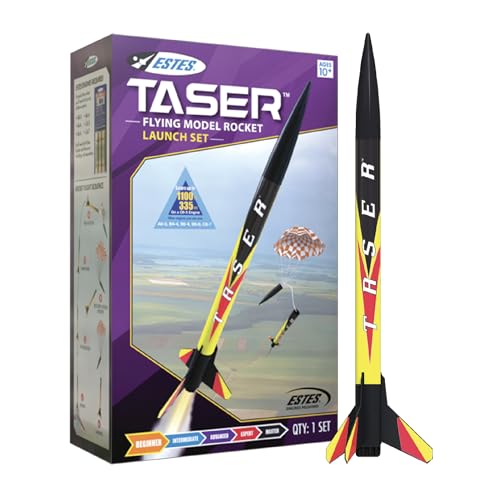
- Assembly takes approximately 10 minutes
- Includes launch pad, controller, and parachute
- Projected altitude up to 1,100 feet
Best For: Short homeschool lessons and beginners who want minimal preparation
Best for Extended Lessons
Estes Journey Rocket Launch Set

- Approximately one-hour beginner assembly
- Includes launch pad, controller, and parachute
- Projected altitude up to 1,100 feet
Best For: Homeschool projects that emphasize building before launch
Classroom Launch Lab – Estes Wizard 12-Pack
For group projects and science clubs, this bulk pack is a practical choice among model rocket sets for homeschool. It provides 12 intermediate Wizard kits, each with parts, decals, a parachute, and instructions, while leaving engines and launch equipment for separate planning.
Best For: Homeschool groups, classrooms, and flight competitions needing multiple build projects.
Pros:
- Includes 12 individual rocket-building kits.
- Supports approximately one hour of assembly per rocket.
- Projected altitude reaches up to 1,600 feet with a compatible C6-7 engine.
- Useful for wind-drift studies and interdisciplinary STEM activities.
Cons:
- Engines, launch pad, controller, starters, wadding, and batteries are sold separately.
- Intermediate construction may require more guidance than a ready-to-fly set.
This is the strongest option for a homeschool setting where several learners need their own build and flight project. Plan the launch hardware and consumables before ordering.
Quick-Start Flight Set – Estes Rascal and Hijinks Launch Set
If you want model rocket sets for homeschool with minimal construction, this beginner launch set offers two prebuilt rockets. It includes the Rascal and Hijinks models, parachutes, a launch pad, and a controller, though engines and other launch consumables must be purchased separately.
Best For: Beginners who want to focus on launch procedures, observation, and basic rocket science.
Pros:
- Includes two fully assembled rockets, so no building is required.
- Launch pad system and controller are included.
- Projected altitude reaches up to 1,100 feet with a compatible C6-7 engine.
- Designed for ages 10 and up.
Cons:
- Rocket engines, starters, recovery wadding, and four AA batteries are sold separately.
- Offers less hands-on construction than build-it-yourself kits.
This set is a convenient entry point for homeschool lessons centered on launching, timing, recovery, and comparing flights. It is especially useful when construction time is limited.
Classic Build Project – Estes Alpha Rocket Kit
Estes 1225 Alpha Rocket-Building Kit, Intermediate Flying-Rocket-Model Kit for Ages 10+
Check Price On AmazonThe Alpha is a single intermediate kit suited to homeschool learners who need a focused construction project. It includes the rocket components, decals, parachute, and instructions, while the launch system, engine, paint, and several building supplies require separate preparation.
Best For: Individual students learning the basics of rocket construction and aerodynamic design.
Pros:
- Provides a detailed build experience with laser-cut fins, engine mount, parachute, and instructions.
- Requires approximately one hour to assemble.
- Can reach a projected 1,000 feet with a compatible C6-7 engine.
- Includes guidance on additional building and launch supplies.
Cons:
- Launch pad, controller, engines, starters, wadding, paint, and tools are sold separately.
- As an intermediate kit, it may need adult or instructor support.
Choose the Alpha when the educational value is in building, finishing, and testing one complete model. It works well as a structured individual STEM assignment.
Small-Field STEM Pack – Estes Star Hopper 12-Pack
For younger beginners and compact launch areas, this bulk pack is one of the more accessible model rocket sets for homeschool. It includes 12 snap-together Star Hopper kits with engine mounts, streamers, and instructions, but launch hardware and consumables are separate.
Best For: Beginner group activities, small-field flights, science clubs, and youth programs.
Pros:
- Includes 12 beginner kits for shared or repeated projects.
- Snap-together design supports assembly in approximately one hour or less.
- Projected altitude is about 400 feet, suitable for small fields.
- Uses a drag streamer for recovery and is designed for ages 10 and up.
Cons:
- Engines, launch pad, starters, recovery wadding, and batteries are sold separately.
- Lower projected altitude may be less exciting for advanced flight studies.
The Star Hopper is a practical bulk choice when ease of assembly and manageable flight height matter more than maximum altitude. It can support a full group while keeping the activity approachable.
Best Intermediate Build – Big Bertha Rocket Kit
Estes 1948 Big Bertha Rocket-Building Kit, Intermediate Flying-Rocket-Model Kit for Ages 10+
Check Price On AmazonFor homeschoolers looking for model rocket sets for homeschool, the Estes Big Bertha provides a hands-on intermediate project that connects construction, flight, and basic rocketry. Assembly takes about an hour, and the finished rocket can reach a projected 500 feet with a compatible C6-5 engine.
Best For: Ages 10+ learners ready for a traditional build-and-launch STEM activity.
Pros:
- Includes laser-cut balsa fins, decals, a body tube, nose cone, and 18-inch parachute.
- Offers an approximately one-hour assembly project.
- Compatible with multiple Estes engine options.
- Provides a slow, realistic liftoff and projected altitude up to 500 feet.
Cons:
- Engines, starters, recovery wadding, launch pad, controller, and batteries are sold separately.
- Requires more assembly than a ready-to-fly model.
Big Bertha is a strong choice when the learning value of building matters as much as the launch. Budget for the required launch equipment and follow the NAR safety code when flying.
Best Complete Two-Rocket Set – Tandem-X Launch Set
Among model rocket sets for homeschool, the Estes Tandem-X stands out for offering two different build-and-launch experiences in one package. Students can assemble the beginner-friendly Amazon and Crossfire ISX models, then use the included launch pad and controller for practical rocketry lessons.
Best For: Homeschool groups or families wanting two rockets and varied construction challenges.
Pros:
- Includes two rocket models with different designs and projected flight heights.
- Comes with a Porta Pad II launch pad and Electron Beam Launch Controller.
- Amazon can be built in about an hour with precolored parts and self-stick graphics.
- Supports hands-on exploration of rocketry, physics, and engineering concepts.
Cons:
- Rocket engines, starters, recovery wadding, and four AA batteries are sold separately.
- The two rockets require different compatible engine options.
This is the most classroom-friendly option of the three for sharing construction and launch activities. Its included launch system adds value, while the two rocket designs create opportunities to compare flight performance.
Best Ready-to-Fly Option – Athena Rocket
Estes 2452 Athena Rocket-Building Kit, Prebuilt Beginner Flying-Rocket Model Kit for Ages 10+, Blue
Check Price On AmazonFor homeschoolers who want model rocket sets for homeschool with minimal preparation, the Estes Athena is a ready-to-fly beginner model. The rocket arrives fully assembled, needs about 15 minutes of preparation, and can reach a projected 1,125 feet with a compatible C6-7 engine.
Best For: Ages 10+ beginners who want to focus on launch preparation and flight rather than construction.
Pros:
- Fully assembled and ready to fly after approximately 15 minutes of preparation.
- Includes a parachute for recovery.
- Projects an altitude of up to 1,125 feet with a C6-7 engine.
- Compatible with several Estes engine options.
Cons:
- Launch pad, controller, engines, starters, recovery wadding, and batteries are sold separately.
- Provides less construction practice than build-it-yourself kits.
Athena is a practical pick for a first launch or a lesson centered on flight observation, preparation, and recovery. Choose it when quick setup is more important than assembling the rocket from individual parts.
Best Overall – Estes Alpha III Rocket Launch Set
For families seeking model rocket sets for homeschool, the Estes Alpha III offers a practical introduction to building, launch systems, recovery, and basic aerospace concepts. It includes the rocket components, decals, parachute, launch pad, and controller, while requiring separate engines, starters, recovery wadding, and four AA batteries.
Best For: Homeschool students ages 10 and up who want a classic beginner rocket with included launch equipment and an altitude of up to 1,150 feet.
Pros:
- Includes the Porta-Pad II launch pad and Electron Beam controller.
- Designed for beginners and can be assembled in about one hour.
- Supports several Estes engines and can reach a projected 1,150 feet.
Cons:
- Engines, starters, recovery wadding, and batteries are sold separately.
- Requires a suitable launch site and adherence to model-rocket safety procedures.
The Alpha III is a strong all-around choice when a homeschool activity should combine hands-on construction with a complete initial launch setup. Its longer preparation time allows more room for a structured building lesson.
Best Quick Build – Estes Taser Rocket Launch Set
The Estes Taser is a convenient option for model rocket sets for homeschool when lesson time is limited. Its precolored body tube and molded fins simplify assembly, and the set includes a parachute, launch pad, and controller; engines, starters, recovery wadding, and four AA batteries are separate purchases.
Best For: Homeschool students ages 10 and up who want a fast, accessible build with approximately 10 minutes of preparation.
Pros:
- Ready to assemble in approximately 10 minutes.
- Includes a high-visibility parachute for recovery.
- Reaches a projected altitude of up to 1,100 feet with a compatible C6-7 engine.
- Includes the Porta-Pad II launch pad and Electron Beam controller.
Cons:
- Launch engines, starters, recovery wadding, and batteries are not included.
- Requires a suitable launch area and safe-use procedures.
The Taser stands out for short homeschool sessions or introductory demonstrations. Its streamlined construction reduces setup time while still providing opportunities to discuss propulsion, flight, and recovery.
Best for Extended Lessons – Estes Journey Rocket Launch Set
The Estes Journey gives homeschool families a straightforward model rocket set for homeschool with enough building time to support a fuller project lesson. The kit includes rocket parts, decals, a parachute, launch pad, and controller, but requires separate engines, starters, recovery wadding, and four AA batteries.
Best For: Students ages 10 and up who want an approximately one-hour build followed by launches reaching up to 1,100 feet.
Pros:
- Includes the rocket, decals, parachute, launch pad, and controller.
- Provides approximately one hour of assembly for a hands-on project.
- Compatible with multiple Estes engines.
- Can reach a projected altitude of up to 1,100 feet with a C6-7 engine.
Cons:
- Engines, starters, recovery wadding, and batteries are sold separately.
- Requires an appropriate launch site and compliance with model-rocket safety guidance.
The Journey is a good fit when the building process is part of the lesson rather than something to complete as quickly as possible. It pairs a moderate assembly project with the included launch equipment needed for a beginner flight experience.
How We Picked These Model Rocket Sets for Homeschool
We focused on the factors that matter most in a homeschool setting: stated age guidance, build difficulty, whether launch equipment is included, and how well each kit supports repeatable STEM activities. The selection includes individual kits for focused projects, complete launch sets for getting started quickly, and 12-pack classroom bundles for groups or multiple launch attempts.
Because these are model rockets, families should also check the required engines, recovery supplies, batteries, and any recommended tools before ordering. Always follow the manufacturer’s instructions and launch only in a suitable open area under responsible adult supervision.
Quick Comparison
| Best For | Recommended Options |
|---|---|
| Homeschool groups or co-ops | Estes Wizard or Star Hopper bulk packs |
| First complete launch setup | Rascal and Hijinks, Alpha III, Taser, or Journey sets |
| Students who want to build | Alpha, Big Bertha, or Tandem X kits |
| A prebuilt beginner experience | Athena |
| More advanced construction practice | Wizard, Alpha, or Big Bertha |
Key Buying Factors for Model Rocket Sets for Homeschool
Build Level and Student Age
Beginner kits are generally the easiest starting point for younger or first-time builders, while intermediate models offer more construction steps and opportunities to discuss stability, weight, and design. Use the listed age guidance as a baseline, then consider your child’s patience, dexterity, and interest in detailed work.
Launch Equipment
A launch set with a pad and controller can reduce the number of separate purchases and make the first flight simpler. Building-only kits may be a better value if you already own compatible equipment or want to stage construction before buying launch supplies.
Quantity and Lesson Format
Bulk packs are especially useful for siblings, co-ops, science fairs, and repeated design challenges. A single kit may be preferable when one student is completing a longer engineering project or when storage space is limited.
Experiment Potential
Look for a model that supports more than one lesson: students can measure flight time, compare recovery methods, document construction changes, or analyze why a launch performed differently. Choose a rocket size and complexity that leaves room for observation without overwhelming the builder.
Who Should Buy Which Model Rocket Sets for Homeschool?
Choose the Wizard or Star Hopper bulk packs for a homeschool classroom, co-op, or family that needs several identical projects. Pick a complete set such as the Rascal and Hijinks, Alpha III, Taser, or Journey when convenience and a ready-to-launch starting point matter most. The Alpha, Big Bertha, and Tandem X are better suited to students who want a more involved building project. Choose the Athena if a prebuilt beginner model is the priority. Whichever option you select, match the kit to the learner’s experience and plan the required launch materials before beginning.