Choosing the right label can make the difference between clean traceability and a failed sample workflow. For labs that rely on xylene, alcohol, refrigeration, or frequent handling, durability matters as much as size and adhesion.
This roundup covers the best solvent resistant specimen labels for common pathology and clinical use cases, from small tube labels to larger specimen and container formats.
Best 10 Solvent Resistant Specimen Labels Picks for 2026
Histology-Grade Protection
Xylene and solvent resistant labels 0.875" x 0.875"

- Resists xylene, toluene, alcohols, DMSO, and MEK
- No self-laminate required to protect printout
- 1,000 labels on a 1" core
Best For: Histology labs that need compact, solvent-resistant specimen labels
Freezer-to-Autoclave Toughness
Tough-Spots SPRL-1100 Polyvinyl Label

- Withstands boiling, freezing, solvents, and caustic agents
- Safe for steam-autoclaving and boiling water baths
- 5000-label roll for high-volume tube labeling
Best For: Small tubes that need to survive solvents, heat, and freezing
Stain-Resistant All-Rounder
Xylene and solvent resistant labels 0.9375" x 0.9375"

- Resists xylene, ethanol, acetone, toluene, and water
- Built to fight abrasion, smudging, and scratches
- Helps avoid stain pickup from hematoxylin and eosin
Best For: Histology labs needing a multipurpose, stain-resistant label
Printer-Friendly Laboratory Bulk Pack
Tough-Spots for Laser Printers

- Laser-printer label in a 3/8-inch round format
- Bulk pack of 3,840 white labels
- Sold for research or further manufacturing use only
Best For: Research labs needing a large laser-printable label supply
Roll-Format Pathology Labels
420 Pcs Medical Specimen Labels

- 420-count roll for routine labeling
- Writable paper surface for easy marking
- Strong adhesive for tubes, vials, and charts
Best For: Routine hospital and pathology specimen tracking
Heavy-Duty Film Labels
UltraDuty Waterproof Laser Sheet Labels

- Chemical-, UV-, and water-resistant film
- Works on metal, plastic, glass, and more
- Laser printable for custom label runs
Best For: Durable labeling in harsh or wet environments
High-Visibility Specimen Labels
Fluorescent 1 x 2 Inch Specimen Tags
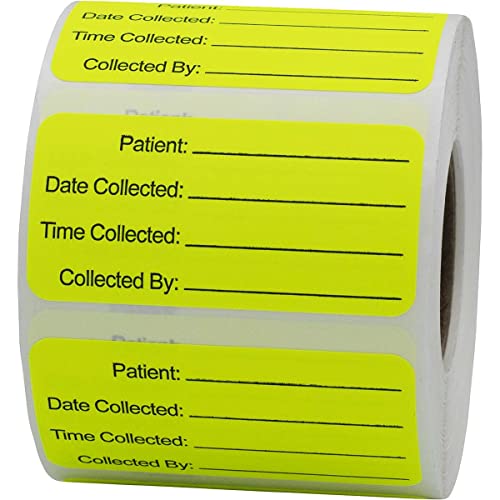
- 500-count roll for regular use
- Fluorescent yellow for quick visibility
- Compact 1 x 2 inch label size
Best For: Clinics needing bright, easy-to-read specimen labels
Chemical Safety
Avery GHS Secondary Container Labels

- BS5609 Sec. 2 certified
- Waterproof and chemical resistant
- Handwrite-only, preprinted GHS format
Best For: Secondary containers in harsh chemical environments
Specimen ID
Green Pathology Specimen Labels

- 500 labels per roll
- Bright green for visibility
- Easy peel-and-stick application
Best For: High-volume pathology specimen identification
Hazard Marking
Avery HMIS Secondary Container Labels

- Large 4" x 2" handwrite-only format
- Waterproof and chemical resistant
- Includes PPE checkboxes and HMIS fields
Best For: Larger HMIS hazard labels for secondary containers
Histology-Grade Protection – Xylene and solvent resistant labels 0.875" x 0.875"
If you need solvent resistant specimen labels for histology work, this XyliTAG option is built for harsh staining workflows. It’s made to handle xylene, toluene, alcohols, DMSO, MEK, acrylonitrile, eosin Y, hematoxylin, and more, with no transparent self-laminate required to protect the printout.
Best For: Labs that want compact, xylene-resistant labels for stained specimen containers and routine histology processing.
Pros:
- Resistant to xylene, toluene, alcohols, DMSO, MEK, and other solvents
- No transparent self-laminate needed to protect printed information
- Compact 0.875" x 0.875" format for small containers
- Pack of 1,000 labels on a 1" core
Cons:
- Must be printed with xylene-resistant ribbons
- Not a general-purpose label for standard printers without the right ribbon
For labs that already use compatible ribbon printing, this is a straightforward solvent-resistant choice with a strong focus on staining resilience. Its value is strongest where exposure to harsh reagents is routine and durability matters more than convenience.
Freezer-to-Autoclave Toughness – Tough-Spots SPRL-1100 Polyvinyl Label
For solvent resistant specimen labels that can also handle extreme lab conditions, this Tough-Spots polyvinyl option is made for durability. The labels are designed to withstand boiling, freezing, organic solvents, and caustic agents, and can be used in steam-autoclaving, boiling water baths, or freezers.
Best For: Labs that need small tube labels able to survive solvents, heat, freezing, and autoclaving.
Pros:
- Withstands boiling, freezing, organic solvents, and caustic agents
- Suitable for steam-autoclaving and boiling water baths
- Works in freezers for cold storage applications
- Large roll of 5,000 labels for high-volume use
Cons:
- Small 3/8-inch size may not suit larger containers
- Assorted format may not fit every labeling preference
This is a practical pick when labels must survive both chemical exposure and temperature extremes. Its biggest advantage is versatility across lab workflows, especially where tube labeling needs to hold up through processing, storage, and cleanup.
Stain-Resistant All-Rounder – Xylene and solvent resistant labels 0.9375" x 0.9375"
If you’re comparing solvent resistant specimen labels for staining workflows, this StainTUFF option is built for broad chemical exposure and physical durability. It resists sequential exposure to xylene, ethanol, acetone, and toluene, plus running water, and is designed to resist abrasion, smudging, scratches, and staining from hematoxylin or eosin.
Best For: Histology and staining labs that want a durable, multipurpose label for repeated chemical handling.
Pros:
- Resists xylene, ethanol, acetone, toluene, and running water
- High resistance to abrasion, smudging, and scratches
- Designed to avoid picking up color from hematoxylin and eosin
- Multipurpose use at any stage of the staining process
Cons:
- Label size details are limited in the supplied notes
- Plastic construction may be more than needed for simple storage labeling
This is a strong fit when the label has to stay readable through the full staining workflow. Its emphasis on chemical, water, and abrasion resistance makes it a flexible option for busy histology environments.
Printer-Friendly Laboratory Bulk Pack – Tough-Spots for Laser Printers
For teams looking for solvent resistant specimen labels in a laser-printable format, this Tough-Spots pack is aimed at research and further manufacturing use. The supplied notes highlight the material and format rather than solvent testing, so it’s best viewed as a bulk label option for labs that need a laser-printer-friendly supply.
Best For: Research and manufacturing labs that need a large quantity of laser printer labels for specimen or inventory use.
Pros:
- Designed for laser printers
- Large pack of 3,840 labels
- White 3/8-inch round format
- Sold for research or further manufacturing use only
Cons:
- The supplied notes do not list solvent resistance claims
- Research-only positioning limits broader use cases
This option makes sense when quantity and laser-print compatibility matter more than a detailed chemical-resistance spec. If your workflow requires explicit solvent resistance, the other products in this roundup are the better fit.
Roll-Format Pathology Labels – 420 Pcs Medical Specimen Labels
If you need solvent resistant specimen labels for daily lab workflow, this 420-count pathology roll is built for fast hand application and clear specimen marking. The writable paper surface works with pens, pencils, and permanent markers, while the strong adhesive helps labels stay put on vials, tubes, containers, and charts during transport and refrigeration.
Best For: Hospitals, pathology labs, and specimen collection teams that want simple roll labels for routine patient and specimen tracking.
Pros:
- 420 labels on a roll for regular high-volume use.
- Writable surface accepts pens, pencils, and permanent markers.
- Strong adhesive is designed to resist curling or peeling.
- Clear printed headers make specimen details easier to read.
Cons:
- Paper construction is less specialized than film-based lab labels.
- No dispenser box included, so roll handling is more manual.
Overall, this is a practical everyday option when you want affordable pathology labels that are easy to write on and quick to apply. It is best suited to standard lab workflows where readability and adhesion matter more than heavy chemical resistance.
Heavy-Duty Film Labels – UltraDuty Waterproof Laser Sheet Labels
For solvent resistant specimen labels that need serious durability, this Avery UltraDuty film label is built for harsh conditions. The labels are designed to resist chemicals, abrasion, UV, water, and extreme temperatures, and the laser-printer format makes them a solid choice when you need crisp, customizable labeling on demand.
Best For: Labs and facilities that need highly durable labels for chemical exposure, outdoor use, or tough container surfaces.
Pros:
- Resists chemicals, abrasion, UV, water, and extreme temperatures.
- Film material offers a more durable option than paper labels.
- Compatible with metal, plastic, glass, and painted surfaces.
- Laser-printer sheets support print-on-demand labeling.
Cons:
- Only 50 labels per pack, so it is not ideal for very high-volume use.
- Designed for laser printers, which limits flexibility for other print methods.
This is the strongest durability option in the group if your labels must survive harsh handling or exposure to moisture and chemicals. It makes the most sense when long-lasting adhesion and print quality are more important than low cost per label.
High-Visibility Specimen Labels – Fluorescent 1 x 2 Inch Specimen Tags
Specimen Collection Medical Healthcare Labels, 1 x 2 Inch Rectangles, 500 Total Per Roll
Check Price On AmazonThese fluorescent specimen collection labels are a straightforward pick for workflows that benefit from bright, easy-to-spot identification. Each 1 x 2 inch rectangle comes on a 500-count roll and is printed on fluorescent matte adhesive paper, making it a practical choice for clinics, pharmacies, and drug store labeling tasks.
Best For: Clinics and healthcare teams that want bright, easy-to-see specimen labels in a roll format.
Pros:
- 500 labels per roll for steady daily use.
- Fluorescent yellow color improves visibility.
- 1 x 2 inch size works well for compact labeling.
- Matte adhesive paper is suitable for common healthcare and warning uses.
Cons:
- Paper-based construction is less rugged than film labels.
- Limited product details on solvent or chemical resistance.
If your priority is quick visual identification rather than maximum chemical durability, this roll label is a useful low-friction option. It fits well in settings that want high visibility and simple application across routine specimen and warning label tasks.
Chemical Safety – Avery GHS Secondary Container Labels
If you need solvent resistant specimen labels for secondary containers, this Avery GHS option is built for harsh lab and workplace conditions. These 1″ x 2.5″ labels are preprinted with GHS pictograms and space for the signal word, product identifier, and supplier information, while remaining waterproof and resistant to chemicals, abrasion, UV rays, tearing, and harsh temperatures.
Best For: Secondary containers that need durable, handwrite-only GHS labeling in demanding environments.
Pros:
- BS5609 Sec. 2 certified and tested to stay adhered for 90 days in seawater
- Waterproof and resistant to chemicals, abrasion, UV rays, tearing, and harsh temperatures
- Preprinted GHS pictograms with fields for key safety information
- Handwrite-only format works with ballpoint pens and permanent markers
Cons:
- Not compatible with laser or inkjet printers
- Only 48 labels per pack
- Designed for hand application rather than custom printed workflows
For teams that want a rugged, compliant-looking label for chemical containers, this is the strongest pick in the group. It focuses on durability and readability rather than customization, which makes it practical for safety programs and day-to-day use.
Specimen ID – Green Pathology Specimen Labels
For solvent resistant specimen labels in a simpler clinical format, this pathology roll is a basic peel-and-stick choice for identifying specimens and conveying patient information. Each 2″ x 1″ paper label comes in a bright green color and is made for easy application on almost flat surfaces.
Best For: Clinics and pathology workflows that need an eye-catching specimen identification label in roll form.
Pros:
- 500 labels per roll for high-volume use
- Bright green color stands out for quick identification
- Easy peel-and-stick application
- Sized at 2″ x 1″ for compact specimen labeling
Cons:
- Paper construction is less rugged than chemical-resistant label options
- No waterproof or solvent-resistant claims in the supplied notes
- Best suited to almost flat surfaces only
This roll is a straightforward utility option when visibility and quantity matter more than heavy-duty durability. If your priority is specimen identification in a clinical setting, it offers a simple and practical format.
Hazard Marking – Avery HMIS Secondary Container Labels
If you want solvent resistant specimen labels for hazardous secondary containers, this Avery HMIS pack gives you a larger 4″ x 2″ format with preprinted hazard categories and PPE checkboxes. The labels are waterproof and resistant to chemicals, abrasion, UV rays, tearing, and harsh temperatures, making them a durable choice for demanding storage and handling areas.
Best For: Teams that need larger handwrite-only HMIS labels for chemical hazard communication.
Pros:
- Preprinted HMIS layout helps communicate health and physical hazards quickly
- Includes checkboxes for personal protective equipment requirements
- Waterproof and resistant to chemicals, abrasion, UV rays, tearing, and harsh temperatures
- BS5609 Sec. 2 certified and tested to remain adhered for 90 days in seawater
Cons:
- Handwrite-only, so it is not usable with laser or inkjet printers
- White labels may offer less visual punch than color-coded alternatives
- Best suited to HMIS workflows rather than general-purpose labeling
Among the three, this is the most format-friendly option if you need a larger label with more room for hazard details. It balances durability and readability well, especially where HMIS communication matters.
How We Picked These Solvent Resistant Specimen Labels
We focused on labels built for real lab conditions: chemical exposure, moisture, temperature changes, and repeated handling. Priority went to products with strong adhesive performance, clear print compatibility, and practical sizes for tubes, slides, specimen containers, and secondary containers.
We also considered whether the label format matches common workflows. A great label is only useful if it fits the container, prints cleanly, and stays readable through storage and transport.
Quick Comparison
For small tubes, round polyvinyl labels and compact diameter formats are usually the best fit. For specimen bags, jars, or larger containers, rectangular labels offer better legibility and more room for identifiers. If your lab prints in volume, roll-based options are often more efficient than sheet formats, while preprinted compliance labels may suit safety and container marking tasks.
Key Buying Factors for Solvent Resistant Specimen Labels
Adhesive Strength and Surface Compatibility
Look for labels that bond well to plastic, glass, and chilled surfaces. Some adhesives perform better on dry room-temperature containers, while others are designed for cold or curved surfaces. If labels may contact solvents, make sure both the face stock and adhesive are rated for chemical resistance.
Print Method and Readability
Thermal transfer, laser, and ink-friendly materials are not interchangeable. Match the label to your printer type so barcodes, patient names, and accession numbers stay sharp. In lab settings, print clarity is critical because smudging or fading can interrupt chain-of-custody and specimen tracking.
Size and Label Shape
The right size depends on the container and the amount of information you need to display. Small tube labels save space, while wider labels make room for barcodes, handwritten notes, or regulatory details. Round labels may work well on small vials, but rectangles are typically easier to scan and read at a glance.
Chemical and Environmental Resistance
For Solvent Resistant Specimen Labels, check resistance to xylene, alcohol, water, refrigeration, and UV exposure if applicable. If labels move from bench to freezer to transport, choose materials that stay bonded and legible across the full workflow.
Who Should Buy Which Solvent Resistant Specimen Labels?
Clinical labs and pathology teams should favor labels sized for specimen tubes and jars with strong chemical resistance. Research labs that print high volumes may benefit from roll formats that streamline daily labeling. Facilities handling both specimens and chemical containers may want a mix of specimen labels and general-purpose resistant labels for secondary containers and compliance use.
If your workflow is simple, choose the smallest label that still supports barcode and identifier readability. If your workflow is complex, prioritize durability, printer compatibility, and container fit over the lowest per-label cost.