Choosing the right nucleic acid quantification photometer can make routine DNA and RNA work faster, cleaner, and more reproducible. The best models balance accuracy, small sample volume, and simple operation for busy labs.
Below, we focus on compact instruments built for microvolume measurement, purity checks, and quick concentration readings so you can find the right fit for your workflow and budget.
Best 10 Nucleic Acid Quantification Photometer Picks for 2026
Portable Fluorescence Pick
Nano-500 Micro Spectrophotometer

- Compact 3.6 kg design for portable use
- Measures dsDNA from 2 to 15000 ng/μl
- Fluorescence detection down to 0.5 pg/μl dsDNA
Best For: Portable molecular biology labs needing fast micro-volume fluorescence and absorbance testing
Auto-Ranging Value Pick
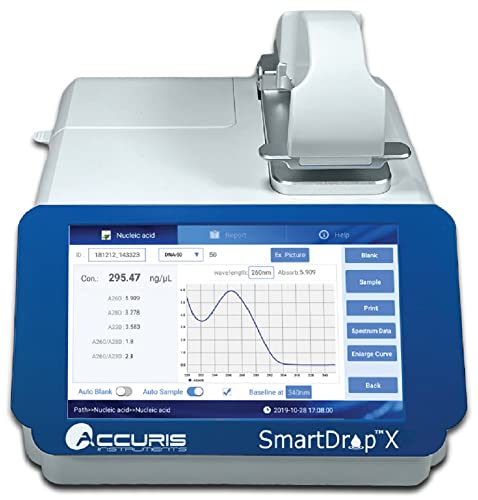
- Auto-ranging 0.2 mm and 1.0 mm path lengths
- Detects dsDNA up to 4,500 ng/μl without dilution
- Shows 260/280 and 260/230 ratios quickly
Best For: Routine labs that want simple microvolume DNA, RNA, and protein quantification
High-Range Touchscreen Pick
01-UV2101 Micro Volume Spectrophotometer

- Measures dsDNA from 0.2 ng/μL to 27,500 ng/μL
- Built-in 7-inch color touch screen
- Available in multiple wavelength and module configurations
Best For: Labs needing broad-range nucleic acid quantification with onboard touchscreen control
Basic Quantification Budget Pick

- Fixed 0.5 mm path length design
- Detects dsDNA up to 2,500 ng/μl
- Uses LED and silicon detector technology
Best For: Entry-level users needing basic DNA, RNA, and protein quantification
Fast compact pick
Fast, Compact Nucleic Acid Detection
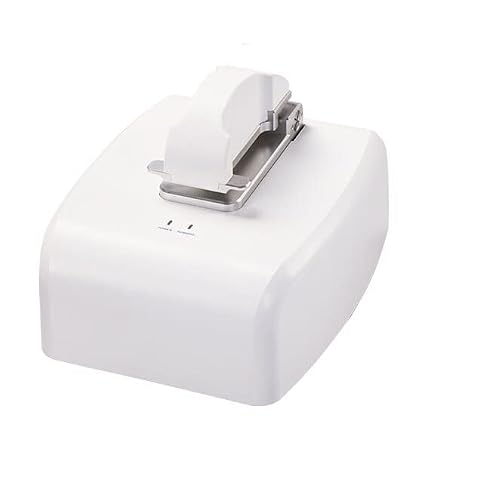
- <5s measurement time
- 200-800nm range, 1nm resolution
- 2.6kg compact build with PC connectivity
Best For: Rapid nucleic acid quantification in a small lab footprint
High-range analysis pick
High-Range DNA/RNA and Protein Analysis

- Detects up to 15,000 ng/µl dsDNA
- Auto-ranging 0.05mm, 0.2mm, and 1.0mm path lengths
- Full-spectrum scanning with 260/280 and 260/230 ratios
Best For: High-capacity microvolume analysis with detailed ratio reporting
Minimal-sample pick
Low-Sample Nucleic Acid and Protein Analysis

- Uses only 0.5-2 µl samples
- 5 second measurements with no warm-up
- Automatic concentration output, no cuvettes required
Best For: Fast measurements when sample volume is very limited
Ultra-Micro DNA Quantification
GOYOJO Nano-300 low-volume spectrophotometer

- 0.5-2.0μl sample use for limited material
- 1nm wavelength accuracy and 0.003Abs absorbance accuracy
- 0.02-100A absorbance range for flexible testing
Best For: Low-volume DNA quantification with high measurement accuracy
Dual-Mode Nucleic Acid Analyzer
TUOHE Ultra-Micro dual-mode analyzer

- Pedestal and cuvette detection modes
- 0.5-2μl pedestal testing for small samples
- 7-inch touch screen with standalone operation
Best For: Flexible labs that want pedestal and cuvette workflows
Full-Function Quantification
7-inch touchscreen spectrophotometer

- Multiple modes including spectral scanning and kinetics
- 2nm bandwidth with 0.002Abs photometric accuracy
- Standalone 7-inch touch-screen operation
Best For: Labs needing a versatile all-in-one UV-Vis and nucleic acid instrument
Portable Fluorescence Pick – Nano-500 Micro Spectrophotometer
If you need a nucleic acid quantification photometer that balances portability with fluorescence capability, the Nano-500 is built for quick micro-volume work. It supports dsDNA measurements from 2 to 15000 ng/μl, uses just 0.5–2.0 μl of sample, and returns results in under 6 seconds.
Best For: Labs and researchers who want a compact, Android-based micro spectrophotometer with fluorescence detection for fast DNA, RNA, and protein analysis.
Pros:
- Compact footprint and 3.6 kg weight make it easy to move between work areas
- 2048 linear CCD array and xenon flash lamp support fast, high-resolution measurements
- Fluorescence detection can quantify dsDNA down to 0.5 pg/μl
- 7-inch capacitive touch screen and USB output simplify operation and data transfer
Cons:
- Requires only tiny sample volumes, so careful pipetting is important
- Portability and touch-based workflow may be more than needed for basic single-use testing
Overall, the Nano-500 is a strong fit if you want a compact nucleic acid quantification photometer with both absorbance and fluorescence workflows. Its fast read time and low-volume requirements make it practical for busy molecular biology labs.
Auto-Ranging Value Pick – Accuris SmartDrop X NS1010
The Benchmark Accuris SmartDrop X is a practical nucleic acid quantification photometer for labs that want straightforward microvolume analysis with fewer setup steps. It detects up to 4,500 ng/μl of dsDNA without dilution, calculates 260/280 and 260/230 ratios, and performs full-spectrum scans from 200 to 800 nm.
Best For: Labs looking for a microvolume spectrophotometer with auto-ranging path lengths and easy purity ratio readouts for DNA, RNA, and protein work.
Pros:
- Auto-ranging 0.2 mm and 1.0 mm path lengths help simplify measurement workflow
- Detects dsDNA up to 4,500 ng/μl without dilution
- Quickly displays 260/280 and 260/230 purity ratios
- Full-spectrum absorbance scans cover 200 to 800 nm
Cons:
- Maximum dsDNA range is lower than some higher-end microvolume units
- Package size is relatively large at 20 x 20 x 13 inches
For routine microvolume quantification, the SmartDrop X focuses on useful essentials rather than extra complexity. That makes it a solid choice when you want dependable absorbance-based nucleic acid analysis with fast ratio reporting.
High-Range Touchscreen Pick – 01-UV2101 Micro Volume Spectrophotometer
If your nucleic acid quantification photometer needs to handle both very low and very high concentrations, the 01-UV2101 is built for range and flexibility. It offers a 0.03 mm minimum detection path length, measures dsDNA as low as 0.2 ng/μL, and reaches up to 27,500 ng/μL.
Best For: Labs that need a touchscreen microvolume spectrophotometer with a broad concentration range and flexible configuration options.
Pros:
- Wide detection range from 0.2 ng/μL to 27,500 ng/μL dsDNA
- Built-in 7-inch color touch screen supports on-instrument operation
- Android operating system and onboard software remove the need for a computer
- Available in full-wavelength, fixed-wavelength, micro-volume, or cuvette models
Cons:
- Many model choices may make selection more involved
- Advanced range and configuration options may be unnecessary for basic workflows
As a broad-coverage nucleic acid quantification photometer, this model stands out for its wide concentration range and flexible hardware options. It is a sensible pick when your samples vary a lot and you want most functions handled directly on the instrument.
Basic Quantification Budget Pick – Accuris SmartDrop L NS1000
The Benchmark Accuris SmartDrop L is a straightforward nucleic acid quantification photometer for basic DNA, RNA, and protein analysis. It uses fixed 0.5 mm path length measurement, detects up to 2,500 ng/μl of dsDNA, and relies on LED and silicon detector technology for everyday quantification tasks.
Best For: Entry-level labs or users who need an affordable microvolume spectrophotometer for core quantification and purity checks.
Pros:
- Simple fixed 0.5 mm path length setup
- Detects dsDNA up to 2,500 ng/μl
- Uses affordable LED and silicon detector technology
- Suitable for basic DNA/RNA/protein quantification and purity analysis
Cons:
- Fixed path length offers less flexibility than auto-ranging models
- Maximum detection range is lower than higher-spec instruments
The SmartDrop L keeps the focus on essentials, which can be a good tradeoff if you do routine quantification rather than advanced workflows. It is best viewed as a practical, budget-conscious option for standard microvolume analysis.
Fast compact pick – Fast, Compact Nucleic Acid Detection
If you want a nucleic acid quantification photometer built for quick daily workflow, this micro spectrophotometer is focused on fast measurements and compact convenience. It uses a xenon flash lamp, covers 200-800nm, and delivers results in under 5 seconds, making it a practical fit for molecular biology and biotechnology labs that need rapid spectral analysis.
Best For: Labs that want a compact, fast-read instrument for nucleic acid concentration measurement and general spectral analysis.
Pros:
- Measures dsDNA concentrations from 2 to 4500 ng/µl.
- Rapid results in less than 5 seconds with no warm-up delay noted.
- Wide 200-800nm wavelength range and 1nm spectral resolution.
- Compact 2.6kg design with PC connectivity for flexible lab setups.
Cons:
- Higher-end concentration handling is lower than some competing microvolume models.
- Product details emphasize nucleic acid detection more than broader application features.
Overall, this is a straightforward choice for labs that value speed, portability, and reliable nucleic acid detection in a small footprint. Its broad spectral range and quick read time make it appealing when routine quantification needs to stay efficient.
High-range analysis pick – High-Range DNA/RNA and Protein Analysis
This nucleic acid quantification photometer is aimed at users who need broad microvolume performance and a very high detection ceiling. The SmartDrop FX NS1020 supports full-spectrum absorbance scanning, auto-ranging path lengths, and ratio calculations, giving it a more feature-rich profile for DNA, RNA, and protein analysis.
Best For: Labs that need high-range microvolume measurements with full-spectrum analysis and ratio reporting.
Pros:
- Detects up to 15,000 ng/µl of dsDNA without dilution.
- Auto-ranging path lengths of 0.05mm, 0.2mm, and 1.0mm.
- Supports 260/280 and 260/230 ratio calculations.
- Long-life xenon lamp with precision monochromator and full-spectrum scanning.
Cons:
- Listed item weight is 50 pounds, so it is not the most portable option.
- Specifications focus on analysis capability rather than compact benchtop convenience.
For labs that routinely work with a wide range of sample types and want higher measurement capacity, this model offers the most analysis depth in the group. The tradeoff is size, but the extra capability can be worthwhile when dilution-free high-range reads matter.
Minimal-sample pick – Low-Sample Nucleic Acid and Protein Analysis
For buyers comparing a nucleic acid quantification photometer that prioritizes tiny sample volumes, this lab microspectrophotometer is built around convenience. It uses only 0.5-2 µl samples, skips cuvettes and dilution, and returns concentration results automatically, which keeps routine nucleic acid and protein checks simple.
Best For: Users who want minimal sample volume and fast, no-fuss nucleic acid and protein measurements.
Pros:
- Requires only 0.5-2 µl sample volumes.
- Fast 5 second measurements with no lamp warm-up time needed.
- Supports nucleic acid and protein analysis.
- Direct pipette loading with automatic concentration output.
Cons:
- Top concentration range is 4500 ng/µl, below some higher-capacity alternatives.
- No cuvettes or dilution is convenient, but the product details do not emphasize broader scanning features.
This is a practical pick if your priority is conserving sample and simplifying the measurement process. The fast read time and automatic output make it especially useful for busy workflows where speed and sample efficiency both matter.
Ultra-Micro DNA Quantification – GOYOJO Nano-300 low-volume spectrophotometer
If you need a nucleic acid quantification photometer for small-volume DNA work, the GOYOJO Nano-300 is built around precision and low sample use. It measures with 0.5-2.0μl samples and is designed for DNA quantification across a broad absorbance range, making it a practical fit for routine molecular biology and lab workflows.
Best For: Labs that want compact, low-volume DNA quantification with strong absorbance range and accuracy.
Pros:
- 0.5-2.0μl sample requirement helps conserve limited material.
- Wavelength accuracy of 1nm and absorbance accuracy of 0.003Abs support reliable measurements.
- Wide absorbance range of 0.02-100A adds flexibility for varied sample concentrations.
- Uses a 2048-linear CCD array detector and xenon flash lamp for consistent performance.
Cons:
- Focused primarily on nucleic acid analysis rather than broader multi-function lab use.
- No built-in touchscreen or printer features are mentioned in the supplied notes.
Overall, this is a strong fit if your buying priority is accurate DNA quantification with minimal sample volume. It emphasizes core measurement performance over extras, which is often exactly what matters in a nucleic acid quantification photometer.
Dual-Mode Nucleic Acid Analyzer – TUOHE Ultra-Micro dual-mode analyzer
The TUOHE Ultra-Micro is a practical nucleic acid quantification photometer for users who want pedestal and cuvette options in one instrument. It supports DNA, RNA, protein, and cell solution testing, and the 7-inch capacitive touch screen plus custom operating system make day-to-day use straightforward.
Best For: Users who want flexible pedestal/cuvette operation with simple standalone control.
Pros:
- Two detection modes: pedestal and cuvette.
- Pedestal mode uses only 0.5-2μl sample for quick nucleic acid testing.
- 7-inch capacitive touch screen with a customized operating system.
- Built-in printer option lets you print reports directly without a computer.
Cons:
- The supplied notes do not list detailed measurement accuracy specs.
- Some features, such as printing, appear to depend on optional configuration.
This model stands out for convenience and flexibility rather than headline technical specs. If you want a nucleic acid quantification photometer that can work standalone and handle multiple sample formats, it is an easy one to consider.
Full-Function Quantification – 7-inch touchscreen spectrophotometer
7 inch Big Touch Screen New Generation DNA RNA Protein Quantification Spectrophotometer
Check Price On AmazonThis nucleic acid quantification photometer is aimed at users who want more than basic DNA and RNA reads. It supports direct photometric, quantitative, kinetic, multi-wavelength, and spectral scanning modes, while the 7-inch touch screen lets you operate the instrument directly without relying on PC software.
Best For: Users who want a feature-rich spectrophotometer for nucleic acid, protein, and broader UV-Vis testing.
Pros:
- Supports direct photometric, quantitative, kinetic, multi-wavelength, and spectral scanning modes.
- 7-inch touch screen allows standalone operation without computer software.
- Strong stated precision, including 2nm bandwidth and photometric accuracy to 0.002Abs.
- Includes 4 glass cuvettes and 2 quartz cuvettes in the box.
Cons:
- Heavier and larger than more basic micro-volume instruments.
- The feature set may be more than needed if you only want simple DNA quantification.
For buyers who want a broader instrument that can handle nucleic acid/protein testing and multiple measurement modes, this model is especially compelling. It combines strong specs with direct on-device control, making it a versatile choice for a busy lab.
How We Picked These Nucleic Acid Quantification Photometers
We prioritized instruments that are practical for everyday nucleic acid work: reliable microvolume measurement, broad wavelength coverage, fast read times, and support for DNA, RNA, and often protein analysis. We also looked for features that matter in real labs, such as touchscreens, portability, small sample requirements, and clearer purity assessment.
Because the best Nucleic Acid Quantification Photometer is the one that matches your workflow, we favored a mix of compact, entry-friendly, and higher-feature models rather than repeating the same spec profile across all 10 picks.
Quick Comparison
In general, the easiest way to narrow the list is by sample volume, speed, and interface. If you need fast routine readings, look for xenon flash systems and broad wavelength ranges. If bench space is tight, compact or portable units may be the better fit. If multiple users share the instrument, a larger touchscreen and simplified menus can save time.
Key Buying Factors for a Nucleic Acid Quantification Photometer
Sample Volume and Sensitivity
Microvolume instruments are ideal when samples are limited, since many use only 0.5 to 2.0 μl. This is especially important for precious extractions or low-yield preparations.
Measurement Range and Purity Checks
Look for coverage that supports nucleic acid concentration and purity ratios. A wider wavelength range generally helps with more complete spectral analysis and contamination assessment.
Speed and Light Source
Xenon flash designs are common because they enable rapid readings and efficient throughput. If you process many samples daily, shorter measurement times can add up quickly.
Ease of Use
A clear touchscreen, straightforward menus, and onboard analysis tools reduce training time and operator error. This matters in teaching labs, core facilities, and shared research spaces.
Workflow Fit
Some users need a portable Nucleic Acid Quantification Photometer for fieldwork or small benches, while others need a more stationary system for regular lab throughput. Match the instrument to your sample load and space constraints, not just the spec sheet.
Who Should Buy Which Nucleic Acid Quantification Photometer?
Buy a compact microvolume model if you want everyday DNA and RNA quantification with minimal sample use. Choose a more feature-rich unit if you need faster throughput, a larger display, or broader multi-analyte capability. If your work is occasional or budget-sensitive, a simpler photometer may be enough; if your lab depends on frequent purity checks and consistent results, it is worth paying for a better interface and stronger analytical tools.
In short, the best Nucleic Acid Quantification Photometer is the one that gives you accurate readings, uses very little sample, and fits your workflow without adding unnecessary complexity.