Choosing a ceramic hot plate for laboratory work is about more than max temperature. The right model should match your vessel size, heating needs, stirring demands, and safety expectations.
Below, we focus on lab-suitable options that balance precision, durability, and practical day-to-day use for chemistry, pharmaceutical, and general research settings.
Best 10 Ceramic Hot Plate for Laboratory Picks for 2026
Precision Bench Top Choice
Corning PC-600D Digital Hot Plate

- 10 x 10 inch Pyroceram top
- 5 to 550°C microprocessor control
- Digital display with spill-deflecting design
Best For: General lab heating with repeatable temperature control
Compact Value Heater

- 600W heating with 380°C max temp
- 320 x 190 mm continuous heating plate
- Adjustable thermostat in a compact size
Best For: Small labs and basic heating tasks
Stir-and-Heat Lab Pick
Corning PC-420D Stirring Hot Plate

- 5 to 550°C temperature control
- Displays rpm or temperature digitally
- 5 x 7 inch Pyroceram top
Best For: Labs needing stirring and precise heating
Controlled Mixing Option

- 0.5°C accuracy with PT1000 probe
- 100 to 1500 RPM stirring range
- Safety protections for hot, high-temp, and splash events
Best For: Small-batch heating and stirring with probe-based control
Premium Temperature Control
Corning PC-400D 5x7 Pyroceram Hot Plate

- 5 x 7-inch Pyroceram top resists scratches and corrosion
- Digital display with 5 to 550°C range
- Built-in rod support and spill-deflecting cast design
Best For: Dependable lab heating with precise, repeatable temperature control
All-in-One Stirring Choice
FOUR E'S 5-Inch Stirrer Hot Plate

- Heating and stirring can run independently
- Ceramic-coated plate offers chemical resistance
- PID control with overheating protection
Best For: Small lab batches that need both heating and magnetic stirring
Compact North America Pick
Corning Scholar PC-170 5x5 Hot Plate

- Compact 5 x 5-inch top
- Dual heat shields keep the case cooler
- UL/CUL approved and 120V/60Hz compatible
Best For: Simple lab heating in a smaller footprint
Accurate Digital Control
ONiLAB 5 inch LED Ceramic Coated Hotplate Stirrer

- 0.5°C temperature accuracy with PT1000 probe support
- Ceramic-coated stainless steel plate with good chemical resistance
- Up to 5L stirring capacity and 1500 rpm max speed
Best For: Compact lab mixing and heating with digital temperature control
Classic Bench Plate
Benchmark Scientific H4000-H Ceramic Top Hot Plate
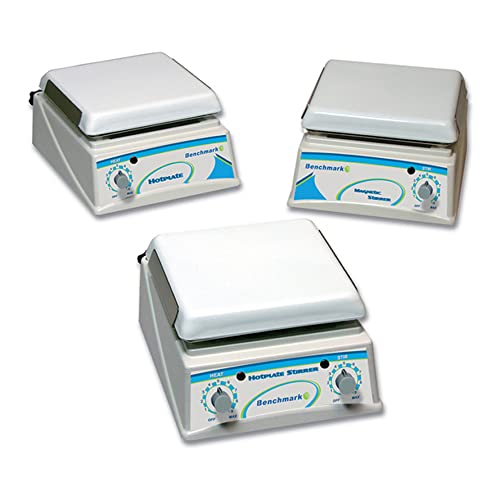
- White ceramic top resists chemicals and scratches
- 80 to 380°C temperature range
- Knob-controlled microprocessor regulation
Best For: Simple lab heating with a durable ceramic surface
Safety-Focused Stirrer
FOUR E'S SCIENTIFIC Ceramic Coated Digital Hotplate

- 0.5°C accuracy with PT1000 probe support
- Ceramic coating for even heating and fast cooling
- Includes stand, probe sensor, stir bars, and retriever
Best For: 110V lab stirring and heating with safety features
Precision Bench Top Choice – Corning PC-600D Digital Hot Plate
If you need a ceramic hot plate for laboratory work with tight temperature control, the Corning PC-600D is built for repeatable heating on a 10 x 10 inch Pyroceram surface. Its microprocessor control and digital LED readout make it a strong fit for labs that value consistency, chemical resistance, and spill protection over simple basic heating.
Best For: General laboratory heating tasks that call for precise, repeatable temperature control and a durable glass-ceramic top.
Pros:
- 10 x 10 inch Pyroceram top offers scratch, corrosion, and chemical resistance.
- Microprocessor-based control maintains temperature from 5 to 550°C in 5°C steps.
- Digital LED temperature display and flashing indicator help confirm setpoint status.
- Two-piece casting design helps deflect spills away from the electrical area.
Cons:
- Requires a 120V/60Hz U.S. power source.
- Designed as a hot plate only, so it does not add stirring capability.
Overall, this model stands out for labs that want a dependable ceramic surface and a wide operating range with easy-to-read digital feedback. It is less about compact simplicity and more about controlled, repeatable bench heating.
Compact Value Heater – 600W Ceramic Lab Hot Plate
This ceramic hot plate for laboratory use focuses on straightforward heating power in a compact footprint. With a 600W element, adjustable thermostat, and a 320 x 190 mm continuous heating plate, it suits routine heating jobs where simple control and bench-space savings matter.
Best For: Labs, classrooms, and small workspaces that need a compact ceramic heater for steady, uncomplicated heating.
Pros:
- 600W heating element provides fast warm-up performance.
- Max temperature of 380°C covers common lab heating needs.
- Continuous heating mode supports uninterrupted operation.
- Compact design helps conserve benchtop space.
Cons:
- Temperature control is via thermostat dial rather than digital readout.
- No stirring function is included.
For buyers who want a practical heating-only unit, this model delivers the essentials without taking up much room. It is a sensible choice when speed, simplicity, and a compact ceramic surface are more important than advanced controls.
Stir-and-Heat Lab Pick – Corning PC-420D Stirring Hot Plate
If your ceramic hot plate for laboratory work needs both heat and stirring, the Corning PC-420D is a versatile bench option. It combines a Pyroceram glass-ceramic top with digital speed and temperature displays, making it suitable for users who want a compact stirring hot plate with controlled, repeatable settings.
Best For: Laboratory workflows that need both magnetic stirring and precise temperature control in a small footprint.
Pros:
- Microprocessor-based control maintains temperature from 5 to 550°C in 5°C increments.
- Digital display shows stirring speed in rpm or temperature in °C.
- Pyroceram glass-ceramic surface resists scratches, corrosion, and chemicals.
- Built-in rod mount support adds convenience for lab setups.
Cons:
- Smaller 5 x 7 inch top limits working area.
- Requires 120V/60Hz U.S. power.
This model is a strong fit when stirring is part of the job and you still want the durability of a ceramic-style lab top. Its smaller surface makes it best for focused tasks rather than larger vessels or crowded setups.
Controlled Mixing Option – FOUR E'S Stirrer Hot Plate
For buyers looking for a ceramic hot plate for laboratory mixing and heating, this FOUR E’S SCIENTIFIC model offers a ceramic-coated plate, digital control, and a wide stirring range. It is aimed at users who want accurate temperature sensing and adjustable stirring in one unit, especially for small-batch lab, classroom, or workshop work.
Best For: Small-scale lab heating and stirring where accurate temperature feedback and adjustable mixing are important.
Pros:
- Accurate temperature control is rated to 0.5°C with an internal sensor and PT1000 probe.
- 600W heating output and max temperature of 536°F support a range of tasks.
- 100 to 1500 RPM stirring range and 5L capacity allow flexible mixing.
- Built-in safety protections include hot warning, high temperature, and splash protection.
Cons:
- Supports 110V only.
- Stir bar is included, but the stand is not.
This is a practical pick when you need more than heating alone and want feedback from a probe-based temperature system. It is especially useful for users who value safety features and a broad stirring range in a compact laboratory unit.
Premium Temperature Control – Corning PC-400D 5×7 Pyroceram Hot Plate
If you need a ceramic hot plate for laboratory work with precise temperature control, the Corning 6795-400D PC-400D is built around repeatable heating and a chemically resistant Pyroceram surface. Its 5 x 7-inch glass-ceramic top is designed to resist scratches and corrosion, while the cast body helps deflect spills away from the electrical area.
Best For: Labs that want dependable, microprocessor-controlled heating with a durable glass-ceramic top and built-in rod support.
Pros:
- Digital LED temperature display with settings from 5 to 550°C in 5-degree increments
- Microprocessor-based control for consistent and repeatable temperature performance
- Scratch-, corrosion-, and chemical-resistant Pyroceram top
- Built-in rod support and angled front panel add practical lab convenience
Cons:
- Designed for 120V/60Hz power, so it is not universal for all regions
- Hot plate only, with no stirring function included
This model is a solid fit when accuracy, durability, and simple day-to-day operation matter more than extra features. It is a straightforward choice for labs that want a robust ceramic hot plate for laboratory heating tasks.
All-in-One Stirring Choice – FOUR E'S 5-Inch Stirrer Hot Plate
This ceramic hot plate for laboratory use adds magnetic stirring, making it a practical option when you need both heat and motion in one unit. The ceramic-coated plate is designed for chemical resistance and efficient heat transfer, while the LED display lets you monitor speed and temperature in real time.
Best For: Users who want a compact stirrer-hot plate with temperature control, variable speed, and built-in safety features.
Pros:
- Combines heating and stirring, with independent operation for each function
- LED display shows speed and temperature in real time
- Max 5 L capacity with 100-1500 RPM speed range
- PID control, overheating protection, and enclosed plate design improve safety
Cons:
- Rated for 110V power only
- Maximum heating specification tops out at 280°C / 536°F
For small-scale lab mixing and heating, this model offers strong versatility in a single footprint. It is especially appealing if you want a ceramic hot plate for laboratory workflows that also require stirring performance.
Compact North America Pick – Corning Scholar PC-170 5×5 Hot Plate
The Corning Scholar PC-170 is a compact ceramic hot plate for laboratory settings where simple, reliable heating is the priority. Its 5 x 5-inch top and dual heat shields are designed to keep the outer case cool to the touch, and it runs on 120V/60Hz power for North American use and similar electrical environments.
Best For: Basic lab heating tasks where a smaller footprint and cooler outer housing are important.
Pros:
- Compact 5 x 5-inch top suits limited bench space
- Dual heat shields help keep the outer case cool
- UL/CUL approved for added reassurance
- 120V/60Hz operation fits North American lab setups
Cons:
- No digital display or advanced controls mentioned
- Smaller top may be limiting for larger vessels
This is a practical option if you want a straightforward heated plate without extra complexity. It works well as a simple ceramic hot plate for laboratory use when space, safety, and compatibility matter most.
Accurate Digital Control – ONiLAB 5 inch LED Ceramic Coated Hotplate Stirrer
If you need a ceramic hot plate for laboratory work that can both heat and stir, this ONiLAB unit is built around precise digital control. The ceramic-coated stainless steel plate offers good chemical resistance and fast heat transfer, while the LED display makes it easier to dial in temperature and speed for routine lab mixing.
Best For: Labs that want a compact hotplate stirrer with digital temperature control and a ceramic-coated surface.
Pros:
- Internal sensor plus PT1000 probe support with 0.5°C accuracy.
- Ceramic-coated stainless steel plate for chemical resistance and faster cooldown.
- Handles up to 5L mixing volume and up to 3L at 1500 rpm.
- HOT warning flashes above 50°C for added safety awareness.
Cons:
- Only one size option is listed, so it may not suit larger lab vessels.
- The plastic housing is sturdy, but it is still a compact bench unit.
Overall, this model is a strong fit if you want a lab hotplate stirrer with straightforward controls, good stirring capacity, and a ceramic-coated work surface that is easy to manage day to day.
Classic Bench Plate – Benchmark Scientific H4000-H Ceramic Top Hot Plate
This ceramic hot plate for laboratory benches is a simple, no-frills heating option for users who value reliable temperature range and chemical resistance over digital extras. The white ceramic top is designed for fast heating and scratch resistance, while knob-based microprocessor regulation keeps operation straightforward.
Best For: Basic lab heating tasks where a ceramic top and simple control layout are the priority.
Pros:
- White ceramic top plate offers fast heating and resistance to chemicals and scratches.
- Temperature range from 80 to 380°C.
- Microprocessor-based analog regulation with knob control is easy to use.
- Hot top indicator adds a helpful safety cue.
Cons:
- No stirring function is included.
- Analog control may be less precise than digital readouts for fine adjustment.
If you want a straightforward ceramic laboratory hot plate rather than a stirrer, this Benchmark unit covers the essentials with a durable top and a wide usable temperature range.
Safety-Focused Stirrer – FOUR E'S SCIENTIFIC Ceramic Coated Digital Hotplate
For buyers comparing a ceramic hot plate for laboratory use, this FOUR E’S SCIENTIFIC model stands out for combining digital heating, stirring, and built-in safety features. The ceramic coating is designed for even heat distribution and fast cooling, while the included accessories make setup easier for everyday lab or classroom use.
Best For: Users who want a 110V hotplate stirrer with safety protections and included probe accessories.
Pros:
- 0.5°C temperature accuracy with internal sensor and PT1000 probe support.
- Ceramic coating provides thermal conductivity, even heat distribution, and faster cool-down.
- Up to 5L stirring capacity with 100 to 1500 rpm range.
- Includes stand, stir bar retriever, stir bars, and temp probe sensor.
Cons:
- Supports 110V only, so power compatibility matters.
- Safety and heating guidance suggests it works best when operating conditions are controlled.
This is a practical pick if you want a laboratory hotplate stirrer with a ceramic-coated plate, built-in protection, and useful accessories right out of the box.
How We Picked the Best Ceramic Hot Plate for Laboratory
We focused on lab-friendly ceramic hot plate models with clear temperature control, appropriate platform sizes, dependable build quality, and features that matter in real workflows such as stirring, probe support, and digital readouts. We also considered whether each Ceramic Hot Plate for Laboratory use is better suited to routine heating, mixing, or larger-volume setups.
Quick Comparison
For compact bench work, 5-inch and 5 x 7-inch units are easier to place and heat faster. For larger beakers, flasks, or broader sample batches, larger tops such as 7.5 x 7.5 inches or 10 x 10 inches provide more usable surface area and better stability. If your work includes solution prep or reaction mixing, a magnetic stirrer hot plate is usually the smarter choice than a heat-only plate.
Key Buying Factors for a Ceramic Hot Plate for Laboratory Use
Top Size and Vessel Fit
Match the plate size to your most common glassware. A small top is efficient for micro-batches and limited bench space, while a larger platform improves support for bigger vessels and multi-container workflows.
Temperature Range and Control
Look for a range that covers both gentle warming and higher-heat applications. Digital controls are preferable when repeatability matters, and probe compatibility is helpful if your process needs more accurate sample-side temperature monitoring.
Stirring Needs
If your protocol involves dissolving solids, maintaining uniformity, or managing reactions, choose a magnetic stirrer model. Check the RPM range and maximum stirring volume so the unit can handle your typical sample sizes without strain.
Surface Material and Chemical Resistance
Ceramic and pyroceram tops are valued for thermal stability and easier cleanup. In a laboratory setting, resistance to spills and common chemicals can improve longevity and reduce maintenance time.
Power, Voltage, and Safety
Confirm voltage compatibility before buying. Safety features such as indicator lights, stable housing, and support for external temperature probes can help reduce risk during longer heating sessions.
Who Should Buy Which Ceramic Hot Plate for Laboratory?
If you need simple, reliable heating for standard lab containers, a heat-only ceramic hot plate is often enough. If you prepare solutions, disperse powders, or run mixed samples, a magnetic stirrer hot plate is the better fit. Larger labs or users working with bigger glassware should prioritize wide top dimensions, while smaller benches and teaching labs may benefit from compact 5-inch or 5 x 7-inch units. For precise or repeatable workflows, choose a digital Ceramic Hot Plate for Laboratory use with stronger temperature control and probe support.
In short, the best choice comes down to your vessel size, whether you need stirring, and how much control your protocol requires.