Choosing among moisture balances for food samples means balancing measurement accuracy, drying speed, capacity, temperature control, and workflow convenience. The right analyzer can make routine quality checks faster while helping produce more consistent results.
This roundup includes compact and higher-capacity halogen analyzers, touchscreen models, RS232-equipped instruments, and reusable sample pans. Use the guide below to narrow the options by test volume, required readability, and food-testing workflow.
Best 10 Moisture Balances for Food Samples Picks for 2026
Best Overall
Rapid Halogen Moisture Analyzer
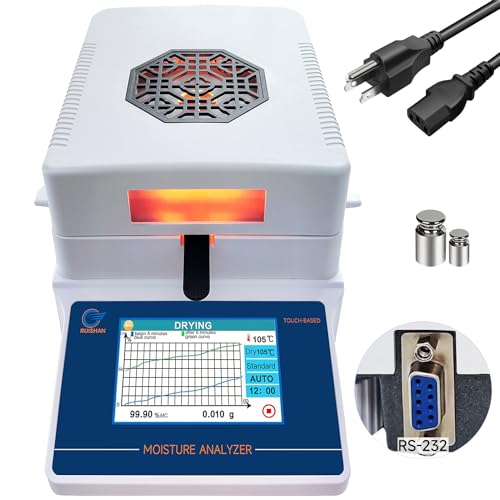
- 120 g capacity with 0.01% readability
- Three drying modes and 32 stored methods
- RS-232 output plus calibration accessories
Best For: Versatile lab and production moisture testing
Best Established Option

- 1 mg/0.01% readability for precise testing
- Backlit LCD shows weight and moisture
- Easy-clean chamber and RS-232 interface
Best For: Routine testing with durable lab hardware
Best for Data Tracking
GS110 Halogen Moisture Analyzer

- 40°C–160°C adjustable heating range
- Stores 20 results with printer interface
- Rapid automatic drying and weight monitoring
Best For: Fast testing with saved and printable records
Best Touchscreen Value
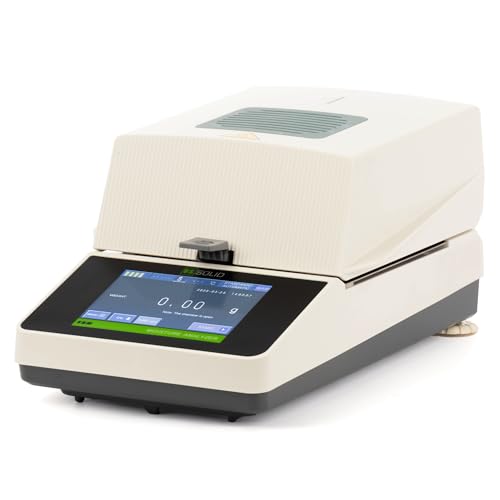
- 5-inch touchscreen with three drying modes
- 110 g capacity and 0.1% moisture readability
- Stores 20 methods and exports through RS-232
Best For: User-friendly laboratory moisture testing
Flexible Precision
UXILAII 200g Halogen Moisture Analyzer

- 200 g capacity with 0.001 g readability
- Three drying and three ending modes
- 32 stored methods with RS232 output
Best For: Labs needing versatile, high-capacity food moisture testing
Batch-Test Essential

- 50 pans per box for frequent testing
- 300°C temperature resistance
- 58 ml capacity with defined dimensions
Best For: Labs needing replacement pans for compatible moisture analyzers
Stable Lab Performance
Fristaden Lab 110g Moisture Analyzer

- 0.001 g readability and 0.01% moisture resolution
- HBM load cell with halogen drying
- RS-232 connectivity and programmable methods
Best For: Labs seeking stable, repeatable loss-on-drying analysis
Precision Pick
High-Resolution Halogen Moisture Analyzer
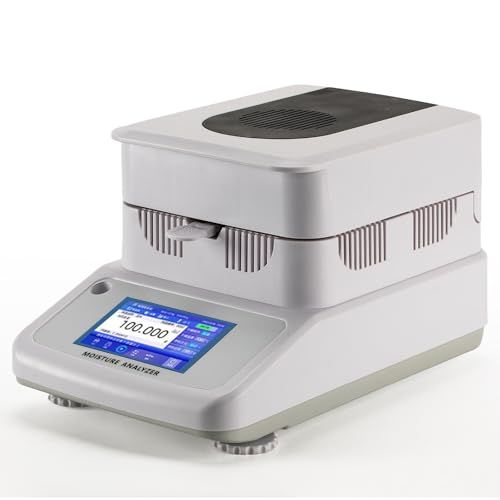
- 0.002 g weight and 0.01% moisture readability
- 100-record database with RS232 output
- Four drying programs from 40–180°C
Best For: High-resolution food and industrial moisture testing
Value Workhorse
U.S. Solid Halogen Moisture Analyzer
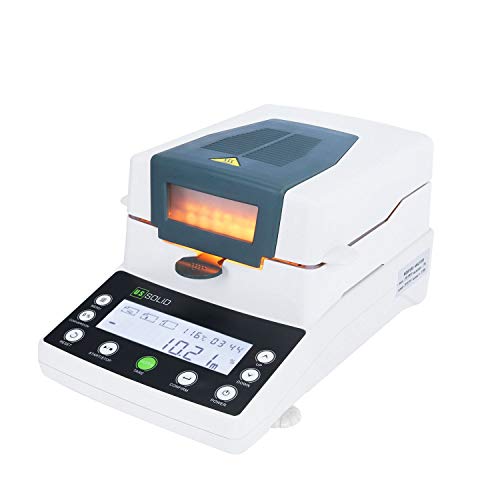
- 5 mg weight and 0.1% moisture readability
- 15 preset method groups and three result formats
- Includes 50 sample pans and RS232 connectivity
Best For: Routine food, grain, and laboratory moisture checks
Flexible Lab Choice
FLB Programmable Moisture Analyzer

- 0.001 g readout accuracy with 110 g capacity
- 34 programmable memory groups
- Manual, automatic, and timed drying modes
Best For: Multi-protocol food and laboratory testing
Best Overall – Rapid Halogen Moisture Analyzer
For moisture balances for food samples, this analyzer combines a 120 g capacity with 0.01% readability and rapid halogen heating. Its touchscreen controls, selectable drying modes, and broad sample compatibility make it a flexible choice for routine lab testing.
Best For: Labs and production settings testing food, grain, plants, wood, paper, textiles, and other materials.
Pros:
- Offers standard, fast, and soft drying modes with automatic or timed ending modes.
- Stores up to 32 research methods for repeat testing.
- Supports RS-232 connection to a printer or computer.
- Includes sample pans, calibration weights, pan holder, and sample remover.
Cons:
- Its 3.3 kg body is less convenient for frequent relocation.
- Temperature begins at 50°C, which may not suit every delicate sample.
This is a strong all-purpose option when you want fast results, method storage, and a well-equipped package for varied food-sample workflows.
Best Established Option – Ohaus MB27 Moisture Analyzer
The Ohaus MB27 is a straightforward choice for measuring moisture in food samples and other materials. It pairs halogen heating with 1 mg/0.01% readability, a backlit LCD, and an easily cleaned heating chamber for frequent testing.
Best For: Users who want a durable fixed-installation analyzer with clear readings and PC or printer connectivity.
Pros:
- Provides quick, precise moisture measurements using halogen heating.
- Backlit LCD displays both weight and moisture readings.
- Easily cleaned heating chamber supports repeated testing.
- Die-cast metal and ABS housing is designed for durability.
Cons:
- Its listed 110 g capacity is slightly lower than some alternatives.
- The supplied notes do not list multiple drying modes or stored test methods.
Choose the MB27 when dependable construction, simple readout, and routine workflow matter more than touchscreen features or extensive method storage.
Best for Data Tracking – GS110 Halogen Moisture Analyzer
For moisture balances for food samples that need quick results and documented records, the GS110 uses rapid halogen heating and real-time weight monitoring. Adjustable temperatures from 40°C to 160°C and programmable heating times allow testing to be tailored to different materials.
Best For: Labs and production environments that need rapid testing, historical data storage, and printable results.
Pros:
- Automatically heats, monitors weight, and calculates moisture in minutes.
- Temperature adjusts in 1°C increments from 40°C to 160°C.
- Stores up to 20 historical data sets and supports printer output.
- Includes 20 aluminum pans and a 100 g calibration weight.
Cons:
- Its listed readout accuracy is 0.005 g, while moisture readability is presented separately.
- The supplied details do not specify a touchscreen interface.
The GS110 is particularly practical when a faster alternative to oven drying is needed and test records must be saved or printed for later reference.
Best Touchscreen Value – U.S. Solid Moisture Analyzer
This U.S. Solid analyzer is a practical pick for moisture balances for food samples when easy controls and flexible result displays are priorities. Its 5-inch color touchscreen, 110 g capacity, and 250 W halogen lamp support quick testing across food, grain, plastics, textiles, and chemicals.
Best For: Laboratory users who want touchscreen operation, multiple drying modes, and straightforward data export.
Pros:
- Measures weight to 0.01 g and moisture to 0.1%.
- Provides standard, fast, and soft drying modes up to 160°C.
- Stores up to 20 methods and offers automatic, manual, and timed endings.
- Displays moisture percentage, dry weight, or dry-weight percentage.
Cons:
- Its 0.1% moisture readability is less detailed than some higher-resolution analyzers.
- The supplied details list 20 included pans in the components, while the feature notes mention 50.
With its accessible touchscreen and useful display options, this model fits labs seeking a user-friendly analyzer for varied routine sample testing.
Flexible Precision – UXILAII 200g Halogen Moisture Analyzer
For labs needing versatile moisture balances for food samples, the UXILAII combines 0.001 g weight readability with 0.01% moisture readability, halogen heating, and a 200 g capacity. Its touchscreen controls and multiple test modes make it practical for routine food-quality measurements.
Best For: Food, agriculture, pharmaceutical, and research labs that need high capacity, stored methods, and flexible drying controls.
Pros:
- 200 g maximum capacity with 0.001 g weight readability.
- Three drying modes and three ending modes support different sample-testing workflows.
- Stores up to 32 methods and supports RS232 output to a printer or computer.
- Includes calibration weights and a 5-inch color touchscreen.
Cons:
- The heating unit and sample container become hot after testing and require careful handling.
- Calibration with weights is required before testing.
- Aluminum pans are not included and must be purchased separately.
The UXILAII is a strong all-around choice when capacity and configurable methods matter. Its broad temperature range and connectivity add useful flexibility for recurring food-sample analysis.
Batch-Test Essential – Reusable Aluminum Sample Pans
These aluminum pans are a practical consumable for moisture balances for food samples, especially when testing frequently or in batches. The 50-pack provides replacements for weighing, drying, and moisture-analysis workflows.
Best For: Laboratories that need a steady supply of disposable-style aluminum dishes compatible with most moisture analyzers.
Pros:
- Includes 50 pans for repeated testing and routine replacements.
- Aluminum construction supports heat conductivity and even heat distribution.
- Rated for temperatures up to 300°C.
- 58 ml capacity and smooth surfaces support weighing, drying, and dispensing.
Cons:
- Compatibility should be confirmed because analyzer dimensions can vary.
- The 103 mm top diameter, 92 mm bottom diameter, and 8 mm height may not suit every instrument.
- These are accessory pans rather than a complete moisture analyzer.
For labs already equipped with a compatible analyzer, this bulk pack can simplify recurring sample preparation. Verify the pan dimensions before ordering to avoid fit issues.
Stable Lab Performance – Fristaden Lab 110g Moisture Analyzer
The Fristaden Lab analyzer is designed for precise moisture balances for food samples, offering 0.001 g readability, 0.01% moisture resolution, and a halogen drying system. Its HBM load cell and RS-232 connectivity make it suitable for repeatable laboratory loss-on-drying work.
Best For: Food, pharmaceutical, agricultural, and research labs prioritizing weighing stability, method storage, and documented test output.
Pros:
- 0.001 g readability and 0.01% moisture resolution support detailed measurements.
- German-engineered HBM load cell is designed for stability and accuracy.
- Halogen drying provides rapid, even heating for loss-on-drying analysis.
- RS-232 connectivity and programmable methods support PC or printer records.
Cons:
- Its 110 g capacity is lower than some higher-capacity moisture analyzers.
- RS-232 is the listed connectivity option, rather than a newer wireless connection.
- It is intended for laboratory/scientific applications rather than general household use.
The Fristaden Lab model is a focused option for users who value a stable load cell and repeatable drying performance. Its included calibration weight and one-year U.S. warranty add practical support for laboratory purchasing.
Precision Pick – High-Resolution Halogen Moisture Analyzer
For moisture balances for food samples that require detailed readings and repeatable workflows, this analyzer combines 0.002 g weight readability with 0.01% moisture readability. Its 5-inch touchscreen, programmable heating modes, and built-in record storage make it practical for laboratory or production testing.
Best For: Food and industrial users who want high-resolution readings, flexible drying programs, and onboard test records.
Pros:
- Halogen heating and a PT-100 sensor support fast, precise analysis.
- Stores up to 100 test records and supports RS232 data output.
- Offers standard, mild, fast, and slow heating from 40–180°C.
- Includes calibration weight, trays, windproof cover, and stylus.
Cons:
- Its 120 g capacity may not suit unusually large sample loads.
- Printer compatibility is optional rather than included.
This is the strongest choice of the three for users prioritizing fine readability and substantial internal data storage. The touchscreen controls and multiple drying modes also help accommodate different food sample types.
Value Workhorse – U.S. Solid Halogen Moisture Analyzer
This U.S. Solid model is a practical option for moisture balances for food samples when straightforward operation and included consumables matter. It provides 5 mg weight readability, 0.1% moisture readability, a 110 g capacity, and 50 sample pans for routine testing.
Best For: Food, grain, herb, pharmaceutical, chemical, and laboratory users performing recurring moisture checks on a practical budget.
Pros:
- 450 W halogen heating dries samples quickly and evenly.
- Three drying modes support standard, fast, and soft testing.
- Stores up to 15 preset method groups for repeated procedures.
- Includes 50 sample pans and an RS232 port for PC or printer output.
Cons:
- Its 0.1% moisture readability is less detailed than the other listed analyzers.
- The drying range tops out at 199°C and may require careful setup for delicate samples.
Choose this analyzer if included sample pans and simple repeat testing are more important than the finest available resolution. Its method storage and three result display options make routine workflows easier to manage.
Flexible Lab Choice – FLB Programmable Moisture Analyzer
For moisture balances for food samples shared across different operators or testing routines, the FLB analyzer offers 0.001 g readability, a 5-inch touchscreen, and 34 programmable memory groups. Its selectable operating modes and multilingual menu provide useful flexibility for laboratory and production environments.
Best For: Food, agricultural, chemical, and pharmaceutical testing sites that need stored methods and adaptable operation.
Pros:
- Provides 0.001 g readout accuracy with a 110 g capacity.
- Stores 34 programmable test methods to reduce repeated setup.
- Supports manual, automatic, and timed operation with gentle or rapid drying.
- Includes RS232 connectivity, calibration weights, and a one-year manufacturer warranty.
Cons:
- Heating adjustment is limited to 40–180°C.
- The unit weighs 11 pounds, so it is better suited to a fixed workstation than frequent relocation.
Its combination of fine readability, method memory, and multiple control modes makes the FLB a well-rounded laboratory option. It is especially appealing when several sample protocols must be maintained and exported through RS232.
How We Picked the Best Moisture Balances for Food Samples
We compared the selected products by weighing capacity, readability, heating method, drying-temperature range, interface, included accessories, and practical lab usability. Halogen heating is emphasized because it can shorten drying cycles compared with conventional methods, although actual test time depends on the sample, target endpoint, and programmed method.
We also considered whether each unit suits occasional checks, routine production testing, or more structured laboratory work. Features such as RS232 connectivity, internal databases, touchscreens, multiple drying modes, and included pans can matter as much as headline resolution.
Quick Comparison
- Highest precision: Models rated around 0.001 g readability are suited to users who need finer changes in sample mass.
- Simple routine testing: 0.01 g or 5 mg readability can be practical for straightforward quality-control checks.
- Higher sample capacity: Units around 110–200 g provide flexibility for larger or denser samples, provided the method supports that load.
- Best workflow features: Touchscreens, stored methods, multiple drying modes, and RS232 ports can reduce manual recording and setup time.
- Accessory value: Reusable aluminum pans may lower ongoing consumable costs, but verify their size and compatibility before ordering.
Key Buying Factors for Moisture Balances for Food Samples
Readability and Repeatability
Readability is the smallest displayed increment, not a guarantee of overall accuracy. Look for a specification that matches your laboratory method, then check calibration options, repeatability data, and whether the manufacturer provides clear operating instructions.
Heating Control and Drying Range
Temperature range and control affect how quickly and consistently a sample dries. A wide range, such as approximately 40–160°C or higher, offers flexibility, but heat-sensitive foods may require gentler programs. Multiple drying modes can help accommodate samples with different moisture characteristics.
Capacity, Pan Size, and Sample Preparation
Do not choose capacity by maximum load alone. Consider the recommended sample mass, pan diameter, sample thickness, and whether the material can spread evenly. Uneven or oversized samples can produce inconsistent results even on a precise instrument.
Data Handling and Maintenance
For repeated testing, an RS232 connection, built-in database, or touchscreen may simplify documentation. Also confirm power requirements, calibration procedures, replacement-pan availability, and cleaning access before purchase.
Who Should Buy Which Moisture Balances for Food Samples?
Choose a high-resolution 0.001 g model for laboratory users who need fine mass-change readings and are prepared to control sample preparation carefully. Choose a 0.01 g or 5 mg model for routine food-production checks where speed and straightforward operation are more important than maximum displayed resolution.
Choose a touchscreen or database-equipped analyzer for teams sharing methods or recording many tests. Choose an RS232 model when results need to move into a computer or existing quality system. If you already own a compatible analyzer, the reusable pan pack can be the most practical purchase for reducing consumable use. Before ordering, verify voltage, pan dimensions, temperature requirements, and the instrument’s stated performance for your specific food samples.