The best mineral collection kits for kids turn curiosity about rocks, crystals, and fossils into an engaging hands-on science activity. The options in this roundup range from compact starter sets to large collections with testing tools, labels, display cases, and educational guides.
Use the buying guide below to compare specimen variety, learning value, organization, and age suitability before choosing a kit for a classroom, gift, or home geology project.
Best 10 Mineral Collection Kits for Kids Picks for 2026
Mega Collection Pick
Dan&Darci 250+ Rock, Fossil & Mineral Kit

- 250+ mixed specimens
- Jumbo learning mat included
- Display case and pouch included
Best For: Large, varied geology activities
Largest Collection Pick
National Geographic 300+ Rock Collection

- Over 300 genuine specimens
- Two geodes to crack open
- Learning guide and storage bag
Best For: Maximum variety with geode exploration
Display & Fossil Pick
250+ Rocks, Minerals & Fossils Kit

- 250+ specimens included
- Genuine fossils and unbroken geodes
- Display case and stand included
Best For: Collectors who want fossils and displays
Compact Starter Pick
National Geographic 15-Piece Collection
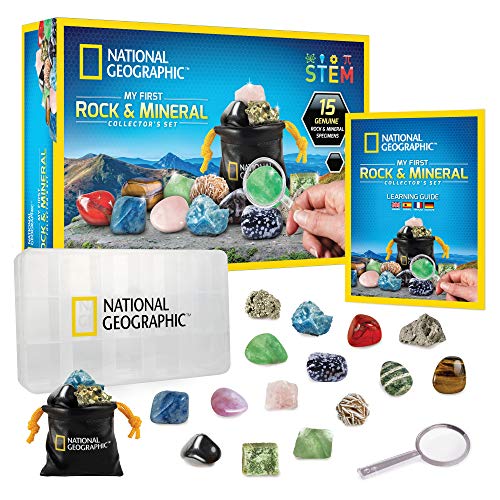
- 15 named specimens
- Clear storage case included
- Full-color learning guide
Best For: Organized beginner collections
Hands-On STEM Pick
Toysmith Rock & Mineral Science Kit

- 30 real rock and mineral specimens
- Includes viewer and testing tools
- Organized trays support repeat exploration
Best For: Young geologists ages 8 and up
Largest Starter Assortment

- 54 rocks, crystals, and minerals
- Includes cards, guidebook, and magnifier
- Compartment case supports display
Best For: Beginners and classroom or family activities
Compact Display Set

- 48 natural rocks and minerals
- Includes guide and magnifying glass
- Labeled compartments simplify display
Best For: Older beginners and display-focused collectors
Bulk Crystal Explorer
450-Piece Rocks and Minerals Set

- Approximately 450–500 stones
- 40+ tumbled crystal types
- Includes rough stones and chips
Best For: Large-scale sorting, crafts, and geology exploration
Display Case Classic
18-Piece Rock and Mineral Collection

- 18 rocks and minerals
- Plastic collection box included
- Description and educational information
Best For: Organized beginner collections and display
Young Geologist Starter
25-Piece Mineral Rock Collection

- 25 rocks and gemstones
- Includes descriptions and learning guide
- Recommended for ages 6 and up
Best For: Guided introductory geology and STEM activities
Mega Collection Pick – Dan&Darci 250+ Rock, Fossil & Mineral Kit
For shoppers comparing mineral collection kits for kids, the Dan&Darci set stands out for its 250+ specimens, mix of rocks, crystals, minerals, and genuine fossils, plus tools for sorting and learning. The two-pound collection is designed for geology-themed individual or group activities.
Best For: Kids and families wanting a large, varied collection with an oversized learning mat and display accessories.
Pros:
- Includes more than 250 rocks, minerals, crystals, and genuine fossils.
- Comes with a jumbo learning mat, magnifying glass, fossil display case, and collector’s pouch.
- Offers both rough and polished specimens for comparison and exploration.
Cons:
- The manufacturer recommends it for ages 8 and up, despite some broader age descriptions.
- The large assortment may require time to sort and organize.
This is a strong all-around choice when quantity and variety matter most. Its learning mat and included accessories make the collection more structured than a box of loose specimens.
Largest Collection Pick – National Geographic 300+ Rock Collection
Among mineral collection kits for kids, this National Geographic option offers one of the largest assortments, with more than 300 genuine rocks, minerals, and crystals from around the world. It also adds two break-open geodes for a hands-on discovery activity.
Best For: Kids who want the biggest specimen count and an exciting geode-cracking component.
Pros:
- Includes over 300 genuine rocks, minerals, and crystal specimens.
- Two premium geodes provide an interactive crystal-revealing activity.
- Includes a full-color learning guide, magnifying glass, and closable storage bag.
Cons:
- The manufacturer recommends the kit for ages 8 and up.
- The notes do not specify a display case for individual specimens.
Choose this set when specimen quantity and interactive exploration are higher priorities than display features. Its guide and storage bag help turn the large assortment into an approachable starter collection.
Display & Fossil Pick – 250+ Rocks, Minerals & Fossils Kit
This collection is a practical choice among mineral collection kits for kids who want both discovery and display. It combines more than 250 specimens with genuine fossils, unbroken geodes, identification materials, and a display case with stand.
Best For: Young collectors who want fossils, geodes, and a dedicated way to showcase favorite finds.
Pros:
- Includes more than 250 rocks, minerals, gems, genuine fossils, and geodes.
- Features fossil examples such as sand tiger shark teeth and gastropods.
- Includes a display case, display stand, three collection pouches, magnifying glass, and learning guide.
Cons:
- The manufacturer recommends the kit for ages 6 and up, but small specimens still require appropriate supervision.
- The notes do not state that the geodes are pre-cut; they are described as unbroken.
This set has especially good presentation value because children can sort their finds, keep extras in pouches, and put favorites on display. It is a well-rounded option for a budding fossil or rock collector.
Compact Starter Pick – National Geographic 15-Piece Collection
For families seeking a smaller introduction to mineral collection kits for kids, this National Geographic set includes 15 named rock and mineral specimens in a compact format. A clear storage box, pouch, and full-color guide keep the starter collection easy to identify and store.
Best For: Beginners who prefer a focused collection rather than hundreds of loose specimens.
Pros:
- Includes 15 specimens such as tiger’s eye, rose quartz, pyrite, and fluorite.
- Comes with a clear storage case and storage pouch.
- The full-color learning guide supports rock identification and geology learning.
Cons:
- It includes substantially fewer specimens than the larger kits in this roundup.
- The manufacturer recommends it for ages 8 and up.
This is the most manageable option for a first collection, a gift, or a child who values organization. The smaller assortment also makes it easier to examine and learn about each specimen individually.
Hands-On STEM Pick – Toysmith Rock & Mineral Science Kit
For kids who want to do more than simply look at specimens, this mineral collection kit for kids combines 30 real rocks and minerals with tools for observation, testing, and identification. Its compact, organized format makes it practical for home or classroom exploration.
Best For: Young geologists ages 8 and up who want hands-on STEM activities and a structured introduction to geology.
Pros:
- Includes 30 real specimens: 15 rocks and 15 minerals.
- Comes with a magnifying viewer, streak plate, nail, and other testing tools.
- Durable trays help sort and store the collection between activities.
- Supports specimen comparison, classification, and identification.
Cons:
- Recommended for children ages 8 and up.
- Offers fewer total specimens than some larger collection-focused kits.
This is a strong choice when interactive testing matters more than having the largest assortment. It gives children a focused set of specimens and the basic tools needed to investigate their properties.
Largest Starter Assortment – 54-Piece Rock Collection Kit
This mineral collection kit for kids is built around variety and presentation, with 54 globally sourced rocks, crystals, and minerals in a compartmentalized case. Identification cards, a learning book, and a magnifier make it a versatile starter collection.
Best For: Beginners ages 6 and up who want a broad collection for learning, display, classroom activities, or family games.
Pros:
- Includes 54 specimens, including 9 polished gems and 45 raw stones and crystals.
- Provides 54 illustrated identification and game cards.
- Includes a colorful reference book covering origins, hardness, and mining locations.
- Transparent compartment storage case supports sorting and display.
Cons:
- The kit is focused on collection and identification rather than mineral testing.
- Specimens vary because each piece is distinct and handpicked.
Choose this set if specimen count, display, and reference materials are your priorities. It offers more pieces than the other options here, while its cards and guide add learning and group-play possibilities.
Compact Display Set – 48-Piece Gemstone Collection
This mineral collection kit for kids offers 48 natural rocks, minerals, and gemstones in a labeled compartment case. A full-color learning guide and magnifying glass provide a straightforward way for children to examine specimens and learn their names.
Best For: Kids ages 12 and up, beginner collectors, and families seeking a labeled collection for home or classroom display.
Pros:
- Includes 48 natural rocks, minerals, and crystals.
- Features varied specimens such as rose quartz, red jasper, opal, and Desert Rose.
- Full-color guide supports identification and learning.
- Separate labeled compartments make the set easy to view and organize.
Cons:
- Recommended for ages 12 and up.
- Does not list dedicated mineral testing tools beyond the included magnifying glass.
- The storage package is made of cardboard.
This kit is a practical pick for collectors who value labeled organization and a broad gemstone selection. It is better suited to examining and displaying specimens than conducting formal mineral tests.
Bulk Crystal Explorer – 450-Piece Rocks and Minerals Set
For shoppers seeking mineral collection kits for kids with plenty of variety, this set offers approximately 450–500 small stones. It combines at least 40 types of tumbled crystal chips with at least 25 types of natural rough stones, making it suited to sorting, observing, crafts, and introductory geology activities.
Best For: Kids who want a large, varied collection for hands-on STEM exploration, crafts, or display.
Pros:
- Includes a broad assortment of tumbled crystals and rough stones.
- Offers approximately 1.5 pounds of tumbled chips and 1 pound of tiny rough stones.
- Small pieces can support sorting, rock study, jewelry-making, and DIY projects.
- Recommended for ages 3–12 and themed around geology.
Cons:
- Stone types and selection are random.
- Irregular pieces are small, ranging from about 0.2 to 0.8 inches.
- The large quantity may be more than a child needs for a simple introductory collection.
This is the quantity-focused option in the roundup. Its extensive assortment is appealing for classrooms, craft projects, and repeated sorting activities, though the small, randomly selected stones may be less suitable for children who want a compact, clearly organized display set.
Display Case Classic – 18-Piece Rock and Mineral Collection
This compact choice among mineral collection kits for kids includes 18 rocks and minerals in a plastic collection box. A description sheet and educational information support basic identification and geological learning, while the case keeps the set together for display or classroom use.
Best For: Beginners who prefer a small, organized collection with a storage and display box.
Pros:
- Provides an easy-to-manage 18-piece starter collection.
- Includes a plastic collection box for storage and display.
- Comes with a description sheet and educational information.
- Recommended for children ages 4–12.
Cons:
- Contains fewer specimens than the larger kits in this roundup.
- The supplied details do not specify the individual rock and mineral types.
- The set uses a plastic/acrylic case rather than a larger specimen-storage system.
Choose this set when presentation and simplicity matter more than quantity. The included box and information make it approachable for a first collection, while the limited piece count keeps the activity focused and manageable.
Young Geologist Starter – 25-Piece Mineral Rock Collection
For families comparing mineral collection kits for kids ages 6 and up, this 25-piece set offers a focused introduction to recognizable specimens. It includes examples such as quartz, tiger eye, snowflake obsidian, and red jasper, with descriptions intended to help children identify and learn about the rocks.
Best For: Children ages 6 and up who want a guided, introductory geology and STEM activity.
Pros:
- Includes 25 rocks and gemstones for a manageable starter collection.
- Features varied examples including quartz, tiger eye, snowflake obsidian, and red jasper.
- Descriptions and a learning guide support identification and geological study.
- Designed to encourage hands-on science exploration and curiosity.
Cons:
- It is a smaller collection than the 450-piece set.
- The supplied details do not specify a dedicated storage or display case.
- Recommended for ages 6 and up, so it may not suit younger children.
This is a balanced middle option for a child who wants more variety than a compact 18-piece set without managing hundreds of stones. Its learning materials make it particularly practical for guided home or classroom geology activities.
How We Picked the Best Mineral Collection Kits for Kids
We focused on kits that offer genuine rocks, minerals, gemstones, crystals, or fossils and provide enough context for children to identify and learn from them. We also considered specimen count, organization, included tools, display options, educational materials, portability, and likely age appeal.
Large collections can offer more variety, but a smaller kit with clear labels and a useful guide may provide a better first experience. Since contents can vary by package, check the current listing for the exact specimen count, accessories, and recommended age before ordering.
Quick Comparison
- Best for maximum variety: Choose a 250- to 450-piece collection if the child enjoys sorting, comparing, and building a larger specimen library.
- Best for structured learning: Look for identification guides, name labels, testing tools, or a viewer.
- Best for display: Prioritize a case, labeled compartments, or a dedicated collection box.
- Best for beginners: A smaller set with clearly identified specimens is usually easier to understand and organize.
- Best for gifting: A complete kit with attractive packaging and several activities offers more immediate play value.
Key Buying Factors for Mineral Collection Kits for Kids
Specimen Variety and Authenticity
Review whether the set includes a mix of minerals, crystals, gemstones, rocks, and fossils or mainly consists of small tumbled pieces. Variety supports comparison and discussion, while larger specimens may be easier for younger children to handle and inspect.
Learning Materials
Identification cards, description sheets, labels, magnifiers, viewers, and testing tools can make a collection more educational. For children completing a school project, names and basic facts are especially useful.
Organization and Storage
Display cases and collection boxes help prevent pieces from getting lost and make repeated use more convenient. Large bulk sets may need a separate tray, jars, or organizer, so account for storage before buying.
Age and Supervision
Small rocks and accessories can present a choking hazard. Follow the manufacturer’s age guidance and supervise younger children, particularly when a kit includes pointed tools, testing equipment, or very small specimens.
Who Should Buy Which Mineral Collection Kits for Kids?
Choose a large, high-count collection for an enthusiastic young geologist who enjoys sorting and cataloging. A kit with a viewer and testing tools is better for children who want experiments rather than simple collecting. For a first introduction, select a compact labeled set with an identification guide. Families prioritizing presentation should choose a collection with a display case, while classrooms and clubs may benefit from bulk sets that provide enough pieces for group activities.
Ultimately, the best Mineral Collection Kits for Kids match the child’s interest and attention span. More pieces do not always mean more learning; clear information, manageable organization, and opportunities to observe and compare often matter just as much.