Choosing the right magnetic bead separation rack can make DNA, RNA, and protein cleanup faster, cleaner, and more repeatable. The best rack depends on your tube format, bead volume, and how much throughput you need.
Below, we focus on practical lab use: fit, magnet strength, ease of cleanup, and compatibility with common tubes, strips, and plates.
Best 10 Magnetic Bead Separation Rack Picks for 2026
96-Well PCR Plate Rack
SP Bel-Art Magnetic Bead Separation Rack
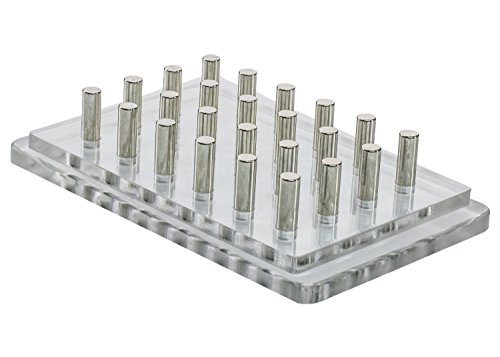
- Fits ANSI-standard microplates
- Clear acrylic improves visibility
- Powerful magnets secure beads fast
Best For: Plate-format PCR and microplate workflows
Compact 12-Well Rack
Preliminary Magnetic Beads Purification Rack

- 12 wells for 1.5/2 mL tubes
- Neodymium magnets separate beads fast
- Compatible with any bead kit
Best For: Small-volume biological sample purification
16-Tube Aluminum Rack
4E's USA Magnetic Bead Separator

- Holds 16 tubes with adapter rings
- 10° magnet angle supports fast separation
- Detachable holder helps resuspension
Best For: DNA and RNA purification workflows
16-Well Lab Stand
1.5/2 mL Magnetic Separation Rack

- Fits 16 wells of standard tubes
- Precision slots aid magnetic contact
- Durable plastic with embedded magnets
Best For: Routine lab workflows with standard microcentrifuge tubes
Legacy Rack
DNA/RNA purification rack for 1.5 mL tubes

- Holds up to 16 tubes
- Strong neodymium magnets
- Snug tube-slot fit
Best For: routine DNA/RNA cleanup with 1.5 mL conical tubes
High-Capacity Separator
8-well magnetic separator for 50 mL tubes

- 8 wells for 50 mL tubes
- Fast bead pull with neodymium magnets
- Works with bead-based kits
Best For: larger-volume PCR and purification workflows
Mid-Size Lab Rack
Magnetic bead stand for 10–15 mL tubes
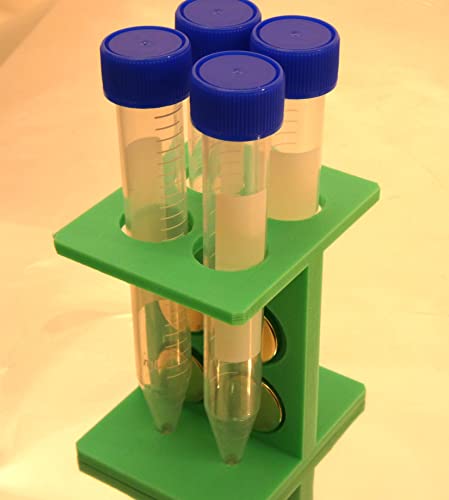
- Fits 10 mL and 15 mL tubes
- Rare-earth neodymium magnets
- For DNA/RNA/protein purification
Best For: medium-volume lab prep with 10–15 mL tubes
Fast 8-Tube Rack
Compact Aluminum Rack for 1.5 mL Tubes

- Separates magnetic beads in about 10 seconds
- Includes adapter rings for different 1.5 mL tubes
- Detachable magnet holder helps with resuspension
Best For: Small-volume DNA, RNA, and protein purification in 1.5 mL tubes
Plate-Format Separator
Deep-Well Rack for Microplates

- Fits 96-well 0.1 mL or 0.2 mL microplates
- Neodymium magnets separate beads quickly
- Compatible with any magnetic beads kit
Best For: Plate-based DNA, RNA, or protein purification
Strip-Tube Separator

- Holds standard 8-strip PCR tubes and 0.1/0.2 mL tubes
- Rare earth magnets deliver 5000+ gauss force
- Compact stand saves bench space
Best For: PCR strip workflows, DNA/RNA purification, and NGS prep
96-Well PCR Plate Rack – SP Bel-Art Magnetic Bead Separation Rack
SP Bel-Art Magnetic Bead Separation Rack for 96-Well PCR Tube Plate (F19900-0003) Made in USA
Check Price On AmazonIf you need a magnetic bead separation rack for a 96-well PCR tube plate, this SP Bel-Art model is built around plate-format workflows. It uses powerful magnets to quickly secure beads, and the clear acrylic body makes it easy to see tube contents while you work. The rack also lets you turn the tube for efficient bead mixing, which is useful when you want a straightforward bench tool for plate-based purification.
Best For: Plate-format PCR and microplate workflows that need visible, fast magnetic bead handling.
Pros:
- Fits microplates following ANSI standards
- Powerful magnets quickly secure beads
- Clear acrylic allows unobstructed view of tube contents
- Can be turned for efficient bead mixing
Cons:
- Designed specifically for 96-well PCR tube plate use
- Less suited to small single-tube workflows
This is a practical pick if your process centers on standard plate formats and you value visibility during separation. Its bench-friendly design keeps the workflow simple, but its specialization means it makes the most sense in plate-based labs.
Compact 12-Well Rack – Preliminary Magnetic Beads Purification Rack
This compact magnetic bead separation rack is aimed at preliminary purification in 1.5 mL and 2 mL centrifuge tubes. With 12 wells and neodymium magnets, it is designed to pull magnetic beads quickly, often in as fast as 10 seconds and up to two minutes for viscous solutions. If you want a simple rack for small-volume sample cleanup, this model keeps the process direct and efficient.
Best For: Small-volume biological sample purification in standard centrifuge tubes.
Pros:
- 12 wells sized for 1.5 mL/2 mL tubes
- Strong neodymium magnets speed separation
- Works with any magnetic beads-based purification kit
- Simple operation for routine small-volume workflows
Cons:
- Primarily for preliminary purification tasks
- Slower separation may be needed for viscous solutions
For labs that need a compact rack for routine bead-based cleanup, this is a straightforward fit. Its speed and broad kit compatibility are the main advantages, especially when working with standard microcentrifuge tubes.
16-Tube Aluminum Rack – 4E's USA Magnetic Bead Separator
This magnetic bead separation rack is built for 1.5 mL Eppendorf and microcentrifuge tubes, with space for 16 tubes and included adapter rings for different manufacturers. The removable magnet holder supports easier resuspension, while the angled 10° magnet placement is intended to improve contact with the tube cone and speed separation. If you want a sturdier rack for DNA or RNA purification, this one emphasizes speed and flexibility.
Best For: DNA and RNA purification workflows that benefit from fast separation and tube flexibility.
Pros:
- Holds 16 tubes and includes adapter rings
- Magnets positioned at a 10° angle for faster contact
- Separation can occur within 10 seconds
- Detachable magnet holder makes resuspension easier
Cons:
- Built around 1.5 mL tube formats
- More specialized for purification workflows than general use
This model stands out if you want a compact aluminum rack with strong magnets and a removable magnet holder. It is especially practical for fast-moving purification work where tube compatibility and easy resuspension matter.
16-Well Lab Stand – 1.5/2 mL Magnetic Separation Rack
This 16-well magnetic bead separation rack is designed for routine work with 1.5 mL and 2.0 mL tubes. It uses neodymium magnet-based collection, precision-machined tube slots, and embedded magnets to support direct contact between the tube wall and magnetic surface. For a simple benchtop bead stand that focuses on everyday laboratory handling, it offers a compact and durable setup.
Best For: Routine laboratory bead separation with standard 1.5 mL and 2.0 mL tubes.
Pros:
- Compatible with 16 wells of 1.5 mL or 2.0 mL tubes
- Precision-machined slots support direct magnetic contact
- Durable engineering plastic construction
- Operates from -20°C to 70°C
Cons:
- For research and industrial use only
- Basic design is aimed at routine workflows
This is a clean, practical option for labs that want a stable magnetic separator for common tube sizes. Its strength is dependable routine handling rather than extra features, which makes it easy to slot into standard workflows.
Legacy Rack – DNA/RNA purification rack for 1.5 mL tubes
If you need a magnetic bead separation rack for routine DNA or RNA cleanup, this 16-position rack is built around 1.5 mL conical centrifuge tubes and bead-based purification workflows. It is designed to work with any kit and uses strong neodymium magnets to separate beads quickly, with a snug tube fit that helps reduce disturbance when opening or closing tubes.
Best For: DNA, RNA, and biomolecule purification with 1.5 mL centrifuge tubes in small lab workflows.
Pros:
- Holds up to 16 of the 1.5 mL conical centrifuge tubes
- Strong neodymium magnets support quick bead separation within about a minute
- Snug slot design helps keep pellets undisturbed while handling tubes
- Compatible with any magnetic beads-based purification kit
Cons:
- Built specifically for 1.5 mL centrifuge tubes, so it is not a universal tube rack
- No multi-tube size flexibility is listed in the supplied notes
This is a practical pick if your workflow centers on standard 1.5 mL tubes and you want a straightforward rack for bead separation. The snug fit and fast magnet action make it a solid bench tool for common purification tasks.
High-Capacity Separator – 8-well magnetic separator for 50 mL tubes
VISOSCI 8 Wells 50ml pcr Tube Magnetic Bead Separator Magnetic Separation Rack for PCR sequencing
Check Price On AmazonThis magnetic bead separation rack is aimed at larger sample handling, with 8 wells sized for 50 mL centrifuge tubes. The strong neodymium magnets are designed to pull beads quickly, and the product notes call out fast separation in as little as 10 seconds for some samples, making it a fit for PCR sequencing and other bead-based purification workflows.
Best For: Larger-volume magnetic bead purification using 50 mL centrifuge tubes.
Pros:
- 8-well layout for 50 mL centrifuge tubes
- Strong magnets can separate beads very quickly, according to the notes
- Works with any magnetic beads-based purification kit
- Suitable for biological sample purification workflows
Cons:
- Its larger size and 6.49 lb weight make it less portable than smaller racks
- Designed for 50 mL tubes, so it is not intended for smaller tube formats
If your workflow uses 50 mL tubes and you want a rack that is built for faster bead capture, this model is worth a look. It leans toward higher-capacity handling rather than compact bench convenience.
Mid-Size Lab Rack – Magnetic bead stand for 10–15 mL tubes
Magnetic Beads Separation Stand, Lab Rack for 10 or 15 ml Tubes. DNA RNA Protein Purification
Check Price On AmazonFor users working with mid-size centrifuge tubes, this magnetic bead separation rack is designed for 10 mL and 15 mL tubes in DNA, RNA, and protein purification. The supplied notes describe a lab rack with strong rare-earth neodymium magnets, making it a simple option for bead separation in common medium-volume sample prep steps.
Best For: DNA, RNA, and protein purification workflows using 10 mL or 15 mL centrifuge tubes.
Pros:
- Fits 10 mL and 15 mL centrifuge tubes
- Uses strong rare-earth neodymium magnets
- Suitable for DNA, RNA, and protein purification
Cons:
- Tube count is not specified in the supplied notes
- Color may differ from the product images
This is a straightforward mid-size rack for labs that do not need a 1.5 mL format or a large 50 mL stand. Its main appeal is simple compatibility with common 10 to 15 mL workflows.
Fast 8-Tube Rack – Compact Aluminum Rack for 1.5 mL Tubes
If you want a magnetic bead separation rack for small-volume purification work, this 8-tube aluminum separator is built for speed and convenience. It uses angled magnets and adapter rings to help it work with 1.5 mL Eppendorf and microcentrifuge tubes, while the detachable magnet holder makes resuspension easier when you need it.
Best For: DNA, RNA, and protein purification workflows using 1.5 mL tubes that benefit from fast, compact separation.
Pros:
- Fast magnetic bead separation in about 10 seconds
- Strong magnetic field rated above 5000 gauss
- Adapter rings help fit 1.5 mL tubes from different manufacturers
- Detachable magnet holder supports easy resuspension
Cons:
- Only holds 8 tubes at a time
- Designed for 1.5 mL tubes, so it is not a universal plate-format rack
This is a practical pick if you want a sturdy, bench-friendly separator with strong magnets and flexible tube compatibility. The aluminum build and wide temperature range add durability for routine lab use.
Plate-Format Separator – Deep-Well Rack for Microplates
This magnetic bead separation rack is designed for 96-well microplate workflows, especially when you need to process biological samples in a plate format. It uses strong neodymium magnets for quick separation and is intended to work with any magnetic beads-based purification kit.
Best For: 96-well DNA, RNA, or protein purification using 0.1 mL or 0.2 mL microplates.
Pros:
- Built for 96-well, 0.1 mL or 0.2 mL microplates
- Neodymium magnets can separate beads in as fast as 10 seconds
- Works with any magnetic beads-based purification kit
- Simple operation for small-volume sample workflows
Cons:
- Optimized for plate-based formats, not individual tubes
- Viscous solutions may take up to two minutes
If your lab runs plate-based purification, this rack focuses on compatibility and straightforward operation. It is a sensible choice when you want fast bead pull-down across 96 wells without adding unnecessary complexity.
Strip-Tube Separator – 16-Well Aluminum Separator
For strip-tube workflows, this magnetic bead separation rack is built around 16 wells and standard 8-strip PCR tubes. The aluminum alloy stand, precision-machined slots, and rare earth magnets are aimed at fast, stable separation for common molecular biology prep steps.
Best For: DNA/RNA purification, NGS library prep, and other strip-tube workflows using 0.1 mL or 0.2 mL tubes.
Pros:
- Fits standard 8-well PCR strip tubes and 0.1/0.2 mL tubes
- Rare earth magnets provide over 5000 gauss of magnetic force
- Fast separation is listed at about 10 seconds
- Compact aluminum alloy build saves bench space
Cons:
- Designed for strip tubes, so it is not a general multi-format rack
- Compact size may be less suited to larger sample layouts
This is a strong fit if your workflow centers on PCR strips and fast bead handling. Its compact footprint and stable construction make it easy to integrate into routine purification and sequencing prep tasks.
How We Picked These Magnetic Bead Separation Rack Options
We prioritized racks that match common lab formats, including 1.5/2 mL tubes, 8-strip PCR tubes, 10/15 mL tubes, and 96-well plates. We also looked for stable construction, reliable magnetic capture, and designs that support efficient supernatant removal without disturbing bead pellets.
Because workflows vary, we favored a mix of compact single-rack options and higher-throughput formats so buyers can choose the best fit for routine extractions, screening, or plate-based processing.
Quick Comparison
If you work with standard microcentrifuge tubes, a 16-well or 8-well rack is usually the easiest starting point. For plate-based workflows, a 96-well Magnetic Bead Separation Rack can improve consistency and speed. Larger tube formats such as 10/15 mL are better when sample volume matters more than density.
In general, aluminum or metal-bodied racks tend to feel sturdier, while removable magnets can add flexibility. The right choice is less about the strongest magnet and more about whether the rack matches your tube type and workflow.
Key Buying Factors for a Magnetic Bead Separation Rack
Tube and Plate Compatibility
First check whether the rack is designed for your exact consumables. A Magnetic Bead Separation Rack for 1.5 mL tubes will not necessarily perform well with 2 mL, strip tubes, or deep-well plates.
Throughput and Workflow
Choose a smaller rack for single-sample or low-volume work, and a larger rack when you need to process many samples in parallel. Higher-throughput formats save time, but only if they still allow easy pipetting and visibility of bead capture.
Magnet Placement and Removal
Good magnet alignment helps beads collect quickly and stay put while you remove liquid. Some racks use fixed magnets, while others use removable designs that can simplify cleaning or reconfiguration.
Material, Stability, and Cleanup
Look for a stable base and a surface that wipes down easily. Aluminum alloy and similar materials are popular because they balance durability with manageable weight, especially in busy lab settings.
Who Should Buy Which Magnetic Bead Separation Rack?
For routine tube-based purification, a 16-well rack is often the most versatile choice. For small-batch screening, compact 8- or 12-well racks can save bench space. For PCR and sequencing workflows, strip-tube and plate-compatible options are usually the best match.
If you routinely switch between protocols or tube sizes, consider whether you need one dedicated rack per workflow rather than trying to force a single format to do everything. Matching the rack to the sample format is the fastest way to improve consistency and reduce handling errors.