Choosing the right handheld LCR meter can make component testing faster, more accurate, and far less frustrating. Whether you repair boards, sort parts, or verify values on the bench, the best model depends on the measurements you need most.
Below, we focus on practical buying factors that matter in real use: accuracy, test frequency, display readability, auto component detection, and support for ESR, DCR, and related parameters.
Best 10 Handheld Lcr Meters Picks for 2026
Bench-Ready Auto Range
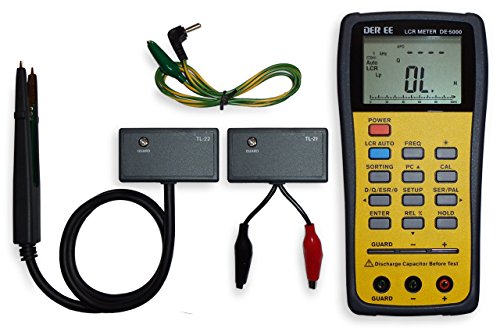
- 19999/9999-count dual display
- AUTO-LCR with serial/parallel detection
- 5 test frequencies plus sorting mode
Best For: Technicians and hobbyists who want flexible auto-ranging component testing
Feature-Rich Sorting Tool
FNIRSI LC1020E 100kHz LCR Meter

- Dual-parameter display with ESR/Q/D/θ
- Sorting and comparison mode with tolerance settings
- 2.8-inch color TFT and Type-C charging
Best For: Buyers who prioritize sorting, comparison, and a color interface
Multi-Frequency Value Pick
1833C Hantek Handheld LCR Meter

- 10 test frequencies up to 100kHz
- 0.30% accuracy rating
- Measures L, C, and R with included carry bag
Best For: Anyone needing portable multi-frequency testing without extra complexity
Budget Component Tester
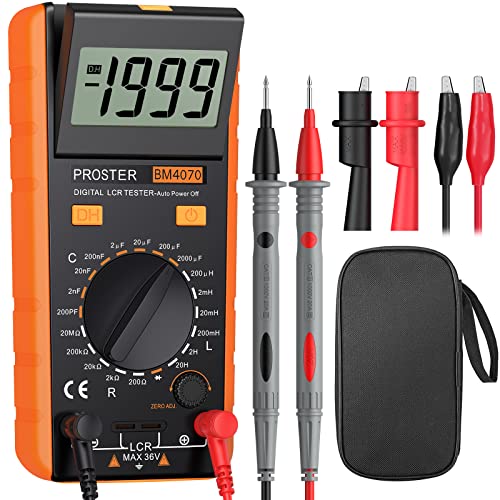
- Capacitance, inductance, resistance, and diode testing
- Rotatable LCD with data hold
- Complete kit with leads, battery, and bag
Best For: Budget buyers who want basic, dependable component checks
Bench-Ready Precision
B&K 879B Handheld Deluxe LCR Meter

- Dual-display handheld meter with backlit screen
- Includes leads, 9V battery, USB cable, and AC adapter
- Compact 330 g design for portable use
Best For: Technicians and hobbyists who want a portable, backlit meter with accessories included
Multi-Tool Tweezer Tester
FNIRSI LCR-ST2 Tweezer LCR Meter
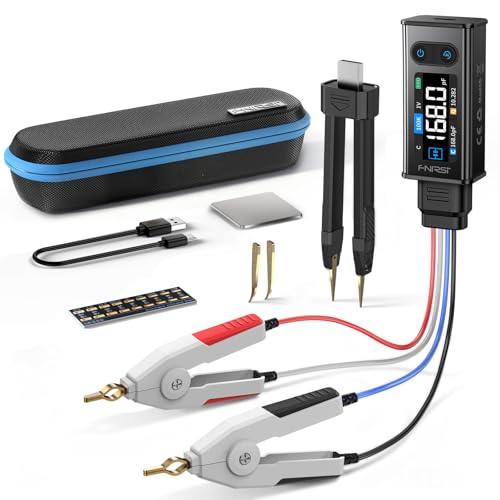
- Tests SMD and through-hole parts with auto sorting
- Scans 100 Hz to 100 kHz with four RMS test levels
- Rechargeable, compact, and includes tweezers plus clips
Best For: Electronics repair and quick verification of mixed component types
Accuracy-Focused Classic
DE-5000 High Accuracy Handheld LCR Meter

- Five test frequencies from 100 Hz to 100 kHz
- 20,000/2,000-count backlit display with many modes
- Includes alligator lead, SMD leads, and carrying case
Best For: Users who want detailed measurements and strong component verification
Lab-Grade Portable Pick
UNI-T UT622E Handheld Advanced LCR Meter with DCR

- Measures L, C, R, Z, ESR, D/Q, and DCR.
- Test frequencies up to 100 kHz.
- 4-wire Kelvin connection with logging and Mini-USB transfer.
Best For: Engineers and technicians needing portable, higher-frequency component testing.
Balanced Value Tester
Handheld LCR Meter 100Hz-100KHz, 0.2% Accuracy

- 0.2% accuracy with ESR calibration and open/short correction.
- Frequency range from 100 Hz to 100 kHz.
- Mini-USB PC control plus a 2.8-inch TFT display.
Best For: Users who want broad frequency coverage and PC connectivity in a portable meter.
Auto-Identify Analyzer
Precision LCR-101A Handheld Digital Meter

- Auto-identifies L, C, or R components.
- Measures L, C, R, Z, D, and Q.
- USB logging with thousands of readings and screen rotation.
Best For: Technicians and hobbyists who want fast component identification and clear display handling.
Bench-Ready Auto Range – DE-5000 Handheld LCR Meter
If you want a handheld LCR meter that feels more like a bench instrument, the DE-5000 is built for fast component checks with auto-ranging and dual display readings. It measures L, C, and R directly in AUTO-LCR mode and adds secondary values like D, Q, phase angle, and ESR/Rp, making it useful for sorting and deeper component analysis.
Best For: Electronics hobbyists and technicians who want a handheld LCR meter with strong auto-ranging and multiple test frequencies.
Pros:
- 19999/9999-count dual display for detailed readings
- Auto detects serial or parallel mode based on the DUT
- Five test frequencies: 100Hz, 120Hz, 1kHz, 10kHz, and 100kHz
- Includes sorting mode for quickly screening component batches
Cons:
- IR-to-USB cable is listed as an optional accessory, not included
- Battery-powered design may be less convenient than USB charging
Overall, the DE-5000 is a practical choice when you need a handheld LCR meter with flexible frequency selection and enough measurement depth for serious component work. Its automatic L/C/R detection and sorting mode make it especially efficient for bench troubleshooting and parts matching.
Feature-Rich Sorting Tool – FNIRSI LC1020E 100kHz LCR Meter
The FNIRSI LC1020E is a handheld LCR meter aimed at users who want detailed readings, sorting tools, and a color display in one compact tester. It supports AUTO, capacitance, resistance, and inductance measurements while showing main and secondary parameters like X, D, Q, theta, and ESR at the same time.
Best For: Users who want a modern handheld LCR meter with sorting/comparison features and a color display.
Pros:
- Dual-parameter display with X/D/Q/θ/ESR shown together
- Sorting and comparison mode with nominal/tolerance settings
- 5 test frequencies up to 100kHz
- 2.8-inch color TFT screen with adjustable brightness
- Type-C charging and firmware updates
Cons:
- Open/short calibration is required before measurement
- Not intended for live circuits or charged capacitors
- Performance depends on proper discharge and setup
For buyers who want handheld LCR meters with modern workflow features, the LC1020E stands out for its comparison tools and clear display. It is especially appealing if you regularly screen parts by tolerance and want a tester that helps separate pass/fail results quickly.
Multi-Frequency Value Pick – 1833C Hantek Handheld LCR Meter
The Hantek 1833C is a straightforward handheld LCR meter for users who want a wide range of test frequencies without moving into a more complex instrument. It measures inductance, capacitance, and resistance, and its 10 typical frequencies make it a flexible fit for component evaluation across different test conditions.
Best For: Users who want a portable handheld LCR meter with broad frequency coverage and simple component testing.
Pros:
- 10 test frequencies from 100Hz to 100kHz
- 0.30% accuracy rating
- Supports inductance, capacitance, and resistance measurements
- Includes handbag and alligator clip cable
Cons:
- Fewer advanced features than sorting-focused meters
- No color display or dual-parameter readout listed
The 1833C is a sensible option if your main goal is reliable component measurement across many frequencies rather than advanced screening functions. It offers a good balance of portability, accuracy, and practical accessories for everyday electronics work.
Budget Component Tester – Proster LCR Meter Multimeter
The Proster BM4070 is a handheld LCR meter designed for basic component checks, with clearly defined ranges for capacitance, inductance, and resistance. It is especially useful when you want a compact tester for hobby work, troubleshooting, or sorting parts without paying for advanced display features.
Best For: Budget-minded users who need a straightforward handheld LCR meter for routine component testing.
Pros:
- Measures capacitance, inductance, resistance, and diode forward voltage
- Wide capacitance range up to 2000µF and inductance up to 20H
- Rotatable LCD makes readings easier to view at different angles
- Includes data hold, auto power off, and a complete accessory kit
Cons:
- 3 1/2 digit display is less detailed than higher-count meters
- No advanced sorting or comparison mode listed
If you mainly need a practical handheld LCR meter for everyday bench tasks, the BM4070 covers the essentials well. Its range selection, zero adjust for capacitance, and included leads make it a useful entry-level tool for component evaluation.
Bench-Ready Precision – B&K 879B Handheld Deluxe LCR Meter
B&K Precision 879B Dual Display Handheld Deluxe Universal LCR Meter with Backlit Display
Check Price On AmazonIf you’re comparing handheld lcr meters for general electronics work, the B&K Precision 879B stands out as a straightforward bench-to-field option. It offers dual-display measurement with a backlit screen, runs on battery power, and includes the leads and interface accessories you need to get started.
Best For: Technicians and hobbyists who want a portable, backlit handheld LCR meter with a complete accessory set.
Pros:
- Dual-display design with a backlit screen for easier reading
- Includes banana-to-alligator test leads, 9V battery, mini USB cable, and AC adapter
- Compact handheld size at 190 mm x 90 mm x 41 mm and 330 g
- RoHS compliant and battery powered for portable use
Cons:
- Supplied notes do not list detailed frequency ranges or measurement limits
- Uses a 9V battery, so runtime will depend on battery condition
Overall, the 879B is a practical pick if you want a handheld LCR meter with a familiar form factor and included accessories rather than a feature list focused on advanced scanning modes.
Multi-Tool Tweezer Tester – FNIRSI LCR-ST2 Tweezer LCR Meter
The FNIRSI LCR-ST2 is one of the more versatile handheld lcr meters if you need a compact tester for SMD parts and through-hole components. It combines automatic component sorting with multi-frequency scanning, so it can be useful when you’re checking everything from tiny resistors to larger electrolytics.
Best For: Electronics repair work and component verification on mixed SMD and through-hole parts.
Pros:
- Measures resistors, capacitors, inductors, diodes, continuity, and voltage
- Full-range scan from 100 Hz to 100 kHz with four RMS test levels
- Primary and secondary display readouts for deeper component analysis
- Very compact design with rechargeable battery, Type-C charging, and rear magnet
Cons:
- Small tweezer-style form factor may be less convenient for some larger parts
- More specialized than a traditional handheld meter for general bench use
In practice, this meter is best when speed and part-level testing matter more than a standard multimeter-style layout. The included tweezers, Kelvin clips, and storage pouch make it easy to keep in a repair kit.
Accuracy-Focused Classic – DE-5000 High Accuracy Handheld LCR Meter
For buyers prioritizing precision in handheld lcr meters, the DE-5000 is a strong classic choice. It supports multiple test frequencies, a high-resolution backlit display, and a broad set of measurement modes, making it well suited to careful component evaluation.
Best For: Users who want a high-accuracy handheld LCR meter for detailed component measurements and sorting.
Pros:
- Supports 100 Hz, 120 Hz, 1 kHz, 10 kHz, and 100 kHz testing
- High-resolution display with 20,000 and 2,000 counts plus backlight
- Measures Ls, Lp, Cs, Cp, Rs, Rp, DCR, and includes D, Q, phase angle, and ESR
- Includes TL-21 alligator lead, TL-22 SMD leads, and a carrying case
Cons:
- No battery or power-source details are listed in the supplied notes
- More focused on measurement depth than on ultra-compact portability
The DE-5000 fits well when accuracy, frequency selection, and measurement flexibility matter more than a minimal design. Its included test leads and case make it ready for bench or field use right out of the box.
Lab-Grade Portable Pick – UNI-T UT622E Handheld Advanced LCR Meter with DCR
If you want one of the more capable handheld LCR meters for bench work or field checks, the UNI-T UT622E stands out with full LCR plus DCR measurement in a compact, rechargeable design. It covers capacitance, inductance, resistance, impedance, ESR, and D/Q, so you can characterize both AC and DC behavior without switching tools.
Best For: Engineers and technicians who need a portable LCR meter with DCR testing, higher test frequencies, and data logging.
Pros:
- Measures L, C, R, Z, ESR, D/Q, and DC resistance for broader component analysis.
- Selectable test frequencies from 100 Hz up to 100 kHz support more advanced verification work.
- 4-wire Kelvin connection and open/short correction help reduce fixture and lead errors.
- Logs up to 500 groups and supports Mini-USB data transfer.
Cons:
- Higher-end feature set may be more than casual users need.
- Battery life is about 8 hours, so longer sessions may require charging.
Overall, the UT622E is a strong choice if you need a handheld LCR meter that goes beyond basic component checks and offers the measurement depth needed for serious electronics work.
Balanced Value Tester – Handheld LCR Meter 100Hz-100KHz, 0.2% Accuracy
This handheld LCR meter is built for practical component testing, with a wide 100 Hz to 100 kHz frequency range and support for inductors, capacitors, and resistors. Its 0.2% accuracy, ESR calibration, and open/short correction make it a solid fit when you want dependable readings from a portable digital bridge.
Best For: Engineers and technicians who want a straightforward handheld LCR meter with PC connectivity and a broad frequency range.
Pros:
- Supports 100 Hz, 120 Hz, 1 kHz, 10 kHz, 40 kHz, and 100 kHz testing.
- Includes Mini-USB remote communication for PC control and data acquisition.
- Open/short correction and recording mode improve measurement workflow.
- 2.8-inch backlit TFT display is easy to read in dim spaces.
Cons:
- Does not list DCR measurement like some higher-end models.
- USB-based PC features may not matter if you only need quick handheld readings.
For buyers comparing handheld LCR meters, this model offers a strong mix of frequency options, visibility, and computer connectivity without pushing into unnecessary complexity.
Auto-Identify Analyzer – Precision LCR-101A Handheld Digital Meter
If you want a handheld LCR meter that speeds up component sorting, the LCR-101A focuses on auto-identification and clear readouts. It measures capacitance, inductance, resistance, impedance, D, and Q, while its large backlit LCD and 180-degree screen rotation make everyday use more convenient.
Best For: Technicians, repair workers, and serious hobbyists who want quick component recognition and easy-to-read results.
Pros:
- Auto-component recognition identifies L, C, or R quickly.
- Measures L, C, R, Z, D, and Q for more complete component checks.
- USB data logging supports thousands of readings for analysis and documentation.
- Selectable 100 Hz, 1 kHz, and 10 kHz test frequencies add flexibility.
Cons:
- USB cable is not included for data logging.
- Fewer test frequencies than some competing handheld LCR meters.
The LCR-101A is a practical pick if you value speed and readability over maximum frequency range, especially for repair, inventory work, and hands-on component analysis.
How We Picked the Best Handheld Lcr Meters
For Handheld Lcr Meters, we prioritized measurement accuracy, usable test frequency range, ease of operation, and how well each model handles common jobs like capacitor sorting, inductor checks, and resistor verification. We also looked at display quality, auto-ranging or auto component recognition, and whether the meter offers useful extras such as ESR, D/Q, phase angle, or DCR readings.
Because these tools are often used on crowded benches or in field repairs, we also favored models that are genuinely handheld, readable, and practical for quick checks without complicated setup.
Quick Comparison
Some Handheld Lcr Meters are best for general electronics work, while others are better suited to precision part matching or SMD testing. Higher frequency support can matter when testing capacitors and inductors that behave differently outside low-frequency measurements. If you need broad versatility, look for a meter with multiple test frequencies and clear component identification. If you mostly test small parts or SMDs, compact tweezer-style or auto-detect designs may be the better fit.
Key Buying Factors for Handheld Lcr Meters
Accuracy and Resolution
Accuracy determines how trustworthy your readings are, especially when matching parts or checking tight-tolerance components. Higher resolution is useful, but it should be paired with solid real-world accuracy rather than marketing numbers alone.
Test Frequency Range
Test frequency affects how components are measured. A meter with 100 kHz support is more versatile than a low-frequency-only model, especially for modern capacitors and inductors. Multiple selectable frequencies are a strong advantage if you work across different component types.
Measurement Functions
Not all Handheld Lcr Meters measure the same parameters. Basic models may cover capacitance, inductance, and resistance, while more advanced units also provide ESR, DCR, Q, D, and phase angle. Choose the feature set that matches your troubleshooting and validation work.
Usability and Form Factor
Readable screens, backlighting, auto recognition, and solid probe or tweezer handling make a big difference in daily use. For small SMD parts, a tweezer-style meter can save time. For general bench use, a conventional handheld design with stable leads may be more flexible.
Who Should Buy Which Handheld Lcr Meters?
If you need a reliable all-around tool for bench repairs and part sorting, choose a balanced handheld LCR meter with good accuracy and multiple frequencies. If you focus on SMD work, go with a tweezer-style option. If precision and broader diagnostic readings matter most, step up to a model that includes DCR and advanced measurement modes. For casual DIY testing, a simpler handheld LCR meter can be enough as long as it offers clear readings and auto detection.
In short, the best Handheld Lcr Meters are the ones that match your component mix, testing environment, and accuracy needs without adding unnecessary complexity.