Finding reliable electronic loads under $200 means balancing output power, voltage and current limits, control modes, display quality, and safe operation. The right tester can simplify battery capacity checks, USB-C testing, power-supply validation, and repeatable discharge experiments without the cost of laboratory equipment.
This roundup compares 10 practical options ranging from compact USB load modules to programmable DC loads rated for higher voltage and power. Use the guide below to match the tester’s capabilities with your bench setup and testing goals.
Best 10 Electronic Loads Under 200 Picks for 2026
Precision Bench Pick
Ransanx EL15 150W Programmable DC Load

- 1mV/1mA resolution
- CC, CV, and CP modes
- 150W capacity with dual cooling fans
Best For: Lab-style battery, power-supply, and component testing
USB Testing Value
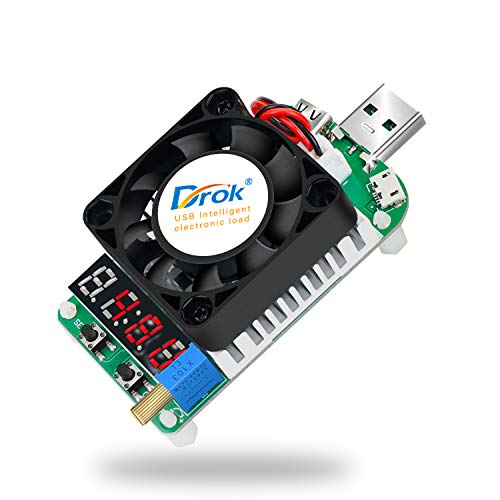
- USB and Type-C interfaces
- 0.25A–4A adjustable constant current
- Protection features and LED readout
Best For: USB charger, cable, and low-power discharge testing
High-Capacity Programmable Pick

- Multiple CC, CV, CR, and CP modes
- Battery, dynamic, transient, and list testing
- USB computer communication
Best For: Broad-range battery, charger, and DC supply testing
Compact Battery Testing
5A 35W Adjustable Electronic Load

- Measures voltage, current, power, capacity, and time
- Supports automatic capacity and time limits
- Temperature-controlled fan for higher-load operation
Best For: Lower-power battery discharge and aging tests
Versatile USB Testing
180W 20A Multimode Load Tester

- Four modes: current, voltage, power, and resistance
- 2.4-inch color display with data reports
- Includes temperature probe and connection cables
Best For: DIY USB, cable, and battery testing
High-Capacity DC Testing

- Supports loads up to 150W and 20A
- Four operating modes with detailed display data
- Includes OVP, OCP, and OPP protection
Best For: Power-battery and higher-power DC testing
High-Precision Pick
MakerHawk 180W Four-Wire Load Tester

- 180W, 200V, and 20A testing capacity
- Four operating modes and four-wire measurement
- Color display, app support, and safety protections
Best For: Accurate battery and power-device testing
Value Measurement Pick
150W USB Electronic Load Tester

- 150W, 200V, and 20A maximum ratings
- Measures voltage, current, capacity, and more
- Compatible with multiple USB formats
Best For: Affordable USB and DC power testing
Precision Bench Pick – Ransanx EL15 150W Programmable DC Load
For electronic loads under 200, the Ransanx EL15 is a strong choice when measurement resolution and programmable testing matter. Its 150W, 60V, and 12A capacity supports battery, power-supply, and component evaluation work.
Best For: Lab-style battery capacity testing, power-supply characterization, and repeatable bench testing.
Pros:
- Offers 1mV/1mA resolution for precise measurements.
- Supports constant-current, constant-voltage, and constant-power modes.
- Includes a 1.9-inch LCD, list-mode programming, banana sockets, and XT30 plugs.
- Aluminum housing and dual cooling fans support 150W continuous operation.
Cons:
- Its 150W maximum is below the capacity of some larger electronic loads.
- The compact display may be less convenient for highly detailed test monitoring.
The EL15 is one of the more capable electronic loads under 200 for users who want fine control, multiple operating modes, and a durable workbench form factor.
USB Testing Value – DROK LD25 25W USB Load Tester
Among electronic loads under 200, the DROK LD25 is tailored to USB and Type-C testing rather than general-purpose bench work. Its adjustable 0.25A–4A constant-current range is useful for checking chargers, cables, and USB power output.
Best For: USB charger evaluation, cable quality checks, and controlled low-power discharge testing.
Pros:
- Works with USB and Type-C interfaces.
- Provides a 0.25A–4A adjustable constant-current range.
- Displays voltage, current, and power on a four-digit LED screen.
- Includes overvoltage, overpower, and over-temperature protection with temperature-controlled cooling.
Cons:
- Limited to 25W maximum power and 4A current.
- There is no reverse-connection protection; incorrect polarity can permanently damage the module.
- The supplied notes specify a 4V minimum operating voltage.
The LD25 makes sense when your testing centers on USB-powered devices and chargers, but it is not the right fit for higher-voltage or higher-power DC supply testing.
High-Capacity Programmable Pick – YERTAI ET5406A+ 200W DC Load
The YERTAI ET5406A+ sits at the 200W threshold for electronic loads under 200 and offers a broad testing platform for batteries, chargers, and DC power supplies. It combines multiple test modes with USB computer communication and protective features.
Best For: Users needing programmable battery, charger, and DC supply testing across a wide voltage and current range.
Pros:
- Supports up to 200W, 120V, and 20A according to the product title and listed model specifications.
- Includes CC, CV, CR, CP, battery, dynamic, transient, list, and short-circuit modes.
- Offers USB communication for computer control; software and SCPI are available from the supplier.
- Provides overcurrent, overvoltage, overpower, over-temperature, and reverse-polarity prompt functions.
Cons:
- Computer-based control may require obtaining software and SCPI documentation from the supplier.
- The segment-code LCD may be less informative than a graphical display.
Choose the ET5406A+ when versatility and a near-maximum sub-$200-class power rating are more important than a compact USB-only tester.
Wide-Range Desktop Choice – 120W Programmable DC Electronic Load
This desktop model is a practical option among electronic loads under 200 for users who need unusually broad voltage and resistance ranges. It handles up to 120W, 150V, and 20A while providing four operating modes and timing measurements.
Best For: Desktop battery and DC power-source testing where voltage range, resistance control, and watt-hour tracking are useful.
Pros:
- Supports CC, CV, CR, CP, and short-circuit testing.
- Provides a 0–150V range, 0–20A current range, and 0.1–999.9 ohm resistance range.
- Measures watt-hours and amp-hours with integral timing.
- Front-panel buttons, adjustment knobs, input terminals, and an LED display simplify operation.
Cons:
- Maximum power is 120W, lower than some options in this roundup.
- The desktop design weighs about 2 pounds and is less portable than compact modules.
- The listed upper temperature rating is 40°C.
The DH-801-style load is a good fit for bench users who value high voltage and resistance coverage, especially when battery energy measurements are part of the test routine.
Compact Battery Testing – 5A 35W Adjustable Electronic Load
For buyers comparing electronic loads under 200, this 5A, 35W model is a focused option for battery discharge testing and smaller DC projects. It displays voltage, current, power, capacity, and discharge time while supporting adjustable constant-current operation.
Best For: Battery capacity checks, unattended aging experiments, and lower-power DC testing.
Pros:
- Displays current, voltage, power, capacity, and discharge time.
- Automatically records discharge capacity and duration.
- Supports maximum capacity and time limits for unattended tests.
- Temperature-controlled fan starts above 10W or 40°C.
Cons:
- Limited to 35W and 5A, so it is not suited to higher-power loads.
- Requires a corded electric power source.
This is a practical, specialized load for modest-power battery work. Its automatic cutoff settings and temperature-controlled fan add useful convenience, while the 35W ceiling defines its testing range.
Versatile USB Testing – 180W 20A Multimode Load Tester
If you need electronic loads under 200 with broader operating flexibility, this 180W tester offers constant-current, constant-voltage, constant-power, and constant-resistance modes. Its color display, reporting function, and wired temperature probe make it suitable for detailed battery and USB testing.
Best For: DIY power testing, battery discharge work, and checking charging cables and data cables.
Pros:
- Offers four operating modes for different test setups.
- Includes a 2.4-inch HD color screen and automatic data reports.
- Provides three intelligent safety protections for discharge monitoring.
- Supports external NTC temperature measurement and flexible wiring.
Cons:
- The supplied notes do not specify the exact limits of each operating mode.
- Its battery-powered design may require attention to operating charge.
With 180W capacity and four load modes, this is the most versatile choice of the group for users testing varied USB and DC sources. The included probe and cables also make it ready for more hands-on setups.
High-Capacity DC Testing – 150W 20A Color-Display Load
Among electronic loads under 200, this 150W, 20A constant-current load balances substantial DC capability with clear monitoring. It is designed for power-battery capacity testing and shows key readings such as voltage, current, power, energy, capacity, internal resistance, and discharge time.
Best For: Power-battery testing, DC-output devices, and users who want detailed on-screen measurements.
Pros:
- Handles up to 150W and 20A according to the supplied specifications.
- Provides constant-current, voltage, power, and resistance modes.
- 2.4-inch display shows extensive electrical and discharge data.
- Includes overvoltage, overcurrent, and overpower protection.
Cons:
- Its listed compatible range reaches up to 150V and 20A, requiring appropriate source selection.
- It is corded electric rather than a portable battery-powered tester.
This model is a strong middle-ground option for more demanding battery and DC work. Its four modes, external NTC sensor, detailed display, and multiple protections provide useful control without exceeding the 150W category.
High-Precision Pick – MakerHawk 180W Four-Wire Load Tester
Among electronic loads under 200, the MakerHawk stands out for its 180W capacity, four-wire measurement system, and broad testing range. It supports up to 200V and 20A, with four operating modes, app connectivity, and temperature-controlled cooling for extended discharge or aging tests.
Best For: Users who need accurate, flexible testing for batteries, chargers, power banks, adapters, and cables.
Pros:
- Four-wire design helps reduce voltage-measurement error caused by wire resistance.
- Supports constant current, constant power, constant resistance, and constant voltage modes.
- 2.4-inch color screen displays voltage, current, power, capacity, temperature, resistance, and timing data.
- Includes overload, overcurrent, and high-temperature protection with intelligent fan cooling.
Cons:
- Its corded-electric design may be less convenient for portable setups.
- The feature-rich interface may be more than casual users need.
The MakerHawk is the most versatile option here for users prioritizing measurement accuracy and long-running tests. Its app and wired connectivity add convenience, while the 180W rating keeps it within the electronic loads under 200 category.
Value Measurement Pick – 150W USB Electronic Load Tester
This 150W model is a practical choice among electronic loads under 200 for measuring USB devices, batteries, DC power supplies, and charging cables. Its display tracks key electrical readings, while adjustable voltage and current limits help support controlled testing.
Best For: Budget-conscious users testing USB equipment, batteries, and DC power sources.
Pros:
- Measures voltage, current, power, capacity, impedance, temperature, energy, and time.
- Handles up to 150W, 200V, and 20A.
- Supports USB, Mini USB, Micro USB, and Type-C devices, along with batteries and DC supplies.
- Smart fan cooling is designed to dissipate heat quietly.
Cons:
- Its stated measurement refresh rate is about 0.5 times per second.
- It has fewer documented connectivity and display features than the MakerHawk model.
Choose this tester if you want broad measurement coverage and USB compatibility without moving beyond the 150W range. Its configurable overvoltage and overcurrent alarms add useful protection during routine testing.
Simple Industrial Pick – 150W TFT Constant-Current Load
For shoppers comparing electronic loads under 200, this 150W tester offers a clear 2.4-inch TFT display and four selectable working modes. It is designed for direct-current load testing, with adjustable protection limits, stop-voltage controls, timed discharge, and external temperature monitoring.
Best For: Users who want a straightforward industrial-style load for battery-capacity and discharge testing.
Pros:
- Provides constant current, constant voltage, constant power, and constant resistance modes.
- Displays voltage, current, power, capacity, internal resistance, operating mode, and discharge settings.
- Supports up to 150W and 20A for direct-current load testing.
- Allows voltage, current, and power protections plus stop-voltage and time-limit settings.
Cons:
- Its minimum operating voltage is listed as 12V DC, limiting some lower-voltage applications.
- The notes identify an external NTC sensor for temperature monitoring rather than integrated temperature control.
This model is a good fit when a clear display and configurable discharge controls matter more than app connectivity. Its four modes and protection settings provide useful flexibility for controlled battery testing.
How We Picked the Best Electronic Loads Under 200
We focused on the specifications that matter most in real bench work: maximum voltage, current, and power; supported operating modes; adjustment range; display and monitoring features; connection options; and suitability for batteries, USB devices, chargers, and power supplies. The selection includes compact modules for low-power USB testing as well as larger programmable loads rated up to 200W.
Because specifications and included accessories can vary by seller or version, verify the listing before purchase. Pay particular attention to cooling requirements, input terminals, cable ratings, and whether the unit includes a power adapter, test leads, or a USB cable.
Quick Comparison
| Best For | Recommended Capability | What to Look For |
|---|---|---|
| USB and USB-C devices | 25W to 35W | USB connectors, adjustable constant-current control, clear voltage and current readings |
| General battery testing | 120W to 150W | Adjustable current, capacity monitoring, thermal protection, and usable display controls |
| Higher-power discharge work | 180W to 200W | Higher voltage and current limits, active cooling, multiple operating modes, and reliable terminals |
| Power-supply development | Programmable DC load | Constant-current, constant-voltage, and constant-resistance modes with fine adjustment |
Key Buying Factors for Electronic Loads Under 200
Voltage, Current, and Power Ratings
Choose a load with headroom above the source you intend to test. A unit rated for 60V is not appropriate for a 120V supply, and the maximum current and wattage must be considered together. At higher voltage, the usable current may be limited by the total power rating.
Control Modes
Constant-current mode is useful for battery discharge and many adapter tests. Constant-resistance mode can model a simple resistive load, while constant-voltage mode helps evaluate sources that need a controlled voltage condition. Some models add power or battery-capacity functions, but confirm how those measurements are calculated before relying on them for formal testing.
Cooling and Safety
Electronic loads convert electrical energy into heat. Look for a fan, adequate heatsinking, over-temperature protection, and unobstructed airflow. Never exceed the rated power or connect a source whose voltage is outside the input range. For lithium batteries and high-current supplies, use appropriate fuses, wiring, connectors, and supervision.
Display and Connections
A color TFT or similarly clear display can make voltage, current, power, resistance, and elapsed capacity easier to monitor. Four-wire sensing is valuable when cable resistance could affect accuracy. USB interfaces are convenient for small-device testing, while screw terminals or binding posts are generally better for higher-current bench connections.
Who Should Buy Which Electronic Loads Under 200?
Choose a compact DROK-style USB load if your work centers on chargers, USB power banks, and low-power USB-C devices. A 35W-class tester suits basic checks but leaves little margin for higher-wattage adapters.
For everyday battery capacity testing and power-supply troubleshooting, a 120W to 150W model offers a useful balance of range, size, and cost. Buyers who need more demanding discharge tests should consider a 180W to 200W unit with active cooling and higher voltage and current limits.
If you are developing or characterizing power supplies, prioritize a programmable model with CC, CV, and CR modes, fine adjustment, readable measurements, and dependable thermal management. For occasional hobby use, avoid paying for maximum output you will not use; better controls, safer connections, and sufficient headroom are usually more valuable than a higher headline wattage.