Chemical resistant laboratory labels need to survive solvents, moisture, abrasion, and frequent handling without fading or lifting. The right choice keeps safety information readable and sample IDs intact.
Below, we focus on labels built for real lab conditions, whether you need printable GHS sheets, preprinted safety decals, or small-format solvent-resistant options.
Best 10 Chemical Resistant Laboratory Labels Picks for 2026
UltraDuty GHS
Waterproof Chemical Labels for Laser Printers

- Waterproof and chemical resistant
- BS 5609 adhesive performance
- Made for GHS secondary containers
Best For: Durable lab and workplace chemical container labeling
Brady Solvent-Resistant Lab
Solvent-Resistant .375" Lab Label Cartridge

- Resists many chemicals and solvents
- High-tack permanent adhesive
- UL969 recognized and RoHS compliant
Best For: Small-format lab, barcode, and PCB labeling
SDS Safety Roll

- High-visibility hazard labeling
- Extra room for chemical names
- Easy peel-and-stick application
Best For: Visible SDS and secondary container labeling
Brady Temp-Resistant Lab
Temperature-Resistant .75" Polypropylene Labels

- Wide temperature resistance
- Chemical resistance to common lab solvents
- Adheres to glass and stainless steel
Best For: Vials, tubes, and specimen containers in harsh lab conditions
OSHA Hazard Label Roll
3x4in Chemical Safety Stickers
- 100-label roll for routine use
- GHS pictograms and HMIS titles included
- Semi-gloss paper with permanent adhesive
Best For: Labs and workplaces needing clear hazard-style container labels
Ultra-Resistant Lab Marker Pack
Alcohol Proof Fine Tip Markers
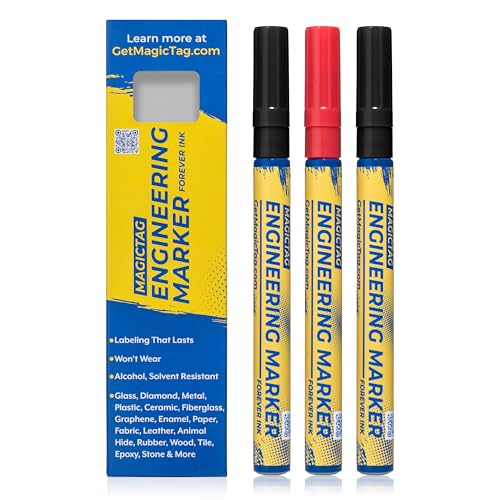
- Ink resists alcohols, DMSO, bleach, and more
- Works on glass, plastic, metal, and wet surfaces
- Fine 1 mm tip for controlled labeling
Best For: Permanent handwritten labeling in labs and industrial settings
Xylene-Resistant Microscope Labels

- Built for xylene, toluene, alcohols, and DMSO
- No self-laminate required
- 1000-count supply in compact 22mm size
Best For: Small printed labels in solvent-heavy lab workflows
Writable NFPA 704 labels
OSHA-compliant vinyl hazard stickers

- 250-count pack for secondary containers and stations
- Waterproof, chemical-resistant vinyl with clear write-in cover
- OSHA compliant and NFPA 704 aligned
Best For: Writable hazard labeling in labs, shops, and storage areas
Solvent-proof stain labels
24mm x 24mm xylene-resistant labels

- Handles xylene, ethanol, acetone, toluene, and water
- Resists abrasion, smudging, scratches, and stains
- Made for histology and staining workflows
Best For: Histology and solvent-heavy lab procedures
Printable GHS film labels
UltraDuty waterproof laser GHS labels

- Chemical, abrasion, UV, water, and temperature resistant
- BS5609 Sec. 2 certified with seawater adhesion
- Print-on-demand for containers and work labels
Best For: Printable GHS labeling for harsh lab and industrial settings
UltraDuty GHS – Waterproof Chemical Labels for Laser Printers
For chemical resistant laboratory labels that need to hold up in demanding environments, this Avery UltraDuty option is built for secondary containers, drums, totes, pails, jugs, and bottles. It is designed for on-site label creation with the Avery GHS Wizard and is made to resist water, chemicals, abrasion, sun, tearing, and harsh temperatures.
Best For: Labs and workplaces that need durable GHS labels for chemical containers and permanent safety signage.
Pros:
- Waterproof and resistant to chemicals, abrasion, sunlight, tearing, and harsh temperatures
- High-performance adhesive passes BS 5609 protocol for 90-day seawater immersion
- Works for GHS secondary container labeling and permanent workplace signs
- Supports quick on-demand printing with the Avery GHS Wizard
Cons:
- Requires a laser printer
- Designed for larger label applications, so it is not the best fit for very small vials or tubes
This is a strong pick if you need chemical resistant laboratory labels that prioritize durability and compliance-minded performance. It is especially useful when labels must stay readable through handling, weather exposure, and harsh conditions.
Brady Solvent-Resistant Lab – Solvent-Resistant .375" Lab Label Cartridge
If you need chemical resistant laboratory labels for flat surfaces that may face frequent liquid contact, this Brady cartridge is built for lab, barcode, and printed circuit board labeling. It is engineered to resist a wide range of chemicals and solvents, and it is also intended to survive outdoor applications.
Best For: Labs and technical environments that need solvent-resistant labels for small-format, high-precision applications.
Pros:
- Resists minerals spirits, sodium hydroxide, sulfuric acid, oils, isopropyl alcohol, jet fuel, and more
- High-tack permanent adhesive is made for flat surfaces exposed to liquids and chemicals
- UL Recognized to UL969 and RoHS compliant
- Compatible with several Brady M21 and BMP21 printers
Cons:
- Only .375″ wide, so it is intended for smaller labeling jobs
- Printer compatibility is limited to supported Brady models
This is a practical choice when chemical resistance matters more than label size. Its solvent resistance and strong adhesive make it a good fit for lab items, barcodes, and other surfaces that face tough handling.
SDS Safety Roll – 3×4 Chemical Data Stickers
For chemical resistant laboratory labels focused on visibility and quick identification, this SDS/MSDS sticker roll is aimed at secondary containers and hazard communication. The labels use a high-visibility color scheme and provide extra room for writing the chemical name, making them practical for safety workflows.
Best For: Teams that need easy-to-read SDS and hazard labels for secondary chemical containers.
Pros:
- High-visibility safety yellow, blue, and red design stands out
- 3×4 inch size gives more room for the chemical name
- Easy peel-and-stick format for fast application
- Includes GHS pictograms and HMIS/compliance-oriented hazard details
Cons:
- Made from semi-glossy paper, not a heavy-duty synthetic material
- Best suited to labeling and identification rather than extreme exposure
This roll is a good fit when the priority is clear hazard communication and simple application. It is less specialized for harsh chemical exposure than industrial synthetic labels, but it covers the basics well for visible workplace labeling.
Brady Temp-Resistant Lab – Temperature-Resistant .75" Polypropylene Labels
When you need chemical resistant laboratory labels that can handle both temperature swings and lab exposure, this Brady label cartridge is built for demanding environments. It is designed for vials, tubes, stainless steel, and glass, and it can withstand a wide temperature range while resisting several common lab chemicals.
Best For: Laboratories needing temperature-resistant labels for vials, tubes, and specimen containers.
Pros:
- Withstands temperatures from -196C to 121C (-320F to 248F)
- Resists ethanol, DMSO, IPS, short-term xylene, formalin, acetic acid, and toluene
- Adheres to stainless steel and glass
- White polypropylene material with permanent adhesive for lab use
Cons:
- Best suited to dry, room-temperature specimen containers according to the notes
- Requires compatible Brady printers
This is the strongest pick in the group for temperature extremes as well as chemical resistance. It is a solid match for lab workflows where labels must stay in place on small containers and hard surfaces.
OSHA Hazard Label Roll – 3x4in Chemical Safety Stickers
If you need chemical resistant laboratory labels for quick, clear container identification, this 100-label roll offers a practical OSHA-style option. It includes GHS pictograms and HMIS titles, and the semi-gloss paper format is designed for easy peel-and-stick use on smooth surfaces.
Best For: Labs, businesses, and home users who want hazard-compliant secondary container labels with broad warning symbols.
Pros:
- Includes GHS pictograms and HMIS titles for more detailed hazard identification.
- Permanent self-adhesive backing is made for secure placement on smooth surfaces.
- Useful on boxes, bins, glass, and product packaging.
- 100 labels per roll gives a useful supply for routine labeling.
Cons:
- Paper construction may be less durable than plastic labels in harsh environments.
- Users must black out unused hazard areas themselves.
Overall, this is a straightforward choice if you want compliant-looking labels that are easy to apply and easy to customize for different chemicals. It fits routine lab and facility use where visibility and quick identification matter most.
Ultra-Resistant Lab Marker Pack – Alcohol Proof Fine Tip Markers
If your chemical resistant laboratory labels need handwriting that survives aggressive cleaning and storage conditions, this 3-pack marker set is built for that job. The ink is described as resisting alcohols, DMSO, bleach, peroxide, acids, bases, UV light, and even freezing or autoclave conditions, with adhesion on glass, plastic, metal, and wet surfaces.
Best For: Labs, industry, and healthcare users who need permanent handwriting on tough or moist surfaces.
Pros:
- Ink is designed to resist a wide range of chemicals and cleaning agents.
- Writes on glass, plastic, metal, and even wet or moist surfaces.
- Fine 1 mm tip supports controlled, accurate labeling.
- Humectant-rich ink is made to stay usable after long storage.
Cons:
- These are markers, not adhesive labels.
- Sold as a 3-pack, so quantity is limited for high-volume work.
For permanent hand labeling, this set is a strong practical pick where ordinary pens fade, smear, or dry out too quickly. It is especially useful when labels must stay legible through harsh lab handling and repeated exposure.
Xylene-Resistant Microscope Labels – 22mm Printable Tags
For chemical resistant laboratory labels that must hold up through solvent-heavy workflows, these XyliTAG labels are designed for resistance to xylene, toluene, alcohols, DMSO, MEK, and more. They are small 22 mm x 22 mm white plastic labels made for printing with xylene-resistant ribbons, and the print does not require a transparent self-laminate.
Best For: Laboratories and histology-style workflows that need small, solvent-resistant printed labels.
Pros:
- Resists xylene, toluene, alcohols, DMSO, MEK, and other solvents.
- No transparent self-laminate required to protect the print-out.
- 1000-label count suits high-volume lab use.
- Compact 22 mm square size works for small containers or slides.
Cons:
- Must be printed with xylene-resistant ribbons.
- Small size limits how much information can fit on each label.
This is the most specialized option in the group, and it makes sense when solvent exposure is the main concern. If your workflow involves xylene or similar chemicals, these labels are built for that kind of demanding environment.
Writable NFPA 704 labels – OSHA-compliant vinyl hazard stickers
If you need chemical resistant laboratory labels for secondary containers, spray bottles, drums, or safety stations, this NFPA 704 option is built for practical workplace identification. The vinyl construction, permanent adhesive, and clear write-in cover are aimed at keeping handwritten hazard details readable in busy lab and industrial environments.
Best For: Lab teams, industrial safety staff, and small facilities that need writable NFPA 704 hazard labels for compliant chemical identification.
Pros:
- Write-in spaces let you add chemical names, hazard codes, and symbols for custom labeling.
- Vinyl material is waterproof, chemical-resistant, and fade-resistant.
- OSHA compliant and made to meet NFPA 704 standards for emergency response identification.
- Peel-and-apply format works on plastic, glass, metal, and other smooth surfaces.
Cons:
- Designed around NFPA 704 hazard communication, not detailed multi-line container labels.
- Best suited to smooth surfaces, so rough or textured containers may be less ideal.
This is a strong choice when you want durable, writable hazard labels that can hold up in a lab or industrial setting. The 250-count pack also makes it practical for ongoing labeling needs across multiple work areas.
Solvent-proof stain labels – 24mm x 24mm xylene-resistant labels
For chemical resistant laboratory labels that need to survive staining workflows, these 24mm x 24mm labels are built for repeated exposure to xylene, ethanol, acetone, toluene, and water. They are also designed to resist abrasion, smudging, scratches, and stain pickup, which makes them a practical pick for histology and other lab processes.
Best For: Histology labs and staining workflows that need small, durable labels with strong solvent resistance.
Pros:
- Resists sequential exposure to xylene, ethanol, acetone, toluene, and water.
- Built to withstand abrasion, smudging, scratches, and physical damage.
- Designed to stay stain-resistant during hematoxylin and eosin procedures.
- Multipurpose enough for use at any stage of the staining process.
Cons:
- Small 24mm x 24mm format may not suit larger container markings.
- Primarily optimized for staining workflows rather than broad facility labeling.
If your priority is keeping labels readable through solvents and staining steps, this product is well targeted. Its durability profile makes it especially useful where ordinary labels would smudge, stain, or wear out too quickly.
Printable GHS film labels – UltraDuty waterproof laser GHS labels
When you need chemical resistant laboratory labels that can handle tougher environments, these Avery UltraDuty GHS labels are built for chemical, abrasion, UV, water, and temperature resistance. They are a good fit if you print labels on demand for bottles, beakers, drums, or other containers and want a film label that stays adhered in demanding conditions.
Best For: Labs and facilities that need printable GHS labels for containers, equipment, and outdoor or wet environments.
Pros:
- Resistant to chemicals, abrasion, UV, water, and extreme temperatures.
- BS5609 Sec. 2 certified, with adhesion for at least 90 days in seawater.
- Works on metal, plastic, painted surfaces, fiber, polycarbonate, glass, and more.
- Print-on-demand format with free Avery industrial templates.
Cons:
- Requires a laser printer for printing.
- Pack includes 50 labels, so it is less suited to high-volume bulk needs.
This is a versatile pick if you want printable labels that are designed for harsh conditions and broad surface compatibility. The film construction and certification details make it especially appealing for compliance-minded labeling projects.
How We Picked the Best Chemical Resistant Laboratory Labels
We prioritized labels that are designed for contact with common lab chemicals, cleaning agents, and repeated handling. We also looked for clear compliance-oriented formatting, strong adhesion on typical lab surfaces, and practical sizing for bottles, tubes, secondary containers, and equipment.
For printable options, we favored media that works with laser printing and holds up to smudging, water, UV exposure, and scuffing. For preprinted labels, we looked for durable materials and layouts that support fast identification in busy lab settings.
Quick Comparison
Choose printable sheets if you need flexible, high-volume labeling for changing content. Choose preprinted safety labels if you want fast application and consistent hazard formatting. Small-format solvent-resistant labels are better for vials, asset tags, and compact containers where space is limited.
Key Buying Factors for Chemical Resistant Laboratory Labels
Resistance to Chemicals and Solvents
Look for labels specifically rated for solvent resistance, waterproofing, and UV exposure. If labels may encounter alcohol, xylene, or strong cleaners, material quality matters more than standard adhesive strength alone.
Surface Compatibility
Not every adhesive performs equally on glass, plastic, powder-coated metal, or curved containers. If you label multiple surfaces, choose a format that is described as universal or multi-surface rather than assuming one product fits all.
Size and Information Density
Large labels work well for GHS warnings and secondary containers, while small labels are better for sample IDs, asset tracking, or narrow vials. Make sure the layout leaves enough room for readable text, icons, and barcodes.
Printer or No-Printer Workflow
If your lab prints labels in-house, confirm the sheet size and printer type first. If you need speed and consistency, preprinted Chemical Resistant Laboratory Labels can save time and reduce formatting errors.
Who Should Buy Which Chemical Resistant Laboratory Labels?
Buy printable GHS sheets if your lab needs custom text, changing inventories, or frequent relabeling. Choose preprinted SDS or hazard labels if compliance visibility is your top priority and you want a simple apply-and-go workflow.
If you handle aggressive solvents or need labels for very small containers, prioritize solvent-resistant specialty formats. For general lab organization, asset tracking, and durable identification, look for labels that balance adhesive strength, print clarity, and material resistance rather than only focusing on price.