The best compact smart home hubs bring multiple devices, wireless standards, and automation routines under one roof without taking over your living space. The right choice can also improve reliability by reducing dependence on cloud services and scattered apps.
We compared ten leading hubs across compatibility, automation power, connectivity, setup requirements, and value to help you choose a system that fits your current devices and future plans.
Best 10 Compact Smart Home Hubs Picks for 2026
Best Overall

- Preinstalled Home Assistant OS simplifies setup
- Silent, compact design with 4GB RAM and 32GB storage
- Expandable with USB Z-Wave, Zigbee, and Thread devices
Best For: Flexible local home automation and expansion
Best for Tapo Devices

- Connects up to 64 Tapo devices
- Low-power protocol helps preserve device batteries
- Includes a chime and 90 dB siren
Best For: Tapo sensors, switches, buttons, and alerts
Best Multi-Protocol Hub

- Supports SmartThings, Matter, Zigbee, and Z-Wave Plus
- Works with Alexa and Google Home
- Offers Wi-Fi or Ethernet setup
Best For: Mixed-protocol SmartThings homes
Best Local Matter Bridge
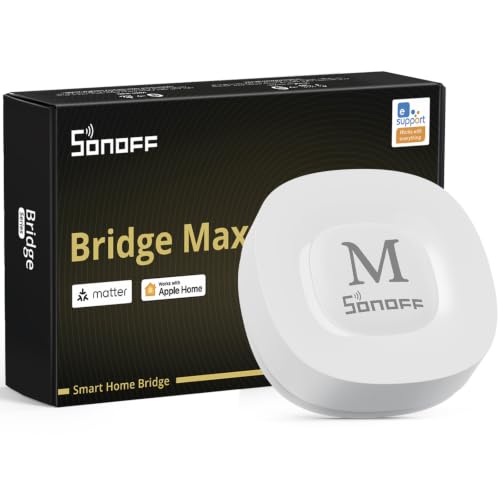
- Bridges Zigbee, BTHome, and eWeLink to Matter
- Local web console works without cloud reliance
- Supports Home Assistant through MQTT or bridging
Best For: Local Zigbee-to-Matter integration
Best for Easy Setup

- Local processing keeps automations responsive
- Supports Matter, Z-Wave, Zigbee, and Bluetooth
- No subscription; works with major voice platforms
Best For: Multi-protocol DIY smart homes
Best for Lutron Lighting
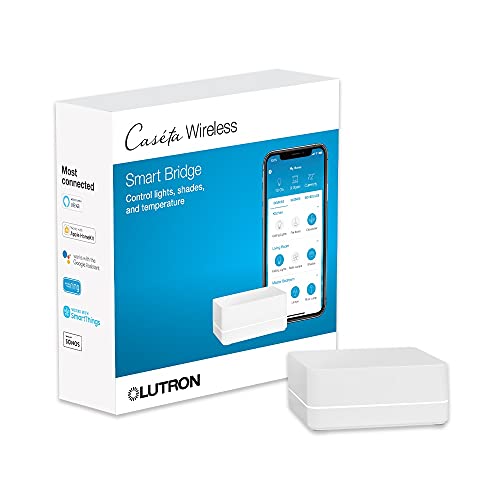
- Controls up to 75 Caseta devices
- Works with Alexa, Apple HomeKit, and Google Assistant
- Uses Clear Connect instead of Wi-Fi for device communication
Best For: Caseta lighting installations
Best for Advanced Aqara Setups

- Combines Zigbee, Thread, Matter, Wi-Fi, and IR
- Supports local automations through Edge Hub operation
- Includes PoE, encrypted storage, and USB-C backup-power support
Best For: Aqara-centered Matter and Thread systems
Most Versatile

- Seven protocols in one local-first hub
- Supports 50,000+ devices from 1,000+ brands
- Advanced flows and energy monitoring
Best For: Expanding, mixed-brand smart homes
Best Small Aqara Upgrade
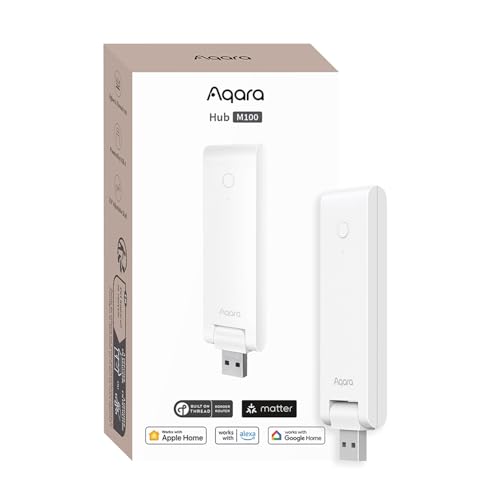
- Matter bridge for Aqara Zigbee products
- Supports Aqara Zigbee and Thread devices
- Compact, adjustable USB-powered design
Best For: Aqara-focused Matter smart homes
Best for Aqara IR Control

- 360-degree infrared appliance control
- Ethernet connection and USB power
- Supports up to 128 Aqara Zigbee devices with repeaters
Best For: Aqara setups with IR appliances and alarms
Best Overall – Home Assistant Green
Home Assistant Green | Smart Home hub with Advanced Automation | Official Home Assistant Hardware
Check Price On AmazonHome Assistant Green is a straightforward starting point for shoppers seeking compact smart home hubs with powerful automation potential. Home Assistant OS is preinstalled, so setup mainly involves connecting the included power supply and Ethernet cable. Its silent, fanless design keeps it unobtrusive while providing a central place to manage compatible devices and home data.
Best For: Homeowners who want a flexible Home Assistant hub with local data storage and room to expand.
Pros:
- Home Assistant is already installed for a simpler setup.
- Compact, silent design with 4GB RAM, 32GB storage, and a quad-core processor.
- Supports USB expansion for Z-Wave, Zigbee, and Thread connectivity.
- Uses only a couple of watts of power and keeps home data on the device.
Cons:
- Ethernet is the listed network connection, so it is not a wireless-first hub.
- Z-Wave, Zigbee, and Thread connectivity requires additional USB devices.
Green is a strong choice when you want one compact controller for broad automation possibilities without adding another noisy computer to your home. Its expansion-based approach offers flexibility, though extra radios may increase the overall cost.
Best for Tapo Devices – Tapo Smart Hub H100
The Tapo Smart Hub H100 is a compact option among smart home hubs for households building around Tapo sensors, switches, and buttons. It connects to a 2.4GHz Wi-Fi network and uses a low-power wireless protocol to help extend the battery life of supported devices. The built-in chime and 90 dB siren add useful alert functionality.
Best For: Tapo users who need a small central hub for sensors, buttons, switches, alerts, and basic automations.
Pros:
- Supports up to 64 Tapo devices per hub.
- Low-power connections can help extend compatible device battery life.
- Built-in chime and up to 90 dB siren provide audible alerts.
- Offers a stated maximum connection distance of up to 30 meters.
Cons:
- Requires a 2.4GHz Wi-Fi network.
- Designed around Tapo sensors, switches, and buttons rather than broad cross-brand compatibility.
- It cannot directly connect to Tapo smart plugs or smart lighting according to the supplied notes.
The H100 makes the most sense as the central point for a Tapo-focused setup, particularly where long battery life and audible security notifications matter. It is less suitable if you want a universal hub for many unrelated smart home brands.
Best Multi-Protocol Hub – Aeotec Smart Home Hub
The Aeotec Smart Home Hub is a practical choice for shoppers comparing compact smart home hubs that support several major protocols. Working with SmartThings, Zigbee, Z-Wave Plus, Matter, Wi-Fi, Alexa, and Google Home, it is designed to bring devices from multiple categories into one app and automation system. Setup can use either Wi-Fi or Ethernet.
Best For: SmartThings households that want broad protocol support and voice-assistant integration.
Pros:
- Supports SmartThings, Matter, Zigbee, Z-Wave Plus, and Wi-Fi.
- Works with Amazon Alexa and Google Home.
- Supports wired Ethernet or Wi-Fi setup.
- Many automations can run locally for improved speed and reliability.
Cons:
- The supplied notes identify it as designed for use in North America.
- Its 1.1-pound weight is higher than some especially small hub options.
- Compatibility and automation features depend on the SmartThings ecosystem and supported devices.
Choose Aeotec when protocol variety is more important than having the smallest possible footprint. Its combination of SmartThings management, local automation support, and voice-assistant compatibility makes it a versatile center for a mixed-device home.
Best Local Matter Bridge – SONOFF Bridge Max
The SONOFF Bridge Max is a compact smart home hub for connecting Zigbee, BTHome, and eWeLink devices with Matter-compatible platforms. Its local web console allows configuration over the LAN without relying on a cloud service or a required app. It also supports Home Assistant integration through MQTT or device bridging.
Best For: Users who want local Zigbee-to-Matter bridging and flexible integration with Home Assistant, Alexa, Google Home, or Apple Home.
Pros:
- Bridges Zigbee, BTHome, and eWeLink devices to Matter platforms.
- Provides a local web console with no cloud required for configuration.
- Supports Ethernet and Wi-Fi connectivity.
- Includes local security features with a built-in 90 dB alarm and mobile notifications.
Cons:
- It is a Matter Bridge, not a Matter Controller, so it cannot add Matter devices directly.
- Some advanced setup may be better suited to users comfortable with LAN, MQTT, or Home Assistant configuration.
- Its main focus is bridging compatible devices rather than serving as a universal Matter hub.
Bridge Max stands out for privacy-conscious users who prefer local management and need to connect Zigbee devices across Matter ecosystems. Be sure to distinguish its bridge role from a Matter controller before buying.
Best for Easy Setup – Hubitat Elevation C-8 Pro
For shoppers comparing compact smart home hubs, the Hubitat Elevation C-8 Pro is a strong all-around choice for reliable, locally processed automation. It supports Matter, Z-Wave, Zigbee, and Bluetooth while fitting easily into a small space.
Best For: DIY users who want fast, private automations across multiple device protocols without a subscription.
Pros:
- Runs automations locally, so core routines continue during internet outages.
- Supports Matter 1.5, Z-Wave 800 Series, Zigbee 3.0, and Bluetooth.
- Works with Alexa, Google Home, and Apple HomeKit and supports more than 1,000 devices across 100+ brands.
- Compact design, dual external antennas, advanced rules, and no recurring subscription.
Cons:
- Advanced automation features may require more setup than simpler hubs.
- Its broad configuration options may be more than casual users need.
The C-8 Pro stands out when flexibility, local control, and long-term expandability matter most. Its active community and ongoing platform updates add value for homeowners building a more capable system over time.
Best for Lutron Lighting – Lutron Caseta Smart Hub
Among compact smart home hubs, the Lutron Caseta Smart Hub is a focused option for connecting Caseta lighting with popular voice assistants and selected smart-home brands. It plugs into an outlet, connects to your router, and supports up to 75 Caseta devices.
Best For: Homes centered on Lutron Caseta dimmers and switches that want straightforward app and voice control.
Pros:
- Supports Alexa, Apple HomeKit, Google Assistant, Ring, Serena shades, and Sonos.
- Clear Connect Technology avoids competing with Wi-Fi-connected devices.
- Simple setup through the Lutron app after connecting it to a router.
- Supports expansion to as many as 75 Caseta devices.
Cons:
- It is primarily designed for Lutron Caseta devices rather than broad multi-protocol compatibility.
- Caseta dimmers, switches, and other coordinating accessories are sold separately.
This hub makes the most sense when dependable Lutron lighting control is the priority. Its setup is approachable, but buyers building a mixed-brand system may prefer a hub with broader device-protocol support.
Best for Advanced Aqara Setups – Aqara Smart Home Hub M3
The Aqara Smart Home Hub M3 is one of the more versatile compact smart home hubs for Aqara-focused installations. It combines Zigbee, Thread, Matter bridging, infrared control, local automation, Wi-Fi, and optional Power over Ethernet in one enclosure.
Best For: Aqara users who want local automations, Matter integration, Thread support, and added control for infrared appliances.
Pros:
- Supports up to 127 Aqara Zigbee devices and 127 Thread devices, with repeaters needed for Thread expansion.
- Acts as an Edge Hub for local automations and can migrate Zigbee devices from older Aqara hubs.
- Includes a 360-degree IR blaster with feedback and learning for compatible appliances.
- Offers dual-band Wi-Fi, Matter bridging, PoE, encrypted local storage, and USB-C power-bank support.
Cons:
- Its Zigbee device limit applies to Aqara Zigbee devices, not third-party Zigbee devices.
- Some cloud-based notifications still require an internet connection.
- A 2A USB power adapter is not included, and stable placement near the router is recommended.
The M3 is a feature-rich choice for users already invested in Aqara or planning a Matter-enabled setup. Its IR control and wired connectivity make it especially useful where appliance integration and connection stability are important.
Most Versatile – Homey Pro (2026)
For shoppers comparing compact smart home hubs, Homey Pro (2026) is the most broadly equipped option here. It combines Wi-Fi, Zigbee, Z-Wave Plus, infrared, Bluetooth Low Energy, Matter, and Thread in one local-first hub, while supporting control through its app and compatible voice assistants.
Best For: Large or expanding smart homes that need wide protocol and brand compatibility.
Pros:
- Supports seven connectivity technologies, including Matter and Thread.
- Works with more than 50,000 devices from over 1,000 brands, according to the supplied notes.
- Offers local processing, energy monitoring, sensor alerts, and customizable Homey Flow automations.
Cons:
- Its broad feature set may be more than needed for a small, single-brand setup.
- Compatibility should still be checked for individual devices and brands.
Homey Pro is the strongest choice when flexibility and long-term expansion matter most. Its compact 4.9-by-4.9-by-1.5-inch enclosure and local-first operation make it a capable central controller, though its extensive ecosystem is best suited to buyers willing to configure a more advanced system.
Best Small Aqara Upgrade – Aqara Smart Hub M100
Among compact smart home hubs, the Aqara Smart Hub M100 stands out for its small, flexible design and Matter bridging. It supports Aqara Zigbee and Thread devices, can run some automations locally, and connects to Matter ecosystems such as Apple Home, Alexa, and Home Assistant.
Best For: Aqara users who want a small Matter bridge with local automation support.
Pros:
- Supports up to 20 Aqara Zigbee devices and 20 Thread devices.
- Bridges Aqara Zigbee products into compatible Matter ecosystems.
- Uses adjustable positioning and USB-A power, including compatible power banks, PCs, or routers.
Cons:
- Third-party Zigbee devices are not supported.
- The 5V/0.5A power adapter is not included.
- Some features, including cloud push notifications, still require a cloud connection.
The M100 is a practical choice for a focused Aqara installation or a Matter-centered setup. Its local execution and Wi-Fi 6 connection add useful performance benefits, but the device limits and required separate power adapter are important considerations before buying.
Best for Aqara IR Control – Aqara Smart Hub M2
The Aqara Smart Hub M2 is a compact smart home hub for Aqara-based automation, alarm functions, and infrared control. It connects to up to 128 Aqara Zigbee devices with the required repeaters, adds Ethernet for a stable wired connection, and works with Apple HomeKit, Alexa, Google Assistant, and IFTTT.
Best For: Aqara households that want IR control for TVs, fans, or air conditioners alongside security automations.
Pros:
- Provides 360-degree infrared control for compatible indoor appliances.
- Includes an Ethernet port for a potentially more stable connection.
- Built-in speaker supports alerts, doorbell functions, alarms, and configurable ringtones.
Cons:
- Requires 2.4 GHz Wi-Fi.
- Supports Aqara Zigbee child devices, not third-party Zigbee devices or Aqara Thread devices.
- Some connected Zigbee devices require Aqara repeaters to reach the stated capacity.
M2 makes sense when infrared control and Aqara security features are central to the setup. It offers useful ecosystem integrations and wired networking, but buyers should confirm that their existing devices are Aqara-compatible and account for the 2.4 GHz requirement.
How We Picked the Best Compact Smart Home Hubs
We focused on hubs that offer meaningful automation capabilities in a small, practical package. Each option was evaluated for supported protocols, platform compatibility, local or cloud processing, setup requirements, expansion potential, and how well it fits common smart-home needs. We also considered whether a hub is best suited to beginners, enthusiasts, a specific ecosystem, or households with demanding mixed-device setups.
Protocol support matters because it determines which sensors, switches, lights, locks, and other accessories can join your system. We paid particular attention to Zigbee, Z-Wave, Matter, Thread, Wi-Fi, Bluetooth, infrared, and proprietary integrations.
Quick Comparison
| Best For | Recommended Hub Types | What to Look For |
|---|---|---|
| Simple device control | Tapo, Aqara M100, Aqara M2 | Easy setup and ecosystem compatibility |
| Local automation | Home Assistant Green, Hubitat | Fast routines and reduced cloud dependence |
| Broad protocol support | Homey Pro, Aeotec, Aqara M3 | Z-Wave, Zigbee, Matter, Thread, or IR support |
| Lighting-focused homes | Lutron Caseta Smart Hub | Reliable control of compatible Lutron devices |
| Budget expansion | SONOFF Bridge Max | Affordable device bridging and app integration |
Key Buying Factors for Compact Smart Home Hubs
Compatibility and Protocols
Choose a hub that supports the devices you already own, not just the standards you may use later. Matter can improve cross-platform compatibility, while Zigbee and Z-Wave provide access to large accessory ecosystems. Thread support is especially useful if you plan to add newer low-power Matter devices.
Local Control and Reliability
Local processing can make automations respond faster and continue working during an internet outage. However, some products still require cloud access for setup, remote control, voice assistants, firmware updates, or certain integrations. Check these limitations before buying.
Automation Depth
Basic hubs handle schedules and simple triggers. More advanced platforms support conditions, variables, presence detection, device states, and complex multi-step routines. If you expect your system to grow, prioritize automation flexibility over the smallest price tag.
Setup and Network Requirements
Confirm whether the hub needs 2.4GHz Wi-Fi, Ethernet, a particular mobile app, or a separate bridge. Wired hubs can offer dependable performance, while Wi-Fi models are easier to place. Also consider where the hub will sit relative to sensors and other wireless devices.
Who Should Buy Which Compact Smart Home Hubs?
Choose Home Assistant Green if you want powerful customization and a strong local-first platform. Choose Hubitat Elevation C-8 Pro for advanced automations with broad Z-Wave, Zigbee, and Matter support. Choose Homey Pro if maximum protocol coverage and a polished all-in-one experience are priorities.
Choose Aeotec Smart Home Hub for a balanced SmartThings-compatible setup, or Lutron Caseta Smart Hub if dependable Lutron lighting control is your main goal. Aqara M3 suits households wanting advanced Aqara automation, IR control, and newer Matter capabilities.
For simpler ecosystem-based setups, consider Tapo H100, Aqara M100, or Aqara M2. The SONOFF Bridge Max is a practical option when affordable device bridging matters most. Before ordering, verify compatibility with your existing accessories and the voice assistant or smart-home platform you use most.