The best wireless smart home hubs bring compatible lights, locks, sensors, switches, and routines into one easier-to-manage system. They can improve reliability, reduce app switching, and unlock automations that basic voice assistants cannot handle alone.
This roundup compares 10 standout options, from automation-focused platforms and multi-protocol gateways to simple hubs designed for lighting, sensors, or voice-controlled homes.
Best 10 Wireless Smart Home Hubs Picks for 2026
Best for Home Assistant Beginners

- Home Assistant OS is preinstalled
- Local, privacy-focused data storage
- USB expansion for Zigbee, Z-Wave, and Thread
Best For: Easy entry into a flexible Home Assistant setup
Best for Local Automation Power Users

- Local automations work without internet
- Supports Matter, Z-Wave, Zigbee, and Bluetooth
- No subscription required
Best For: Complex DIY smart homes needing fast, local control
Best for Lutron Lighting Systems
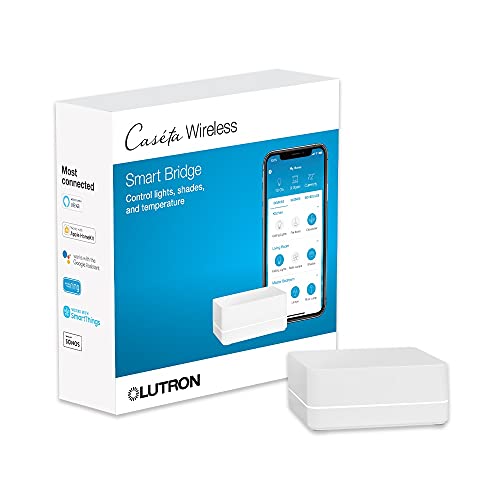
- Supports up to 75 Caseta devices
- Clear Connect avoids Wi-Fi congestion
- Works with major voice and smart home platforms
Best For: Central control for a Lutron Caseta lighting setup
Best for Aqara and Matter Integration

- Matter bridge with Zigbee and Thread support
- Local automation and encrypted storage
- Built-in IR blaster plus PoE and Wi-Fi
Best For: Aqara homes expanding into Matter and local control
Best Sensor-Rich Hub

- Monitors temperature, humidity, and light
- Learns and controls many IR remotes
- Supports Matter, Alexa, Google Home, and Apple Home
Best For: Environmental monitoring and SwitchBot automation
Best Long-Range Gateway
YoLink X3 Hub Smart Home Gateway

- Uses LoRa for coverage up to 2,034 feet
- Offers up to eight hours of backup battery
- Provides outage and offline alerts
Best For: Large properties and detached outbuildings
Best Touchscreen Control Panel

- Provides a customizable 8-inch dashboard
- Supports Wi-Fi, Zigbee, Matter, Thread, and more
- Controls devices, cameras, routines, and security
Best For: Alexa homes needing a shared wall-mounted controller
Best Overall

- Supports Matter, Zigbee, Z-Wave Plus, and SmartThings
- Works with Alexa and Google Home
- Uses Wi-Fi or Ethernet connectivity
Best For: Multi-protocol smart homes
Best for Aqara Devices

- Connects up to 128 Aqara Zigbee devices
- Includes 360-degree IR device control
- Works with HomeKit, Alexa, Google Assistant, and IFTTT
Best For: Aqara-centered automation and security
Best Budget Tuya Gateway

- Combines Zigbee 3.0 and Bluetooth Mesh
- Supports up to 128 Tuya devices
- Adds app and Alexa or Google Home control
Best For: Tuya and Smart Life ecosystems
Best for Home Assistant Beginners – Home Assistant Green
Home Assistant Green | Smart Home hub with Advanced Automation | Official Home Assistant Hardware
Check Price On AmazonHome Assistant Green is an approachable entry point for wireless smart home hubs, with Home Assistant OS already installed. Connect the included power supply and Ethernet cable, then manage compatible devices and build automations from one central platform.
Best For: Homeowners who want an easy, privacy-focused Home Assistant setup with room to add Zigbee, Z-Wave, or Thread connectivity later.
Pros:
- Home Assistant comes preinstalled for a straightforward setup.
- Local data storage keeps your home’s data on the hub.
- Silent, fanless design with 4GB RAM, 32GB storage, and a quad-core processor.
- USB ports support optional Z-Wave, Zigbee, and Thread adapters.
Cons:
- Ethernet is the primary included network connection.
- Z-Wave, Zigbee, and Thread connectivity require separate USB devices.
Green is a strong choice if you want the flexibility of Home Assistant without assembling your own hardware. Its expandable design makes it suitable for gradually building a more advanced local smart home.
Best for Local Automation Power Users – Hubitat Elevation C-8 Pro
The Hubitat Elevation C-8 Pro is a local-first option among wireless smart home hubs. It runs automations directly on the hub and combines Matter, Z-Wave 800 Series Long Range, Zigbee 3.0, and Bluetooth support for broad device compatibility.
Best For: DIY smart home builders who want fast local automations, advanced rules, broad protocol support, and no required subscription.
Pros:
- Automations continue working locally when the internet is unavailable.
- Supports Matter, Z-Wave, Zigbee, and Bluetooth in one hub.
- Works with Alexa, Google Home, and Apple HomeKit.
- Dual external antennas are designed to extend wireless range.
Cons:
- Advanced features and Rule Machine may require a learning curve.
- It is designed for users comfortable with DIY setup and community-supported customization.
With local processing, extensive protocol support, and a robust rule engine, the C-8 Pro is well suited to complex homes. It offers considerable flexibility for users willing to spend time configuring their system.
Best for Lutron Lighting Systems – Lutron Caseta Smart Hub
The Lutron Caseta Smart Hub is a focused choice among wireless smart home hubs for coordinating Caseta lighting and related accessories. It connects to your router, uses Lutron’s Clear Connect technology, and supports voice and platform integrations including Alexa, Apple HomeKit, and Google Assistant.
Best For: Households building a Lutron Caseta lighting system that want app, remote, and voice control through a compact bridge.
Pros:
- Supports up to 75 Caseta devices.
- Clear Connect technology does not compete with Wi-Fi-connected devices.
- Works with Alexa, Apple HomeKit, Google Assistant, Ring, Serena shades, and Sonos.
- Setup involves connecting the hub to a router and following the Lutron app instructions.
Cons:
- It is primarily intended for Lutron Caseta devices and coordinating accessories.
- Caseta dimmers and switches are sold separately.
This hub makes the most sense when lighting is the center of your smart home. It is simple to deploy and integrates with several major ecosystems, but it is less suited to shoppers seeking a general-purpose multi-brand hub.
Best for Aqara and Matter Integration – Aqara Smart Home Hub M3
The Aqara Smart Home Hub M3 combines Zigbee, Thread, Matter bridging, Wi-Fi, Bluetooth, and a smart IR blaster in one device. For shoppers comparing wireless smart home hubs, it stands out by pairing local automation features with support for Aqara devices and several broader smart home ecosystems.
Best For: Aqara users who want local automations, Matter ecosystem integration, IR control, and flexible wired or wireless networking.
Pros:
- Supports Aqara Zigbee and Thread devices and can bridge Aqara functions to Matter ecosystems.
- Local automation operation helps reduce reliance on cloud processing.
- Built-in 360-degree IR blaster can control compatible traditional remotes and air conditioners.
- Offers dual-band Wi-Fi, PoE, USB-C power options, and encrypted local storage.
Cons:
- Its Zigbee support is specified for Aqara Zigbee devices, not third-party Zigbee devices.
- A 2A USB power adapter is not included.
- Some cloud-based notifications still require an internet connection.
The M3 is a feature-rich option for an Aqara-centered home, especially where Matter compatibility and IR control are useful. Check ecosystem requirements carefully, particularly if you plan to mix in non-Aqara Zigbee products.
Best Sensor-Rich Hub – SwitchBot Hub 2 (2nd Gen)
For shoppers comparing wireless smart home hubs, the SwitchBot Hub 2 stands out by combining Wi-Fi connectivity with temperature, humidity, light sensing, and infrared remote control. It can bring compatible SwitchBot devices and many IR appliances into one app, while also working with Alexa, Google Home, and Apple Home through Matter-supported devices.
Best For: Homes that want environmental monitoring, IR appliance control, and SwitchBot automation in one compact hub.
Pros:
- Built-in temperature and humidity monitoring, plus an adaptive light sensor.
- Can consolidate infrared remotes for devices such as TVs and air conditioners.
- Supports scenes, geofencing, two physical smart buttons, and Matter for select SwitchBot devices.
- Compatible with Alexa, Google Home, and Apple Home features through supported integrations.
Cons:
- Wi-Fi connectivity supports 2.4GHz networks.
- Matter support is centered on SwitchBot Lock, Curtains, and Blind Tilts, with broader device support expected later.
- The listed maximum supported device count is six.
Choose this hub if sensing room conditions and controlling IR appliances are as important as linking SwitchBot accessories. Its two buttons and automation triggers also make everyday routines accessible without relying solely on a phone or voice assistant.
Best Long-Range Gateway – YoLink X3 Hub Smart Home Gateway
Among wireless smart home hubs, the YoLink X3 is designed for devices that need coverage beyond typical home Wi-Fi. Its LoRa-based connection reaches up to 2,034 feet under the stated conditions, while Ethernet or 2.4GHz Wi-Fi connects the hub to your network.
Best For: Large properties, detached structures, basements, garages, porches, and other areas where long-range device communication matters.
Pros:
- LoRa technology provides a stated receiving range of up to 2,034 feet.
- Can connect devices in challenging locations such as sheds, garages, and outbuildings.
- Built-in backup battery provides up to eight hours of power during an outage.
- Sends power-outage and extended offline alerts through the YoLink app.
Cons:
- Supports only 2.4GHz Wi-Fi or Ethernet for the hub’s network connection.
- Its ecosystem is designed around YoLink smart home devices.
- Long-range performance can vary with property layout and conditions.
The X3 is a practical choice when reliable reach is more important than serving as a broad multi-platform control screen. Its battery backup and outage alerts add useful resilience for monitoring devices across a larger property.
Best Touchscreen Control Panel – Amazon Echo Hub
The Amazon Echo Hub approaches wireless smart home hubs as a centralized touchscreen controller. Its customizable 8-inch dashboard can organize devices, cameras, routines, and security controls, while built-in support for Wi-Fi, Bluetooth, Zigbee, Matter, Sidewalk, and Thread devices broadens compatibility.
Best For: Alexa households that want an at-a-glance wall-mounted control panel for smart home devices and routines.
Pros:
- Customizable dashboard lets users arrange sections and resize controls.
- Built-in support for Wi-Fi, Bluetooth, Zigbee, Matter, Sidewalk, and Thread devices.
- Can control cameras, routines, compatible security systems, media, and thousands of Alexa-compatible devices.
- Supports wall mounting and optional tabletop or power-over-Ethernet accessories.
Cons:
- Wall-mounting cable-management hardware and tabletop stands are sold separately.
- Alexa+ and compatible Ring features require the applicable subscription, sold separately.
- Its interface and controls are centered on the Alexa ecosystem.
Pick the Echo Hub if multiple people in the home will benefit from visible, touch-based controls instead of relying only on phones or voice commands. It is especially useful for organizing cameras, routines, and security devices on a shared dashboard.
Best Overall – Aeotec Smart Home Hub
For shoppers comparing wireless smart home hubs, the Aeotec Smart Home Hub is a versatile choice for coordinating devices across several major protocols. It supports Matter, Zigbee, Z-Wave Plus on the V3 model, Wi-Fi, Ethernet, SmartThings, Alexa, and Google Home, with setup and automation managed through the SmartThings app.
Best For: Homes that need broad device compatibility and flexible wired or wireless connectivity.
Pros:
- Supports Matter, Zigbee, Z-Wave Plus, Wi-Fi, and SmartThings devices.
- Works with Alexa and Google Home voice control.
- Offers both Ethernet and Wi-Fi setup options.
- Supports custom routines, with many automations running locally.
Cons:
- Z-Wave Plus support is specified for the V3 model.
- Designed for use in North America.
The Aeotec hub stands out when your smart home includes devices from multiple ecosystems. Its broad protocol support and SmartThings automation tools make it a practical foundation for a growing connected home.
Best for Aqara Devices – Aqara Smart Hub M2
The Aqara Smart Hub M2 is a focused option among wireless smart home hubs, combining Aqara Zigbee device control with alarm functions and 360-degree infrared control. It connects with Apple HomeKit, Alexa, Google Assistant, and IFTTT, but requires 2.4 GHz Wi-Fi and is intended for Aqara Zigbee child devices.
Best For: Aqara users who want automation, security alerts, and IR control from one hub.
Pros:
- Supports up to 128 Aqara Zigbee devices when required repeaters are used.
- Controls compatible infrared devices such as TVs, fans, and air conditioners.
- Offers Ethernet for a wired connection and USB power flexibility.
- Integrates with Apple HomeKit, Alexa, Google Assistant, and IFTTT.
Cons:
- Requires 2.4 GHz Wi-Fi.
- Does not support Aqara Thread devices or Zigbee devices from other brands.
- Compatibility varies by sub-device.
Choose the M2 if Aqara is already central to your setup. Its built-in speaker, alarm capabilities, and infrared controls add useful functionality, but the ecosystem restrictions make it less suitable as a universal hub.
Best Budget Tuya Gateway – Tuya Multi-Mode Smart Gateway
This compact gateway is a streamlined pick among wireless smart home hubs for users invested in the Tuya Smart or Smart Life ecosystem. It combines Zigbee 3.0 and Bluetooth Mesh connectivity, supports app and voice control, and can link up to 128 compatible Tuya devices through a 2.4 GHz network.
Best For: Tuya or Smart Life users building a compact Zigbee-and-Bluetooth setup.
Pros:
- Combines Zigbee 3.0 and Bluetooth Mesh in one gateway.
- Supports remote control, device grouping, and automation through the app.
- Works with Alexa and Google Home voice control.
- Supports up to 128 Tuya smart home devices.
Cons:
- Supports Tuya or Smart Life devices only.
- Requires a 2.4 GHz network.
- Provides a narrower ecosystem than multi-brand hubs.
This gateway makes sense when your devices already use Tuya or Smart Life. Its small design and dual-protocol support offer a simple way to connect compatible sensors, plugs, lights, and other devices, but it is not intended for mixed-brand ecosystems.
How We Picked the Best Wireless Smart Home Hubs
We evaluated these Wireless Smart Home Hubs by looking at protocol support, automation depth, compatibility, setup requirements, reliability, and long-term flexibility. The selection includes hubs supporting combinations of Zigbee, Z-Wave, Matter, Thread, Bluetooth, infrared, Wi-Fi, or proprietary ecosystems. We also considered whether each model works best as a dedicated automation controller, a bridge for a specific brand, or a convenient touchscreen and voice-control center.
Because no single hub fits every home, the list balances advanced enthusiast platforms with simpler choices for lighting, sensors, remote control, and mainstream voice assistants.
Quick Comparison
| Best For | What to Prioritize | Strong Options |
|---|---|---|
| Advanced local automation | Powerful rules, broad device support, and local processing | Home Assistant Green, Hubitat Elevation C-8 Pro |
| Smart lighting | Reliable control and compatibility with existing switches | Lutron Caseta Smart Hub |
| Matter and multi-brand setups | Current standards and flexible ecosystem support | Aqara Hub M3, Aeotec Smart Home Hub |
| Simple sensor or IR control | Easy setup and remote-control features | SwitchBot Hub 2, Aqara Smart Hub M2 |
| Voice and visual control | Display, Alexa integration, and centralized access | Amazon Echo Hub |
| Long-range sensors | Extended wireless range and low-power devices | YoLink X3 Hub |
Key Buying Factors for Wireless Smart Home Hubs
Protocol and Device Compatibility
Check the wireless standards used by your current and planned devices. Zigbee and Z-Wave can support dependable local networks, while Matter is designed to improve cross-platform compatibility. A hub may still require brand-specific devices, bridges, or subscriptions, so verify compatibility before buying.
Automation and Local Control
Advanced hubs can trigger routines from motion, temperature, presence, time, or multiple conditions. Local processing generally reduces cloud dependence and can keep essential automations working during an internet outage. If you prefer minimal configuration, choose a platform with guided setup and prebuilt integrations.
Network Requirements and Expansion
Review whether the hub needs Ethernet, 2.4GHz Wi-Fi, a cloud account, or additional radios. Consider placement, wireless range, device limits, and whether the system can grow with your home. A modest hub may be sufficient for an apartment, while a larger installation benefits from stronger range and broader protocol support.
Interface and Ecosystem Fit
Some hubs are managed mainly through an app or web interface; others add voice control, infrared, or a wall-mounted display. Choose a system that works with the assistants and platforms you already use, such as Alexa, Google Home, Apple Home, or SmartThings.
Who Should Buy Which Wireless Smart Home Hubs?
Choose Home Assistant Green or Hubitat Elevation C-8 Pro if deep customization and powerful automations matter most. Pick the Lutron Caseta Smart Hub for a lighting-first installation centered on compatible Lutron controls.
The Aqara Hub M3 and Aeotec Smart Home Hub suit buyers building broader multi-protocol systems, while the SwitchBot Hub 2 and Aqara M2 are practical for adding sensors, IR appliances, and straightforward remote access. The YoLink X3 is worth considering for long-range sensors, and the Amazon Echo Hub is the convenient choice for households wanting a visual Alexa control panel.
Finally, a generic multi-mode gateway may work for a basic Zigbee or Bluetooth setup, but confirm its app support, device compatibility, security updates, and automation features before committing.