A reliable wired connection can reduce congestion, simplify cable management, and help your gaming setup make the most of fast broadband. The right switch also gives you room to connect consoles, PCs, access points, and streaming hardware without constantly swapping cables.
We selected 10 network switches for gaming across affordable Gigabit, faster 2.5GbE, and higher-capacity configurations. Use the guide below to match port count, speed, management features, and installation style to your setup.
Best 10 Network Switches for Gaming Picks for 2026
Best Multi-Gig Port Capacity

- Eight 2.5Gbps RJ45 ports
- 40Gbps switching capacity
- Fanless plug-and-play design
Best For: Large gaming setups with multiple wired devices
Best Compact 8-Port Pick

- Eight 2.5Gbps ports
- Non-blocking architecture
- Compact plug-and-play design
Best For: Desktop users building a simple multi-gig network
Best Small Gaming Setup

- Five 2.5Gbps RJ45 ports
- 25Gbps switching capacity
- Quiet fanless operation
Best For: Compact gaming stations with a few wired devices
Best Managed Gigabit Option
TP-Link TL-SG108E Easy Smart Switch
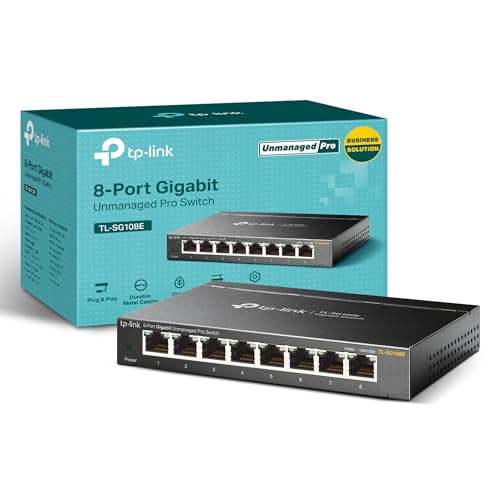
- Eight gigabit Ethernet ports
- VLAN, QoS, and IGMP support
- Metal desktop or wall-mount design
Best For: Gamers who need network controls and monitoring
Best High-Speed Expansion

- Five 2.5Gb Ethernet ports plus a 10Gb SFP+ port
- Supports link aggregation and VLAN modes
- Metal, fanless-style desktop or wall-mount design
Best For: Gaming setups with a NAS, server, or 10Gb backbone
Best Compact Gaming Upgrade

- Five 2.5Gb ports with 25Gbps switching capacity
- Plug-and-play with no configuration required
- Silent fanless design for desks and entertainment setups
Best For: Small gaming networks needing simple 2.5Gb connectivity
Best for Multiple Wired Devices

- Eight RJ45 ports support up to 2.5Gb each
- Automatically adapts to 100M, 1G, and 2.5G devices
- Fanless metal design supports quiet plug-and-play use
Best For: Expanded home gaming networks with many wired devices
Best Multigig Upgrade
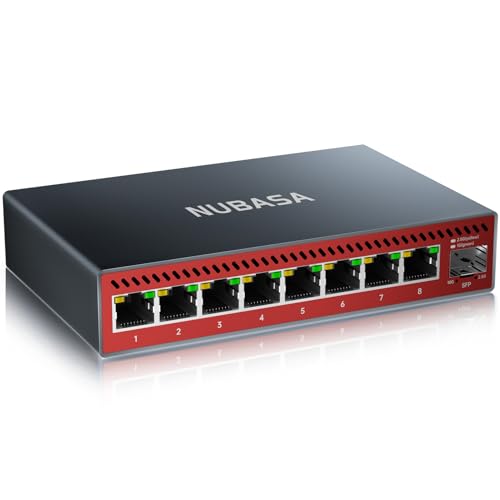
- Eight 2.5Gbps RJ45 ports
- 10Gbps SFP+ uplink
- Fanless aluminum casing
Best For: Expanding a high-speed gaming and NAS network
Best Compact 2.5G Pick

- Five 2.5Gbps ports
- Plug-and-play setup
- Quiet desktop or wall placement
Best For: Small gaming setups with several multigig devices
Best Budget Gigabit Option
TP-Link TL-SG108 Gigabit Switch

- Eight gigabit Ethernet ports
- Fanless metal construction
- Plug-and-play installation
Best For: Basic wired gaming networks using gigabit devices
Best Multi-Gig Port Capacity – BrosTrend 8-Port 2.5Gb Switch
The BrosTrend 8-port model is a practical choice among network switches for gaming when you need several wired devices connected at 2.5Gbps. Its unmanaged, fanless design keeps setup simple and operation quiet for gaming rooms, home offices, and LAN parties.
Best For: Gamers and households needing eight high-speed wired connections for PCs, consoles, NAS devices, TVs, and access points.
Pros:
- Eight RJ45 ports support 2.5Gbps connections and up to 40Gbps switching capacity.
- Plug-and-play operation requires no software installation or configuration.
- Fanless construction provides quiet operation.
- Desktop or wall-mount installation offers placement flexibility.
Cons:
- It is unmanaged, so it does not provide advanced VLAN or traffic-management controls.
- It uses RJ45 ports only and does not include optical SFP connectivity.
Choose this switch if you want broad 2.5Gbps coverage without adding configuration work. It is especially well suited to a busy gaming setup with multiple wired devices.
Best Compact 8-Port Pick – NETGEAR MS308 2.5G Switch
The NETGEAR MS308 is a compact option for shoppers comparing network switches for gaming and other multi-gig wired uses. It provides eight 2.5Gbps ports, a non-blocking architecture, and straightforward plug-and-play installation for desktop setups.
Best For: Desktop users who want eight 2.5Gbps connections in a compact, easy-to-install unmanaged switch.
Pros:
- Eight 2.5Gbps Ethernet ports support multiple high-speed wired devices.
- Non-blocking architecture is designed for seamless data transfer.
- Plug-and-play setup avoids complex configuration.
- Compact desktop design fits neatly into a workspace.
Cons:
- It is an unmanaged switch, limiting configuration and traffic-control options.
- The supplied details list compatibility with desktop and laptop devices rather than a broader device range.
The MS308 is a sensible fit when you want multi-gig speed in a tidy desktop form factor. Its simple installation makes it accessible, while the eight ports leave room for several wired devices.
Best Small Gaming Setup – BrosTrend 5-Port 2.5Gb Switch
The BrosTrend 5-port switch is a space-conscious option among network switches for gaming. Every port supports 2.5Gbps, while the unmanaged fanless design keeps installation easy and operation quiet for a gaming PC, console, NAS, or home entertainment system.
Best For: Smaller gaming setups that need several fast wired connections without paying for unused ports.
Pros:
- Five 2.5Gbps RJ45 ports provide up to 25Gbps switching capacity.
- Plug-and-play setup requires no software installation.
- Fanless operation remains quiet during demanding tasks.
- Desktop or wall-mount placement adds flexibility.
Cons:
- Five ports provide less expansion room than an eight-port switch.
- As an unmanaged model, it lacks advanced network-management features.
This is a good match for a focused gaming station where a handful of wired devices need multi-gig connectivity. Its smaller port count keeps the design straightforward while preserving 2.5Gbps performance on every port.
Best Managed Gigabit Option – TP-Link TL-SG108E Easy Smart Switch
The TP-Link TL-SG108E takes a different approach from newer 2.5Gbps network switches for gaming, pairing eight gigabit ports with useful management features. It supports VLANs, QoS, IGMP snooping, port mirroring, loop prevention, and cable diagnostics for users who want more control over their wired network.
Best For: Gamers who value VLANs, QoS, monitoring, and other network-management tools more than multi-gig port speeds.
Pros:
- Eight 10/100/1000Mbps RJ45 ports expand wired connectivity.
- Easy Smart management is available through a web interface or free software.
- Supports up to 32 VLANs, QoS, IGMP snooping, port mirroring, loop prevention, and cable diagnostics.
- Sturdy metal construction supports desktop or wall-mount installation.
Cons:
- Its ports are gigabit rather than 2.5Gbps, so it is slower than the multi-gig options here.
- Advanced features may require more setup than an unmanaged plug-and-play switch.
The TL-SG108E is the better choice when network organization and traffic control matter more than maximum link speed. It can suit gaming networks that also need segmentation, monitoring, or QoS controls.
Best High-Speed Expansion – UGREEN 2.5Gb 6-Port Switch
For gaming setups that also connect to a NAS or other high-speed equipment, this UGREEN model is a flexible choice among network switches for gaming. It combines five 2.5Gb Ethernet ports with a 10Gb SFP+ port and offers standard, link aggregation, and VLAN modes through one-touch switching.
Best For: Gamers who need multi-gig connectivity plus a 10Gb backbone connection for a NAS, server, or high-performance router.
Pros:
- Five 2.5Gb ports and one 10Gb SFP+ port support fast wired connections.
- Link aggregation can increase the bandwidth limit to 5Gbps for compatible multi-port devices.
- VLAN mode isolates ports 1–4 while keeping them connected to ports 5–6.
- Metal housing, ventilation, lightning protection, and desktop or wall mounting support practical installation.
Cons:
- The SFP+ port requires a separately purchased optical or RJ45 module.
- It is an unmanaged Layer 2 switch, so advanced configuration options are limited.
This is the most versatile option of the three for a gaming network that is growing beyond basic console and PC connections. Its extra SFP+ port and link aggregation support are especially useful when fast storage or a 10Gb network backbone is part of the setup.
Best Compact Gaming Upgrade – TP-Link Omada DS105G-M2
The TP-Link Omada DS105G-M2 is a straightforward pick for network switches for gaming when five wired connections are enough. All five ports support 2.5Gb speeds, making it suitable for gaming PCs, LAN parties, 2.5G NAS devices, Wi-Fi 6 access points, and 4K media equipment.
Best For: Gamers and small offices seeking a compact, plug-and-play 2.5Gb switch without configuration or central management.
Pros:
- Five 2.5Gb ports provide up to 25Gbps of switching capacity.
- Plug-and-play operation requires no software, configuration, or central management.
- Fanless operation supports silent use near a gaming desk or entertainment system.
- Metal construction and included rubber feet suit desktop placement.
Cons:
- With five ports, it offers less expansion room than the eight-port alternative.
- It does not include an SFP+ port or the additional modes offered by the UGREEN six-port model.
This switch keeps the upgrade simple: connect compatible devices and gain 2.5Gb networking without changing to Cat6 wiring. It is a strong fit for a focused gaming setup, though larger networks may outgrow its five-port layout.
Best for Multiple Wired Devices – UGREEN 2.5Gb 8-Port Switch
When a gaming room has several PCs, consoles, routers, or storage devices, this eight-port UGREEN model provides useful room to expand. Every RJ45 port supports up to 2.5Gb and automatically adapts to 100M, 1G, or 2.5G connections, making it a practical all-around choice among network switches for gaming.
Best For: Larger home gaming networks that need eight wired 2.5Gb connections with quiet, maintenance-free operation.
Pros:
- Eight 2.5Gb ports provide more connection capacity for gaming PCs, consoles, NAS devices, and routers.
- Automatic speed detection supports 100M, 1G, and 2.5G devices.
- Plug-and-play setup requires no software or configuration.
- Metal housing, thermal components, ventilation, and fanless operation support quiet extended use.
Cons:
- It has no SFP+ port for direct fiber or 10Gb module connectivity.
- As an unmanaged switch, it does not provide advanced network management features.
The eight-port layout makes this the easiest recommendation when expansion matters more than specialized features. It delivers consistent 2.5Gb connectivity across a mixed-device network while keeping installation and daily operation simple.
Best Multigig Upgrade – NUBASA 8-Port 2.5G Switch
For gamers building a fast wired network, the NUBASA is a strong choice among network switches for gaming. It provides eight 2.5Gbps RJ45 ports plus a 10Gbps SFP+ uplink, making it well suited to gaming PCs, consoles, NAS devices, and high-speed internet equipment. Its unmanaged design keeps installation simple.
Best For: Gamers who need multiple 2.5Gbps connections and a faster backbone link for NAS, routers, or servers.
Pros:
- Eight 2.5Gbps ports support gaming PCs, consoles, and other multigig devices.
- 10Gbps SFP+ uplink supports compatible 1G, 2.5G, and 10G modules.
- Fanless aluminum construction provides silent operation and heat dissipation.
- Plug-and-play setup with backward compatibility for slower Ethernet devices.
Cons:
- The SFP+ modules are sold separately unless you choose a bundle option.
- It is an unmanaged switch, so advanced traffic controls are not available.
The NUBASA offers the most expansion headroom of these options, especially if your setup includes 2.5GbE devices and a 10GbE backbone. It is a practical long-term upgrade for a performance-focused home network.
Best Compact 2.5G Pick – UGREEN 5-Port 2.5Gb Switch
The UGREEN CM953 is a compact option for gamers upgrading a small wired setup. All five ports support 2.5Gbps, so a gaming PC, console, NAS, and other compatible devices can share multigig connectivity without configuration or software. Its fanless design also keeps operation quiet.
Best For: Gamers with a few 2.5GbE devices who want a simple desktop or wall-mounted switch.
Pros:
- Five 2.5Gbps ports provide multigig connectivity on every port.
- Plug-and-play operation works with 2.5Gbps, 1Gbps, and 100Mbps devices.
- Fanless cooling, non-slip feet, and wall-placement flexibility suit home setups.
- Supports smooth NAS transfers and low-latency gaming connections.
Cons:
- Five ports provide less expansion capacity than an eight-port switch.
- The plastic casing is less substantial than an aluminum or metal enclosure.
UGREEN keeps the feature set focused: five full-speed 2.5Gbps ports, quiet operation, and easy placement. It is a sensible choice when you want a compact network switches for gaming upgrade without paying for unused ports or advanced management.
Best Budget Gigabit Option – TP-Link TL-SG108 Gigabit Switch
The TP-Link TL-SG108 is a straightforward choice for gamers whose equipment uses standard gigabit Ethernet. Its eight 10/100/1000Mbps ports make it easy to connect gaming consoles, computers, and other wired devices, while the unmanaged, plug-and-play design avoids setup work.
Best For: Gamers who want an affordable, dependable gigabit switch for a basic wired network.
Pros:
- Eight gigabit ports accommodate consoles, computers, and peripherals.
- Fanless operation is suitable for bedrooms, offices, and other quiet spaces.
- Metal housing and shielded ports support durability, cooling, and interference protection.
- Energy-efficient operation adjusts power use based on link status and cable length.
Cons:
- Its gigabit ports are slower than the 2.5Gbps options in this roundup.
- It offers no 2.5Gbps ports or SFP+ uplink for multigig expansion.
The TL-SG108 is best when gigabit speeds match your router, internet service, and gaming devices. It provides more ports and a sturdy, quiet enclosure, but buyers planning a multigig upgrade should choose one of the faster switches instead.
How We Picked the Best Network Switches for Gaming
We focused on practical features that affect a home gaming network: Ethernet speed, port count, switching capacity, installation flexibility, cooling, and ease of setup. The selection includes simple unmanaged switches for plug-and-play expansion, as well as smart-managed and multi-gigabit models for users who need traffic controls or faster local transfers.
We also considered useful details such as fanless operation, metal housings, shielded ports, uplink capacity, warranty coverage, and compatibility with PCs, consoles, NAS devices, routers, and Wi-Fi access points. A switch does not increase your internet speed by itself, so every recommendation should be matched to the capabilities of your router, cabling, and connected devices.
Quick Comparison
| Best For | Recommended Type | What to Look For |
|---|---|---|
| Basic console or PC expansion | 5- or 8-port Gigabit | Plug-and-play setup, fanless cooling, sturdy enclosure |
| Fast gaming PCs and local file transfers | 2.5GbE switch | Multi-gigabit ports on the switch and compatible devices |
| NAS, workstation, or high-speed uplink | 2.5GbE with 10GbE uplink | A faster SFP+ or dedicated uplink port |
| Traffic prioritization or segmentation | Smart-managed switch | QoS, VLAN support, and a configuration interface |
Key Buying Factors for Network Switches for Gaming
Speed and Compatibility
Gigabit Ethernet remains sufficient for most online gaming because game latency is usually influenced more by your internet connection, routing, and server distance than by raw LAN bandwidth. Choose 2.5GbE when you have multi-gig internet, a fast NAS, modern PCs, or several users transferring large files at once. Check that your router and network adapters support the target speed; otherwise, the switch will negotiate down to a slower connection.
Port Count and Layout
Count every device you plan to connect, including the router uplink, then leave at least one or two spare ports for future additions. Five ports suit a small desk or single gaming area, while eight ports provide more flexibility for a console, PC, streaming gear, access point, and storage device. Consider port placement and cable clearance if the switch will sit behind a desk.
Managed Versus Unmanaged
Unmanaged switches are the easiest choice: connect the cables and start playing. A smart-managed model is worthwhile if you want QoS controls, VLANs, monitoring, or separate traffic groups, but it requires more configuration. QoS can help prioritize selected traffic on a busy local network, although it cannot fix inadequate internet service or severe wireless interference.
Cooling, Build, and Installation
Fanless switches are quiet and well suited to bedrooms, offices, and gaming desks. Metal cases and shielded ports can improve durability and reduce unwanted cable strain. Confirm whether the model supports desktop placement or wall mounting, and keep it in a ventilated location rather than inside a sealed cabinet.
Who Should Buy Which Network Switches for Gaming?
Choose a compact Gigabit switch if you simply need more wired ports for one console, PC, or streaming setup. Pick an 8-port Gigabit model for a typical home entertainment center or office where affordability and simplicity matter most. Move to a 5- or 8-port 2.5GbE switch if your network includes newer gaming PCs, a multi-gig router, or a NAS and you want faster local transfers. For advanced home labs or storage-heavy setups, a model with a 10GbE uplink provides more headroom. Finally, select a smart-managed switch when VLANs, QoS, and network visibility are more important than completely maintenance-free operation.