Fast, dependable media transfers can make a major difference on a video shoot, especially when large 4K, 6K, or 8K files are involved. The right reader should match your camera cards, computer ports, and editing workflow without adding unnecessary complexity.
These 10 picks cover CFexpress Type B, CFexpress Type A, XQD, SD, microSD, and multi-format setups, with options ranging from compact single-purpose readers to versatile desktop and travel hubs.
Best 10 Memory Card Reader for Videographers Picks for 2026
Best Multi-Format Pick
CFexpress Type B/XQD/SD 10Gbps Reader

- Supports CFexpress Type B, XQD, and SD cards
- USB 3.2 Gen 2 offers up to 10Gbps
- Includes USB-C and USB-A cables
Best For: Filmmakers using several professional card formats
Best Sony Workflow Pick
MRW-G2 CFexpress Type A Reader

- Supports CFexpress Type A and SD cards
- Handles UHS-I and UHS-II SD media
- USB 3.2 Gen 2 supports 10Gbps
Best For: Sony shooters using Type A and SD media
Best Travel Hub

- Supports SD and microSD card formats
- Offers 65W USB-C pass-through charging
- Dual card slots and USB-C ports aid mobile workflows
Best For: Travel creators using SD and microSD media
Best CFexpress Type A Speed Pick
Lexar 10Gbps CFexpress Type A Reader

- Supports CFexpress Type A and UHS-II SD
- Listed speeds reach 900MB/s for Type A
- Includes USB-C-to-C and USB-C-to-A cables
Best For: Type A shooters prioritizing portable fast offloads
Versatile Pick

- Reads and writes up to five cards simultaneously
- Supports CF, SD, microSD, XD, MS, and more
- Includes USB-A and USB-C connectivity
Best For: Mixed-format camera workflows and multi-device editing setups
Apple-Compatible Pick

- Supports UHS-II SD card speeds
- Works with USB-C Mac, iPad, and iPhone
- Compact design avoids blocking other ports
Best For: Apple users transferring SD footage to USB-C devices
Pro Workflow Pick

- Supports CFexpress Type B at up to 10Gbps
- Adds two USB 3.2 data ports
- Works with SD, CF, XD, MS, and TF cards
Best For: CFexpress-based video workflows and mobile editing stations
Best Portable Organizer
AboveTEK UHS-II SD/MicroSD Reader

- 312MB/s UHS-II transfer support
- Built-in storage for SD and TF cards
- Compact USB-C design with dual slots
Best For: Videographers using SD and microSD cards on the go
Best Professional Format Hub
Yeemie Pro 8-in-1 CFexpress Reader

- 10Gbps USB 3.2 Gen 2 transfer support
- Reads six card formats simultaneously
- Adds two USB ports for peripherals
Best For: Videographers with CFexpress Type B and mixed media
Best Compact Everyday Pick
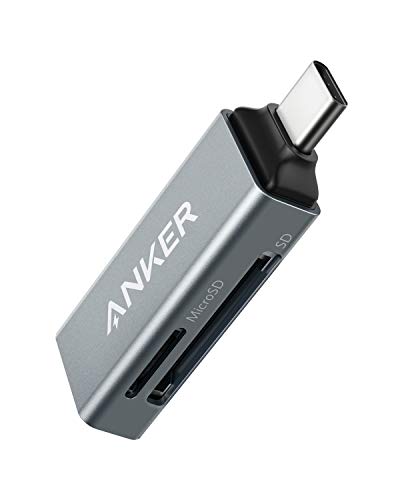
- Small USB-C design for travel
- Standard SD and microSD slots
- Convenient for phones and laptops
Best For: Videographers using UHS-I SD and microSD cards
Best Multi-Format Pick – CFexpress Type B/XQD/SD 10Gbps Reader
For videographers working across camera systems, this memory card reader for videographers combines CFexpress Type B, XQD, and SD support in a compact dual-slot design. Its USB 3.2 Gen 2 interface supports transfers up to 10Gbps, making it suitable for moving large 4K and 8K video files to a compatible computer.
Best For: Professional filmmakers, wedding teams, indie DITs, and expedition creators using CFexpress Type B, XQD, and SD cards.
Pros:
- Supports CFexpress Type B, XQD, and SD cards.
- 10Gbps USB 3.2 Gen 2 transfer interface.
- Includes USB-C and USB-A cables for flexible connectivity.
- Aluminum housing and plug-and-play operation suit mobile workflows.
Cons:
- Does not support CFexpress Type A cards.
- Transfer performance depends on the host port and card.
This is the most versatile option here for crews carrying multiple card formats. Its dual-slot layout, rugged aluminum body, and included cables make it particularly practical for on-location ingest, though users with Type A cards will need another reader.
Best Sony Workflow Pick – MRW-G2 CFexpress Type A Reader
The Sony MRW-G2 is a focused memory card reader for videographers using CFexpress Type A or SD media. With USB 3.2 Gen 2 connectivity and a USB-C connector, it is designed to streamline transfers of high-resolution images, 4K video, and other large files.
Best For: Sony camera users and creators who need CFexpress Type A and SDXC/SDHC compatibility.
Pros:
- Supports CFexpress Type A and SDXC/SDHC cards.
- Compatible with both UHS-I and UHS-II SD cards.
- USB 3.2 Gen 2 supports 10Gbps transfer speeds.
- Compact 95-gram design is easy to add to a travel kit.
Cons:
- Uses a USB-C connection rather than offering USB-A connectivity directly.
- Supports two card types, not CFexpress Type B or XQD.
For a Type A-based workflow, the MRW-G2 offers the right combination of format support and fast USB connectivity. It is less flexible for mixed-format production teams, but its compact design and Sony compatibility make it a straightforward choice for compatible cameras.
Best Travel Hub – SmallRig 5-in-1 SD/TF Reader
The SmallRig 5-in-1 is a versatile memory card reader for videographers who work with SD and microSD media while traveling. It combines dual USB-C ports, dual SD/TF slots, and 65W USB-C pass-through charging in a compact design for phones, laptops, and other mobile setups.
Best For: Travel photographers, content creators, and videographers transferring SD or microSD footage from mobile workstations.
Pros:
- Supports SD, SDHC, SDXC, Micro SD, Micro SDHC, and Micro SDXC cards.
- Dual SD/TF slots support simultaneous reading and writing.
- 65W PD pass-through charging helps maintain power during transfers.
- Includes a 120cm USB-C cable for flexible mobile use.
Cons:
- Does not support CFexpress cards.
- Listed maximum card read speed is 100MB/s.
- Plugging or unplugging the PD charger during transfers may interrupt transmission.
This reader is better suited to SD-based travel workflows than high-end CFexpress ingest. Its charging capability and long cable add convenience for mobile devices, while the stated 100MB/s card speed makes it a practical everyday option rather than a maximum-speed professional offloader.
Best CFexpress Type A Speed Pick – Lexar 10Gbps CFexpress Type A Reader
The Lexar CFexpress Type A/SD reader is a compact memory card reader for videographers who want fast offloads from Type A and UHS-II SD cards. Its USB 3.2 Gen 2 interface is rated up to 10Gbps, with listed card transfer speeds of up to 900MB/s for CFexpress Type A and 312MB/s for UHS-II SD.
Best For: Videographers and photographers using CFexpress Type A and UHS-II SD cards who want a portable dual-format reader.
Pros:
- Supports CFexpress Type A and SD UHS-II cards.
- Listed speeds reach up to 900MB/s for Type A and 312MB/s for UHS-II SD.
- Includes both USB-C-to-C and USB-C-to-A cables.
- Backed by a two-year limited warranty.
Cons:
- Does not support CFexpress Type B, XQD, or microSD cards.
- Performance depends on the card and connected USB port.
With clear Type A and UHS-II speed targets, this Lexar model is a strong fit for creators prioritizing quick media transfers without carrying a large dock. Its single reader design is focused, so mixed-format crews should verify their camera cards before buying.
Versatile Pick – 7-in-1 USB Card Reader
For videographers using a mix of legacy and current media, this 7-in-1 memory card reader for videographers offers broad format coverage, USB-A and USB-C connectivity, and USB 3.0 transfer speeds. It can read and write up to five cards at the same time, which may help streamline multi-card offloads.
Best For: Videographers who work with SD, CF, microSD, XD, MS, and other supported card formats across different computers and mobile devices.
Pros:
- Supports a wide range of card types, including CF, SDXC, microSD, XD, and MS.
- USB-A and USB-C connectors improve compatibility with laptops, tablets, and phones.
- Supports 5Gbps transfers and simultaneous reading and writing of up to five cards.
- Plug-and-play compatibility with Windows, macOS, Linux, Chrome OS, and Android.
Cons:
- Its broad multi-slot design may be more than needed for users who only shoot SD cards.
- Transfer performance depends on the connected port and the card being used.
This is a flexible choice for mixed-camera workflows and shared editing setups. Its 12-month warranty adds practical reassurance for frequent use.
Apple-Compatible Pick – USB-C to SD Card Reader
Apple’s USB-C to SD Card Reader is a straightforward memory card reader for videographers who primarily use SD cards with a USB-C Mac, iPad, or iPhone. It supports UHS-II transfer speeds for high-resolution photos and videos while remaining backward compatible with other SD cards and adapters.
Best For: Apple users who want a compact, dedicated SD reader for USB-C devices.
Pros:
- Supports UHS-II SD card transfer speeds.
- Works with USB-C Mac, iPad, and iPhone devices.
- Backward compatible with other SD cards and adapters.
- Designed to avoid blocking adjacent ports.
Cons:
- It is designed for SD cards rather than a broad range of media formats.
- Its USB-C design may require an adapter for devices without USB-C connectivity.
This reader keeps the workflow simple for Apple-based production kits. Choose it when reliable SD compatibility matters more than multiple card slots or extra USB ports.
Pro Workflow Pick – 8-in-1 CFexpress Type B Hub
For high-bitrate camera workflows, this 8-in-1 memory card reader for videographers combines a CFexpress Type B slot with SD, CF, XD, MS, and TF support. Its 10Gbps USB 3.2 Gen 2 connection and two additional USB ports are suited to mobile editing and fast media-management setups.
Best For: Videographers using CFexpress Type B alongside other card formats who need extra USB connectivity on the road.
Pros:
- Supports CFexpress Type B cards plus SD, CF, XD, MS, and TF formats.
- Offers up to 10Gbps transfer speeds for supported cards and devices.
- Includes two USB 3.2 data ports and USB-A/USB-C switch cables.
- Supports simultaneous reading of multiple cards and USB devices, according to the supplied notes.
Cons:
- Its advanced CFexpress features may be unnecessary for SD-only workflows.
- Actual transfer speeds depend on the card, computer, and connection.
- The six card slots do not include every format listed in the broader compatibility description as a separate physical slot.
This is the most workflow-focused option of the three, especially for CFexpress Type B users handling demanding footage. The compact aluminum body and 12-month warranty also suit travel-heavy production work.
Best Portable Organizer – AboveTEK UHS-II SD/MicroSD Reader
For videographers who need a memory card reader for videographers that also keeps spare media organized, the AboveTEK combines USB-C transfer with built-in storage. Its UHS-II support, dual slots, and compact aluminum design make it practical for camera, drone, and action-camera workflows.
Best For: Videographers who use SD and microSD cards and want a portable reader that doubles as a card holder.
Pros:
- Supports UHS-II transfer speeds up to 312MB/s.
- Reads SD and microSD cards, including UHS-I and UHS-II formats.
- Stores up to four SD cards and 10 TF cards.
- USB-C plug-and-play compatibility with Windows, macOS, Android, Linux, and iPhone.
Cons:
- Uses USB-C connectivity, so older USB-A devices may require an adapter.
- Its two slots are designed for SD and microSD media rather than larger professional formats such as CFexpress.
The AboveTEK is a strong travel option when minimizing loose cards matters as much as transferring footage. It is especially appealing for creators working across cameras, drones, phones, and tablets.
Best Professional Format Hub – Yeemie Pro 8-in-1 CFexpress Reader
The Yeemie Pro is a memory card reader for videographers handling several media formats and high-resolution footage. Its CFexpress Type B slot, six card readers, and two additional USB ports create a versatile desktop or travel hub for busy production workflows.
Best For: Videographers using CFexpress Type B alongside SD, microSD, CompactFlash, Memory Stick, or XD cards.
Pros:
- USB 3.2 Gen 2 supports transfer rates up to 10Gbps, or 1,250MB/s.
- Reads and writes six card formats plus two USB devices simultaneously.
- Includes CFexpress Type B, SD, TF, CF, MS, and XD slots.
- Comes with both USB-A-to-C and USB-C-to-C cable options.
Cons:
- Not compatible with XQD cards.
- Its broad feature set may be more than needed for workflows limited to SD or microSD.
For creators with mixed-camera kits, this hub can reduce cable and reader swapping during offloads. The CFexpress Type B support and extra USB ports make it the most expansive option in this roundup.
Best Compact Everyday Pick – Anker USB-C Dual-Slot Reader
The Anker PowerExpand is a compact memory card reader for videographers who primarily use standard SD and microSD media. Its USB-C connection and dual-slot layout make it convenient for quick footage transfers to compatible laptops, phones, and other devices.
Best For: Videographers who want a small, straightforward reader for SD and microSD cards.
Pros:
- Dual slots support standard SD and microSD cards.
- Compact 1.65-inch design fits easily beside other computer peripherals.
- USB-C connectivity supports smartphones and compatible laptops.
- Includes an 18-month warranty.
Cons:
- Supports UHS-I media rather than the faster UHS-II standard.
- May require removing a phone or device case for a proper connection.
- Its listed compatibility is centered on USB-C devices and does not include CFexpress.
The Anker is a sensible choice when portability and simplicity matter more than maximum throughput or broad format support. It works well as a lightweight everyday reader for SD-based camera kits.
How We Picked the Best Memory Card Reader for Videographers
We focused on the factors that matter most during real-world video transfers: supported card formats, interface speed, connection type, build quality, portability, and ease of use. The selection includes readers for current professional formats such as CFexpress Type A and Type B, as well as widely used SD, UHS-II, XQD, CF, microSD, and older media.
Advertised transfer rates are theoretical maximums. Actual performance depends on the card, computer, cable, port, file size, and thermal conditions, so compatibility and sustained reliability are just as important as headline speed.
Quick Comparison
| Reader Type | Best For | What to Check |
|---|---|---|
| CFexpress Type B/XQD | High-bitrate cinema and mirrorless cameras | CFexpress generation, XQD support, and USB 3.2 speed |
| CFexpress Type A/SD | Sony cameras using Type A cards | Type A compatibility and included cable or connector |
| SD/microSD | Most consumer and prosumer video workflows | UHS-I versus UHS-II support |
| Multi-format hub | Mixed-camera kits and travel | Simultaneous use, port layout, and operating-system support |
Key Buying Factors for a Memory Card Reader for Videographers
Match the Card Format
Start with the cards used by your cameras. CFexpress Type A and Type B are not interchangeable, and neither is automatically compatible with XQD. SD readers should specify UHS-II support if your cards use the second row of contacts; otherwise, transfer speeds may be limited.
Check the Host Connection
USB-C is convenient, but the computer or tablet must also support the required USB standard. A 10Gbps reader connected to a slower USB port will not reach its rated maximum. Confirm whether the reader uses a detachable cable, built-in plug, or adapter for your device.
Prioritize Sustained Performance
Large video files can expose heat and throttling issues that short speed tests miss. Aluminum bodies may help with heat dissipation, while a sturdy cable and strain relief improve reliability in mobile editing environments.
Consider Your Workflow
A single-format reader is often smaller and simpler. A multi-card hub is more practical for crews carrying several camera systems, but extra slots and features can increase size and create more opportunities for format confusion.
Who Should Buy Which Memory Card Reader for Videographers?
- CFexpress Type B or XQD camera owners: Choose a dedicated Type B/XQD reader or a multi-format hub that explicitly supports both formats.
- Sony Type A users: Select a reader designed for CFexpress Type A, ideally with SD support if you also shoot on SD cards.
- SD-focused videographers: Look for UHS-II support when using professional V60 or V90 cards; basic UHS-I readers suit slower cards and casual transfers.
- Traveling creators: A compact USB-C reader with SD and microSD slots reduces cable and accessory clutter.
- Editors with mixed media: An 8-in-1 or 7-in-1 reader can be worthwhile, provided its individual slots and USB speed match your cards.
Before buying, verify the exact card format, device ports, operating-system compatibility, and whether the advertised speed applies to the slot you plan to use. For paid shoots, reliability and correct compatibility should take priority over the lowest price.