The right memory card reader can make the difference between a smooth photo workflow and a frustrating transfer session. The best models combine fast connections, broad card compatibility, dependable construction, and a design that fits your camera bag.
This roundup compares 10 versatile readers for photographers using SD, microSD, CompactFlash, Memory Stick, and other formats across cameras, phones, tablets, and computers.
Best 10 Memory Card Readers for Photographers Picks for 2026
Best All-in-One Option
UGREEN 4-Slot USB 3.0 Card Reader
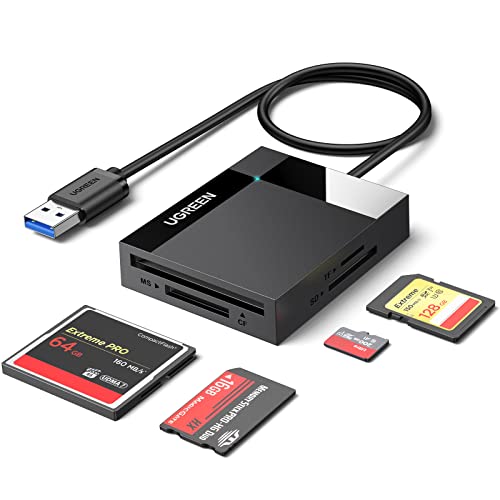
- Reads SD, microSD, CF, and Memory Stick cards
- Supports four cards simultaneously
- USB 3.0 speeds up to 5Gbps
Best For: Photographers using multiple card formats
Best Card-Case Design
PGYTECH USB-C SD and microSD Reader

- Stores cards while functioning as a reader
- Reads SD and TF cards simultaneously
- Protective aluminum and rubber construction
Best For: Traveling photographers using USB-C devices
Best USB-C Format Coverage

- Accepts CF, SD, microSD, and Memory Stick cards
- Includes USB-C and USB-A connectivity
- Supports plug-and-play photo and video transfers
Best For: Photographers bridging USB-C and older computers
Best Compact Dual-Interface Pick

- Offers USB-C and USB-A connections
- Reads SD and microSD cards simultaneously
- USB 3.0 speeds up to 5Gbps
Best For: Traveling photographers using mixed device ports
Best USB-C All-Rounder

- SD and microSD support
- USB-C plus USB-A expansion
- Plug-and-play compatibility
Best For: USB-C photographers transferring files across phones, tablets, and computers
Best Dual-Card Speed Pick
Acer USB-C/USB-A SD Card Reader

- Simultaneous SD and microSD access
- USB 3.0 up to 5Gbps
- USB-C and USB-A connectors
Best For: Photographers and editors working with SD and microSD cards
Best Multi-Format Option

- Supports five major card formats
- Seven slots for flexible workflows
- USB-C transfers up to 5Gbps
Best For: Photographers using SD, CF, XD, MS, and microSD cards
Best Four-Format Pick

- Reads SD, microSD, MS, and CF cards
- Handles four cards simultaneously
- USB-C and USB 3.0 connectors
Best For: Photographers using several card formats
Most Versatile Format Support

- Supports seven card interfaces
- Reads and writes up to five cards together
- USB-C and USB 3.0 connectivity
Best For: Photographers with varied or legacy card formats
Best Mobile Workflow
5-in-1 USB-C Photo Card Reader
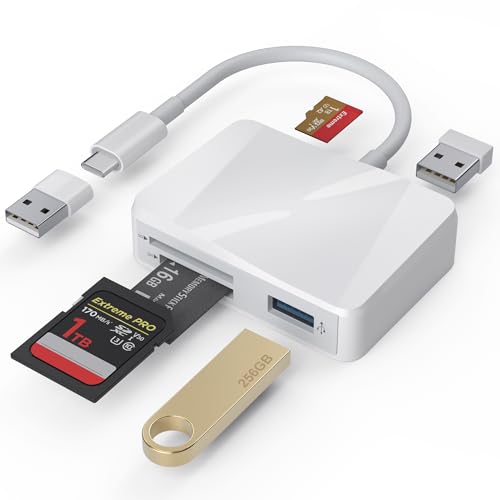
- Supports SD, microSD, and Memory Stick
- Includes USB-C and detachable USB-A
- Adds two USB-A ports
Best For: Photographers transferring images to phones and tablets
Best All-in-One Option – UGREEN 4-Slot USB 3.0 Card Reader
For photographers working with several card formats, this UGREEN model is a versatile choice among memory card readers for photographers. It includes SD, microSD, CompactFlash, and Memory Stick slots, with USB 3.0 transfer speeds rated up to 5Gbps.
Best For: Photographers who regularly use multiple card types and want to read or write four cards simultaneously.
Pros:
- Supports SD, microSD, CF, and Memory Stick formats.
- Can read and write four cards at the same time.
- Plug-and-play compatibility with Windows, macOS, Linux, and ChromeOS.
- Compact body with a 1.7-foot cable.
Cons:
- Uses a USB connection rather than a native USB-C interface.
- Its four-slot design may be more than needed for single-card workflows.
The combination of broad media support and simultaneous transfers makes this a practical desktop or travel-bag reader for photographers managing cards from different cameras.
Best Card-Case Design – PGYTECH USB-C SD and microSD Reader
The PGYTECH combines card storage and transfer in one compact accessory, making it a useful option among memory card readers for photographers who travel. Its USB-C reader supports SD and TF cards simultaneously, while the case stores additional cards and two Nano SIM cards.
Best For: Mobile photographers who want card protection, organization, and USB-C transfers in one accessory.
Pros:
- Combines an SD/TF reader with a storage case.
- Supports simultaneous SD and TF data transfer.
- USB-C plug-and-play compatibility with supported phones, tablets, and computers.
- Aluminum shell and rubber case offer IP54-level protection.
Cons:
- USB-C devices must support OTG for phone and tablet transfers.
- A USB-C-to-USB-A adapter is required for desktop computers without USB-C.
- The advertised 312MB/s ideal speed depends on SD 4.0 cards and device performance.
This is especially appealing when keeping spare cards organized matters as much as downloading images. Check your device’s OTG support before relying on it for mobile transfers.
Best USB-C Format Coverage – RRSITIAU 4-in-1 Card Reader
This 4-in-1 reader is designed for photographers moving files between modern USB-C devices and older computers. It accepts CompactFlash, SD, microSD, and Memory Stick cards, and includes a detachable USB-C-to-USB adapter for broader connectivity.
Best For: Photographers who need one reader for USB-C phones, tablets, laptops, and USB-equipped computers.
Pros:
- Supports CF, SD, TF, and Memory Stick formats.
- Works with USB-C and USB-A devices through the included adapter.
- Supports common photo and video formats, including JPEG, RAW, H.264, and MPEG-4.
- Plug-and-play operation requires no additional driver or software.
Cons:
- Its listed transfer rate is 480Mbps, below the 5Gbps rating of USB 3.0 models.
- Does not support Wi-Fi SD cards.
- Simultaneous multi-card operation is not specified.
Choose this model when format flexibility and USB-C compatibility are priorities. It is a convenient bridge between current mobile devices and cameras or computers using legacy card types.
Best Compact Dual-Interface Pick – UGREEN USB-C and USB-A Reader
For photographers who want a small reader that works across newer and older devices, this UGREEN model is a strong everyday option among memory card readers for photographers. It offers USB-C and USB-A connectivity, USB 3.0 speeds up to 5Gbps, and simultaneous SD and microSD access.
Best For: Photographers and content creators who transfer images between USB-C devices, traditional computers, cameras, and action cameras.
Pros:
- Dual USB-C and USB-A interfaces improve device compatibility.
- Reads SD and microSD cards simultaneously.
- USB 3.0 supports transfer speeds up to 5Gbps.
- Slim, lightweight 37-gram design suits travel.
Cons:
- Supports SD and microSD formats but not CF or Memory Stick.
- Actual transfer speeds depend on the card and connected device.
This is a practical choice for streamlined workflows involving SD-family cards. Its dual-interface design is particularly useful if your kit includes both USB-C laptops or phones and USB-A computers.
Best USB-C All-Rounder – BnmxTek USB-C SD Card Reader
For photographers looking for memory card readers for photographers that work across phones, tablets, and computers, the BnmxTek reader offers USB-C connectivity, SD and microSD support, and a USB-A expansion port. Its compact design is useful for quickly reviewing or moving camera, drone, and action-camera files.
Best For: Photographers using USB-C iPhones, iPads, MacBooks, Android devices, or laptops who need SD and microSD access.
Pros:
- Works with SD, SDHC, SDXC, microSD, microSDHC, and microSDXC cards.
- USB-C connector supports many current phones, tablets, Macs, and laptops.
- Includes a USB-A female port for peripherals such as flash drives or hard disks.
- Plug-and-play operation requires no additional app or driver on supported systems.
Cons:
- Cannot read an SD card and microSD card simultaneously.
- Built-in USB-C cable does not support Lightning devices.
- Listed transfer rate is 54 MB/s.
This is a practical, flexible choice for photographers who primarily use USB-C equipment and want a reader that handles both full-size and microSD media. Verify your device has USB-C before buying.
Best Dual-Card Speed Pick – Acer USB-C/USB-A SD Card Reader
The Acer reader is a strong option among memory card readers for photographers who want fast transfers and flexible device connectivity. Its USB 3.0 interface is rated up to 5Gbps, and the dual slots can read and write SD and microSD cards simultaneously.
Best For: Photographers and video editors managing SD and microSD cards on USB-C or USB-A computers, tablets, and phones.
Pros:
- Supports simultaneous reading and writing of SD and microSD cards.
- USB-A and USB-C connectors work with a broad range of devices.
- Rated for up to 5Gbps USB 3.0 data transfer.
- Compact aluminum body includes protective covers and an attached cord.
Cons:
- Thick device cases may prevent full connector insertion.
- Does not support CFexpress, CF, XQD, MS, or Memory Stick cards.
- Not compatible with Lightning-port devices.
Choose this model if simultaneous SD and microSD access matters more than support for legacy or professional formats such as CFexpress. Its dual connector design also reduces the need for a separate adapter.
Best Multi-Format Option – Yeemie Pro 7-in-1 Card Reader
Photographers working with several camera systems may prefer this 7-in-1 reader over simpler memory card readers for photographers. It supports SD, TF/microSD, CF, MS, and XD formats, with multiple slots designed for moving files between cameras, phones, tablets, and laptops.
Best For: Photographers who use a mix of SD, microSD, CompactFlash, Memory Stick, and XD cards.
Pros:
- Supports SD, TF/microSD, CF, MS, and XD card formats.
- Offers seven card slots and claims support for reading up to five cards at once.
- USB-C interface is rated for up to 5Gbps transfers.
- Aluminum construction, reinforced cable, and independent slot LEDs add practical usability.
Cons:
- USB-C-only design is not suitable for Lightning devices without additional hardware.
- Its larger multi-slot design may be more than needed for photographers using only SD cards.
- Dimensions listed in the specifications are comparatively bulky for a travel reader.
This is the most versatile choice of the three for mixed-format workflows, especially when older cameras or specialized devices are part of your kit. Confirm that your cards match the supported formats before purchase.
Best Four-Format Pick – BENFEI 4-in-1 Card Reader
For photographers who need dependable memory card readers for photographers, the BENFEI 4-in-1 is a practical choice for common camera media. Its integrated USB-C and USB 3.0 connectors support SD, microSD, Memory Stick, and CompactFlash cards, with simultaneous access to all four card types.
Best For: Photographers using a mix of SD, microSD, CF, and Memory Stick cards who want one compact reader for USB-C and USB-A computers.
Pros:
- Supports SD, microSD, Memory Stick, and CompactFlash formats.
- Can read and write four cards simultaneously.
- USB-C and USB 3.0 connectivity supports broad device compatibility.
- Offers UHS-I transfer rates up to 160MB/sec when supported by the card and port.
Cons:
- Does not support standard Memory Stick, Memory Stick Micro (M2), or CF Type I.
- Actual transfer speeds depend on the card and USB port.
The BENFEI stands out for photographers who regularly switch among several legacy and current card formats. Its four-slot design and 18-month warranty add practical value, though users should verify their exact card type before buying.
Most Versatile Format Support – Rocketek 7-in-1 Card Reader
The Rocketek 7-in-1 is designed for photographers who work with a broad range of camera cards. It combines USB-C and USB 3.0 connectors with slots for CF, SD, microSD, xD, and Memory Stick media, making it one of the more flexible memory card readers for photographers.
Best For: Photographers and creators handling multiple card standards, including CF, xD, SD, microSD, and Memory Stick.
Pros:
- Supports seven card interfaces and a wide selection of card types.
- Can read and write up to five cards at the same time.
- USB-C and USB 3.0 connections work with computers, tablets, and phones.
- Advertises 5Gbps USB 3.0 transfer speeds and plug-and-play setup.
Cons:
- The seven-slot layout may be more than needed for photographers using only SD cards.
- Actual performance depends on the connected card and device.
If your workflow includes older xD or Memory Stick media alongside modern SD and CF cards, the Rocketek offers unusually broad coverage. Its simultaneous multi-card capability can also help when organizing files from several cards.
Best Mobile Workflow – 5-in-1 USB-C Photo Card Reader
This 5-in-1 reader is aimed at photographers who want to move images directly from camera cards to phones, tablets, or computers. With USB-C connectivity, a detachable USB-A adapter, SD, microSD, and MS slots, plus two USB-A ports, it is a flexible option among memory card readers for photographers.
Best For: Photographers transferring photos and videos between camera cards, USB-C mobile devices, and older USB-A computers.
Pros:
- Supports SD, microSD, and Memory Stick cards, including SDXC and UHS-I/UHS-II cards.
- USB-C connector and detachable USB-A adapter support newer and older devices.
- Includes two USB-A ports for additional peripherals or storage devices.
- Plug-and-play design requires no additional power or driver installation.
Cons:
- Its listed 480MB/sec transfer rate may be lower than some dedicated USB 3.0 readers.
- It does not list CompactFlash support.
The reader is a strong fit for photographers who edit or back up images on phones and tablets as well as computers. Its dual-connectivity design improves compatibility, while the lack of CF support makes it less suitable for photographers using CompactFlash cameras.
How We Picked the Best Memory Card Readers for Photographers
We focused on the features that matter during real-world photo transfers: supported card formats, connection type, transfer flexibility, portability, and compatibility with current computers and mobile devices. The selection includes simple SD and microSD readers as well as multi-card hubs that support older or less common formats such as CompactFlash, Memory Stick, and XD.
We also considered whether a reader can handle multiple cards, provide USB-A or USB-C flexibility, and work with devices such as recent iPhones, iPads, MacBooks, Windows laptops, Android devices, and camera-focused field setups. Advertised speeds depend on the card, host device, cable, and file type, so treat speed ratings as maximum interface capabilities rather than guaranteed results.
Quick Comparison
- Best for broad format support: Choose a 4-in-1, 5-in-1, or 7-in-1 reader if your cameras use different card types.
- Best for modern laptops and phones: USB-C readers offer the most convenient connection for newer devices.
- Best for older computers: Models with USB-A support avoid the need for a separate dongle.
- Best for organized travel: A card-case reader can help protect and carry memory cards in one compact accessory.
- Best for multiple cards: Readers designed for simultaneous read and write operations can simplify multi-camera workflows.
Key Buying Factors for Memory Card Readers for Photographers
Card-Format Compatibility
Check every card used by your cameras before buying. Standard SD and microSD support is common, but CompactFlash, Memory Stick, and XD compatibility is less universal. A multi-format reader is worthwhile if you regularly shoot with older cameras, action cameras, drones, or trail cameras.
USB Connection and Device Compatibility
USB-C is the most useful choice for newer MacBooks, Windows laptops, tablets, and phones, while USB-A remains common on desktop computers and older laptops. Some readers include both connectors or an adapter, which can be more convenient than carrying separate accessories.
Speed and Simultaneous Transfers
For large RAW files, video, or frequent backups, look for USB 3.0 or faster connectivity. Confirm whether multiple slots can be used at the same time, because some readers support only one active card even when several slots are present.
Portability and Durability
A compact reader is ideal for travel, but a larger hub may provide better spacing and easier access to multiple cards. Protect exposed connectors and avoid forcing cards into tight slots. If you work outdoors, prioritize a sturdy housing and a design that will not easily lose its cap or adapter.
Who Should Buy Which Memory Card Readers for Photographers?
Choose a basic USB-C SD/microSD reader if you mainly use one modern camera and want the smallest setup for a laptop, tablet, or phone.
Choose a multi-format reader if your kit includes CompactFlash, Memory Stick, XD, or several camera generations. The extra slots can eliminate the need for multiple readers.
Choose a USB-A and USB-C model if you move between older computers and newer mobile devices. Built-in dual connectivity is especially useful for shared workstations and travel.
Choose a simultaneous-read model if you copy footage or photographs from several cards during weddings, trips, or commercial shoots. For the most demanding workflows, verify the manufacturer’s limits and use high-quality cards and cables.