The right sound level meter makes it easier to document noise, troubleshoot equipment, check room acoustics, or monitor everyday sound exposure. The models in this roundup range from simple handheld meters to certified Class 2 instruments and data-logging kits.
Use the guide below to compare measurement range, weighting options, calibration support, recording features, and ease of use before choosing a meter for your work.
Best 10 Sound Level Meters Picks for 2026
Best Everyday Value
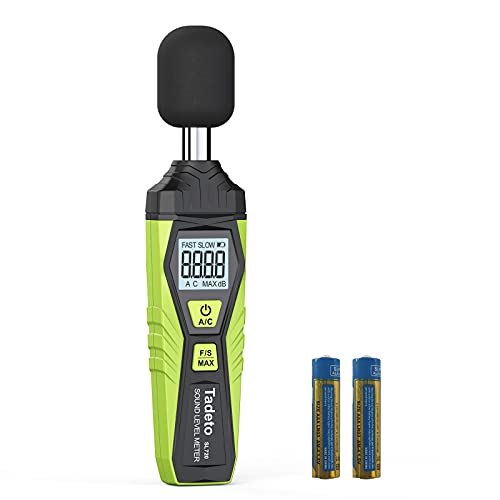
- 30–130 dB measurement range
- A/C weighting and fast/slow response
- Backlit display with data hold
Best For: General home, office, factory, and workshop noise checks
Best Professional-Grade Option
CRY2831 Class 2 Sound Level Meter

- IEC 61672 Class 2 with calibration certificate
- 29–138 dB range and 20 Hz–12.5 kHz response
- IP54, A/C/Z weighting, and AC/DC power
Best For: Workplace, facility, environmental, and industrial inspections
Best Display and Extras
TopTes TS-501B Sound Level Meter

- Large 2.25-inch backlit LCD
- A/C weighting, MAX/MIN, and data hold
- Includes batteries, carry bag, and 36-month warranty
Best For: Easy everyday monitoring at home, work, or in workshops
Best Simple Instrument
Extech 407730 Digital Sound Level Meter

- 40–130 dB range with 0.1 dB resolution
- Fast analog bar graph and MAX/MIN recording
- Windscreen and four AAA batteries included
Best For: Straightforward general noise and peak-level checks
Best Everyday Pick
RISEPRO HT-80A Sound Level Meter

- 30–130 dB range with ±1.5 dB accuracy
- Fast/A weighting, hold, and max/min readings
- Backlight, auto-off, pouch, and gift box
Best For: General home, workplace, and study noise checks
Best for Data Logging
Extech 407732-KIT Sound Level Meter
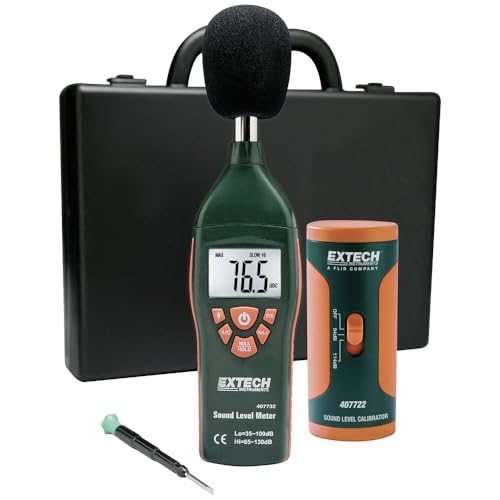
- Stores up to 16,000 readings via USB
- Includes 94 dB calibrator and carrying case
- Programmable sampling plus audible/visual alarms
Best For: PC-based logging and structured monitoring
Best Budget Portable Option
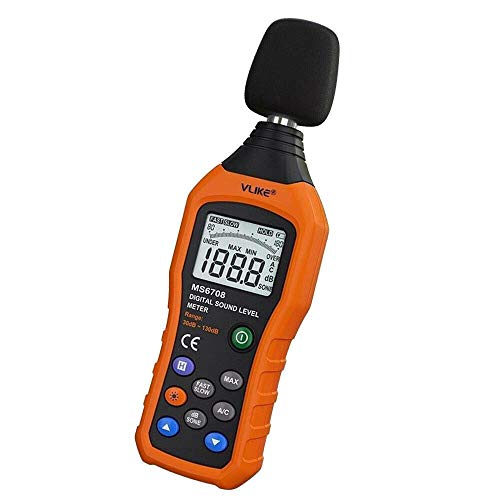
- 30–130 dB measurement range with A/C modes
- Backlit display and maximum lock
- Compact anti-drop casing with auto-off
Best For: Portable real-time noise checks on a budget
Best Overall for Flexible Everyday Testing

- 30–130 dB range with ±1.5 dB accuracy
- A/C weighting and FAST/SLOW response
- MAX/MIN tracking with dB/SONE modes
Best For: Routine home, office, classroom, traffic, and equipment noise checks
Best for Data Logging and PC Analysis
DANOPLUS Data Logger Sound Meter

- Records up to 43,000 readings
- Exports data to Excel through a Windows PC
- Three-color alarm and rechargeable USB operation
Best For: Extended monitoring, documentation, and computer-based noise analysis
Best for Simple Large-Display Monitoring

- 30–130 dB measurement range
- Large red LCD display
- Wall-hanging design with alarm
Best For: Stationary room or workspace noise monitoring
Best Everyday Value – Tadeto Portable Decibel Meter
For straightforward home, office, school, or workshop checks, the Tadeto is one of the more accessible sound level meters. It measures from 30 to 130 dB with A- and C-weighting, while fast and slow response modes help you match the reading to changing or steadier noise.
Best For: General-purpose noise checks in homes, factories, offices, vehicles, and construction areas.
Pros:
- 30–130 dB range with stated ±2.0 dB accuracy and 0.1 dB resolution.
- A-weighting and C-weighting support environmental and higher-intensity sound checks.
- Backlit LCD, data hold, and lightweight portable design.
Cons:
- Its stated accuracy is lower than some professional options in this roundup.
- It does not list temperature or humidity measurement.
The Tadeto emphasizes simple operation and useful core features rather than advanced environmental protection or extended frequency specifications. It is a practical pick when you need readable, portable decibel measurements without a more specialized instrument.
Best Professional-Grade Option – CRY2831 Class 2 Sound Level Meter
The CRY2831 is designed for users who need more than casual readings from their sound level meters. Its IEC 61672-1:2013 Class 2 designation, calibration certificate, broad 29–138 dB range, and multiple weighting modes make it suited to workplace, facility, environmental, and industrial spot checks.
Best For: Technicians, EHS teams, facility managers, inspectors, and demanding industrial or outdoor measurements.
Pros:
- IEC 61672-1:2013 Class 2 meter with stated ±1.5 dB accuracy.
- Wide 29–138 dB range and extended 20 Hz–12.5 kHz frequency response.
- A, C, and Z weighting, fast and slow response, IP54 enclosure, and AC/DC power.
Cons:
- Its professional feature set may be more than needed for occasional household checks.
- The supplied notes do not specify a data-logging or computer-export function.
With its standards-based classification, calibration certificate, rugged rating, and broad measurement specifications, the CRY2831 is the most specialized choice here. It is particularly compelling when measurement conditions and documented accuracy matter.
Best Display and Extras – TopTes TS-501B Sound Level Meter
The TopTes TS-501B combines familiar core functions with a large display and added temperature and humidity information. Among these sound level meters, it stands out for easy handheld use, MAX/MIN tracking, data hold, and a 2.25-inch backlit LCD.
Best For: Home users, noisy-neighbor monitoring, workshops, schools, offices, factories, and audio systems.
Pros:
- 30–130 dB range with A/C weighting and stated ±1.5 dB accuracy.
- Large 2.25-inch backlit screen with MAX/MIN and data-hold functions.
- Includes three AAA batteries and a carry bag, with a 36-month warranty and lifetime technical support.
Cons:
- Its stated frequency range is 30 Hz–8,000 Hz, narrower than the CRY2831’s.
- It is battery-operated rather than offering the listed AC/DC power flexibility of the CRY2831.
The TS-501B is a strong convenience-focused choice for routine measurements. Its readable screen, included accessories, and temperature and humidity readings add practical value for users who want more context than a basic decibel display provides.
Best Simple Instrument – Extech 407730 Digital Sound Level Meter
The Extech 407730 keeps its feature set focused on core sound measurement. It covers 40 to 130 dB, provides A/C weighting, and adds a fast analog bar graph, MAX/MIN recording, and MAX hold for tracking changing noise levels.
Best For: Users seeking a straightforward Extech meter for general sound-level checks and peak monitoring.
Pros:
- 40–130 dB range with 0.1 dB resolution and stated 2 dB accuracy.
- Fast analog bar graph helps show changing levels at a glance.
- MAX/MIN recording, MAX hold, auto power-off, windscreen, and four AAA batteries included.
Cons:
- Its lower measurement limit of 40 dB is higher than the other listed meters.
- The supplied notes do not mention a backlit display, temperature, or humidity readings.
- It offers A/C weighting but does not list the Z-weighting available on the CRY2831.
The 407730 is a sensible option when you value a familiar, uncomplicated layout and useful peak-reading tools. Its analog bar graph complements the digital display, though the narrower range makes it less suitable for very quiet environments.
Best Everyday Pick – RISEPRO HT-80A Sound Level Meter
For routine noise checks, the RISEPRO HT-80A is a practical choice among sound level meters. It covers 30–130 dB, offers ±1.5 dB accuracy, and includes the essential controls for tracking changing sound levels.
Best For: Home, workplace, study, and general-purpose noise monitoring.
Pros:
- Measures a broad 30–130 dB range with stated ±1.5 dB accuracy.
- Includes fast time weighting and A-frequency weighting.
- Data hold, maximum/minimum readings, backlight, and auto power-off add convenience.
- Includes a carrying pouch and gift box.
Cons:
- Uses a plastic construction rather than a metal body.
- Its frequency range is listed as 31.5 Hz to 4 kHz.
The HT-80A balances useful measurement features and portability without adding a complicated workflow, making it a solid all-around option for everyday sound checks.
Best for Data Logging – Extech 407732-KIT Sound Level Meter
The Extech 407732-KIT stands out among sound level meters when recorded measurements matter. Its USB-connected datalogging system can store up to 16,000 readings, while the included 94 dB calibrator supports a more complete measurement kit.
Best For: Users who need PC downloads, programmable sampling, alarms, and calibration equipment.
Pros:
- Datalogs up to 16,000 readings and supports USB transfer to a PC.
- Includes a 94 dB calibrator, case, data hold, and maximum hold.
- Offers programmable sampling rates plus audible and visual alarms.
- Triple LCD displays humidity, temperature, and date information.
Cons:
- It is a more specialized kit than a basic handheld meter.
- The stated measurement range begins at 35 dB rather than 30 dB.
With PC connectivity, substantial storage, and calibration hardware included, this Type 2 sound meter kit is the strongest fit here for organized measurements and repeatable monitoring tasks.
Best Budget Portable Option – VLIKE VL6708 Decibel Meter
The VLIKE VL6708 is a compact option for shoppers comparing affordable sound level meters. It provides real-time 30–130 dB readings, selectable A/C modes, a backlit display, and an anti-drop casing for portable noise checks.
Best For: Portable real-time checks around homes, offices, schools, roads, and workplaces.
Pros:
- Measures from 30–130 dB with selectable A/C modes.
- Backlight supports reading measurements in darker conditions.
- Features maximum locking, auto-ranging, auto power-off, and power-saving circuitry.
- Compact casing includes an anti-drop structure and wear-resistant composite material.
Cons:
- Batteries are not included; it requires four AAA batteries.
- The device cannot keep and generate a report directly.
- Its housing is plastic.
The VL6708 is a straightforward handheld reader for live measurements, especially when A/C weighting and portability are more important than onboard reporting or data export.
Best Overall for Flexible Everyday Testing – Goldeep Portable SPL Tester
For shoppers comparing sound level meters, the Goldeep SL750A offers a practical balance of measurement range, adjustable response, and straightforward controls. It measures 30–130 dB with ±1.5 dB accuracy and includes A/C weighting, dB/SONE units, and MAX/MIN tracking for common home, office, classroom, construction, and equipment checks.
Best For: Everyday indoor and outdoor noise checks, including traffic, neighbors, offices, classrooms, music, and machinery.
Pros:
- 30–130 dB range with stated ±1.5 dB accuracy.
- A/C weighting and FAST/SLOW response settings support different sound environments.
- MAX/MIN tracking, data hold, LCD display, windbreak, and anti-slip grip add practical convenience.
- Includes two AAA batteries and a user manual for immediate use.
Cons:
- Does not list data logging, PC export, or rechargeable operation.
- Its 31.5 Hz–8 kHz frequency response may not suit every specialized measurement task.
This is a versatile choice when you want a portable sound meter for routine noise investigations without needing computer-based recording or analysis.
Best for Data Logging and PC Analysis – DANOPLUS Data Logger Sound Meter
If you need sound level meters for ongoing monitoring rather than occasional spot checks, the DANOPLUS DP-441 stands out for its recording and export features. It stores up to 43,000 readings, connects to a Windows PC for Excel export and analysis, and displays measurement changes on a colored screen with a line chart and analog bars.
Best For: Users who need recorded noise data, adjustable alerts, and PC-based review or printing.
Pros:
- Stores up to 43,000 data points and supports PC viewing and Excel export.
- 30–130 dB range with stated ±1.5 dB accuracy.
- Three-color alarm indicators provide visual low, medium, and high noise warnings.
- Rechargeable 1000mAh battery, USB charging, A/C weighting, and FAST/SLOW response.
Cons:
- PC connectivity and exporting are specified for Windows 7, 10, and 11.
- Its advanced logging features may be unnecessary for simple one-time readings.
The DANOPLUS is the strongest fit here for projects where documenting noise over time matters, especially when you want to transfer readings to a computer for analysis or printing.
Best for Simple Large-Display Monitoring – SW-525A Wall-Hanging Meter
Among sound level meters, the SW-525A focuses on visibility and uncomplicated digital measurement. Its large red LCD display and wall-hanging design make it suitable when readings need to be seen easily from a fixed location, while the 30–130 dB range covers a broad span of everyday noise levels.
Best For: Fixed-position monitoring where a large, easy-to-see display and alarm are more important than advanced data features.
Pros:
- 30–130 dB measurement range.
- Large red LCD display for visible readings.
- Wall-hanging form factor supports stationary use.
- Includes an alarm function for noise monitoring.
Cons:
- Supplied notes do not specify accuracy, weighting options, response settings, or data logging.
- The 0.6 kg weight and wall-hanging design make it less portable than handheld meters.
- Fewer documented features are available for detailed analysis or exported records.
The SW-525A makes sense for a room or workspace that benefits from a prominent, continuously visible noise display, but shoppers needing detailed measurement controls should consider a more feature-rich handheld model.
How We Picked These Sound Level Meters
We selected these Sound Level Meters to cover the most common buying needs, from occasional household checks to repeatable workplace and technical measurements. We considered stated decibel range, A- and C-weighting availability, display readability, maximum/minimum and data-hold functions, logging capacity, power options, and included accessories.
For professional or compliance-related work, certification and calibration support matter as much as headline features. The CRY2831 is identified as an IEC 61672-1:2013 Class 2 meter, while the Extech 407732-KIT adds a calibrator. Basic handheld models are better suited to comparisons, diagnostics, and general monitoring rather than formal regulatory documentation.
Quick Comparison
| Best for | Features to prioritize | Recommended type |
|---|---|---|
| Home projects and quick checks | Simple controls, backlit display, data hold | Basic 30–130 dB handheld meter |
| HVAC and equipment troubleshooting | A/C weighting, MAX/MIN, broad range | Midrange digital meter |
| Extended monitoring | Data logging, export, rechargeable battery | Digital data logger |
| Professional field work | Class rating, calibration documentation | Certified meter or calibration kit |
Key Buying Factors for Sound Level Meters
Measurement Range and Accuracy
A 30–130 dB range covers many household, workshop, and commercial environments, but the lower limit may be too high for very quiet acoustic work. Check the stated accuracy and standards compliance when readings need to be defensible.
Frequency Weighting
A-weighting approximates human hearing and is commonly used for general noise assessments. C-weighting captures more low-frequency energy and can help evaluate bass-heavy sound, machinery, or peak noise. Choose a meter offering both when your applications vary.
Logging and Data Handling
MAX/MIN and data-hold functions are useful for quick inspections. If you need trends, incident records, or reports, choose a model with internal memory, long recording capacity, and straightforward export software or file handling.
Calibration and Usability
A visible backlight, large screen, auto power-off, tripod or wall-mount compatibility, and accessible controls make field use easier. For reliable repeat measurements, use an appropriate acoustic calibrator and follow the manufacturer’s calibration procedure.
Who Should Buy Which Sound Level Meters?
Choose an affordable handheld meter such as the Tadeto, RISEPRO, VLIKE, Goldeep, SW-525A, or TopTes when you need quick readings around the home, office, workshop, or vehicle. The TopTes is a practical choice if a larger display and environmental readings are useful.
Consider the Extech 407730 for established-brand general-purpose testing, or the Extech 407732-KIT when having a calibrator included is important. Choose the data-logger model for projects requiring extended recording and export. For formal inspections or measurements where standards documentation matters, prioritize the CRY2831 Class 2 meter and verify that its calibration status meets your local requirements.