Photographers often outgrow single external drives long before they run out of images. The best RAID enclosures for photo storage make it easier to combine multiple SATA drives into a larger, more organized workspace while adding options for redundancy, speed, or simple expansion.
This roundup covers two-, four-, five-, and eight-bay models, including USB-A, USB-C, and eSATA-equipped enclosures. The right choice depends on your archive size, preferred RAID level, editing workflow, and how much room you want for future drives.
Best 10 Raid Enclosures for Photo Storage Picks for 2026
Maximum-Capacity Pick

- Eight bays and up to 160TB stated capacity
- Eight RAID modes for flexible configurations
- USB-A/C 3.0 with active cooling
Best For: Large photography archives and studio storage
Versatile Five-Bay Value
Syba 5-Bay SATA RAID Enclosure
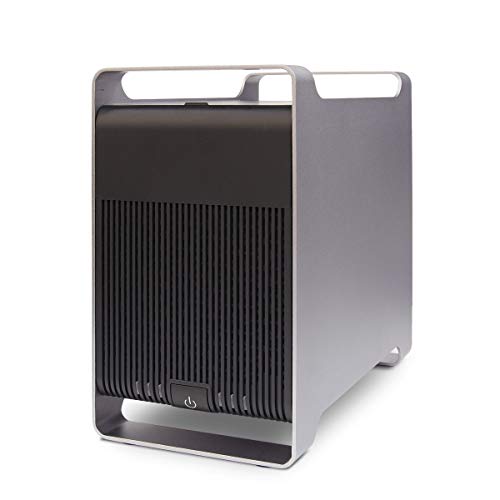
- Five bays with up to 120TB stated capacity
- Supports RAID 0/1/3/5/10, SPAN, and JBOD
- Tray-less installation with USB 3.0
Best For: Flexible home and small-studio photo storage
Compact Professional Pick

- Four 3.5-inch bays and up to 96TB
- Eight listed RAID configurations
- USB-A/C 3.1 and switchable dual fans
Best For: Four-drive professional photo workstations
Quiet Cooling Choice
Yottamaster 5-Bay RAID Enclosure

- Five bays for 2.5-inch and 3.5-inch SATA drives
- Up to 110TB with broad RAID support
- Temperature-controlled 80mm fan
Best For: Flexible studio workflows and mixed-drive photo storage
Compact RAID Flexibility

- Two 3.5-inch SATA bays with up to 48TB capacity
- RAID 0, 1, JBOD, and Normal modes
- USB-C connectivity with fan-assisted cooling
Best For: Photographers needing a compact two-drive RAID enclosure
High-Capacity Photo Vault
Yottamaster Five-Bay RAID Enclosure
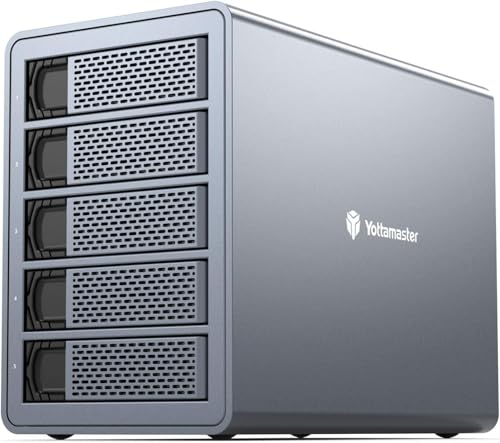
- Five bays support up to 120TB total storage
- Hardware RAID includes RAID 5 and RAID 10
- Works with 2.5-inch and 3.5-inch SATA drives
Best For: Studios and professionals managing large photo archives
Simple Multi-Drive Storage

- Four SATA bays with up to 80TB capacity
- USB 3.0 and eSATA connectivity
- No RAID or NAS features; supports Windows, Mac, and Linux
Best For: Users wanting separate photo-storage drives without hardware RAID
Compact Choice
MAIWO Dual-Bay 2.5-Inch RAID Enclosure

- Four modes: RAID 0, RAID 1, LARGE/JBOD, and NORMAL
- Two 2.5-inch drives with up to 16TB total capacity
- Tool-free USB 3.0 enclosure with UASP
Best For: Portable photo storage using 2.5-inch drives
High-Capacity Pick
CENMATE 4-Bay Aluminum RAID Enclosure

- Four bays and up to 80TB stated capacity
- Eight RAID modes, including RAID 5 and RAID 10
- USB A/C 3.0 and eSATA connectivity
Best For: Large desktop photo archives with multiple drives
Flexible Midrange Option
CENMATE Dual-Bay 2.5/3.5-Inch RAID Enclosure

- Accepts two 2.5- or 3.5-inch SATA drives
- Four modes: RAID 0, RAID 1, NORMAL, and JBOD
- USB A/C 3.0 with up to 5Gbps transfers
Best For: Two-drive desktop setups with mixed drive sizes
Maximum-Capacity Pick – CENMATE 8-Bay RAID Enclosure
For photographers managing large RAW libraries, this CENMATE model is one of the most expansive raid enclosures for photo storage. It supports eight 2.5-inch or 3.5-inch SATA HDDs or SSDs, up to 160TB total with stated drive limits, and offers multiple RAID configurations for different capacity and redundancy needs.
Best For: Photographers and studios that need high-capacity desktop storage with extensive RAID flexibility.
Pros:
- Eight drive bays with support for up to 160TB total capacity.
- Supports eight modes, including RAID 0, RAID 5, RAID 50, RAID 00, Clone, and JBOD-style options.
- Aluminum construction, two cooling fans, and USB-A/C connectivity.
- Works with Windows, Mac, and Linux systems.
Cons:
- At least two drives are required, with one installed in each four-drive group.
- Changing RAID modes requires a manual power-off, switch, and reset procedure.
- Fans operate around 40–50 decibels and may be noticeable in quiet workspaces.
The CENMATE is a capacity-focused choice for photographers with substantial archives. Follow the setup instructions carefully and make a complete backup before configuring RAID, since setup can format the drives.
Versatile Five-Bay Value – Syba 5-Bay SATA RAID Enclosure
This Syba enclosure is a practical option for photographers seeking raid enclosures for photo storage without moving to an eight-bay chassis. It holds five 2.5-inch or 3.5-inch SATA drives, supports up to 120TB based on five 24TB drives, and provides several RAID modes through USB 3.0 or eSATA.
Best For: Photographers who want five-bay flexibility, tray-less drive access, and broad RAID support.
Pros:
- Supports five SATA HDDs or SSDs and up to 120TB total.
- Offers RAID 0, 1, 3, 5, 10, SPAN, and JBOD modes.
- Tray-less design simplifies drive installation and removal.
- USB 3.0 provides transfer speeds up to 5Gbps.
Cons:
- eSATA access to multiple drives requires a compatible Port Multiplier with FIS-based switching.
- The enclosure does not list built-in cooling features in the supplied specifications.
- Its maximum capacity depends on using five drives rated up to 24TB each.
With a straightforward tray-less design and a useful range of RAID choices, the Syba is well suited to a mixed photo archive or backup workflow. USB 3.0 is the simpler connection for most systems, while eSATA may require additional host support.
Compact Professional Pick – MAIWO 4-Bay RAID Enclosure
The MAIWO 4-bay unit balances capacity and footprint for photographers who need raid enclosures for photo storage but do not require eight drive bays. It supports four 3.5-inch SATA drives, up to 96TB total, and includes multiple RAID modes plus switchable dual-fan cooling.
Best For: Professionals and power users building a four-drive photo archive, backup system, or media library.
Pros:
- Supports four 3.5-inch SATA drives with up to 96TB capacity.
- Includes Normal, RAID 0, 1/10, 3, 5, Clone, and Large/JBOD modes.
- USB-A/C 3.1 interface supports transfer speeds up to 5Gbps.
- Two cooling fans can be switched on or off, with drive-status LEDs.
Cons:
- Only 3.5-inch SATA drives are specified, limiting compatibility with 2.5-inch drives.
- Four bays provide less expansion room than five- or eight-bay alternatives.
- RAID setup and drive-management details should be reviewed before loading important photo data.
The MAIWO is a sensible middle ground for a workstation or small studio. Its switchable cooling is useful when balancing temperature control and noise, while the four-bay layout keeps the system more manageable than larger enclosures.
Quiet Cooling Choice – Yottamaster 5-Bay RAID Enclosure
Yottamaster combines five drive bays with a temperature-controlled fan, making this a well-rounded choice among raid enclosures for photo storage. It supports both 2.5-inch and 3.5-inch SATA HDDs or SSDs, up to 110TB using five 22TB drives, and includes hardware and software RAID options.
Best For: Photographers who want flexible drive formats, easy tray access, and quieter automatic cooling.
Pros:
- Five removable trays support both 2.5-inch and 3.5-inch SATA drives.
- Supports RAID 0, 1, 3, 5, 10, JBOD/SPAN, and Clone modes.
- 80mm intelligent fan adjusts its speed according to drive temperature.
- USB 3.0/3.1 connectivity offers up to 5Gbps and works with Windows, Mac, and Linux.
Cons:
- Maximum stated capacity is 110TB with five 22TB drives.
- New drives may need formatting and partitioning before use.
- The supplied information does not specify a detailed warranty term beyond listing a warranty.
The Yottamaster stands out for photographers who mix desktop drives, laptop-size drives, and SSDs in one enclosure. Its automatic fan control and removable trays make it especially practical for an active studio workflow, but new disks still need preparation before they can store files.
Compact RAID Flexibility – Dual-Bay MAIWO RAID Enclosure
For photographers building a practical raid enclosures for photo storage setup, the MAIWO dual-bay enclosure combines two 3.5-inch SATA drive bays with four selectable RAID modes. Its USB-C connection, fan cooling, and 48TB maximum capacity make it a flexible choice for desktop photo libraries and backups.
Best For: Photographers who need a compact two-drive enclosure with RAID 0, RAID 1, JBOD, and Normal modes.
Pros:
- Supports up to two 3.5-inch SATA HDDs and 48TB total capacity.
- Offers RAID 0, RAID 1, JBOD, and Normal modes for different storage needs.
- Includes USB 3.1 Gen 2 Type-C connectivity, UASP support, and both C-C and C-A cables.
- Aluminum construction and a switch-controlled cooling fan help manage heat.
Cons:
- Designed primarily for 3.5-inch drives; 2.5-inch drives require a separate bracket.
- Mechanical HDD performance may be limited to around 6Gbps despite the 10Gbps interface.
The MAIWO is a well-rounded option when two drives are enough for a photo archive, mirrored backup, or expanded desktop storage. Its hardware RAID modes offer more flexibility than a basic multi-bay reader.
High-Capacity Photo Vault – Yottamaster Five-Bay RAID Enclosure
The Yottamaster FS5RU3 is built for photographers and studios managing large collections. With five bays, support for up to 120TB, and hardware RAID modes including RAID 5 and RAID 10, it provides substantial capacity for photo libraries, working media, and archival backups.
Best For: Photo professionals who need high-capacity multi-drive storage for editing workflows, backups, and long-term archives.
Pros:
- Supports five 2.5-inch or 3.5-inch SATA HDDs or SSDs and up to 120TB total capacity.
- Includes RAID 0, 1, 5, 10, JBOD, Clone, and Normal modes.
- Removable aluminum trays simplify drive installation and replacement.
- Aluminum construction, ventilation openings, and an 80mm low-noise fan support cooling during extended use.
Cons:
- USB 3.0 connectivity is rated at up to 5Gbps, slower than newer USB 3.1 Gen 2 enclosures.
- Its five-bay design requires more desktop space than smaller photo-storage enclosures.
For large photo libraries, the Yottamaster offers the strongest capacity and RAID versatility of these options. Its 5Gbps interface is less cutting-edge, but the five bays and RAID 5 support make it well suited to expanding storage systems.
Simple Multi-Drive Storage – CENMATE Four-Bay Enclosure
The CENMATE four-bay enclosure is a straightforward option for expanding photo storage without adding RAID hardware. It supports up to four 2.5-inch or 3.5-inch SATA drives, connects through USB 3.0 or eSATA, and provides up to 80TB of external storage for desktops and laptops.
Best For: Users who want several independently accessible drives for photo storage and do not need built-in RAID or NAS features.
Pros:
- Supports four 2.5-inch or 3.5-inch HDDs or SSDs with up to 80TB total capacity.
- Offers both USB-A/C 3.0 and eSATA connectivity.
- Aluminum construction and a built-in fan help dissipate heat.
- Compatible with Windows, Mac, and Linux systems and includes a 12V power adapter.
Cons:
- Does not provide RAID or NAS functionality.
- The fan may produce approximately 40–50 decibels of noise.
- Hot-swapping is not supported, and eSATA access to multiple bays depends on computer RAID support.
CENMATE makes sense for photographers who prefer a simple enclosure for separate drives rather than a hardware RAID array. It offers useful capacity and broad connectivity, but buyers should be comfortable managing redundancy and backups themselves.
Compact Choice – MAIWO Dual-Bay 2.5-Inch RAID Enclosure
For photographers who need portable raid enclosures for photo storage, the MAIWO dual-bay model supports two 2.5-inch SATA SSDs or HDDs in a compact, tool-free enclosure. Its four RAID modes let you prioritize speed, mirroring, combined capacity, or standard independent-drive use.
Best For: Portable photo storage setups using 2.5-inch drives.
Pros:
- Supports RAID 0, RAID 1, LARGE/JBOD, and NORMAL modes.
- Accepts two 2.5-inch 7mm or 9.5mm SATA drives, up to 16TB total.
- USB 3.0 with UASP supports transfers up to 5Gbps on compatible systems.
- Tool-free installation, hot swapping, LED indicators, and a compact ABS body.
Cons:
- Limited to 2.5-inch drives and a total stated capacity of 16TB.
- Uses USB connectivity rather than eSATA.
This is a practical pick when portability and simple drive installation matter more than maximum capacity. RAID 1 can help mirror photo files, while RAID 0 offers speed but should not replace a separate backup.
High-Capacity Pick – CENMATE 4-Bay Aluminum RAID Enclosure
The CENMATE 4-bay enclosure is designed for photographers and businesses managing larger libraries. It accepts 2.5- or 3.5-inch SATA drives, offers up to 80TB of stated capacity, and includes multiple RAID configurations plus USB A/C and eSATA connections.
Best For: High-capacity desktop photo archives and multi-drive workflows.
Pros:
- Four bays support 2.5- and 3.5-inch HDDs or SSDs, up to 20TB per drive.
- Offers RAID 0/1/3/5/10, CLONE, LARGE, and NORMAL modes.
- Includes USB A/C 3.0 and eSATA connectivity with speeds up to 5Gbps.
- Aluminum construction and built-in fans help manage heat during use.
Cons:
- Fan noise is rated around 40–50 decibels.
- Hot-swapping is not supported.
- RAID mode changes require a manual power-off, switch, and reset procedure; changing modes may cause data loss.
With four bays and broad RAID support, this model suits a more permanent desktop archive. Buyers should plan the array carefully, verify eSATA compatibility, and maintain an independent backup of important images.
Flexible Midrange Option – CENMATE Dual-Bay 2.5/3.5-Inch RAID Enclosure
For a flexible desktop setup, this CENMATE enclosure accommodates either 2.5- or 3.5-inch SATA drives. It provides four RAID modes, USB A/C 3.0 connectivity, and active cooling, making it a practical choice for photographers building a two-drive storage system.
Best For: Desktop photo storage users who want compatibility with both drive sizes.
Pros:
- Supports two 2.5- or 3.5-inch SATA HDDs or SSDs.
- Provides RAID 0, RAID 1, NORMAL, and JBOD modes.
- Supports up to 20TB per drive, with USB 3.0 speeds up to 5Gbps.
- Aluminum construction and a built-in fan help with heat management.
Cons:
- Fan noise is around 40–50 decibels.
- Changing or designing a RAID array may result in data loss.
- RAID mode changes require resetting the enclosure, and the product notes that Mac OS has no RAID software.
This model balances capacity and flexibility without the footprint of a four-bay enclosure. It is especially useful if you already own mixed-size drives, although the fan and manual RAID-reset process may matter in quiet studios.
How We Picked These Raid Enclosures for Photo Storage
We selected these models based on the needs of photographers managing RAW files, edited exports, catalogs, and long-term archives. We compared bay count, support for 2.5-inch and 3.5-inch SATA drives, stated maximum capacity, RAID modes, host connections, cooling features, and ease of installation.
Capacity claims are typically based on the largest supported drives and may vary with drive availability, formatting, and the selected RAID level. An enclosure is not a complete backup strategy: important photos should also exist on a separate device or in a reliable cloud backup.
Quick Comparison
| Best For | Recommended Bay Count | What to Prioritize |
|---|---|---|
| Small photo libraries | 2 bays | RAID 1, compact design, USB 3.x |
| Growing collections | 4 bays | More capacity, multiple RAID modes, active cooling |
| Large archives | 5 bays | High drive capacity, RAID 5 or RAID 10 support |
| Maximum expansion | 8 bays | Drive flexibility, cooling, and future capacity |
Key Buying Factors for Raid Enclosures for Photo Storage
Capacity and Bay Count
Choose the bay count based on both your current library and expected growth. Two bays can be sufficient for a mirrored working archive, while four or more bays provide greater usable capacity and more room to replace or add drives later. Check whether the enclosure supports the drive sizes you plan to use, including newer high-capacity disks.
RAID Mode and Data Protection
RAID 0 combines drives for speed and capacity but provides no drive failure protection. RAID 1 mirrors data and is useful for a smaller, safer photo archive, though usable capacity is cut roughly in half. RAID 5 can offer a balance of capacity and redundancy in multi-bay systems, while RAID 10 emphasizes performance and redundancy at the cost of capacity. JBOD or normal modes may be preferable when you want disks handled independently.
Connectivity and Workflow
USB 3.0 is widely compatible and adequate for many backup tasks. USB-C may simplify connection to newer laptops, but the port standard alone does not guarantee high transfer speeds. eSATA can be useful with compatible desktop systems. For editing directly from the enclosure, confirm that your computer, cable, drives, and enclosure can sustain the expected throughput.
Cooling and Installation
Multiple hard drives generate heat during long transfers and backups. A built-in fan is helpful for sustained workloads, although it may add noise. Tool-free trays simplify drive changes, while standard SATA compatibility gives you more flexibility when selecting HDDs or SSDs. Always verify whether drives and cables are included.
Who Should Buy Which Raid Enclosures for Photo Storage?
Choose a dual-bay enclosure if you have a modest library, want a straightforward RAID 1 mirror, or need a compact desktop solution. A four-bay model is a strong middle ground for enthusiasts and working photographers who want more capacity without moving to a large enclosure. Five-bay options make sense for larger archives and users who want RAID 5 or additional expansion headroom. An eight-bay enclosure is best for photographers with substantial libraries, several backup destinations, or a long-term plan to add drives.
Before buying, confirm your computer’s ports, preferred RAID level, maximum supported drive capacity, and backup plan. For irreplaceable images, treat RAID as an availability and organization tool—not as the only copy of your work.