If you are looking for a straightforward 12V Oil Extractor Pump review, this model is aimed at one specific problem: moving oil and other fluids without making a mess.
It is best for buyers who need a simple transfer pump for service work, not a dipstick-tube extractor.
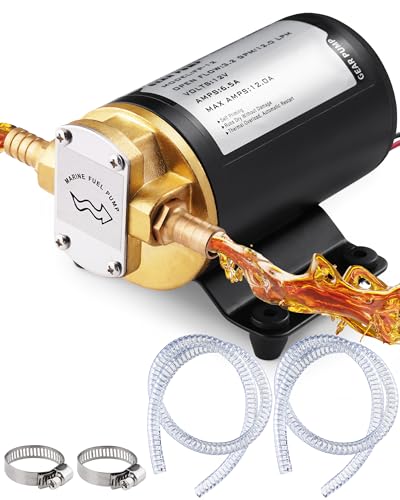
Oil Extractor Pump Review Summary
This pump makes sense for owners who regularly handle engine oil, gear oil, transmission fluid, waste oil, lubricants, diesel fuel, or kerosene and want a cleaner workflow than manual draining.
The listing positions it as a self-priming 12V gear pump with enough output for cars, motorcycles, lawn mowers, and marine engines, so it fits mixed-use garages and small equipment maintenance.
Verdict: it is a practical utility pump rather than a specialty gadget.
If your main goal is faster fluid transfer from tanks, drain pans, service ports, or similar access points, the feature set is aligned with that job.
Review Scorecard
| Category | Score | Editorial assessment |
|---|---|---|
| Fluid versatility | 9/10 | The listing supports multiple oils and fuels, which makes it flexible for home and marine use. |
| Transfer capability | 8/10 | A 3.2 GPM claim and 43.5 PSI max pressure suggest solid small-job throughput. |
| Ease of use | 8/10 | Self-priming design and 12V power simplify setup for common maintenance tasks. |
| Durability cues | 8/10 | All-copper motor, impeller, and pump head are good signs for a utility pump. |
| Safety and control | 7/10 | Thermal protection is a meaningful safeguard, though this is still a basic service tool. |
| Use-case fit | 7/10 | Strong for transfer jobs, but the listing explicitly says it is not for dipstick-tube extraction. |
| Value for maintenance work | 8/10 | The mix of power, compatibility, and simple operation should appeal to practical buyers. |
Key Features and Specifications of Oil Extractor Pump
The core selling point is simple: this is a 12V electric gear pump designed to move fluids from one container or access point to another.
The listing gives it a standard power draw of 78W, a 120W max load, a 3.2 GPM flow rate, and 0.3 MPa / 43.5 PSI maximum pressure.
Key advertised details:
- 12V DC operation
- 78W standard power, 120W max load
- 3.2 GPM flow claim
- 0.3 MPa / 43.5 PSI max pressure
- Up to 120-minute work cycle
- All-copper motor, impeller, and pump head
- Built-in thermal protection
- Designed for motor oil, gear oil, transmission fluid, waste oil, lubricants, diesel fuel, and kerosene
The limitation that matters most is also clearly stated: it is not for extracting oil through the dipstick tube.
That is important because many buyers use the phrase “oil extractor pump” loosely.
This model is better understood as a transfer pump for drain pans, service ports, tanks, and similar access points.
For maintenance settings, that distinction is useful.
It means the pump is built around cleaner handling and easier fluid movement, not around replacing every kind of extraction method.
Pros and Cons of Oil Extractor Pump
Pros
- Handles a wide range of fluids, including several oil types and light fuels
- 12V power makes it convenient for vehicle, shop, and marine use
- All-copper construction is a positive durability signal
- Thermal protection adds a layer of protection for longer sessions
- The listing supports thick oils such as 80W-90, which broadens practical use
Cons
- It is not a dipstick-tube extractor, so some buyers may need a different tool
- The listing is utility-focused and does not provide much detail about included accessories
- A 120-minute work cycle is useful, but still reminds you this is a small-service pump, not heavy industrial equipment
The overall tradeoff is clear: you get a flexible, easy-to-power transfer pump, but you need to buy it for the right kind of fluid handling job.
Who Should Buy Oil Extractor Pump?
This is a good fit for people who want one pump for several maintenance chores.
If you service cars, motorcycles, lawn mowers, boats, or outboard engines and need to move oil or fuel between containers or through service access points, this tool is on target.
It also makes sense for buyers who care more about convenience than specialization.
The 12V setup is handy for garage work, trailering situations, field repairs, and marine maintenance where AC power may not be nearby.
You should probably skip it if you specifically want a dipstick-tube oil extractor, or if your workflow depends on a highly specialized vacuum-style extractor.
The listing says this is not intended for that use, so that is not a minor limitation.
If your main question is is 12V Oil Extractor Pump worth it, the answer is yes for transfer-focused maintenance and no if you need a universal extraction solution.
Fluid Handling Notes for Oil Extractor Pump
Self-Priming Setup
The self-priming design is the feature that makes the pump feel practical rather than fussy.
For buyers who want to move fluid without constant manual priming or awkward setup, that reduces friction in routine maintenance.
Thick Oil Capability
The listing says it can handle thick oils such as 80W-90.
That matters because many small pumps look useful until they meet heavier gear oil.
If your maintenance stack includes thicker lubricants, this is a meaningful plus.
Thermal Protection and Runtime
Built-in thermal protection is a sensible safeguard, especially for longer transfer sessions.
Combined with the 120-minute work cycle claim, it suggests the pump is meant for sustained home-shop or marine tasks rather than quick disposable use.
Clean Service Work
The biggest everyday benefit is cleaner oil handling.
If you have ever fought drain bolts, cramped engine bays, or messy bilges, a pump like this is about reducing hassle more than chasing raw power.
Alternatives to Oil Extractor Pump
If you want a different style of transfer or extraction tool, these are credible alternatives to compare on Amazon:
- Mityvac fluid transfer pumps
- Lumax oil transfer pumps
- Slippery Pete oil extractor pumps
- pump-style oil change kits
Choose a brand-name pump if you want a more established transfer-tool lineup, or compare extractor kits if your main use is pulling fluid from a narrow service path.
The right alternative depends on whether you need transfer, extraction, or both.
Is Oil Extractor Pump Worth It?
Yes, if you want a simple 12V fluid transfer pump for maintenance work and you understand its limits.
It looks well matched to buyers who need to move oil, gear oil, transmission fluid, or light fuel from tanks and service access points with less mess.
The main reason to buy it is convenience.
The main reason not to buy it is the same point made in the listing: this is not a dipstick-tube extractor.
If that is the use case you had in mind, look elsewhere.
For the right buyer, though, this is a sensible, practical tool that should handle routine fluid-moving jobs without overcomplicating them.