Weather can change a safe, productive workday into a costly delay. The right field weather station gives you timely readings for heat, wind, humidity, rainfall, and pressure without relying solely on a distant forecast.
This roundup compares 10 options ranging from compact Kestrel meters for on-site checks to wireless stations with displays, rain gauges, and smart connectivity. Use the buying guide below to match measurement needs, portability, durability, and budget.
Best 10 Weather Stations for Field Work Picks for 2026
Best Pocket Meter
Kestrel 3000 Heat Stress Monitor

- Measures wind, humidity, temperature, and heat stress
- Waterproof, floating, and military drop-tested
- Compact design with replaceable impeller
Best For: Portable heat-stress and weather checks in demanding field settings
Best Connected Station
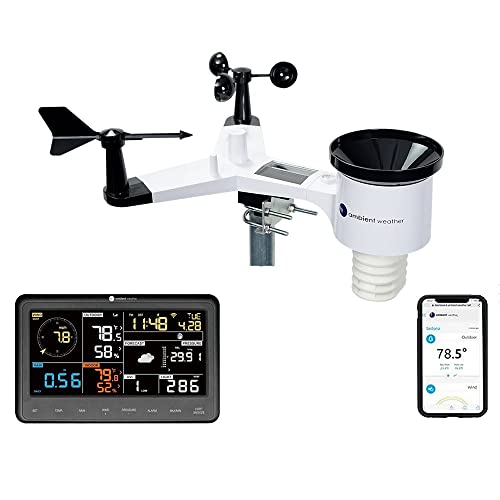
- Tracks wind, rain, UV, solar radiation, and temperature
- Supports Wi-Fi monitoring, alerts, and smart-home integration
- Includes a solar-powered wireless sensor array
Best For: Remote monitoring of fixed outdoor sites
Best Data Logger
Kestrel 5000 Environmental Meter

- Stores up to 10,000 environmental data points
- Measures temperature, humidity, and pressure
- Backlit display with cold-weather lithium battery
Best For: Portable field surveys requiring historical readings
Best Lightning Monitor
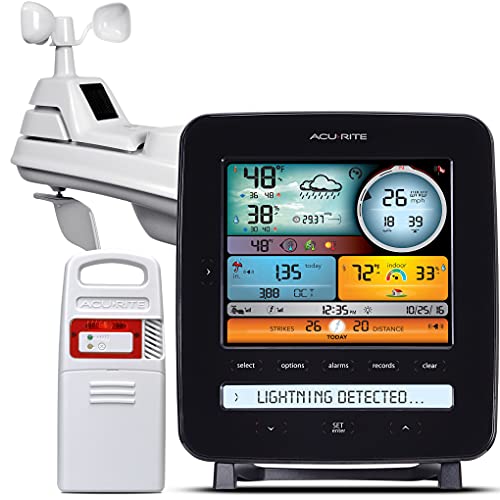
- Tracks wind, rain, pressure, temperature, and humidity
- Detects lightning distance and strike totals
- Offers a large display with 50-plus information points
Best For: Fixed-site storm and weather monitoring
Fireground Specialist
Kestrel 3500FW Fire Weather Meter

- Measures heat stress, wet bulb temperature, humidity, and wind.
- IP67 waterproof, MIL-STD-810F drop-tested, and floats.
- Compact, backlit handheld design for field response.
Best For: Firefighting, HAZMAT, military, and rugged outdoor field teams
Farm and Ranch Monitor
Sainlogic 12-in-1 Wireless Weather Station

- Monitors rainfall, wind, pressure, temperature, and humidity.
- Wireless sensor with solar power and battery backup.
- Large 6.5-inch display suits fixed indoor/outdoor monitoring.
Best For: Farms, orchards, ranches, gardens, and large outdoor properties
Advanced Pocket Meter
Kestrel 5500 Pocket Weather Meter

- Measures wind direction, crosswind, pressure, altitude, and heat stress.
- Logs up to 12,000 customizable data points.
- IP67 and MIL-spec rugged design with replaceable impeller.
Best For: Field researchers and technical crews needing detailed portable data
Large-Display Field Monitor
Sainlogic SA68 12-in-1 Weather Station

- 8-inch high-contrast display with adjustable backlighting
- Measures wind, rain, temperature, humidity, and pressure
- Wireless, solar-assisted setup for farms and orchards
Best For: On-site field monitoring without Wi-Fi
Connected Field Data Hub
Ambient Weather WS-2000 Smart Weather Station
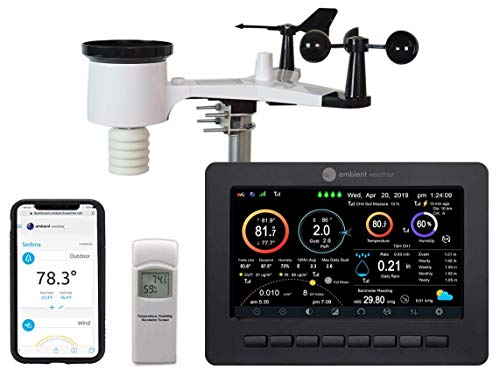
- Wi-Fi supports remote monitoring, alerts, and data sharing
- Integrated array measures weather, UV, and solar radiation
- Color display with imperial and metric unit support
Best For: Connected outdoor monitoring and precipitation tracking
Weather Underground Field Logger
AcuRite Iris 5-in-1 Weather Station
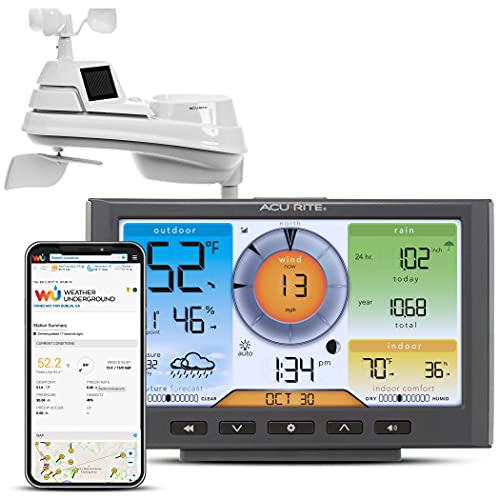
- Wireless monitoring of temperature, wind, rain, and humidity
- Wi-Fi access through Weather Underground
- Tracks 25-plus data points and historical conditions
Best For: Home-based observers needing remote weather history
Best Pocket Meter – Kestrel 3000 Heat Stress Monitor
For field teams that need fast readings without carrying a full-size station, the Kestrel 3000 is a practical choice among weather stations for field work. This handheld meter measures wind, temperature, humidity, dew point, wind chill, and heat stress in a compact, rugged design.
Best For: Athletic trainers, occupational safety teams, agricultural crews, storm chasers, and wildland firefighters who need portable environmental readings.
Pros:
- Measures heat stress index, humidity, dew point, wind chill, and multiple wind-speed values.
- Waterproof, floating, and drop-tested to military standards.
- Includes a replaceable impeller, protective cover, lanyard, battery, and five-year warranty.
Cons:
- Handheld design does not provide a remote sensor array or continuous data logging.
- Uses a small LCD rather than a larger color display.
The Kestrel 3000 stands out when portability and durability matter more than wireless connectivity or long-term weather records. Its heat-stress and wind measurements make it especially useful for mobile field assessments.
Best Connected Station – Ambient Weather WS-2902 Wi-Fi
Ambient Weather WS-2902 Wi-Fi Smart Weather Station | With Wi-Fi Remote Monitoring and Alerts
Check Price On AmazonThe Ambient Weather WS-2902 is a strong fit for teams needing a fixed sensor array with remote access. As one of the more connected weather stations for field work, it tracks wind, temperature, humidity, rain, UV intensity, and solar radiation through a wireless array and Wi-Fi-enabled console.
Best For: Home, garden, agricultural, and site-monitoring applications where remote dashboards, alerts, and network sharing are useful.
Pros:
- Measures wind speed and direction, temperature, humidity, rainfall, UV, and solar radiation.
- Offers Wi-Fi remote monitoring, customizable alerts, and smart-home integration.
- Includes a solar-powered sensor array and color LCD display.
Cons:
- Designed as a mounted station rather than a handheld field meter.
- Operating temperature range begins at 14°F.
- Requires three AAA batteries in addition to the solar-powered array.
The WS-2902 is best when a project benefits from ongoing, networked weather data instead of occasional spot checks. Its remote access and broad sensor coverage add convenience for unattended monitoring.
Best Data Logger – Kestrel 5000 Environmental Meter
The Kestrel 5000 is suited to field professionals who need accurate environmental readings and a record of changing conditions. It stores up to 10,000 data points and measures temperature, humidity, and pressure, making it a capable handheld option among weather stations for field work.
Best For: Agricultural, commercial, residential, and research users who need portable measurements with historical data storage.
Pros:
- Stores up to 10,000 weather data points for tracking environmental changes.
- Provides temperature, humidity, and pressure readings with stated 0.5°C temperature accuracy.
- Uses a backlit, high-resolution display and cold-weather lithium AA battery.
Cons:
- Does not include the broader wind and rainfall measurements found on a full sensor array.
- The supplied model is identified as Non-LiNK, so advanced Kestrel LiNK connectivity is not included.
Choose the Kestrel 5000 when data logging is more important than a permanently installed display or extensive precipitation sensing. Its customizable screens and large storage capacity support repeated field surveys.
Best Lightning Monitor – AcuRite Iris 5-in-1 Station
AcuRite Iris (5-in-1) Professional Weather Station with LCD Display and Lightning Detection (01022M)
Check Price On AmazonThe AcuRite Iris combines a wireless outdoor sensor with a detailed indoor console and lightning detection. It is a useful choice for weather stations for field work when a fixed site needs broad weather coverage, storm awareness, and an easy-to-read display.
Best For: Fixed home, property, agricultural, or worksite monitoring where rainfall, wind, indoor conditions, and lightning alerts are valuable.
Pros:
- Reports outdoor temperature and humidity, wind speed and direction, pressure, and rainfall.
- Estimates lightning distance and tracks detected strikes by running, weekly, and monthly totals.
- Displays more than 50 weather information points, with alerts and a 12-hour personalized forecast.
Cons:
- Its two-pound console and corded power favor a fixed installation over mobile field use.
- Temperature accuracy is listed as plus or minus 1.1°C.
- Includes a one-year limited warranty.
The Iris is a comprehensive station for monitoring a property or established field location, particularly where lightning information matters. It offers more display detail than a handheld meter but is less convenient to relocate.
Fireground Specialist – Kestrel 3500FW Fire Weather Meter
For weather stations for field work, the Kestrel 3500FW is a compact handheld meter focused on fast fire-weather and heat-stress readings. Its rugged, waterproof construction and backlit display make it practical for demanding outdoor environments.
Best For: Firefighting, HAZMAT response, military operations, and other field teams that need portable heat, humidity, and wind measurements.
Pros:
- Measures heat stress index, wet bulb temperature, temperature, humidity, wind speed, and related fire-weather data.
- IP67 waterproof design is drop-tested to MIL-STD-810F and floats.
- Large backlit LCD display supports quick reading in outdoor conditions.
- Compact 3.68-ounce design is easy to carry during field operations.
Cons:
- Its handheld meter format is less suitable for continuously displaying data at a fixed indoor location.
- Temperature accuracy is listed as plus or minus 1°C, which is less precise than the Kestrel 5500.
The 3500FW makes the most sense when portability and rugged fire-weather measurements matter more than a broad home-station display or long-term data logging.
Farm and Ranch Monitor – Sainlogic 12-in-1 Wireless Weather Station
Among weather stations for field work, the Sainlogic 12-in-1 is designed for fixed outdoor monitoring across farms, orchards, ranches, and large properties. Its wireless sensor, solar power, rainfall tracking, and large indoor display provide a broad view of changing conditions.
Best For: Farmers, gardeners, orchard operators, ranchers, and users who want continuous indoor/outdoor weather information from a remote sensor.
Pros:
- Tracks temperature, humidity, rainfall, wind speed and direction, pressure, dew point, and perceived temperature.
- Rain gauge offers stated accuracy of ±1 mm in light rain and ±7% in heavy rain, with manual calibration.
- Solar-powered outdoor system includes battery backup for stated 24-hour/7-day operation.
- Wireless transmission supports installation on poles, rooftops, fences, farms, and orchards.
Cons:
- Three AA batteries are required for the display and are not included.
- The system is less portable than a handheld field meter and requires sensor installation.
- Temperature accuracy is listed at up to ±2°F/1°C.
This is the strongest fit for a permanent monitoring point where rainfall and multiple live readings matter. Choose a handheld meter instead if you need to move between work sites frequently.
Advanced Pocket Meter – Kestrel 5500 Pocket Weather Meter
The Kestrel 5500 is a strong choice among weather stations for field work when you need a pocket-sized instrument with extensive measurements and built-in data logging. It combines wind-direction data, atmospheric readings, and rugged construction in a portable design.
Best For: Field researchers, agricultural users, outdoor professionals, and technical teams needing detailed measurements and stored weather data.
Pros:
- Measures wind direction, headwind and crosswind, pressure, altitude, humidity, dew point, heat stress, and more.
- Stores up to 12,000 data points with customizable data storage.
- IP67 waterproof, MIL-spec rated, and designed to float.
- Replaceable impeller and stated temperature accuracy of ±0.5°C support long-term field use.
Cons:
- The listed model is the non-LiNK version, so wireless app communication is optional rather than included.
- It provides handheld readings rather than a permanently installed remote sensor and indoor console.
- Its broader feature set may be more than needed for basic temperature and wind checks.
For mobile crews that need more than a quick spot reading, the 5500 offers the most complete measurement and logging package of these three options. Its pocket format also avoids the installation demands of a fixed station.
Large-Display Field Monitor – Sainlogic SA68 12-in-1 Weather Station
For weather stations for field work, the Sainlogic SA68 emphasizes readable data, straightforward installation, and broad environmental coverage. Its wireless outdoor sensor, large display, rain gauge, and solar-assisted operation make it practical for farms, ranches, orchards, gardens, and other areas where running cables is inconvenient.
Best For: Farmers, ranchers, gardeners, and field users who want an easy-to-read local display with rainfall, wind, temperature, humidity, and pressure data.
Pros:
- Large, high-contrast 8-inch display with three-level adjustable backlighting.
- Tracks temperature, humidity, barometric pressure, wind, rainfall, dew point, and perceived temperature.
- Rain gauge supports manual calibration and specified accuracy of within ±1 mm for light rain.
- Wireless transmission and solar power with battery backup suit large outdoor properties.
Cons:
- No Wi-Fi connectivity for remote monitoring.
- Required batteries are not included.
The SA68 is a strong choice when on-site readability and comprehensive measurements matter more than app access. Its simple controls and wireless installation are especially useful for nontechnical field users.
Connected Field Data Hub – Ambient Weather WS-2000 Smart Weather Station
Ambient Weather WS-2000 Smart Weather Station | With Wi-Fi Remote Monitoring and Alerts
Check Price On AmazonThe Ambient Weather WS-2000 is a capable option among weather stations for field work when remote access is important. Its integrated wireless sensor array measures core conditions plus UV and solar radiation, while the Wi-Fi-enabled system can transmit readings for online monitoring and alerts.
Best For: Field users who want a color console, Wi-Fi data access, and a broad set of measurements for gardens, outdoor sites, or precipitation tracking.
Pros:
- All-in-one sensor array measures wind speed and direction, temperature, humidity, rainfall, UV, and solar radiation.
- Wi-Fi connectivity supports remote monitoring, alerts, and transmission to a personal weather station network.
- Supports both imperial and metric units, with calibration available.
- Includes a high-definition TFT color display.
Cons:
- Sensor array requires three AAA batteries, which are not included.
- Console requires a 5V DC adapter, so placement depends on access to power.
Choose the WS-2000 if remote visibility and connected reporting are central to your workflow. It offers more network-oriented functionality than a basic local station, though its console power requirement should be considered for remote installations.
Weather Underground Field Logger – AcuRite Iris 5-in-1 Weather Station
The AcuRite Iris 5-in-1 brings the essential instruments needed for many weather stations for field work into a wireless setup. It reports temperature, humidity, wind, pressure, and rainfall, while Wi-Fi connectivity enables remote viewing through Weather Underground and supports historical tracking.
Best For: Home-based field observers and outdoor users who want a compact display, threshold alarms, and online access to hyperlocal weather data.
Pros:
- Measures indoor and outdoor temperature, humidity, wind speed and direction, barometric pressure, and rainfall.
- Connects to Weather Underground for remote monitoring and data sharing.
- Tracks more than 25 data points, including heat index, dew point, wind chill, and rainfall history.
- Color LCD includes an adjustable dimmer, clock, and date display.
Cons:
- Temperature accuracy is specified at ±2°F.
- The listed lower temperature rating is 32°F, limiting suitability for freezing conditions.
- It is designed primarily for home use rather than a dedicated industrial field deployment.
The Iris is a practical fit for users who need familiar weather instruments plus online access and historical context. Its home-oriented design and stated temperature range make installation conditions worth checking before deployment.
How We Picked the Best Weather Stations for Field Work
We focused on the measurements and practical features that matter outside the office: temperature, humidity, wind speed and direction, rainfall, barometric pressure, heat-stress indicators, portability, display quality, connectivity, and setup requirements. The selection includes handheld meters for crews who move between sites, plus fixed wireless stations for farms, facilities, outdoor events, and work areas that benefit from continuous monitoring.
We also considered how quickly a user can get useful readings, whether the device is suited to short spot checks or long-term installation, and how much technical complexity each system introduces. No single model is best for every job, so the strongest choice depends on the conditions and decisions you need to support.
Quick Comparison
- Best for portable general readings: Kestrel 3000 or Kestrel 5000.
- Best for fire-weather work: Kestrel 3500FW.
- Best for advanced handheld data: Kestrel 5500.
- Best for connected home-base monitoring: Ambient Weather WS-2902 or WS-2000.
- Best for broad sensor coverage on a budget: Sainlogic 12-in-1 models.
- Best for simple all-in-one outdoor monitoring: AcuRite Iris systems.
Key Buying Factors for Weather Stations for Field Work
Portability and Deployment
Choose a handheld meter when workers need readings at multiple locations, during inspections, or while moving through a site. A wireless station makes more sense when the sensor can remain installed and the team needs a continuous baseline from one representative location.
Measurements That Support Decisions
Temperature and humidity are essential for heat-risk monitoring, while wind speed and direction matter for lifting, spraying, outdoor operations, and fire behavior. Rainfall and pressure add useful context for changing conditions. If heat stress or fire weather is central to the job, prioritize a meter with purpose-built calculations rather than buying solely by sensor count.
Display, Logging, and Connectivity
A clear local display is valuable when internet access is unreliable. Wi-Fi and Weather Underground integration can help supervisors review conditions remotely, but connected stations require dependable power, network access, and a suitable installation point. Check whether the device stores readings locally if your worksite frequently loses connectivity.
Durability and Accuracy
Field equipment should be easy to protect, carry, and operate with gloves or wet hands. Install fixed sensors away from obstructions, radiant heat, and splash where possible. For safety-critical decisions, use a model with the measurement range, calibration support, and documentation appropriate to your operating procedures.
Who Should Buy Which Weather Stations for Field Work?
Mobile crews and inspectors should start with a compact Kestrel meter. Fire and emergency personnel will benefit most from the dedicated fire-weather model or a more advanced handheld with expanded readings. Sites needing remote oversight should choose a connected Ambient Weather or AcuRite system. Budget-conscious users who want many measurements in one installation can consider Sainlogic, provided the available support and connectivity meet their needs.
Before buying, define where readings will be taken, how often they must be checked, and whether the data is for convenience or operational safety. Those answers usually narrow the field faster than comparing sensor counts alone.