Choosing the right voltage and current data logger can make troubleshooting, load profiling, and long-term electrical monitoring far easier. The best options capture stable readings, store enough data for analysis, and match the voltage, current, and application you actually need.
In this roundup, we focus on practical, buyer-friendly picks for everything from simple single-channel logging to multi-channel power-quality monitoring.
Best 10 Voltage and Current Data Logger Picks for 2026
Industrial 3-Phase Monitoring
ETCR8430 3-Phase Power Recorder

- 6-channel voltage/current logging for three-phase systems
- Records up to 200,000 groups with adjustable intervals
- USB transfer and PC software for analysis
Best For: Industrial maintenance and power quality analysis
Dual-Input Flexible Logger
Triplett ACDL200 Dual Input TRMS Datalogger

- Dual-input TRMS logging for voltage/current combinations
- Up to 256,000 measurements in single-input mode
- Selectable sampling from 1 second to 24 hours
Best For: Technicians needing flexible dual-channel recording
Sensor-Ready Analog Logger
HOBO UX120-006M Analog Data Logger

- 16-bit analog logging with improved accuracy
- Supports a wide range of external sensors
- Displays near real-time data and logging stats
Best For: External sensor-based analog measurement setups
Single-Channel Clamp Logger
Triplett ACDL100 True RMS Datalogger

- Single-channel TRMS logging for AC voltage or current
- Logs up to 100,000 measurements
- Selectable sampling from 1 second to 24 hours
Best For: Basic AC voltage or current monitoring
AC Power Monitoring Pick
Supco LCV LOGiT Current and Voltage Tester

- Tracks AC voltage and current together.
- Stores up to 10,750 data points.
- Includes over/under alarm indicators.
Best For: HVAC and electrical monitoring of single-phase AC equipment
DC Logging Budget Pick
Triplett VDL48 DC Voltage USB Datalogger

- Logs single-channel DC voltage up to 48V.
- Records up to 31,320 readings.
- Sampling rate adjusts from 1 second to 24 hours.
Best For: Compact DC voltage monitoring with flexible logging intervals
Advanced Bluetooth Pick
OWON CMS061 3-in-1 Bluetooth Clamp Meter
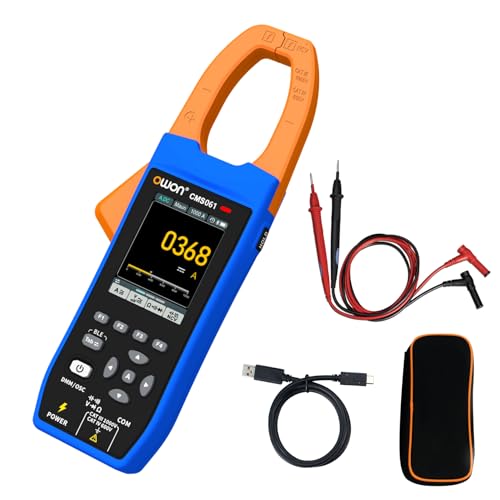
- 3-in-1 tool with clamp meter, oscilloscope, and logger.
- Shows current and voltage waveforms simultaneously.
- Bluetooth syncs with the i-Meter app.
Best For: Professional troubleshooting with waveform analysis and wireless logging
Dual-Input Logger
Extech DL150 True RMS AC Voltage/Current Datalogger
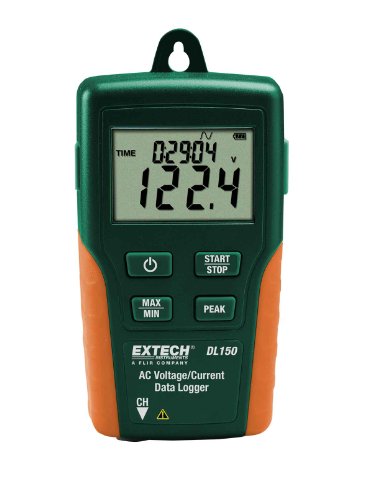
- Dual AC voltage/current logging with True RMS
- 4,000-reading memory with time/date stamping
- USB download for PC analysis
Best For: Electricians and technicians needing dependable AC voltage/current logging
Live Display Logger
Supco True RMS Current and Voltage Data Logger

- Real-time current and voltage display while logging
- Graphical screen shows watts, sample rate, and memory
- Visual LED and software alarms for range alerts
Best For: Users who want live readings with simple alarm feedback
PC-Based Recorder
Hantek 365F True RMS Data Logger

- Logs voltage, current, resistance, and capacitance
- True RMS with trend-curve software support
- Requires a PC to start recording
Best For: PC-based long-term logging with broader measurement coverage
Industrial 3-Phase Monitoring – ETCR8430 3-Phase Power Recorder
If you need a voltage and current data logger for three-phase troubleshooting, the ETCR8430 is built for broad power-quality monitoring. It records voltage, current, frequency, active power, apparent power, and power factor, with a wide measurement range that suits industrial electrical diagnostics and maintenance work.
Best For: Industrial electricians, facility maintenance teams, and power quality analysis on three-phase systems.
Pros:
- 6-channel logging for voltage, current, and other power metrics in three-phase systems
- Wide measurement range: 0.01V to 600V and 1mA to 400A
- Stores up to 200,000 data groups with adjustable intervals from 1 second to 99 minutes
- USB interface and PC software for downloading and analyzing recorded data
Cons:
- Designed for industrial use, so it may be more than needed for simple household tasks
- Requires PC software workflow for full data review
This model stands out when you need long-duration recording and a broad set of electrical measurements in one unit. The rechargeable battery and large memory make it practical for extended monitoring jobs.
Dual-Input Flexible Logger – Triplett ACDL200 Dual Input TRMS Datalogger
The Triplett ACDL200 is a flexible voltage and current data logger for users who need dual-input recording in a compact clamp-style tool. It can log TRMS voltage/voltage, current/current, or voltage/current, with selectable sampling from 1 second to 24 hours for a wide range of monitoring tasks.
Best For: Technicians who need dual-channel logging with flexible input combinations and long data capacity.
Pros:
- Dual input recording supports voltage/voltage, current/current, or voltage/current
- Logs up to 256,000 measurements on single input or 131,000 on dual input
- Selectable sampling rate from 1 second to 24 hours
- Includes min/max recall, multifunction LCD, real time clock, and low battery indicator
Cons:
- Dual-input data capacity is lower than single-input mode
- Jaw size is 0.5 inch, which may limit use on larger conductors
For users who want a practical clamp logger with multiple recording modes, the ACDL200 offers useful flexibility without getting overly complex. Its long logging capacity and broad sampling range make it a solid fit for field diagnostics.
Sensor-Ready Analog Logger – HOBO UX120-006M Analog Data Logger
The HOBO UX120-006M is an analog data logger for setups that rely on external sensors rather than built-in voltage or current clamps. It offers 16-bit resolution, flexible sensor support, and on-screen monitoring features for tracking analog measurements with useful logging statistics.
Best For: Users who need a compact analog logger for external sensor-based measurement setups.
Pros:
- Supports a wide range of external sensors
- 16-bit resolution with twice the accuracy over previous models
- Logs minimum, maximum, average, and standard deviation
- LCD display confirms operation and shows near real-time measurement data
Cons:
- Not a dedicated voltage and current data logger by itself
- Requires compatible external sensors for measurement tasks
This model is best viewed as a flexible analog logging platform rather than a clamp-style electrical recorder. If your application depends on external sensors and detailed trend logging, it offers a compact and capable option.
Single-Channel Clamp Logger – Triplett ACDL100 True RMS Datalogger
The Triplett ACDL100 is a straightforward voltage and current data logger for single-channel AC monitoring. It records TRMS AC voltage up to 600V or current up to 200A, with selectable sampling from 1 second to 24 hours, making it a practical choice for basic electrical logging tasks.
Best For: Users who want a simple single-channel clamp logger for AC voltage or current.
Pros:
- Single-channel TRMS logging for AC voltage or current
- Logs up to 100,000 measurements
- Selectable sampling rate from 1 second to 24 hours
- Includes Peak Hold, min/max recall, LCD, real time clock, and low battery indicator
Cons:
- Single-channel design means it cannot log multiple inputs at once
- Limited to AC voltage or current recording
For simpler monitoring jobs, the ACDL100 covers the essentials without extra complexity. Its clamp form factor, TRMS recording, and long sample interval range make it a dependable entry-level option for electrical logging.
AC Power Monitoring Pick – Supco LCV LOGiT Current and Voltage Tester
If you need a voltage and current data logger for AC troubleshooting, the Supco LCV LOGiT is built for straightforward, real-time monitoring. It combines a voltage tester with an external current probe, so you can track single-phase activity and review compressor and fan run cycles with a practical set of readings.
Best For: HVAC and electrical testing where both voltage and current need to be tracked together over time.
Pros:
- Measures AC voltage from 0 to 500 volts.
- Stores up to 10,750 data points for longer review periods.
- Includes an external current probe for current tracking.
- Over and under alarms help flag voltage and current changes.
Cons:
- Designed for AC single-phase monitoring, not broad multi-channel logging.
- Requires a 9V battery.
- Focused on electrical monitoring rather than advanced app-based reporting.
This is a solid choice if you want a compact logger for AC system checks and cycle monitoring. Its mix of voltage measurement, current probing, and alarm indicators makes it useful for hands-on diagnostics without extra complexity.
DC Logging Budget Pick – Triplett VDL48 DC Voltage USB Datalogger
For buyers focused on a voltage and current data logger specifically for DC voltage, the Triplett VDL48 keeps things compact and simple. It monitors a single DC channel up to 48V, records readings at adjustable intervals, and gives you a clear way to log long-term voltage behavior without a bulky setup.
Best For: Compact DC voltage logging where adjustable sampling and a long record count matter.
Pros:
- Records up to 31,320 DC voltage readings.
- Sampling rate can be set from 1 second to 24 hours.
- Built-in 2000 count LCD for clear display.
- High/low alarms and status LEDs support monitoring.
Cons:
- Single-channel DC voltage only, with a 48V maximum.
- Does not measure current.
- More specialized for voltage logging than general electrical testing.
The VDL48 is a practical pick when your main goal is detailed DC voltage recording rather than broader power analysis. Its adjustable sampling and large data capacity make it a good fit for long-duration monitoring tasks.
Advanced Bluetooth Pick – OWON CMS061 3-in-1 Bluetooth Clamp Meter
If you want a more advanced voltage and current data logger, the OWON CMS061 stands out with its 3-in-1 design. It combines a clamp meter, oscilloscope, and data logger, and it can capture current and voltage waveforms simultaneously for deeper troubleshooting on motors, power supplies, and industrial equipment.
Best For: Electricians and engineers who need live waveform viewing plus Bluetooth logging.
Pros:
- Combines a 600A AC/DC True RMS clamp meter with a data logger.
- Captures current and voltage waveforms simultaneously.
- Bluetooth sync works with the i-Meter app on iOS and Android.
- Includes inrush current detection, NCV, and customizable alarms.
Cons:
- More complex than a basic standalone logger.
- Best suited to users who need clamp meter and oscilloscope features too.
- Requires app use for the full wireless monitoring workflow.
The CMS061 is the strongest fit when logging is only one part of a broader diagnostic workflow. With live waveform analysis, Bluetooth connectivity, and a bright IPS display, it is geared toward users who want more than simple recording.
Dual-Input Logger – Extech DL150 True RMS AC Voltage/Current Datalogger
If you need a voltage and current data logger for faster troubleshooting, the Extech DL150 is built to track AC voltage and current at the same time. With True RMS measurement, a 4,000-reading memory, and USB download support, it suits technicians who want dependable logs and simple PC-based review.
Best For: Electricians and field service pros who want dual-input AC logging with True RMS accuracy.
Pros:
- Logs up to 4,000 readings with time and date stamping.
- Measures AC voltage up to 600V and current up to 200A.
- True RMS helps improve accuracy on noisy or non-linear loads.
- USB transfer makes it easier to download and analyze data on a PC.
Cons:
- Designed for AC voltage/current logging, not broader multi-parameter testing.
- Includes a learning curve if you only need basic spot checks.
The DL150 is a practical choice when you want a rugged, portable logger focused on AC electrical troubleshooting. Its clamp, leads, min/max recording, and hold function add convenience for field work, while the included software supports reporting and analysis.
Live Display Logger – Supco True RMS Current and Voltage Data Logger
The Supco True RMS current and voltage data logger is a straightforward option if you want to watch readings in real time while logging them. Its graphical display shows key values like current, voltage, watts, sample rate, and memory status, while visual alarms help flag over- and under-range conditions.
Best For: Users who want a simple logger with live display and alarm feedback.
Pros:
- Shows current and voltage simultaneously while logging.
- Graphical display includes watts, sample rate, and memory usage.
- Visual alarm LED and software alarms help spot range issues.
- Battery-powered and includes 3 AA batteries.
Cons:
- Product details do not list a storage capacity or exact logging depth.
- Heavier than some compact alternatives at 1.6 pounds.
This model makes sense if you value quick visibility more than advanced setup complexity. The live readout and alarm support are especially useful when monitoring conditions that can change during testing.
PC-Based Recorder – Hantek 365F True RMS Data Logger
The Hantek 365F is aimed at long-term logging when you want a voltage and current data logger that also tracks resistance and capacitance. It supports real-time trend curves, True RMS measurement, and plug-and-play use, but it is designed to work with a PC to start recording.
Best For: PC-based users who need long-time recording across multiple electrical measurements.
Pros:
- Records voltage, current, resistance, and capacitance in real time.
- True RMS support improves measurement confidence.
- Software for Windows 10 and above can create trend curves.
- Plug-and-play design keeps setup simple once connected to a computer.
Cons:
- Needs a PC to start working, so it is not fully standalone.
- Software support is limited to Windows 10 and above.
For users who already plan to log from a computer, the Hantek 365F offers broad measurement coverage in a format built for extended recording. It is a good fit when trend analysis matters more than handheld independence.
How We Picked the Best Voltage and Current Data Logger Options
We prioritized measurement range, logging depth, true RMS accuracy, channel count, and connection options such as USB or Bluetooth. We also looked for models suited to common use cases like HVAC troubleshooting, equipment commissioning, energy audits, and lab testing. A good Voltage and Current Data Logger should be easy to deploy, reliable over long recording sessions, and appropriate for the electrical environment you are measuring.
Quick Comparison: Which Type Fits Your Job?
If you need broad power monitoring across multiple circuits, a multi-channel recorder is usually the best fit. For portable fieldwork, clamp-based or handheld loggers are easier to set up and move between jobs. If you only need DC monitoring, a dedicated DC logger is often simpler and more cost-effective. For mixed or advanced testing, Bluetooth or PC-connected models can make data review faster and more flexible.
Key Buying Factors for Voltage and Current Data Logger Buyers
Voltage, Current, and Signal Type
Match the instrument to AC, DC, or both. Some models are built for AC mains and current transformer work, while others support DC voltage monitoring or true RMS capture for non-sinusoidal loads. Always confirm the maximum voltage and current ratings before buying.
Logging Capacity and Sampling
Longer jobs need more memory and better interval control. If you are tracking intermittent faults or overnight load behavior, choose a logger with enough reading capacity and adjustable sampling intervals. Higher-resolution logging helps when you need to spot small changes over time.
Channels and Connectivity
More channels are useful when comparing multiple loads or phases at once. USB export is common and dependable, while Bluetooth and PC software can speed up setup and analysis. For recurring testing, make sure the workflow is simple enough that you will actually use it in the field.
Accuracy and Ease of Use
True RMS matters when measuring distorted waveforms or modern electronic loads. A clear display, secure probe connection, and straightforward software can save time and reduce setup errors. If the unit requires a PC to start logging, confirm that fits your workflow.
Who Should Buy Which Voltage and Current Data Logger?
Facilities teams and electricians often benefit from multi-channel or power-quality models that can capture more of the electrical picture at once. Technicians doing routine troubleshooting may prefer a compact clamp-style logger for fast deployment. Engineers and lab users should look for stronger software support, broader measurement range, and better data export. If your work is focused on one DC source or battery-fed system, a dedicated DC logger is usually the most efficient choice.
For most buyers, the best Voltage and Current Data Logger is the one that matches the exact measurement type, logging duration, and analysis workflow you need—without paying for features you will never use.