Choosing a UV visible spectrometer for laboratory use comes down to more than wavelength range. The right model should match your samples, testing volume, software needs, and budget.
This roundup compares 10 options for routine analysis, teaching labs, and more demanding photometric workflows so you can narrow the field quickly.
Best 10 UV Visible Spectrometer for Laboratory Picks for 2026
Budget Lab UV-VIS Workhorse
UV-VIS Spectrophotometer 752N/UV1100

- 195-1020nm wavelength range
- ±0.5%T photometric accuracy
- T, A, C, and F modes
Best For: University labs and industrial routine testing
Advanced Double-Beam Analyzer
UV-9000S Double Beam UV Vis Spectrophotometer
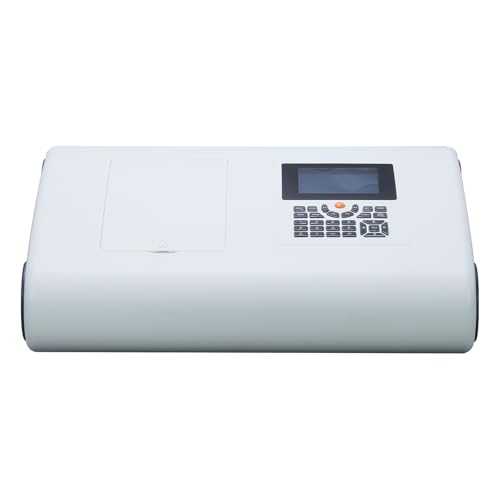
- 190-1100nm with selectable bandwidth
- ≤0.03%T stray light
- UV/VIS Analyst software included
Best For: Demanding labs needing analysis and validation tools
Simple Visible Lab Reader
Digital Visible Laboratory Automatic Spectrometer

- 350-1020nm visible range
- Automatic light gate and zero adjustment
- Fits 10cm cuvettes
Best For: Teaching labs and visible-range experimentation
PC-Ready Single-Beam Scanner
UV-5800PC Single Beam UV Vis Spectrophotometer

- 190-1100nm range
- Below 0.05%T stray light
- Stores 200 data groups
Best For: Labs needing software-ready single-beam analysis
Entry-Level UV/Vis Range
200-1020nm New Generation UV Visible Spectrophotometer

- 200-1020nm wavelength range
- Measures absorbance and transmittance
- Includes glass and quartz cuvettes
Best For: Labs needing a basic UV/Vis spectrophotometer with included cuvettes
Function-Rich Benchtop UV/Vis
UV-6000PC Single Beam UV Vis Spectrophotometer
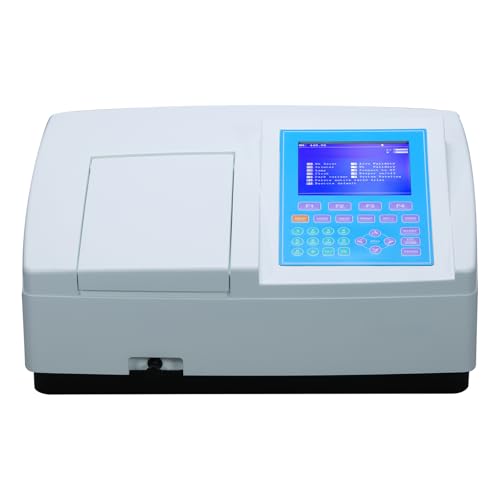
- 190-1100nm wavelength range
- 6-inch LCD with curves and results
- Supports kinetics, multi-wavelength, and DNA/RNA/protein tests
Best For: Labs needing multiple analysis modes and onboard result display
Lab-Ready Single-Beam UV-Vis
UV-5100B 190-1000nm, 2nm bandwidth

- 190-1000nm range with 2nm bandwidth
- Automatic wavelength setting in 0.1nm steps
- Built-in absorbance, transmittance, and quant analysis
Best For: Routine lab photometric testing and basic concentration work
Expanded-Range Quantitative UV-Vis
UV-5200 190-1100nm, 2nm bandwidth
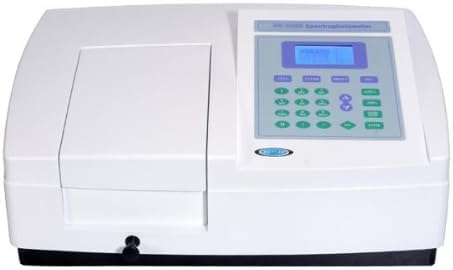
- 190-1100nm wavelength range
- Built-in quantitative analysis with curve and coefficient methods
- Optional software supports scan, kinetics, DNA/protein, and multi-wavelength
Best For: Labs needing wider range and onboard quantitative analysis
Easy-Operation Quantitative UV-Vis
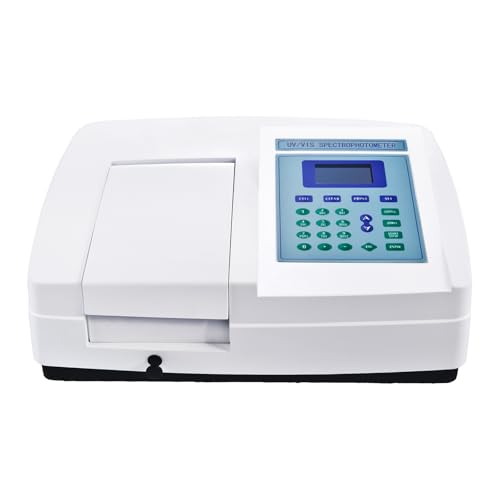
- 190-1100nm range with 2nm bandwidth
- Automatic wavelength setting and 100%T/0Abs calibration
- USB output plus built-in quantitative analysis
Best For: Routine lab absorbance testing and simple concentration analysis
Budget Lab UV-VIS Workhorse – UV-VIS Spectrophotometer 752N/UV1100
If you need a practical UV visible spectrometer for laboratory routines without overcomplicating the workflow, this model covers the basics well. It offers a wide wavelength range, straightforward operation, and several measurement modes, making it a flexible fit for teaching labs, quality control, and general analytical work.
Best For: University labs, industrial quality control, and users who want simple operation with broad application coverage.
Pros:
- Wavelength range of 195-1020nm supports many UV and visible applications.
- Photometric accuracy of ±0.5%T and wavelength accuracy of ±2nm help support reliable routine testing.
- Supports T, A, C, and F modes for different experiment types.
- Includes glass and quartz cuvettes, power cord, and user manual for immediate setup.
Cons:
- Accuracy is solid for routine use, but not as tight as higher-end lab models.
- Optional software and printer add-ons may be needed for expanded convenience.
Overall, this is a straightforward choice when you want a laboratory UV-VIS instrument that is easy to learn and broad enough for common educational and production tasks.
Advanced Double-Beam Analyzer – UV-9000S Double Beam UV Vis Spectrophotometer
For buyers looking for a more advanced UV visible spectrometer for laboratory analysis, this double-beam model brings strong optics and deep software support. Its selectable bandwidth, low stray light, and included UV/VIS Analyst software make it a better fit when you need more detailed spectrum processing and validation tools.
Best For: Demanding laboratories that need double-beam performance, onboard analysis, and software-driven spectrum processing.
Pros:
- Double-beam optics with 190-1100nm range and selectable 0.5/1/2/4nm bandwidth.
- Very low stray light at ≤0.03%T supports demanding analysis work.
- Performs spectrum scanning, standard curve, kinetic, multi-wavelength, and DNA/protein measurements.
- Includes UV/VIS Analyst software for spectrum tracing, peak detection, and other processing tools.
Cons:
- Weighs 77 pounds, so it is less portable than smaller benchtop units.
- Feature set may be more than needed for simple teaching or basic routine tests.
This is a strong pick if your lab values analytical depth, validation features, and flexible software tools alongside the core spectrophotometer functions.
Simple Visible Lab Reader – Digital Visible Laboratory Automatic Spectrometer
If you want a visible-range UV visible spectrometer for laboratory teaching or general experimentation, this automatic model emphasizes ease of use. Its digital display, automatic light gate, and zero adjustment features are designed to reduce operator error and keep measurements simple.
Best For: Teaching labs, R&D experiments, and users who want a visible-range instrument with automation features.
Pros:
- Visible wavelength range of 350-1020nm covers common lab measurement needs.
- Automatic light gate and automatic zero adjustment help simplify operation.
- Supports 100 times automatic calibration for long-term stability.
- Large sample chamber accepts 10cm cuvettes and an RS232 port is available as an option.
Cons:
- Visible-range only, so it does not cover lower UV wavelengths.
- Some connectivity features depend on optional hardware.
It is a practical fit when your work focuses on visible measurements and you want a lower-friction instrument that is easy to read and simple to operate.
PC-Ready Single-Beam Scanner – UV-5800PC Single Beam UV Vis Spectrophotometer
For a UV visible spectrometer for laboratory use with PC expansion in mind, this single-beam unit balances core functionality and data handling. It offers a broad wavelength range, low stray light, onboard memory, and software upgrade support for users who want more than basic photometric measurements.
Best For: Labs that need single-beam UV-VIS measurement with software-controlled scanning and data storage.
Pros:
- 190-1100nm wavelength range supports UV and visible analysis.
- Low stray light below 0.05%T supports cleaner optical performance.
- Stores 200 data groups and 200 standard curves for repeated lab work.
- Can upgrade to scanning mode with Windows-based UV-Professional software.
Cons:
- Single-beam design is less advanced than double-beam alternatives.
- Scanning and expanded functions depend on software connection.
This model makes sense if you want a lab spectrophotometer with a good balance of optical performance, data memory, and the option to expand into scanning workflows.
Entry-Level UV/Vis Range – 200-1020nm New Generation UV Visible Spectrophotometer
If you need a UV visible spectrometer for laboratory use with a broad working range, this 200-1020nm model covers absorbance, transmittance ratio, and concentration measurements for standard samples and standard curves. It also includes a power-on self-test and comes with glass and quartz cuvettes, which makes it a practical starter option for routine lab work.
Best For: Labs that want a simple UV/Vis spectrophotometer with a wide wavelength range and included cuvettes.
Pros:
- Wide 200-1020nm wavelength range for UV and visible measurements
- Measures absorbance, transmission ratio, and concentration using standards or curves
- Includes 4 glass cuvettes and 2 quartz cuvettes at no extra cost
- Power-on self-test adds a basic startup check
Cons:
- No PC software or data connectivity is mentioned
- Fewer advanced features are listed compared with research-focused models
This is a straightforward option if your lab needs core UV/Vis functions without a long feature list. The included accessories and broad wavelength span make it useful for general teaching, basic analysis, and standard concentration work.
Precision-Focused UV/Vis – HNZXIB UV-5100B UV/VIS Spectrophotometer
This UV visible spectrometer for laboratory use offers a 190-1000nm wavelength range, auto wavelength setting, and multiple readout options for absorbance, transmittance, and concentration testing. Its low stray light design, die-cast aluminum optical mount, and USB connectivity make it a practical pick for labs that want a more controlled and data-friendly setup.
Best For: Labs that want automatic wavelength setting and PC connectivity in a compact UV/VIS spectrophotometer.
Pros:
- Auto wavelength setting helps reduce input errors
- Ultra-low stray light design supports more reliable measurements
- USB port supports spectrum scanning, kinetics, and multi-wavelength testing with optional software
- Stores up to 200 results and shows 5 results per screen
Cons:
- Software is optional, so PC features may require an extra purchase
- Weight and size may be less convenient for small benches or frequent moving
For labs that value ease of use and repeatable setup, the UV-5100B balances automation with standard spectrophotometer functions. The combination of wavelength setting, storage, and USB output makes it suitable for routine testing where documentation matters.
Function-Rich Benchtop UV/Vis – UV-6000PC Single Beam UV Vis Spectrophotometer
If you want a UV visible spectrometer for laboratory workflows that can handle multiple analysis modes, the UV-6000PC covers photometric, quantitative, kinetic, spectrum scanning, and multi-wavelength testing. Its 6-inch LCD display, rigid aluminum optical base, and PC output make it a strong fit for labs that prefer onboard viewing and broader analytical capability.
Best For: Labs that need a feature-rich single-beam spectrophotometer for multiple test types.
Pros:
- Supports photometric, quantitative, kinetic, spectrum scanning, and multi-wavelength analysis
- 6-inch LCD displays results and curves directly on the instrument
- USB connection sends results to a PC for spectrum scanning, kinetics, and multi-wavelength work
- Includes DNA/RNA/Protein testing functions
Cons:
- Single-beam design may be less specialized than higher-end dual-beam systems
- PC software details are not fully specified in the notes
This model stands out when your lab needs more than basic absorbance checks and wants several analysis modes in one instrument. The onboard display and PC connectivity help make it practical for day-to-day lab use and result review.
Lab-Ready Single-Beam UV-Vis – UV-5100B 190-1000nm, 2nm bandwidth
If you need a UV visible spectrometer for laboratory work with broad coverage and straightforward standalone testing, the UV-5100B is built around a 190-1000nm range, 2nm bandwidth, and automatic wavelength setting. It supports absorbance and transmittance measurements, plus built-in quantitative workflows for routine concentration checks without relying on a PC.
Best For: Labs that want a single-beam UV-Vis unit for routine photometric testing and basic quantitative analysis.
Pros:
- 190-1000nm wavelength range covers common UV-Vis lab applications
- Automatic wavelength setting with 0.1nm increments for easier operation
- Standalone absorbance and transmittance modes for routine measurements
- Built-in standard curve and coefficient methods for concentration analysis
Cons:
- Optional PC software is needed for spectrum scanning, kinetics, and multi-wavelength analysis
- Single-beam design may be less feature-rich than higher-end lab systems
Overall, this model suits labs that value practical measurement functions, onboard data storage, and simple operation over advanced software-driven workflows.
Expanded-Range Quantitative UV-Vis – UV-5200 190-1100nm, 2nm bandwidth
The UV-5200 is a UV visible spectrometer for laboratory use that extends coverage to 1100nm while keeping a 2nm bandwidth and automatic wavelength setting. It combines fixed-wavelength photometric testing with built-in quantitative analysis, and the optional PC software adds scan, kinetics, DNA/protein, and multi-wavelength functions.
Best For: Laboratories that want a wider wavelength range and onboard concentration analysis in a single-beam instrument.
Pros:
- 190-1100nm range extends farther than many basic UV-Vis models
- Automatic wavelength setting with 100%T/0Abs calibration for routine use
- Built-in standard curve and coefficient methods for quantitative work
- Optional software adds kinetics, wavelength scan, DNA/protein, and multi-wavelength testing
Cons:
- Advanced functions depend on the optional computer software accessory
- Single-beam architecture may not suit labs needing higher-end throughput features
For labs that need broader wavelength coverage and a practical on-instrument workflow, this model offers a strong mix of range, quantitative tools, and day-to-day usability.
Easy-Operation Quantitative UV-Vis – UV-5200 190-1100nm
If your priority is a practical UV visible spectrometer for laboratory routines, this UV-5200 version focuses on automatic wavelength setting, photometric measurement, and built-in quantitative analysis. It provides the same 190-1100nm range and 2nm bandwidth in a simple operating package with LCD readout, data storage, and USB output.
Best For: Labs that want routine absorbance work and straightforward concentration analysis with easy daily operation.
Pros:
- 190-1100nm range with 2nm bandwidth for common UV-Vis testing
- Automatic 100%T/0Abs calibration simplifies fixed-wavelength measurements
- Built-in standard curve and coefficient methods support quantitative analysis
- USB data output and optional parallel printer support make reporting easier
Cons:
- Advanced functions are limited to optional software and accessories
- Best suited to routine lab work rather than highly specialized workflows
This is a sensible pick for labs that want dependable core spectrophotometer functions, clear controls, and simple data handling without unnecessary complexity.
How We Picked the Best UV Visible Spectrometer for Laboratory
We focused on practical lab buying signals: usable wavelength coverage, bandwidth, beam design, software support, measurement modes, and whether the instrument suits routine bench work or higher-throughput analysis. We also favored models with clear specifications that help buyers compare a UV Visible Spectrometer for Laboratory applications without guesswork.
Quick Comparison: What Matters Most
Shortlist by the task first. If you need general teaching or basic absorbance work, a visible-range or entry UV-Vis model may be enough. For broader analytical coverage, choose 190-1100 nm or similar UV/visible ranges. Double-beam systems are often preferred for better stability in repeated measurements, while single-beam units can be simpler and more affordable. Software compatibility is especially useful when you need data handling, reporting, or PC-based control.
Key Buying Factors for a UV Visible Spectrometer for Laboratory
Wavelength Range
Make sure the range matches the chemistry you test. UV work commonly needs access below 400 nm, while visible-only instruments are better for less demanding colorimetric tasks.
Bandwidth and Resolution
Narrower bandwidth generally supports better spectral detail and more precise results. For many routine labs, around 2 nm is a useful balance of performance and value.
Beam Type and Stability
Single-beam instruments are often simpler to operate and maintain. Double-beam models can offer more stable baselines for frequent runs, comparative studies, or longer sessions.
Software and Workflow
PC software can improve data storage, export, and repeatability. If your lab needs audit trails or regular reporting, software support may be as important as optical specs.
Automation and Ease of Use
Features like automatic wavelength setting, photometric modes, and straightforward calibration can reduce operator error and speed up daily testing.
Who Should Buy Which UV Visible Spectrometer for Laboratory?
Teaching and routine QC labs: prioritize ease of use, dependable wavelength coverage, and simple maintenance.
Research and method-development labs: look for broader UV range, narrower bandwidth, and software-driven control.
Budget-conscious buyers: focus on core accuracy and the minimum feature set needed for your assays.
Higher-throughput labs: consider double-beam stability, PC integration, and automated wavelength functions to save time over repeated runs.
For most buyers, the best choice is the instrument that fits your sample types, reporting needs, and daily workload—not just the longest spec sheet.