Choosing from today’s stereo microscopes is easier when you know what matters most: working distance, zoom range, lighting, and comfort.
This roundup focuses on models that make close-up inspection more precise for electronics, specimens, and hands-on hobby work.
Best 10 Stereo Microscopes Picks for 2026
Entry-Level Dual-Illumination Stereo Microscope

- 20X-80X viewing range
- Top and bottom illumination
- All-metal pillar stand
Best For: Introductory inspection and general specimen viewing
Trinocular Zoom Shop Microscope
SWIFT S7 7X-45X Trinocular Zoom
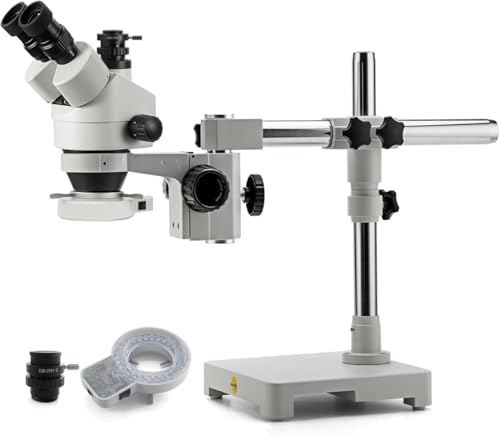
- Continuous 7X-45X zoom
- 56-bulb LED ring light
- Boom stand with camera port
Best For: Electronics, gemology, engraving, and imaging workflows
Simple Starter Stereo Microscope
Celestron Labs S20 20x Starter

- 20x stereo viewing
- Top and bottom LED lighting
- Includes insect specimens
Best For: Beginners and casual family viewing
Professional Zoom Stereo Microscope
SWIFT S7-TP520-EA10-56 3.5X-90X
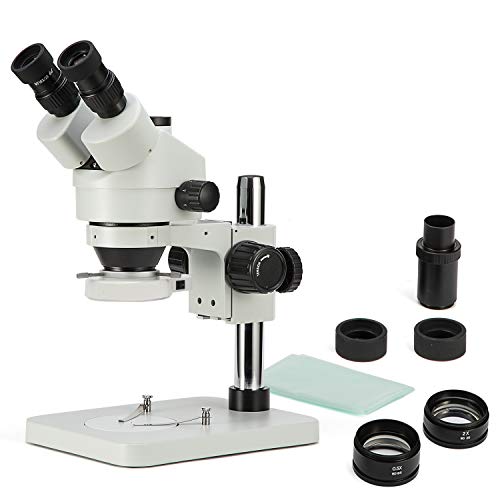
- 3.5X-90X with extra objectives
- Trinocular head for imaging
- 56-bulb LED ring light
Best For: Professional inspection, research, and camera-based documentation
Editor's Pick
Kaisi 7X-50X Trinocular Stereo Microscope

- Trinocular design keeps eyepiece viewing available during camera use
- 7X-50X zoom with WF10x23 eyepieces for a wider field of view
- Includes LED ring light, solder fan, and silicone work surface
Best For: Electronics repair and soldering setups that need camera support
Budget Classroom Kit
Aomekie 20X-50X Stereo Microscope

- 20X and 50X magnification with WF10X, WF25X eyepieces
- Battery-powered LED lighting supports cordless use
- Comes with slides, insect specimens, and mineral specimens
Best For: Beginners, kids, and portable classroom-style observation
Premium Boom Stand
SENZHIYI 3.5X-90X Stereo Zoom Microscope

- Trinocular setup supports camera use alongside visual viewing
- 3.5X-90X range with 0.7-4.5X zoom and auxiliary lenses
- Heavy steel base and boom arm improve stability and reach
Best For: Precision bench work, inspection, and camera-assisted observation
Cordless Two-Light Pick

- 20x and 40x stereo magnification
- Incident and transmitted LED lights
- All-metal pillar stand with binocular head
Best For: general inspection and hobby work
High-Range Trinocular Zoom Pick
Trinocular Stereo Zoom 3.5X-90X

- 0.7x-4.5x zoom with 3.5x-90x range
- Trinocular head supports cameras
- Heavy steel base and LED ring light
Best For: detailed inspection and camera documentation
Balanced Zoom Trinocular Choice

- 6x-45x magnification range
- 56-bulb LED ring light
- Trinocular head with 0.5x CTV adapter
Best For: moderate zoom viewing with camera support
Entry-Level Dual-Illumination Stereo Microscope – AmScope SE306R-PZ 20X-80X
If you want stereo microscopes for general inspection work, the AmScope SE306R-PZ gives you a straightforward 20X-80X viewing range with both top and bottom lighting. The forward binocular head and all-metal pillar stand make it a practical pick for hobby use, classroom work, and basic specimen observation.
Best For: Users who want a simple dual-light stereo microscope for everyday viewing and introductory inspection.
Pros:
- 20X, 40X, and 80X magnification settings cover a useful range for close inspection.
- Built-in incident and transmitted lights support viewing different specimen types.
- Widefield optical glass lenses and binocular head are suited to comfortable observation.
- All-metal framework and pillar stand add stability.
Cons:
- Maximum magnification is lower than zoom-based professional models.
- Halogen lighting may be less convenient than LED setups.
Overall, this model is a solid no-frills option if you value stable construction and dual illumination over advanced features. It fits well as an approachable entry point into stereo microscopy.
Trinocular Zoom Shop Microscope – SWIFT S7 7X-45X Trinocular Zoom
Among stereo microscopes, the SWIFT S7 is built for hands-on work that benefits from a continuous zoom range and a camera-ready trinocular head. Its 7X-45X magnification, 56-bulb LED ring light, and boom stand make it a strong match for bench tasks where clear, shadow-free illumination matters.
Best For: Electronics, gemology, engraving, and other work that benefits from a trinocular zoom stereo microscope.
Pros:
- Continuous 7X-45X zoom gives flexible control over inspection detail.
- Trinocular head includes a third port for camera or additional viewing use.
- 56-bulb LED ring light provides bright, shadow-free illumination.
- Swinging-arm boom stand helps handle larger objects.
Cons:
- Boom stand takes up more bench space than a simple pillar setup.
- Higher-magnification workflow may be more than needed for casual users.
This is the most task-focused option in the group if you need flexibility, imaging support, and good working clearance. It is especially appealing for users who want one microscope to handle both observation and documentation.
Simple Starter Stereo Microscope – Celestron Labs S20 20x Starter
The Celestron Labs S20 is a straightforward stereo microscope for beginners who want a compact setup with top and bottom LED illumination. With 20x power, a straight binocular viewing design, and included insect specimens, it is geared toward easy introductory use rather than advanced lab work.
Best For: Beginners and families looking for an easy starter microscope with included specimens.
Pros:
- 20x magnification is easy to understand for first-time users.
- Top and bottom LED illumination supports different viewing needs.
- Includes two insect specimens and two AA batteries.
- Lightweight metal construction keeps it simple and portable.
Cons:
- Fixed 20x magnification offers less flexibility than zoom models.
- Straight binocular viewing is less ergonomic than angled heads.
As an introductory pick, this model keeps the learning curve low while still delivering the 3D view stereo microscopes are known for. It is best suited to casual exploration and basic observation rather than precision bench work.
Professional Zoom Stereo Microscope – SWIFT S7-TP520-EA10-56 3.5X-90X
If you are comparing stereo microscopes for professional bench work, this SWIFT trinocular zoom model offers a broad magnification range, a 45-degree ergonomic head, and a bright 56-bulb LED ring light. The included 0.5X and 2.0X objectives add flexibility for tasks that need either more working room or higher detail.
Best For: Researchers, collectors, and electronics users who want a zoom stereo microscope with extra objective options.
Pros:
- 7X-45X zoom range expands to 3.5X-90X with the included objectives.
- Trinocular head and vertical port support camera attachment or viewing.
- 56-bulb LED ring light delivers bright, shadow-free illumination.
- 4-inch working distance and 360-degree rotation support practical specimen handling.
Cons:
- More feature-rich than a basic microscope, so it may be overkill for simple casual use.
- Corded power means it is less flexible than battery-powered options.
This model stands out when you want a serious stereo microscope with imaging support and a wider setup range. It is a strong fit for users who expect to switch between inspection, documentation, and detailed bench tasks.
Editor's Pick – Kaisi 7X-50X Trinocular Stereo Microscope
This Kaisi stereo microscope is built for soldering and electronics repair, with a trinocular design that keeps the left eyepiece view available when using a camera. Its 7X-50X zoom range, wide WF10x23 eyepieces, and included LED ring light make it a practical choice when you need clear, comfortable viewing at the bench.
Best For: Electronics repair, soldering, and users who want camera-ready trinocular viewing without sacrificing the eyepiece image.
Pros:
- Trinocular upgrade is designed to avoid losing the left eyepiece view while the camera is in use
- 0.7x-5x zoom objective delivers a 7X-50X magnification range for flexible inspection
- WF10x23 eyepieces offer a wider field of view than standard WF10x20 designs
- Includes an LED ring light, soldering exhaust fan, and silicone work mat with parts trays
Cons:
- Working distance setup changes depending on the lens configuration, so setup needs care
- Best suited to bench work rather than portable use
This is a feature-rich option for repair work where visibility, comfort, and camera compatibility matter. The accessory bundle adds real utility for soldering and small-part handling, making it a strong all-around workbench microscope.
Budget Classroom Kit – Aomekie 20X-50X Stereo Microscope
This Aomekie stereo microscope is a simple, portable option for learning and basic inspection. With 20X and 50X magnification, battery-powered LED lighting, and a bundle of slides plus insect and mineral specimens, it fits well in a home, classroom, or starter science setup.
Best For: Kids, beginners, and anyone who wants a portable starter stereo microscope with included specimens.
Pros:
- Offers 20X and 50X magnification using WF10X, WF25X eyepieces and a 2X objective
- Battery-powered LED light makes it easy to move and use without a power cord
- Includes 10 slides, insect specimens, and 12 mineral specimens for immediate use
- Adjustable interpupillary distance helps different users get a comfortable binocular view
Cons:
- Battery operation means you must supply two AA batteries separately
- It is positioned as an elementary microscope, so it is not aimed at advanced lab or repair work
For basic observing and science exploration, this model gives you a lot in the box without adding complexity. It is especially appealing if you want a ready-to-use stereo microscope for learning, display, and casual specimen inspection.
Premium Boom Stand – SENZHIYI 3.5X-90X Stereo Zoom Microscope
This SENZHIYI stereo microscope is aimed at users who need a larger working area and more stable precision inspection. Its trinocular optical system, 3.5X-90X total magnification range, adjustable boom arm, and heavy steel base make it suitable for inspection tasks where smooth movement and steady imaging matter.
Best For: Industrial inspection, product assembly, teaching, jewelry identification, and precision bench work with camera output.
Pros:
- Trinocular system supports simultaneous viewing and external camera connection
- 0.7-4.5X continuous zoom plus auxiliary lenses delivers a 3.5X-90X magnification range
- Adjustable boom arm provides flexible positioning and a wide operating space
- 18 lb steel base is designed to reduce shaking and improve stability during fine adjustment
Cons:
- The large boom-arm setup is more of a bench solution than a compact desktop microscope
- Its premium feature set may be more than casual users need
Overall, this is the most workstation-oriented of the three stereo microscopes here. If you need stable observation, camera support, and room to work around larger samples, the boom-arm design is a strong fit.
Cordless Two-Light Pick – AmScope SE306R-P-LED 20x-40x
If you want a straightforward stereo microscope for close-up inspection, this AmScope model keeps the setup simple with 20x and 40x viewing, widefield optical glass lenses, and both incident and transmitted LED lighting. The cordless battery-powered design is useful when you need flexibility around a bench or work area.
Best For: Users who need a compact, dual-light stereo microscope for general inspection and hobby work.
Pros:
- 20x and 40x stereo magnification options
- Incident and transmitted LED lights for different specimen types
- Widefield binocular head with optical glass lenses
- All-metal pillar stand for a sturdy base
Cons:
- Fixed magnification is less flexible than zoom models
- Battery-powered setup may be less convenient for long sessions
Overall, this is a practical entry-level pick if you value simple operation and dual illumination over advanced zoom features. It covers the basics well for stereo microscopy tasks that need clear, close viewing.
High-Range Trinocular Zoom Pick – Trinocular Stereo Zoom 3.5X-90X
This stereo microscope is built for users who want a much wider working range, with 0.7x-4.5x zoom optics and included 0.5x and 2x auxiliary lenses that expand the setup to 3.5x-90x. The trinocular head also supports camera attachment, while the LED ring light helps keep illumination even across the field of view.
Best For: Users who want a trinocular stereo microscope with strong zoom range and camera-ready flexibility.
Pros:
- Continuous zoom range with 0.7x-4.5x objective
- Included 0.5x and 2x auxiliary lenses for broader magnification options
- Trinocular head with adapters for digital camera connection
- Heavy steel base and boom stand for stability and reach
Cons:
- Large, heavy build may take up significant bench space
- Higher magnification setup is more complex than basic stereo scopes
As a feature-rich stereo microscope, it suits buyers who need both visual inspection and documentation from the same platform. The stable boom stand and adjustable lighting make it especially practical for detailed bench work.
Balanced Zoom Trinocular Choice – Trinocular Stereo Zoom 6X-45X
For shoppers comparing stereo microscopes with usable zoom and simple camera support, this model offers 6x-45x magnification, a trinocular head, and a 56-bulb LED ring light. It uses a 0.6x-4.5x zoom objective plus a 0.5x CTV adapter, giving it a practical mix of field of view and detail.
Best For: Users who want a trinocular stereo microscope with moderate zoom and clear LED lighting.
Pros:
- 6x-45x magnification range for versatile viewing
- Trinocular head supports camera attachment
- 56-bulb LED ring light for uniform illumination
- Aluminum alloy frame with stable pillar stand
Cons:
- Lower maximum magnification than some zoom-based alternatives
- Uses a power supply rather than cordless operation
This is a solid middle-ground option if you want a stereo microscope that balances magnification, lighting, and documentation support. It is especially sensible for users who need a clearer field of view without moving into a more complex high-range system.
How We Picked These Stereo Microscopes
We looked for Stereo Microscopes that balance image clarity, usable magnification, and real-world convenience. Priority went to models with stable stands, dependable focusing, and lighting that supports detailed work without washing out surface texture. We also favored options that suit common buyer needs, from soldering and repair to biology, coin inspection, and educational use.
Quick Comparison: What Sets Them Apart
The biggest differences among these Stereo Microscopes are magnification style, viewing comfort, and setup flexibility. Fixed-power models tend to be simpler and often better for straightforward inspection, while zoom models offer more versatility for tasks that shift between broad viewing and fine detail. Trinocular versions are especially useful if you want to add a camera later for documentation or teaching.
Key Buying Factors for Stereo Microscopes
Magnification and Zoom Range
Don’t shop by top-end magnification alone. For Stereo Microscopes, practical working magnification matters more than a high number on the box. Lower ranges often provide a wider field of view and more room to work, while zoom optics are better if you need to move between overview and detail without changing instruments.
Working Distance and Stand Style
Working distance determines how much space you have between the lens and the object. This is critical for soldering, assembly, and specimen manipulation. Boom stands and adjustable arms offer more flexibility for large boards or awkwardly shaped samples, while standard stands can be better for compact bench setups.
Lighting Quality
Good lighting is essential. Ring lights and built-in LEDs help reduce shadows and improve contrast, especially on reflective electronics or textured surfaces. If you work on shiny components, look for adjustable brightness so you can avoid glare.
Binocular Vs. Trinocular
Binocular units are the simplest choice for direct viewing. Trinocular Stereo Microscopes add a camera port, which is worth considering if you plan to capture images, stream demonstrations, or create records of your work.
Eyepieces and Auxiliary Lenses
Wide-field eyepieces can improve comfort and make the image feel less cramped. Auxiliary lenses may extend or reduce magnification and can help tailor the scope to your workspace and subject size.
Who Should Buy Which Stereo Microscopes?
If you need a microscope mainly for soldering, board repair, or precision hobby work, choose a model with strong working distance, stable support, and bright adjustable lighting. If you inspect insects, plants, coins, or classroom specimens, a zoom model with a broad field of view is usually the most versatile. If you want image capture or future upgrade potential, a trinocular design is the smartest long-term choice.
In short, the best Stereo Microscopes are the ones that match your bench space, sample size, and viewing habits. Focus on practical usability first, then use magnification and feature sets to narrow down your final pick.