Choosing the right microscope for gemstone inspection comes down to clarity, working distance, and control. The best options make it easier to examine inclusions, polish, settings, and surface details without constant refocusing.
In this roundup, we focused on stereo microscopes for gemstones that balance magnification, ergonomics, and practical features for bench work, evaluation, and repair.
Best 10 Stereo Microscopes for Gemstones Picks for 2026
Trinocular Boom-Stand Pick
Professional Trinocular Stereo Zoom Microscope

- 3.5X-90X zoom range for detailed gemstone inspection
- Trinocular port supports cameras and electronic eyepieces
- Boom stand and steel base improve stability and reach
Best For: Jewelers who want camera-ready stereo viewing with a wide working range
Jeweler’s Bench Combo
DZQ Jewelers Microscope with Ball Vise

- 7X-45X zoom for jewelry inspection and crafting
- 95-300mm working distance gives room for tools
- 360° ball vise helps with engraving and micro-setting
Best For: Bench jewelers who want a microscope and vise in one setup
Professional Trinocular Zoom
SWIFT Trinocular Stereo Zoom Microscope
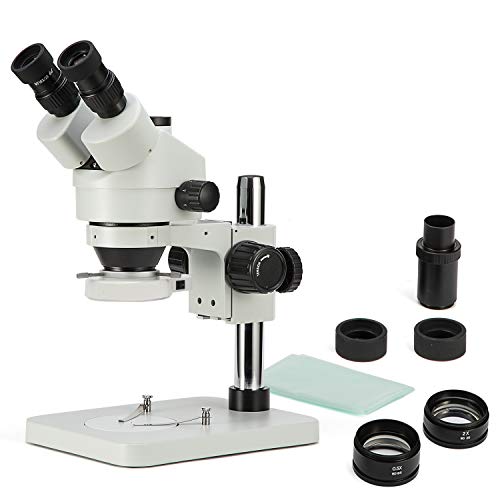
- 3.5X-90X range with extra objectives included
- Trinocular port supports photo and camera use
- 56-bulb LED ring light gives cool, even lighting
Best For: Gemologists who want a stable bench microscope with camera support
Bench-Top Stereo Zoom
AmScope SE306R-PZ Forward Binocular Stereo Microscope

- 20X, 40X, and 80X stereo settings
- Built-in incident and transmitted lights
- All-metal pillar stand for stability
Best For: Fixed-bench gemstone inspection with simple, sturdy optics
Adjustable Jewelry Stand
VEVOR Multi-Directional Jewelry Microscope
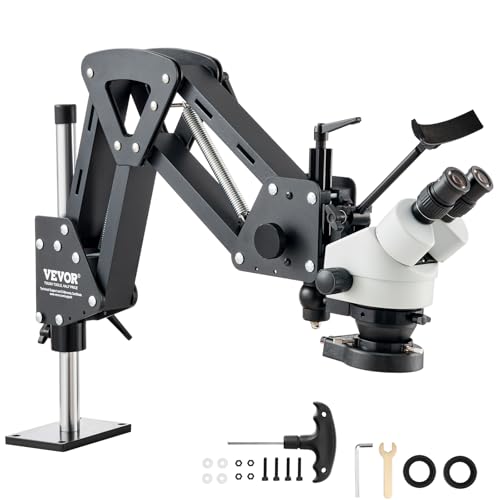
- 7X-45X continuous zoom for flexible viewing
- Spring-mounted stand adjusts in multiple directions
- Integrated 144-LED ring light for even illumination
Best For: Jewelers needing adjustable positioning and bright, uniform lighting
Digital Boom Arm
Andonstar AD246S-M 3 Lens Digital Microscope

- Three interchangeable lenses for different tasks
- UHD 2160P video with HDMI output
- Boom arm stand with measurement software and remote
Best For: Gemstone inspection with digital display, recording, and measurement features
Portable Classroom Pick
AmScope SE100-LED 20X Portable Binocular Microscope

- 20X low-power stereo viewing
- LED reflected lighting for opaque specimens
- Binocular head with adjustable spacing
Best For: Beginners inspecting gemstones, rocks, and jewelry
Field Measuring Choice
AmScope H20 20X Handheld Measuring Microscope

- 20X handheld inspection with 17mm view
- Built-in measuring range and 0.01 reticle
- Durable metal body for field use
Best For: Portable measurement and quick inspection tasks
Starter Kit Pick
AOMEKIE 20X/50X Stereo Microscope Kit with Slides

- 20X and 50X viewing options
- Long 65mm-102mm working range
- Includes slides and mineral specimens
Best For: Starter users who want a bundled microscope kit
Trinocular Boom-Stand Pick – Professional Trinocular Stereo Zoom Microscope
If you want stereo microscopes for gemstones that can handle both inspection and documentation, this trinocular zoom model is built for that workflow. The 3.5X-90X range, boom stand, and LED ring light make it a practical choice for gem work that needs space, stability, and clear shadow-free viewing.
Best For: Jewelers and gem inspectors who want trinocular viewing, camera support, and a wide zoom range.
Pros:
- 3.5X-90X range with 0.7X-4.5X zoom plus 0.5X and 2X auxiliary lenses
- Trinocular head supports electronic eyepieces and digital cameras
- Heavy-duty steel base and double-arm boom stand add stability and reach
- 56S LED ring light includes dimming for focused, shadow-free illumination
Cons:
- Boom-stand setup is larger than a basic bench microscope
- Higher magnification is best suited to detailed inspection rather than wide-area scanning
This is the most flexible option in the group if you need a stereo microscope that can support both hands-on gemstone work and image capture. Its combination of working distance, lighting, and trinocular access makes it especially useful for a professional bench.
Jeweler’s Bench Combo – DZQ Jewelers Microscope with Ball Vise
For stereo microscopes for gemstones that are paired with hands-on setting or engraving, this DZQ setup is aimed at bench work. The 7X-45X zoom, long working distance, and included ball vise make it easier to inspect and manipulate small pieces without constantly repositioning the stone.
Best For: Jewelers doing engraving, micro-setting, and precision bench work with a microscope-mounted vise.
Pros:
- 7X-45X continuous zoom covers common jewelry inspection needs
- 95-300mm working distance leaves room for tools and hand movement
- 360° rotatable ball vise supports engraving and micro-setting
- 60-LED ring light with dimmer helps create even illumination
Cons:
- Top magnification is lower than some trinocular zoom models
- Designed around bench tasks, not camera documentation
This setup makes sense when the microscope is part of the work surface, not just a viewing tool. If your gemstone tasks involve both seeing and manipulating tiny details, the vise and generous working distance are real advantages.
Professional Trinocular Zoom – SWIFT Trinocular Stereo Zoom Microscope
This SWIFT model is a strong fit if you need stereo microscopes for gemstones that balance viewing comfort and practical bench use. It offers a trinocular head, a 3.5X-90X range with additional objectives, and a 56-bulb LED ring light for bright, shadow-free inspection.
Best For: Gemologists and professionals who want a versatile trinocular stereo microscope with documentation support.
Pros:
- 3.5X-90X capability with 0.5X and 2.0X additional objectives
- Trinocular head allows camera attachment for image capture
- 45-degree viewing angle and 360-degree rotation improve comfort
- 56-bulb LED ring light provides cool, shadow-free illumination
Cons:
- Table pillar stand is less flexible than a boom stand
- Best suited to stationary bench setups rather than mobile use
Compared with simpler stereo scopes, this one leans more toward professional bench workflow and documentation. The included objectives and trinocular port make it a practical choice when gemstone inspection needs to be repeatable and easy to capture.
Digital Viewing Alternative – Leipan 7" LCD Digital Microscope
Although it is not a traditional stereo microscope, this Leipan digital model is useful when gemstone viewing is more about screen-based inspection than through-eyepiece work. The large 7-inch display, 12MP camera, and adjustable lights make it a convenient option for reviewing details, sharing images, and working on a repair bench.
Best For: Users who want a screen-based microscope for coin, jewelry, or repair inspection instead of binocular viewing.
Pros:
- 7-inch rotatable HD screen is easier on the eyes and neck
- 10X-1200X digital magnification for close visual inspection
- 8 LED lights plus 2 side lights help illuminate difficult angles
- Can connect to PC or Mac and capture 12MP photos and 1080p video
Cons:
- Not a professional lab biological microscope
- Does not provide the same stereo eyepiece experience as a true binocular scope
If you specifically need stereo microscopes for gemstones, this is the least traditional option in the roundup. Still, its big display and camera features can be handy for inspection, documentation, and repair tasks where a screen is preferred over eyepieces.
Bench-Top Stereo Zoom – AmScope SE306R-PZ Forward Binocular Stereo Microscope
If you want stereo microscopes for gemstones that give you a straightforward, sturdy viewing setup, the AmScope SE306R-PZ is built around practical shop use. Its 20X, 40X, and 80X stereo settings, forward binocular head, and both incident and transmitted lighting make it useful for inspecting surface detail and viewing internal features under controlled light.
Best For: Gemstone inspection at a fixed bench with simple magnification options and dual illumination.
Pros:
- 20X, 40X, and 80X magnification settings cover common gemstone inspection needs.
- Forward binocular head and widefield optical glass lenses support comfortable viewing.
- Built-in top and bottom lights help with surface and transmitted-light observation.
- All-metal pillar stand adds stability for bench work.
Cons:
- Fixed magnification steps offer less flexibility than a continuous zoom system.
- Halogen lighting may be less modern than LED-based setups.
For buyers who want a durable, no-frills stereo microscope for gemstones, this AmScope model emphasizes stability and usable lighting over advanced extras. It is a solid fit for routine bench inspection where dependable optics matter more than digital features.
Adjustable Jewelry Stand – VEVOR Multi-Directional Jewelry Microscope
For stereo microscopes for gemstones that need a larger working envelope, the VEVOR multi-directional jeweler microscope focuses on flexibility. It offers 7X-45X continuous zoom, a spring-mounted stand with multi-angle adjustment, and an integrated ring LED light, making it well suited to detailed jewelry inlay and gemstone viewing where positioning and illumination are important.
Best For: Jewelers and gemworkers who need adjustable positioning, strong lighting, and a wide working range.
Pros:
- 7X-45X continuous zoom gives smooth magnification adjustment.
- Multi-directional spring bracket adjusts up, down, left, right, and forward/back.
- Integrated 144-LED ring light provides even illumination.
- Quick-disconnecting support structure makes setup and repositioning easier.
Cons:
- Large, heavy stand may take up more workspace than a compact bench scope.
- Designed as a specialized jewelry microscope rather than a general-purpose lab model.
If your gemstone work involves frequent repositioning and close control over distance, this VEVOR model offers more mechanical flexibility than a basic stereo stand. The combination of zoom range, stable mounting, and built-in lighting makes it especially practical for hands-on jewelry tasks.
Digital Boom Arm – Andonstar AD246S-M 3 Lens Digital Microscope
Among stereo microscopes for gemstones, the Andonstar AD246S-M stands out if you want a digital workflow with a screen and recording features. It uses three interchangeable lenses, supports UHD 2160P video and HDMI output, and includes a boom-arm stand that can handle larger work areas, making it useful when you want to inspect stones, document details, or share the view on a monitor.
Best For: Gemstone viewing plus photo, video, and monitor-based inspection on a digital setup.
Pros:
- Three interchangeable lenses cover different viewing needs, including stones and slides.
- UHD 2160P recording and HDMI output support larger-screen viewing.
- Boom arm stand offers adjustable positioning for a bigger work envelope.
- Includes measurement software, remote control, and LED brightness settings.
Cons:
- This is a digital microscope rather than a classic binocular stereo model.
- Maximum use depends on the selected lens and digital zoom, so setup matters.
For gemstone buyers who care about documenting what they see, this Andonstar model is more versatile than a basic optical scope. It blends inspection, recording, and display support in one package, which makes it a strong pick for mixed-use work.
Portable Classroom Pick – AmScope SE100-LED 20X Portable Binocular Microscope
AmScope SE100-LED Portable Binocular Stereo Microscope, 20X Magnification | LED Ring Light
Check Price On AmazonIf you want a straightforward entry-level option among stereo microscopes for gemstones, the AmScope SE100-LED keeps the setup simple while still giving you the low magnification and long working distance useful for larger stones, rocks, and jewelry. Its binocular head, fixed vertical inclination, and reflected LED illumination make it practical for home use, classroom demonstrations, and basic specimen inspection.
Best For: Students, hobbyists, and beginners who need a simple portable stereo microscope for gemstones and other larger specimens.
Pros:
- 20X maximum magnification with a 2X objective for low-power inspection
- Reflected upper LED illumination helps light stones and other opaque specimens
- Binocular viewing head with adjustable interpupillary distance for easier viewing
- Reversible black-and-white stage plate adds contrast for light or dark samples
Cons:
- Designed as an elementary microscope, so it is less feature-rich than advanced gem scopes
- Fixed vertical inclination may feel limiting for users wanting more flexible positioning
- Battery-powered lighting may be less convenient than a plug-in setup
For buyers comparing stereo microscopes for gemstones, this model stands out for ease of use and portability rather than high-end optical flexibility. It is a sensible pick when you want a basic binocular scope for examining jewelry, rocks, and larger collectible specimens.
Field Measuring Choice – AmScope H20 20X Handheld Measuring Microscope
The AmScope H20 is a handheld measuring microscope that fits a very different niche within stereo microscopes for gemstones. It is built for quick field, lab, or quality-control checks, with a 100-unit measuring range, 20X magnification, and a compact handheld stand design that makes it easy to bring to the object.
Best For: Users who need a portable measuring microscope for field checks, inspection work, or quick gemstone-related measurements.
Pros:
- 20X magnification with a 17mm field of view for close inspection
- Built-in measuring range and 0.01 reticle unit for measurement tasks
- Adjustable penlight illuminator supports hands-free operation
- Metal construction adds durability for field and classroom use
Cons:
- It is a handheld measuring microscope, not a traditional binocular stereo microscope
- Lower field of view may be less comfortable for broader gem viewing
- Two AAA batteries are required for the illuminator
If measurement matters as much as viewing, this model is a practical specialist tool. It is less about a full desktop gemstone inspection setup and more about portable, on-the-spot examination where compact size and measurement capability are priorities.
Starter Kit Pick – AOMEKIE 20X/50X Stereo Microscope Kit with Slides
For shoppers comparing stereo microscopes for gemstones, the AOMEKIE kit is appealing because it combines 20X and 50X viewing options with a longer working range and a bundled set of specimens and slides. That makes it a convenient starter package for anyone who wants to inspect rocks, jewelry, minerals, or other small objects without buying extra accessories right away.
Best For: Beginners, kids, or hobby users who want a bundle with multiple magnifications and included practice specimens.
Pros:
- 20X and 50X magnification options with WF eyepieces and 2X objective
- 65mm-102mm working range helps with larger specimens
- Includes 10 slides, insect specimens, and 12 mineral specimens
- Binocular viewing, adjustable interpupillary distance, and LED lighting support easy use
Cons:
- Battery-powered LED light requires two AA batteries, which are not included
- As an elementary microscope, it is aimed more at learning than advanced gem work
- Bulky starter kit may include more items than some buyers need
This is the most package-oriented option in the group, which can be helpful if you want a ready-to-use kit for practice and casual inspection. It offers a useful balance of magnification, working distance, and included materials for entry-level gemstone and mineral viewing.
How We Picked the Best Stereo Microscopes for Gemstones
We prioritized models that are useful for real jewelry and gem work: stable stereo viewing, enough working distance for tools and tweezers, useful magnification ranges, and lighting that helps reveal surface features without washing them out. We also considered whether the microscope is better suited for inspection, setting, or digital documentation.
Quick Comparison: What to Expect
Among Stereo Microscopes for Gemstones, lower-to-mid magnification models are usually the most practical for bench tasks because they provide a wider field of view and better depth perception. Higher-magnification digital units can be helpful for imaging, but they are not always the best choice for hands-on setting or sorting.
Key Buying Factors for Stereo Microscopes for Gemstones
Magnification and Zoom Range
For gemstone inspection, a zoom stereo microscope is often more versatile than a fixed-power model. A common sweet spot is roughly 7X to 45X or 3.5X to 90X, depending on whether you need broad inspection, detailed surface checks, or inlaid work.
Working Distance
Working distance matters because you need room for stone tweezers, ring holders, and tools. If you plan to set stones or work at the bench, choose a model that leaves comfortable clearance under the objective.
Lighting
Good illumination is essential for gemstone color, clarity, and inclusion viewing. Ring lights, adjustable LED illumination, and reflected-light setups can improve contrast, but the best lighting is the one you can control to avoid glare on polished facets.
Viewing Style
Binocular and trinocular stereo microscopes are typically the best fit for gem work because they preserve depth perception. Digital microscope models are useful for sharing images, teaching, or documenting stones, but they may not feel as natural for precision handwork.
Mounting and Stability
Bench stability is especially important when inspecting small stones or working with fine tools. Look for a solid stand, smooth focus control, and enough flexibility to position the stone comfortably.
Who Should Buy Which Stereo Microscopes for Gemstones?
If you need a microscope mainly for grading, inclusion checks, and routine inspection, a binocular or trinocular zoom stereo model is usually the best choice. If you want to document your work or present images, consider a trinocular model or a digital microscope with HDMI or LCD output. For occasional use, portable or simpler fixed-magnification models can be a budget-friendly starting point. For hands-on jewelry setting, prioritize working distance and a stable bench setup over chasing the highest magnification.
For most buyers, the best Stereo Microscopes for Gemstones are the ones that deliver comfortable viewing, dependable lighting, and enough workspace to handle real jewelry tasks without frustration.