Choosing a stereo microscope for laboratory dissection is mostly about balance: enough magnification to see fine detail, enough working distance to manipulate samples, and a comfortable viewing setup for long sessions.
This roundup focuses on practical models that suit teaching labs, specimen prep, and routine dissection work, with a clear eye on optical quality, flexibility, and value.
Best 10 Stereo Microscope for Laboratory Dissection Picks for 2026
Top Pick
Trinocular boom zoom with long working distance

- 3.5x-90x magnification with continuous zoom
- Double-arm boom stand for X/Y/Z positioning
- Four-zone 144-LED ring light with dimming control
Best For: Hands-on laboratory dissection and larger specimens
Budget Simplicity
Cordless stereo scope with dual LED lighting

- Fixed 20x and 40x stereo magnification
- Battery-powered cordless design
- Top and bottom LED illumination
Best For: Basic dissection and straightforward bench use
Bench Work Helper
Trinocular zoom scope with light and fan

- 7x-50x magnification with 0.7x-5x zoom objective
- WF10x23 eyepieces with wider field of view
- LED ring light, exhaust fan, and large work floor
Best For: Organized bench work with trinocular viewing
Classic Dual-Light
Binocular stereo scope with 20x-80x steps

- 20x, 40x, and 80x stereo settings
- Built-in incident and transmitted lights
- Forward binocular head on a metal pillar stand
Best For: Bench-based dissection with fixed magnification steps
Budget Stereo Microscope Starter Kit

- 20X and 50X magnification with WF eyepieces
- 65mm to 102mm working range for larger specimens
- Battery-powered LED light improves portability
Best For: Beginners, students, and classroom use
Classroom Stereo Dissection Microscope

- 40X and 80X magnification with 2X and 4X objectives
- Upper and lower halogen lighting for varied specimens
- Reversible stage plate adds contrast control
Best For: Classrooms and hobbyists needing basic dissection capability
Professional Zoom Dissection Scope
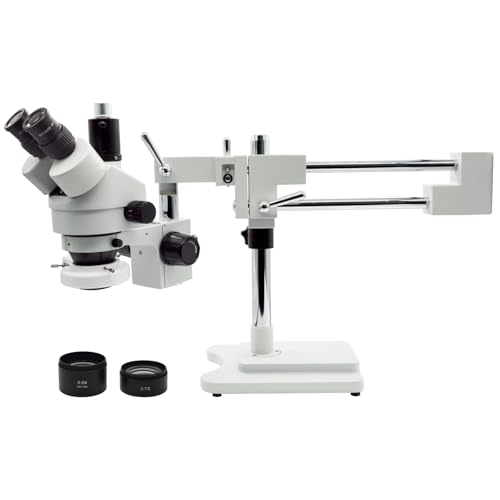
- Continuous zoom covers 3.5X to 90X
- Trinocular head supports camera attachment
- Boom stand and LED ring light improve usability
Best For: Advanced dissection work and imaging setups
Versatile Dissection Microscope
Swift S306S-20-2L 20X/40X/80X Stereo

- 20X/40X/80X magnification for low-power dissection
- 360° rotatable head for flexible viewing
- Upper and lower dimmable LED lighting
Best For: Students and lab users needing a basic stereo microscope for dissection and solid specimens
Zoom Lab Workhorse
SWIFT Trinocular 3.5X-90X Stereo Zoom
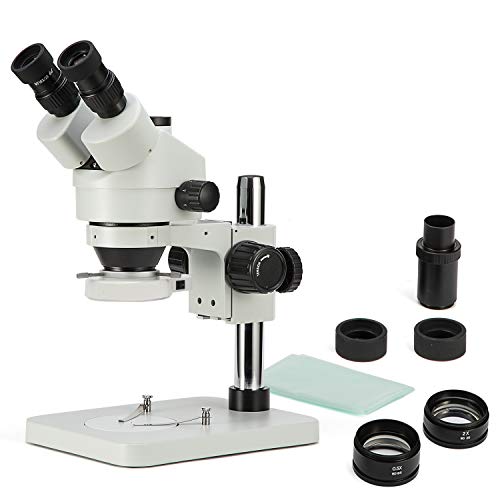
- 3.5X-90X zoom range for flexible inspection
- 4-inch working distance supports dissection work
- 56-bulb LED ring light gives shadow-free illumination
Best For: Researchers and lab technicians who want a flexible zoom stereo microscope
Digital Classroom Dissector
AmScope SE306R-PZ-E 20X/40X/80X

- Includes a 0.3MP USB camera for capture and display
- Upper and lower halogen lighting for specimen viewing
- Reversible stage plate adds contrast control
Best For: Classrooms and home lab users who want a digital stereo microscope for dissection
Top Pick – Trinocular boom zoom with long working distance
If you need a stereo microscope for laboratory dissection, this AmScope model is built for tasks that benefit from long working distance and precise positioning. The trinocular head, continuous zoom range, and boom stand make it practical for inspecting larger specimens or manipulating samples while keeping the workspace open.
Best For: Lab dissection work that needs flexible positioning, strong zoom control, and room to work under the optics.
Pros:
- 0.7x-4.5x zoom objective with a 3.5x-90x overall range for continuous adjustment
- Double-arm boom stand with 20" arms and a 17" pillar for three-axis positioning
- Trinocular head with 10x super-widefield eyepieces and 360-degree rotation
- 144-bulb LED ring light with four zones for separate intensity and direction control
Cons:
- Higher-magnification setup may be more than needed for simple low-detail viewing
- Requires a corded power source
Overall, this is the most workspace-friendly option in the group, especially if your dissection setup needs a long reach and adaptable lighting. It is geared toward hands-on use rather than a compact bench-only station.
Budget Simplicity – Cordless stereo scope with dual LED lighting
This stereo microscope for laboratory dissection keeps the setup straightforward with fixed 20x and 40x viewing options, making it a practical choice when you want basic stereo inspection without a lot of adjustment. Its cordless design and dual LED illumination also make it easy to place on a bench or move around as needed.
Best For: Simple dissection and general stereo viewing when you want a basic, easy-to-use microscope.
Pros:
- Two fixed magnification settings: 20x and 40x
- Cordless, battery-powered operation for flexible placement
- LED incident and transmitted lights for top and bottom illumination
- Widefield optical glass lenses and a sturdy all-metal pillar stand
Cons:
- Only two magnification settings, so fine adjustment is limited
- Maximum 40x magnification may be modest for users needing more zoom range
This model is a solid pick if you value simplicity over versatility. It works best for users who want reliable stereo viewing and built-in lighting without extra setup complexity.
Bench Work Helper – Trinocular zoom scope with light and fan
For a stereo microscope for laboratory dissection that also supports camera use, this Kaisi trinocular model adds a practical trinocular upgrade and a wide zoom range. It is designed around inspection and repair work, but the included working surface, lighting, and smoke control features also make it useful for detailed bench tasks that need a tidy workspace.
Best For: Users who want a trinocular stereo microscope with accessories that support cleaner, more organized bench work.
Pros:
- 0.7x-5x zoom objective with 7x-50x magnification
- WF10x23 eyepieces for a wider field of view than WF10x20 designs
- LED ring light and a soldering exhaust fan for clearer viewing during work
- Large 14.9" x 10" work floor with silicone mat and small parts trays
Cons:
- Workflow is geared toward electronics-style bench use rather than a barebones microscope-only setup
- Working distance setup needs attention to the correct lens position for focus
If you want extra bench accessories along with trinocular viewing, this Kaisi stands out. It is best when your dissection or lab work benefits from a larger work area and integrated smoke and light management.
Classic Dual-Light – Binocular stereo scope with 20x-80x steps
This stereo microscope for laboratory dissection is a straightforward fixed-step option with 20x, 40x, and 80x viewing settings. The forward binocular head, dual illumination, and solid pillar stand make it a practical choice for users who want a simple stereo microscope with predictable magnification steps.
Best For: Users who want a basic binocular stereo microscope with top and bottom lighting for lab bench work.
Pros:
- Three stereo magnification settings: 20x, 40x, and 80x
- Widefield optical glass lenses for standard viewing clarity
- Built-in incident and transmitted lights for flexible illumination
- Sturdy all-metal pillar stand with a forward binocular head
Cons:
- Fixed magnification steps offer less flexibility than a continuous zoom system
- Halogen lighting may be less convenient than LED-based setups
This AmScope fits users who prefer a conventional stereo microscope layout and do not need the wider reach of a boom stand. It is a practical pick for bench-based dissection where simple lighting and stable support matter.
Budget Stereo Microscope Starter Kit – Aomekie 20X/50X LED Binocular
If you need a stereo microscope for laboratory dissection on a budget, this Aomekie model is a practical starter option. It offers 20X and 50X magnification, a long 65mm to 102mm working range, and binocular viewing, which makes it easier to examine larger specimens and simple prepared samples at home or in class.
Best For: Students, beginners, and classroom users who want a portable stereo microscope with included specimens and slides.
Pros:
- Includes WF10X and WF25X eyepieces with 2X objective for 20X and 50X magnification
- Long working distance helps when inspecting rocks, insects, stamps, jewelry, and other larger specimens
- Binocular head with adjustable interpupillary distance suits different users
- LED lighting runs on two AA batteries, so it’s easy to move and carry
Cons:
- Battery-powered light means you need to supply AA batteries separately
- Designed as an elementary microscope, so it is less advanced than professional zoom models
- Magnification range is limited compared with higher-end stereo microscopes
This is a straightforward choice if your priority is accessibility, portability, and general specimen viewing rather than advanced lab performance. The included slides, insect specimen, and mineral samples make it especially convenient for immediate use.
Classroom Stereo Dissection Microscope – AmScope SE306R-P20 40X/80X
This AmScope stereo microscope for laboratory dissection is built for straightforward classroom and home use. With 40X and 80X magnification, a forward-mounted binocular head, and upper and lower halogen lighting, it’s designed to make larger biological specimens, rocks, stamps, and jewelry easier to inspect and manipulate.
Best For: Students, hobbyists, and classrooms that need a dependable binocular stereo scope with basic transmitted and reflected light.
Pros:
- Interchangeable 2X and 4X objectives provide 40X and 80X magnification
- Upper and lower 10W halogen lighting supports both transparent and opaque specimens
- Reversible black/white stage plate helps boost contrast for different sample colors
- Forward-mounted binocular head with 45-degree inclination is easier for younger users
Cons:
- Halogen lighting is less modern than LED illumination
- 120V power requirement limits portability compared with battery-powered models
- Fixed to a basic pillar stand rather than a more flexible boom setup
For a no-frills dissection scope, this model focuses on the essentials: workable magnification, useful lighting, and a viewing head that is comfortable for beginners. It’s a sensible pick when you want a dependable stereo microscope without extra complexity.
Professional Zoom Dissection Scope – ZTEEERS Trinocular 3.5X-90X
If you’re shopping for a stereo microscope for laboratory dissection with more flexibility, this trinocular zoom model is built for serious observation. Its 3.5X to 90X range, smooth 0.7X-4.5X zoom objective, and included auxiliary lenses give you broad coverage for larger specimens and closer inspection, while the boom stand adds working room around the sample.
Best For: Advanced users who want a zoom stereo microscope with camera support and a stable boom stand.
Pros:
- Continuous zoom from 3.5X to 90X offers broad inspection flexibility
- Trinocular port supports connecting a digital camera or HD touch screen
- Heavy-duty steel base and single-arm boom stand provide stability and clearance
- 56S LED ring light includes a dimmer for adjustable, shadow-free illumination
Cons:
- Larger, heavier setup is less portable than compact stereo microscopes
- More advanced configuration may be more than casual users need
- Requires space for the boom stand and steel base
This is the most capable option in the group if you need zoom control, camera compatibility, and a sturdier work platform. It suits users who value a more professional setup for detailed specimen handling and documentation.
Versatile Dissection Microscope – Swift S306S-20-2L 20X/40X/80X Stereo
If you need a stereo microscope for laboratory dissection, this Swift binocular model is a practical choice for close work on solid specimens. The 20X/40X/80X range, forward-mounted 360° rotatable head, and dual LED lighting make it well suited to tasks where you need clear surface detail and a comfortable viewing position.
Best For: Students, lab users, and hobbyists who want an affordable stereo microscope for dissection, repair, and specimen viewing.
Pros:
- 20X/40X/80X magnification covers common low-power dissection needs.
- 360° rotatable forward-mounted head supports multi-person use and changing observation angles.
- Upper and lower dimmable LED lights let you switch between reflected and transmitted illumination.
- Reversible black/white stage plate and frosted glass plate help improve contrast on different specimens.
Cons:
- Fixed eyepiece options are 10X and 20X rather than a zoom system.
- Best suited to solid objects, not detailed high-magnification microscopy.
Overall, this is a straightforward lab dissection microscope with useful lighting and viewing flexibility. It’s a solid pick if you want simple magnification control and comfortable stereo viewing without moving into a more complex zoom platform.
Zoom Lab Workhorse – SWIFT Trinocular 3.5X-90X Stereo Zoom
For a stereo microscope for laboratory dissection that offers more flexibility, this SWIFT trinocular zoom model stands out. Its wide zoom range, 4-inch working distance, and shadow-free LED ring light make it easier to inspect specimens while keeping hands free for detailed handling.
Best For: Researchers, lab technicians, and advanced users who want a zoom stereo microscope with strong lighting and a comfortable working distance.
Pros:
- 3.5X-90X magnification range with 0.7X-4.5X zoom objective adds inspection flexibility.
- 4-inch working distance gives room for dissection and specimen manipulation.
- 56-bulb LED ring light provides bright, shadow-free illumination with low heat.
- Trinocular, 45-degree head with 360-degree rotation supports comfortable observation and camera use.
Cons:
- Trinocular setup may be more than casual users need.
- Heavier metal construction makes it less portable than simpler models.
This is the most versatile option in the group if you value zoom control and a generous working area. It makes sense for lab dissection tasks where lighting quality, distance, and imaging flexibility matter.
Digital Classroom Dissector – AmScope SE306R-PZ-E 20X/40X/80X
This AmScope digital stereo microscope for laboratory dissection is built for viewing and sharing specimens in teaching or basic lab settings. The included 0.3MP camera, forward-mounted binocular head, and upper/lower halogen lighting make it useful when you want both direct observation and simple image capture.
Best For: Classrooms, students, and home lab users who want a stereo microscope with camera output for specimen viewing and display.
Pros:
- 20X/40X/80X magnification with 2X and 4X objectives supports low-power specimen inspection.
- Included 0.3MP USB camera can capture or display images on a computer or projector.
- Upper and lower halogen lighting helps with both transparent and opaque specimens.
- Reversible black/white stage plate and stage clips improve contrast and specimen stability.
Cons:
- Maximum listed magnification is lower than the model title’s broader eyepiece combination suggests.
- Halogen lighting is less cool-running than LED-based options.
For teaching and basic dissection work, this model adds useful digital capture without complicating the setup. It’s a sensible pick when you want a stereo microscope that can support both hands-on viewing and classroom presentation.
How We Picked the Best Stereo Microscope for Laboratory Dissection
For a Stereo Microscope for Laboratory Dissection, we prioritized the features that affect real lab work most: optical clarity, usable zoom or objective ranges, working distance, head style, and ease of focusing. We also considered whether a model is better suited to teaching, general biology, electronics-style inspection, or more specialized dissection tasks.
We gave extra weight to comfort and workflow. Binocular and trinocular heads, forward-mounted viewing, wide-field eyepieces, and stable illumination can make a bigger difference in daily use than a higher headline magnification number.
Quick Comparison
Broadly, these 10 picks fall into a few groups. Zoom stereo microscopes offer the most flexibility for moving between overview and detail work. Fixed-step models are simpler and can be a strong value choice when the magnification range is known in advance. Trinocular designs are best if you may add a camera for documentation, while binocular models are often the most straightforward option for direct viewing.
If you are comparing models for a laboratory, look past the listed maximum magnification and check the eyepieces, objective range, and working distance together. A very high magnification setup is not always the best choice for dissection if it crowds your workspace.
Key Buying Factors for a Stereo Microscope for Laboratory Dissection
Magnification and Zoom Range
Dissection usually benefits from moderate magnification with a wide usable range. Lower power makes it easier to orient specimens, while higher power helps with fine structures. A smooth zoom system is often more useful than a single high-power setting.
Working Distance
This is one of the most important specs for dissection. You need enough clearance to use tools, manipulate tissue, or handle specimens without constantly bumping the lens into the work area. Longer working distance generally improves usability.
Eyepieces and Head Type
Wide-field eyepieces can improve comfort and reduce eye strain. Binocular heads are the standard for direct viewing, while trinocular heads add imaging flexibility. Forward-mounted or ergonomic heads may also help during longer sessions.
Illumination
Good lighting matters as much as optics. LED ring lights are useful for even, shadow-reducing illumination, while dual or upper/lower lighting can help with different specimen types and contrast needs.
Who Should Buy Which Stereo Microscope for Laboratory Dissection?
If you need a versatile lab instrument for repeated dissection, choose a zoom trinocular model with strong working distance and good lighting. If you are buying for a teaching lab or general specimen observation, a simpler binocular stereo microscope may be the better value. For users who need documentation, sharing, or camera attachment, trinocular options are the most practical. If your work is mostly hands-on and budget-driven, a fixed-magnification setup can still be a smart, reliable fit.
In short, the best Stereo Microscope for Laboratory Dissection is the one that matches your specimen size, comfort needs, and workflow—not just the highest magnification on the spec sheet.