The best solar system models make astronomy easier to see, build, and explain. This roundup includes rotating kits, glow-in-the-dark planetariums, foam-ball project sets, inflatable planets, and interactive teaching models.
Whether you need a classroom display, a back-to-school science project, or an engaging STEM gift, these options cover different ages, budgets, skill levels, and learning styles.
Best 10 Solar System Models Picks for 2026
Best Glow-in-the-Dark Pick
National Geographic Solar System Model

- Builds and paints all eight planets and the Sun
- Glow-in-the-dark accents for bedroom display
- Movable arms and included fact poster
Best For: Ages 8 and up seeking a creative, interactive astronomy project
Best Interactive Build
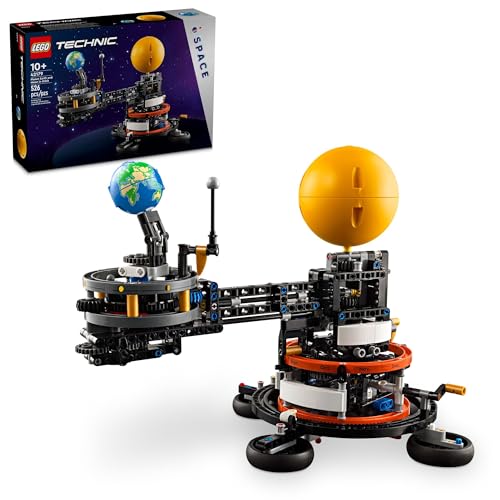
- 526-piece LEGO Technic construction set
- Turn the crank to demonstrate orbital movement
- Includes month and moon-phase details
Best For: Ages 10 and up who enjoy mechanical building and space learning
Best Classroom Project Kit
Wookidel 64-Piece Solar System Set

- Foam pieces and 12 paint colors for customization
- Includes brushes, palette, sticks, flags, and instructions
- Designed for school, home, or family projects
Best For: Ages 6–12 completing a hands-on astronomy craft project
Best Planetarium-Style Kit
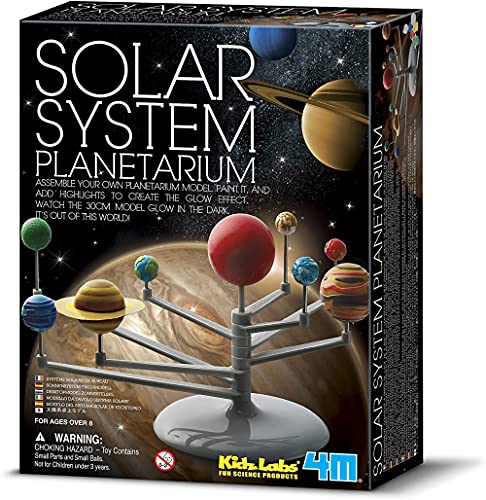
- Assemble and paint a glow-in-the-dark planetarium
- Includes wall chart and 10 quiz sets
- No batteries required; recommended for ages 8+
Best For: Kids who want a hanging astronomy display with learning activities
Best Hands-On Craft Kit
Pllieay Foam Ball Solar System

- Complete painting and assembly set
- Mixed-size lightweight foam pieces
- Includes flags and learning guide
Best For: Hands-on school projects and creative space displays
Best for Interactive Display
Inflatable Solar System Planets
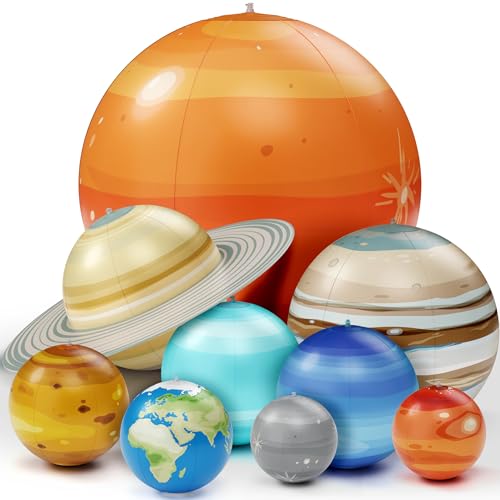
- Includes Sun and all eight planets
- Hanging strings and learning cards included
- Deflates for compact storage
Best For: Classrooms, bedrooms, and interactive space-themed play
Best for Scale Learning
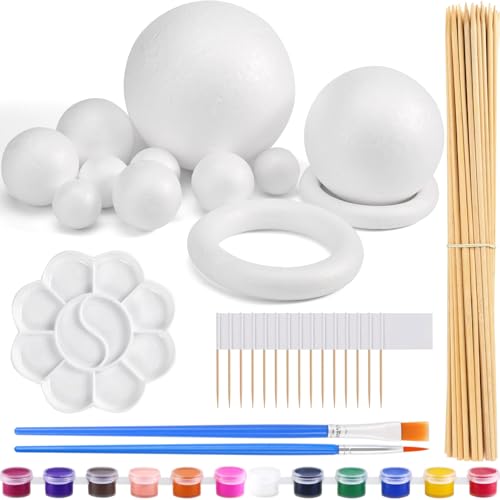
- Ten sizes illustrate planetary scale
- Includes paints, rings, flags, and tools
- Assembles without glue
Best For: School projects teaching size and arrangement
Interactive Pick
Talking Solar System Projector

- Projects eight planets and 24 colorful space images
- Provides English and Spanish astronomy facts
- Also functions as a night light and flashlight
Best For: Young children who want an interactive, bilingual space toy
Best Mechanical Build
Orbiting Solar System STEM Kit

- Builds a rotating model with a windup motor
- Explores planetary gears and gear ratios
- Useful for hands-on STEM and science fairs
Best For: Intermediate builders interested in mechanics and astronomy
Best for Earth-Moon Lessons

- Demonstrates seasons, eclipses, and moon phases
- Includes a seasonal plate with dates and solar terms
- Designed for teaching and school projects
Best For: Earth science lessons and hands-on demonstrations
Best Glow-in-the-Dark Pick – National Geographic Solar System Model
For kids who want to build, paint, and display their own space scene, this National Geographic kit is a hands-on choice among solar system models. It includes all eight planets and the Sun, glow-in-the-dark paint, movable arms, decals, and a fact poster.
Best For: Children ages 8 and up who want an interactive astronomy project and glowing bedroom décor.
Pros:
- Includes planets, Sun, paints, brush, palette, decals, and fact poster.
- Glow-in-the-dark accents add display appeal.
- Movable arms allow planets to be rearranged.
- Supports construction, creative, coordination, and problem-solving skills.
Cons:
- Recommended for ages 8 and up, so it may not suit younger children.
- Plastic construction may offer less tactile detail than some craft-focused kits.
This is a well-rounded option when the goal is both learning and display. Its included supplies and adjustable design make it especially convenient for a self-contained project.
Best Interactive Build – LEGO Earth and Moon in Orbit
This LEGO Technic set stands out among solar system models for its mechanical movement. Builders can turn the crank to observe the Earth and Moon orbiting the Sun, while printed month and moon-phase details connect the model to seasons and lunar cycles.
Best For: Kids ages 10 and up who enjoy construction toys, moving mechanisms, and space-themed learning.
Pros:
- 526-piece build provides an engaging construction challenge.
- Hand-crank mechanism demonstrates orbital movement.
- Printed details show months and moon phases.
- LEGO Builder app offers 3D guidance and progress tracking.
Cons:
- Represents the Earth, Sun, and Moon rather than all eight planets.
- Its 526-piece build may require more time and patience than simpler kits.
Choose this set when interactivity matters more than a complete planet lineup. The crank-driven orbit and calendar details give the finished model strong educational value as well as display potential.
Best Classroom Project Kit – Wookidel 64-Piece Solar System Set
For a paint-and-build classroom activity, the Wookidel kit supplies foam pieces, paints, brushes, bamboo sticks, flags, and instructions in one package. Its smooth polystyrene foam components are designed to be colored, making this one of the more craft-oriented solar system models for school or home projects.
Best For: Children ages 6–12 working on a solar system project at home, in class, or with family.
Pros:
- 64-piece kit includes foam shapes, 12 colors, two brushes, palette, and instructions.
- Foam surfaces are described as smooth and easy to color.
- Includes flags and bamboo sticks for assembling the display.
- Encourages hand-eye coordination, focus, science learning, and artistic skills.
Cons:
- Foam construction may be less durable than a plastic or LEGO model.
- The product information gives differing age references, listing both ages 3–5 in a highlight and 6–12 as the recommended range.
This kit is a practical pick when the activity itself is the priority. The generous paint supplies and foam pieces support customization, while the included materials reduce the need to gather project supplies separately.
Best Planetarium-Style Kit – 4M Solar System Planetarium
The 4M Solar System Planetarium combines assembly, painting, and astronomy activities in a compact kit. Along with planets, rods, string, stencils, and glow paint, it includes a fact-filled wall chart and 10 sets of quiz questions for extending the project beyond construction.
Best For: Kids ages 8 and up who want a glow-in-the-dark hanging planetarium activity with added astronomy facts.
Pros:
- Includes planets, stencils, rods, string, glow paint pen, and instructions.
- Fact-filled wall chart and 10 quiz sets add learning activities.
- No batteries are required.
- Combines STEM learning with painting and room display.
Cons:
- Pluto is not included.
- The hanging planetarium format may require more setup than a tabletop model.
This is a good fit for families looking for solar system models that become part of a room display. Its chart and quizzes make it more than a craft kit, while the glow paint adds a simple visual feature without batteries.
Best Hands-On Craft Kit – Pllieay Foam Ball Solar System
For a hands-on solar system models project, this Pllieay kit provides foam spheres, paints, brushes, sticks, and labeling flags in one package. Its lightweight polystyrene pieces are easy for children to paint and assemble for a school project or space-themed display.
Best For: Kids who want to paint and build a customized solar system model for school or room decoration.
Pros:
- Includes paints, brushes, palette, bamboo sticks, flags, and an introductory guide.
- Mixed-size foam balls help represent different planets and other space objects.
- Painting and assembly encourage creativity, hand-eye coordination, and curiosity about science.
Cons:
- The model requires painting and assembly before it is ready to display.
- Foam construction is lightweight but may be less substantial than a finished model.
This is a practical choice when the activity matters as much as the finished display. The broad supply list makes it suitable for guided classroom work or a creative at-home science project.
Best for Interactive Display – Inflatable Solar System Planets
Among solar system models for younger learners, this inflatable set stands out for its large, tactile format. It includes the Sun and all eight planets, plus hanging strings and learning cards, so children can explore the arrangement visually and interactively.
Best For: Classrooms, space-themed bedrooms, parties, and children who learn well through visual and tactile play.
Pros:
- Includes the Sun and all eight planets in a jumbo inflatable format.
- Built-in hanging loops and included strings support ceiling or room displays.
- Learning cards add planet facts, while the set deflates for compact storage.
Cons:
- Designed for indoor use.
- Inflatables require setup and deflation rather than permanent display.
This set is less of a build-it-yourself project and more of an immersive teaching and decorating tool. Its reusable, easy-to-store design makes it convenient for repeated lessons, play, or themed events.
Best for Scale Learning – 48-Piece Foam Ball Model Kit
This 48-piece kit is a strong option for solar system models that emphasize relative size and labeling. It combines ten foam-ball sizes with rings, paints, bamboo sticks, flags, brushes, and a palette, allowing learners to build and identify a custom planetary display without glue.
Best For: School science projects and DIY activities focused on planetary size, arrangement, and identification.
Pros:
- Ten foam-ball sizes support visual comparison of planetary scale and hierarchy.
- Includes 12 paint colors, two brushes, a palette, rings, sticks, and flags.
- Bamboo skewers and labeled flags allow assembly without glue.
- Ships in a sturdy cardboard box intended to help protect the pieces.
Cons:
- It requires painting and hands-on assembly.
- The foam components are a project base rather than a finished display.
Choose this kit when learning planetary relationships is a priority. Its varied sizes and labeling system make the construction process useful for discussing how the solar system is arranged while leaving room for creative customization.
Interactive Pick – Talking Solar System Projector
For children who learn best through play, this solar system models kit combines a hands-on planet setup with projection, audio facts, and colorful space images. It offers more than a static display, though it requires three AA batteries, which are not included.
Best For: Kids ages 3–8 who enjoy interactive STEM toys, bilingual learning, and bedtime projection.
Pros:
- Projects the eight planets and includes 24 HD space images on three slides.
- Offers educational planet facts in both English and Spanish.
- Works as a projector, night light, and flashlight.
- Uses snap-and-lock assembly designed for easy setup.
Cons:
- Three AA batteries are required but not included.
- Its features are geared toward younger children rather than advanced astronomy study.
This is a strong choice when entertainment and early science learning matter equally. The bilingual talking feature and planetarium-style projection make it especially engaging, while the night-light function adds everyday usefulness.
Best Mechanical Build – Orbiting Solar System STEM Kit
This solar system models kit is designed for children who want to build a working mechanism rather than simply display planets. Its windup motor rotates the model without batteries and introduces gear ratios through a practical STEM project.
Best For: Intermediate young builders, science fair projects, and kids interested in mechanical engineering and planetary motion.
Pros:
- Creates a colorful, rotating solar system model.
- Uses a windup motor, so batteries are not required.
- Explains planetary gears and fundamental gear mechanics.
- Includes an expansion slot for a possible Planet Nine addition.
Cons:
- Listed as an intermediate-difficulty kit, so it may not suit beginners.
- Focuses on mechanical construction rather than bilingual facts or projection.
Choose this kit when the building process is as important as the finished model. It offers a clear connection between planetary orbits and gear systems, making it particularly useful for hands-on STEM learning or a science fair.
Best for Earth-Moon Lessons – Sun Earth Moon Orbital Model
Among solar system models, this Sun-Earth-Moon kit is especially focused on orbital relationships and Earth science. Its moving components are intended to demonstrate seasons, moon phases, and solar and lunar eclipses, making it a teaching-oriented project for children over six.
Best For: Classroom demonstrations, school projects, and children learning how the Sun, Earth, and Moon interact.
Pros:
- Demonstrates Earth’s orbit, Moon’s orbit, seasons, and eclipses.
- Helps illustrate lunar phases through physical movement.
- Includes a seasonal plate with season names, dates, and traditional Chinese solar terms.
- Provides a hands-on assembly project with an approximate 15.2-inch length.
Cons:
- Assembly involves screws, gears, alignment, and several setup steps.
- It models the Sun, Earth, and Moon rather than all eight planets.
- The instructions require careful alignment for seasonal demonstrations.
This model is a practical choice for explaining specific Earth science concepts that a conventional eight-planet display may not show clearly. Its main value is demonstration: rotating and repositioning the components makes eclipses, seasons, and lunar phases easier to discuss.
How We Picked These Solar System Models
We compared these Solar System Models by looking at the learning experience they provide, the amount of assembly required, age suitability, included materials, display value, and durability. We also considered whether each kit is best for independent play, guided family activities, classroom demonstrations, or a student science project.
Because “model” can mean several things, this list includes both build-it-yourself kits and ready-to-use educational displays. Some focus on accurate orbital movement, while others prioritize creative construction, tactile learning, portability, or visual impact.
Quick Comparison
| Best For | Model Types to Consider | What to Look For |
|---|---|---|
| Hands-on STEM building | LEGO, gear-driven, and DIY kits | Clear instructions, moving parts, and reusable components |
| Science projects | Foam-ball and paint sets | Enough planets, paints, supports, labels, and project guidance |
| Young children | Inflatable or large-piece models | Oversized pieces, simple setup, and safe materials |
| Nighttime learning | Glow-in-the-dark planetariums | Bright finishes, charging instructions, and suitable wall or ceiling mounting |
| Classroom demonstrations | Talking, rotating, or orbital models | Visibility, factual labeling, stability, and easy operation |
Key Buying Factors for Solar System Models
Age and Supervision
Check the recommended age before buying. Small balls, sticks, toothpicks, and loose hardware may require adult supervision, particularly for younger children. A larger inflatable set can be easier for preschool or early-elementary learners, while intricate construction kits are generally better for older children and teens.
Learning Goal
Choose a model that matches the lesson. Rotating and gear-based designs can demonstrate motion and orbital relationships. Paint-your-own kits support creative projects and planet identification. Talking or labeled models may be more useful for memorizing facts, while glow-in-the-dark versions add visual appeal after the activity is finished.
Completeness and Construction
Review what is included: paints, brushes, stands, labels, rods, batteries, tools, and instructions can vary considerably. Also consider the finished model’s stability. A model that looks impressive but tips easily may be frustrating for a classroom or shared play area.
Size, Storage, and Display
Measure the available space before choosing a large hanging, inflatable, or orbiting model. Foam and plastic pieces are usually easier to store than a permanently assembled display. If the model will be used repeatedly, prioritize sturdy connectors and replaceable or reusable parts.
Who Should Buy Which Solar System Models?
Choose a DIY paint-and-build kit for a school assignment or a child who enjoys crafting. Pick a LEGO or gear-driven model for older children who want construction challenges and moving mechanisms. A glow-in-the-dark planetarium suits bedrooms, gifts, and visual learners, while an inflatable set works well for younger children, group activities, and large demonstrations.
For teachers and homeschoolers, prioritize readable labels, a stable base, visible planetary relationships, and an activity that supports the concepts you plan to teach. For a quick gift, choose a kit with fewer setup steps and most components included. Finally, remember that no tabletop model represents planetary scale perfectly; the best choice is the one that makes the intended astronomy lesson clear, engaging, and manageable.