The best smart home hubs without cloud access keep essential automations running locally, helping reduce latency, improve privacy, and maintain control during internet outages.
This roundup compares 10 leading options, from Home Assistant and Hubitat platforms to Matter, Zigbee, Z-Wave, and specialized lighting hubs, so you can choose the right balance of flexibility and simplicity.
Best 10 Smart Home Hubs Without Cloud Access Picks for 2026
Best Overall

- Preinstalled Home Assistant OS
- Keeps home data on the hub
- Expandable via USB adapters
Best For: Privacy-focused local automation beginners
Best Multi-Protocol Option

- Local Zigbee and Matter automation
- Matter, Thread, Wi-Fi, and IR support
- PoE and wireless connectivity
Best For: Aqara households building a multi-protocol system
Best for YoLink Devices

- Local schedules and automations
- Open Local API for integrations
- Up to 2,034 feet of LoRa range
Best For: YoLink households prioritizing long-range local control
Best for Advanced Local Automations

- Local processing without a subscription
- Matter, Z-Wave, Zigbee, and Bluetooth
- Advanced Rule Machine automation
Best For: DIY users building complex multi-brand automations
Reliable Lighting Control
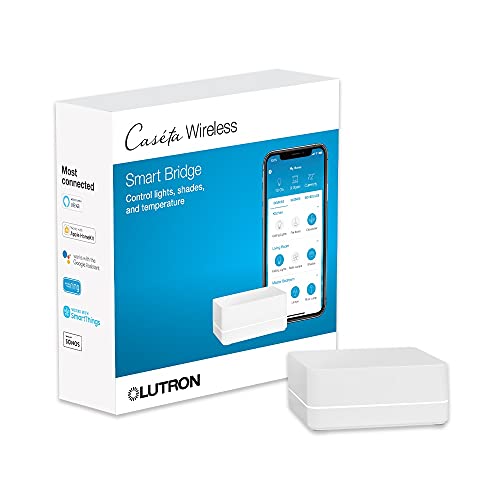
- Supports up to 75 Caseta devices
- Works with major voice and smart-home platforms
- Clear Connect avoids Wi-Fi interference
Best For: Lutron Caseta lighting systems needing broad platform compatibility
Privacy-First Automation

- Prioritizes local control and automation
- Supports Zigbee, Thread, Matter, and Home Assistant
- Stores configuration data in encrypted local storage
Best For: Privacy-focused Aqara and multi-protocol automation setups
Cloud-Free Local Bridging
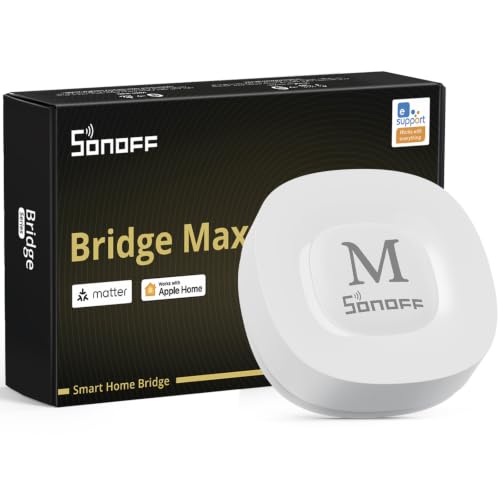
- Local web console works without cloud services
- Bridges Zigbee and BTHome devices to Matter platforms
- Supports local automations and Home Assistant MQTT
Best For: DIY users building LAN-first Zigbee and Home Assistant systems
Best Overall Local-First Hub

- Local-first processing with minimal cloud dependency
- Supports Zigbee, Z-Wave, Matter, Thread, and more
- Compatible with 50,000+ devices across 1,000+ brands
Best For: Large, mixed-protocol smart homes
Best Budget Tuya Gateway

- Supports Zigbee 3.0 and Bluetooth 5.0
- Works with Smart Life and Tuya Smart apps
- Limited to Tuya-protocol devices
Best For: Tuya-only smart home setups
Best SmartThings-Compatible Hub

- Supports SmartThings, Zigbee, Matter, and Z-Wave
- Many automations can run locally
- Works over Wi-Fi or Ethernet
Best For: SmartThings users wanting local-capable automation
Best Overall – Home Assistant Green
Home Assistant Green | Smart Home hub with Advanced Automation | Official Home Assistant Hardware
Check Price On AmazonHome Assistant Green is a straightforward starting point for shoppers seeking smart home hubs without cloud access. Home Assistant OS comes preinstalled, and the fanless hub keeps your home data on the device while supporting broad automation and USB expansion.
Best For: Homeowners who want a privacy-focused, flexible local automation platform.
Pros:
- Preinstalled Home Assistant OS makes setup simple.
- Local data storage supports privacy-conscious smart home management.
- Supports expansion with Z-Wave, Zigbee, and Thread USB devices.
- Quiet, compact, and power efficient.
Cons:
- Ethernet is the listed primary network connection.
- Additional USB adapters may be needed for Z-Wave, Zigbee, or Thread.
Choose Home Assistant Green when you want a capable local hub with room to grow. Its simple hardware setup is appealing, though building out wireless-device support can require extra accessories.
Best Multi-Protocol Option – Aqara Hub M200
The Aqara Hub M200 is a versatile choice among smart home hubs without cloud access, with local automation for Zigbee and Matter devices. It also combines Matter-controller, Thread-border-router, Matter-bridge, IR, Wi-Fi, and PoE capabilities in one compact hub.
Best For: Aqara users who want multi-protocol support and local device automations.
Pros:
- Runs supported Zigbee and Matter automations locally, even without cloud access.
- Supports Matter, Thread, Zigbee, Wi-Fi, and IR features.
- Offers Ethernet-based PoE or dual-band Wi-Fi connectivity.
- Built-in speaker supports alerts, alarms, and custom messages.
Cons:
- Some features, including cloud push notifications, still require cloud connectivity.
- A 2A USB power adapter is not included.
- Capacity is listed at up to 40 Aqara Zigbee and 40 Thread devices.
The M200 suits an Aqara-centered setup that needs local responsiveness and broad protocol coverage. It is less suitable if every feature must work entirely offline, since some cloud-dependent functions remain.
Best for YoLink Devices – YoLink Local Hub
The YoLink Local Hub is designed for smart home hubs without cloud access, allowing synced automations and Local API integrations to keep working when the external internet is unavailable. Its LoRa connection also offers up to 2,034 feet of range under suitable conditions.
Best For: YoLink users who want long-range devices and local control through Home Assistant or another local center.
Pros:
- Runs configured schedules, timers, and automations locally.
- Provides an open Local API for third-party local integrations.
- Uses Ethernet or Wi-Fi for flexible network setup.
- LoRa connectivity offers a stated range of up to 2,034 feet.
Cons:
- Internet is required for initial provisioning and for creating or modifying rules.
- App access and Local API operation during an outage require powered network equipment.
- Local operation is centered on compatible YoLink devices and integrations.
This hub is a practical fit when you already use YoLink hardware and want local execution after setup. It is not a completely offline provisioning solution, so plan on internet access for configuration changes.
Best for Advanced Local Automations – Hubitat Elevation C-8 Pro
Hubitat Elevation C-8 Pro is a strong option for shoppers comparing smart home hubs without cloud access. It processes automations on the hub, supports Matter, Z-Wave, Zigbee, and Bluetooth, and is designed to keep device data at home without requiring a subscription.
Best For: Experienced DIY users who want broad device compatibility and complex local rules.
Pros:
- Runs automations locally for fast responses during internet outages.
- Supports Matter 1.5, Z-Wave 800, Zigbee 3.0, and Bluetooth.
- Works with more than 1,000 devices across over 100 brands, according to the supplied details.
- Includes Rule Machine and an AI-assisted routine builder.
Cons:
- Advanced features and community-created apps may require a steeper learning curve.
- Voice-assistant and Ring integrations add ecosystem connections beyond the local hub itself.
- Extended wireless range depends on device placement and the surrounding environment.
The C-8 Pro is a compelling local-first platform for users who want detailed rules and wide protocol support without a recurring subscription. Its flexibility is best appreciated by shoppers willing to spend time configuring a more advanced system.
Reliable Lighting Control – Caseta Smart Hub
For shoppers comparing smart home hubs without cloud access, the Lutron Caseta Smart Hub is primarily a dependable, app-connected lighting bridge. It connects to your router and supports Alexa, Apple HomeKit, Google Assistant, Ring, Serena shades, and Sonos, while Lutron’s Clear Connect technology keeps its device communications separate from Wi-Fi traffic.
Best For: Homes centered on Lutron Caseta lighting that want broad ecosystem compatibility and straightforward setup.
Pros:
- Supports up to 75 Caseta devices.
- Works with Alexa, Apple HomeKit, Google Assistant, Ring, Serena shades, and Sonos.
- Clear Connect technology does not compete with Wi-Fi-connected devices.
- Plugs into an outlet and connects to a Wi-Fi router for simple installation.
Cons:
- Requires a router and the Lutron app for setup.
- Designed specifically for Lutron Caseta devices rather than broad multi-brand local control.
- Compatible dimmers, switches, and coordinating accessories are sold separately.
The Caseta Smart Hub is a strong fit when reliable lighting control is the priority. However, the supplied specifications do not identify it as a cloud-free hub, so buyers seeking strictly local operation should verify that requirement before choosing it.
Privacy-First Automation – Aqara Smart Home Hub M3
The Aqara Smart Home Hub M3 is one of the more compelling options for shoppers seeking smart home hubs without cloud access. Its Edge Hub design prioritizes local control and automation, while 8GB of end-to-end encrypted local storage keeps device lists, configuration parameters, and automation data on the hub. Some cloud-based notifications still require an internet connection.
Best For: Privacy-conscious users building advanced Aqara, Zigbee, Thread, Matter, or Home Assistant automations.
Pros:
- Prioritizes local automations through its Edge Hub architecture.
- Supports Aqara Zigbee and Thread devices, with capacity for up to 127 of each under the stated conditions.
- Includes 8GB of encrypted local storage and no microphone or camera.
- Offers Ethernet through PoE, dual-band Wi-Fi, USB-C power options, and Matter bridge functionality.
Cons:
- Some cloud-based notifications still require internet access.
- Supports up to 127 Aqara Zigbee devices, not third-party Zigbee devices.
- A 2A USB power adapter is not included.
With local automation, encrypted storage, and broad protocol support, the M3 is a strong choice for privacy-focused setups. Its ecosystem-specific Zigbee compatibility and internet-dependent notifications are important limitations to consider.
Cloud-Free Local Bridging – SONOFF Bridge Max
The SONOFF Bridge Max is a practical pick among smart home hubs without cloud access because its local web console works directly over your LAN without an app or cloud service. It bridges Zigbee, BTHome, and eWeLink devices to Matter platforms, supports local automations, and can connect with Home Assistant through MQTT.
Best For: DIY users who want local device bridging, Zigbee support, and flexible Home Assistant integration.
Pros:
- Provides a local web console with no cloud required for configuration and management.
- Bridges Zigbee, BTHome, and eWeLink devices to Alexa, Google Home, and Apple Home.
- Supports local automations and Home Assistant through MQTT.
- Includes a built-in 90 dB alarm for local security setups using compatible Zigbee sensors.
Cons:
- Functions as a Matter Bridge, not a Matter Controller, so it cannot add Matter devices directly.
- Some setup and integration scenarios may require technical knowledge of MQTT or local networking.
- The alarm and notifications depend on pairing compatible Zigbee sensors and configuring the system.
The Bridge Max stands out for buyers who specifically want LAN-based management and local bridging. Be careful not to confuse its Matter Bridge role with a Matter Controller: it connects supported non-Matter devices to Matter platforms but does not commission Matter devices itself.
Best Overall Local-First Hub – Homey Pro (2026)
For shoppers comparing smart home hubs without cloud access, Homey Pro (2026) is the strongest fit when local processing and broad device support matter. It combines Zigbee, Z-Wave Plus, Wi-Fi, Bluetooth Low Energy, infrared, Matter, and Thread in one hub, while processing automations on-premise and storing data on the device.
Best For: Large, mixed-protocol smart homes that want local-first automation and extensive compatibility.
Pros:
- Processes everything locally, with minimal cloud dependency.
- Supports seven connectivity technologies, including Matter and Thread.
- Works with more than 50,000 devices from over 1,000 brands.
- Offers Homey Flow and Advanced Flow automation tools.
Cons:
- Its broad feature set may be more than a small setup needs.
- Some device support depends on official or community-built Homey apps.
Homey Pro is the most capable option here for buyers prioritizing local control, protocol flexibility, and room to expand. Its energy tracking and automation features also make it useful for managing larger homes.
Best Budget Tuya Gateway – Tuya Zigbee & Bluetooth Hub
This compact gateway can suit shoppers seeking smart home hubs without cloud access only if their setup is built around Tuya devices. It connects compatible Zigbee 3.0 and Bluetooth 5.0 products through the Smart Life or Tuya Smart app, but the listed remote-control features rely on a 2.4GHz Wi-Fi connection and the Tuya platform.
Best For: Tuya-only homes using compatible Zigbee and Bluetooth devices.
Pros:
- Combines Zigbee 3.0 and Bluetooth 5.0 connectivity.
- Works with Smart Life and Tuya Smart apps.
- Supports Alexa and Google Assistant voice control.
- Connects over 2.4GHz Wi-Fi without requiring an Ethernet cable.
Cons:
- Only compatible with Tuya-protocol devices.
- Not compatible with listed blind, Sengled bulb, and door-lock products.
- Remote control uses the Smart Life or Tuya Smart app and Wi-Fi connection.
This is a narrowly focused gateway rather than a general-purpose local hub. Confirm every device uses the Tuya protocol before buying, especially if minimizing cloud dependence is a central requirement.
Best SmartThings-Compatible Hub – Aeotec Smart Home Hub
The Aeotec Smart Home Hub is a practical choice for buyers exploring smart home hubs without cloud access who want SmartThings compatibility and some local automation. It supports Zigbee, Matter, Wi-Fi, Ethernet, and Z-Wave Plus on the V3 model, while automations can run locally for improved speed and reliability.
Best For: SmartThings users who want broad protocol support and a mix of local and app-based control.
Pros:
- Supports SmartThings, Zigbee, Matter, and Z-Wave Plus on the V3 model.
- Many automations can run locally.
- Offers both Wi-Fi and wired Ethernet setup.
- Works with Alexa and Google Home.
Cons:
- Local operation applies to many automations, not necessarily every function.
- Compatibility and setup center on the SmartThings app and ecosystem.
- The listed Z-Wave Plus support is specified for the V3 model.
Aeotec provides a balanced route into local-capable automation without abandoning SmartThings, voice assistants, or mainstream protocols. It is less cloud-independent in positioning than Homey Pro, but its local automation support can improve responsiveness and reliability.
How We Picked the Best Smart Home Hubs Without Cloud Access
We focused on hubs that offer meaningful local control rather than relying entirely on remote servers. Our evaluation considered whether automations can run on the hub, supported protocols, device compatibility, setup requirements, privacy features, reliability, and the quality of available apps or dashboards.
Because “local” does not mean exactly the same thing across every platform, check each product’s compatibility details before buying. Some devices may still require cloud access for initial setup, remote control, voice assistants, firmware updates, or specific integrations.
Quick Comparison
| Hub type | Best for | Key consideration |
|---|---|---|
| Home Assistant Green | Maximum customization | More setup and configuration |
| Hubitat Elevation | Advanced local automations | Learning curve for beginners |
| Aqara M200 or M3 | Aqara and Matter ecosystems | Best experience with compatible devices |
| Lutron Caseta Hub | Reliable lighting control | Limited primarily to Lutron’s ecosystem |
| Homey Pro | Multi-protocol households | Higher cost |
| YoLink, SONOFF, Tuya, or Aeotec hubs | Specific device ecosystems | Verify local features by device and integration |
Key Buying Factors for Local-First Smart Home Control
Protocol Support
Choose a hub that matches your current devices and future plans. Zigbee and Z-Wave support can provide dependable local connections, while Matter and Thread may improve cross-platform compatibility. Wi-Fi and Bluetooth support are useful, but they do not automatically guarantee local operation.
Automation Processing
Look for clear evidence that schedules, scenes, and routines execute on the hub. A local API, offline automation engine, or locally stored rules can be more important than the number of supported brands.
Remote Access and Voice Control
Decide whether you need control away from home. Some hubs support local operation but use cloud services for remote access, Alexa, Google Assistant, or other voice features. If privacy is a priority, review these dependencies before installation.
Ease of Use and Expansion
Beginner-friendly hubs can save time, while open platforms offer more control and customization. Also consider backup options, firmware support, mobile apps, dashboards, and whether the hub can grow with your household.
Who Should Buy Which Smart Home Hubs Without Cloud Access?
Choose Home Assistant Green if you want deep customization, broad integrations, and full control over your smart home environment. Hubitat Elevation is a strong choice for users who want powerful local rules without assembling a computer-based system.
Aqara’s M200 or M3 makes sense for Aqara users who want Matter support and advanced device automation, while the Lutron Caseta Hub is the focused choice for dependable Lutron lighting. Homey Pro is suited to households combining several wireless protocols in one polished platform.
Choose YoLink, SONOFF, or the Tuya-compatible gateway when your devices already center on those ecosystems. Aeotec’s hub is worth considering for SmartThings-style control with Z-Wave, Zigbee, and Matter support. Whichever model you select, confirm local compatibility for your exact devices before purchasing.