The best science experiment sets for middle school students turn abstract concepts into hands-on investigations. Whether your child is interested in chemistry, electricity, magnetism, biology, or science-fair projects, the right kit can make learning more engaging and memorable.
We selected 10 options across different ages, skill levels, experiment counts, and STEM subjects. Use the guide below to match each student with a kit that offers the right balance of guidance, challenge, equipment, and repeat-play value.
Best 10 Science Experiment Sets for Middle School Students Picks for 2026
Best All-Around Pick
National Geographic Science Magic Kit

- 20 included experiments plus 85+ bonus ideas
- STEM-focused activities for ages 8 and up
- No batteries required
Best For: Young learners who enjoy science demonstrations and magic-style experiments
Best for Electricity Projects
EUDAX Electricity and Magnetism Kit
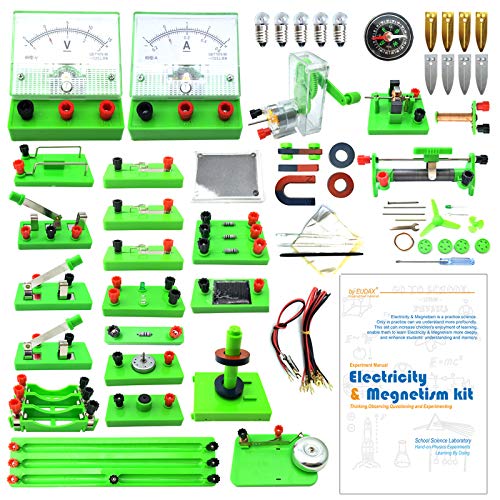
- Includes 79 electricity and magnetism items
- Builds circuits, electromagnets, and generators
- Color manual and storage bag included
Best For: Students focused on introductory electricity and magnetism
Best Variety Pack
National Geographic Mega Science Lab
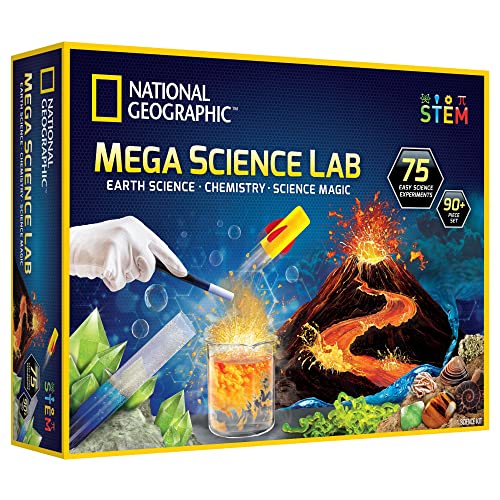
- Three-in-one earth science, chemistry, and magic kit
- 75 total experiments and activities
- Includes fossil, rock, mineral, and crystal specimens
Best For: Students who want broad exposure to multiple science topics
Best Advanced Chemistry Set

- Includes 250 chemistry experiments
- 50 lab-quality components and alcohol burner
- 128-page manual with safety guidance
Best For: Ages 11–15 pursuing structured, supervised chemistry practice
Hands-On Circuit Builder

- Eight guided electricity experiments
- Includes circuit instruction book
- AA batteries required; not included
Best For: Students learning circuits, conductivity, and basic electrical engineering
High-Volume Chemistry Explorer
National Geographic Junior Chemistry Set

- Includes 50 chemistry experiments
- Comes with 20+ lab tools
- Some activities use household materials
Best For: Younger learners seeking broad, introductory chemistry practice
Science Fair Microbiology Kit

- Includes 10 pre-poured LB-agar plates
- Includes sterile cotton swabs
- Science fair e-book included
Best For: Students age 13+ developing a focused microbiology project
Most Experiment Variety
UNGLINGA 210 Experiments Science Kit

- More than 210 activities across multiple science topics
- Includes a colorful step-by-step manual
- Useful for group activities and school projects
Best For: Kids seeking a broad mix of hands-on science projects
Best Guided Chemistry Focus
Thames & Kosmos Chemistry C500

- Includes 28 introductory chemistry experiments
- 48-page guide explains results and concepts
- Designed for ages 10–15
Best For: Students wanting structured, explanation-rich chemistry activities
Best for Chemistry Variety and DIY Fun
Discovery Super Reactions Science Kit

- Offers 66 activities, including 40 bonus DIY ideas
- Covers reactions, pH, gases, slime, and volcanoes
- Includes tools and ingredients to begin experimenting
Best For: Kids who enjoy exciting chemistry demonstrations and DIY extensions
Best All-Around Pick – National Geographic Science Magic Kit
For shoppers comparing science experiment sets for middle school students, this National Geographic kit offers an approachable mix of STEM activities and science-themed magic. It includes materials for 20 experiments plus a bonus booklet with more than 85 additional ideas, making it a versatile choice for independent exploration.
Best For: Kids who enjoy entertaining demonstrations, hands-on STEM activities, and a wide variety of experiments.
Pros:
- Includes materials for 20 magic experiments and a bonus booklet with 85+ more.
- Designed for ages 8 and up with a STEM educational objective.
- No batteries are required.
- Compact 1.5-pound kit with a U.S.-based support team from the manufacturer.
Cons:
- The focus on science magic may be less suitable for students seeking a specialized physics or chemistry lab.
- The included experiments are recommended for ages 8 and up, so older students may want more advanced material.
This is a flexible starter set for curious students who learn best through visual, entertaining activities rather than a formal laboratory progression.
Best for Electricity Projects – EUDAX Electricity and Magnetism Kit
Among science experiment sets for middle school students, this EUDAX kit stands out for students interested in circuits, magnets, and hands-on physics. It includes separate electricity and magnetism components, a color-page manual, repair tools, and projects that move from simple circuits to electromagnetism.
Best For: Students who want to build circuit and magnetism projects and explore introductory physics concepts.
Pros:
- Includes 56 electricity items, 21 magnetism items, and two repair tools.
- Supports projects such as series and parallel circuits, fruit batteries, electromagnets, and electric bells.
- Provides a color-page manual covering basic electricity and magnetism principles.
- Comes in a storage bag for organizing the components.
Cons:
- Requires three AA batteries, which are not included.
- The listed project range is aimed at grades 9–11, making it potentially demanding for younger middle school students.
- It is specialized around physics rather than offering chemistry or earth science activities.
This is a practical choice for learners ready to focus on electrical and magnetic systems, especially when a structured physics project is more appealing than a broad science sampler.
Best Variety Pack – National Geographic Mega Science Lab
This three-in-one National Geographic lab is a strong option for families seeking science experiment sets for middle school students with broad interests. It combines earth science, chemistry, and science magic, with 45 experiments in the kit and a bonus guide containing 30 additional activities using common household items.
Best For: Students who want to sample several science fields instead of committing to one subject.
Pros:
- Combines earth science, chemistry, and science magic in one kit.
- Includes 45 core experiments plus 30 additional household-item activities.
- Features a real fossil and rock, mineral, and crystal specimens for collection.
- Offers projects such as volcanoes, crystals, water tornadoes, bubbling reactions, and gas-powered rockets.
Cons:
- The recommended age is 8 and up, so advanced middle school students may find some activities introductory.
- The broad format provides less depth in any single subject than a dedicated chemistry or physics set.
- The 5.7-pound kit is larger and less portable than smaller experiment sets.
With its mix of physical specimens, chemistry activities, and science magic, this kit works well when variety and repeat use matter more than a tightly sequenced course.
Best Advanced Chemistry Set – Thames & Kosmos Chem C2000
For older students comparing science experiment sets for middle school students, the Thames & Kosmos Chem C2000 provides a more serious introduction to laboratory chemistry. It includes 250 experiments, real lab equipment, selected chemicals, and a 128-page manual covering topics from acids and bases to chromatography and electrochemistry.
Best For: Students ages 11–15 who are ready for structured chemistry experiments with adult supervision.
Pros:
- Offers 250 experiments organized across 18 themed chapters.
- Includes 50 lab-quality components such as glass test tubes, beakers, pipettes, goggles, and an alcohol burner.
- Covers acids and bases, gases, food chemistry, soaps, chromatography, oxidation, and electrochemistry.
- Provides a detailed 128-page full-color manual with safety, first-aid, labeling, and waste-disposal guidance.
Cons:
- Adult supervision is required, particularly for heat-based experiments and chemical handling.
- The alcohol burner and real chemicals make it less suitable for casual, unsupervised use.
- Its chemistry-only focus may not appeal to students seeking earth science or physics activities.
This is the most academically focused option in the group, suited to a motivated student who wants a substantial foundation for high school chemistry rather than a collection of quick demonstrations.
Hands-On Circuit Builder – Electric Circuit Kit
For shoppers comparing science experiment sets for middle school students, this circuit kit offers a focused introduction to electricity through eight guided projects. It covers series and parallel circuits, fruit batteries, saltwater power generation, and other ways to light a bulb. Note that AA batteries are required and are not included.
Best For: Middle school learners exploring basic circuits, conductivity, energy, and electrical engineering at home, in class, or for a science project.
Pros:
- Includes eight hands-on circuit and electricity experiments.
- Features a detailed, easy-to-follow circuit book.
- Encourages problem-solving, creativity, and STEM exploration.
- Suitable for home, classroom, or science fair use.
Cons:
- AA batteries are required but not included.
- The manufacturer recommends it for ages 8–12, so older students may find the projects introductory.
This is a practical choice when the goal is to make electricity concepts tangible without branching into too many unrelated topics. Its limited experiment range is balanced by a clear focus on circuit fundamentals.
High-Volume Chemistry Explorer – National Geographic Junior Chemistry Set
This National Geographic set is a broad option among science experiment sets for middle school students, with 50 hands-on chemistry activities and more than 20 kid-friendly lab tools. Illustrated, step-by-step instructions support independent use, while some experiments use common household materials such as baking soda and vinegar.
Best For: Younger learners and families seeking a general chemistry introduction with a wide variety of experiments and reusable lab-style tools.
Pros:
- Offers 50 interactive chemistry experiments.
- Includes more than 20 child-safe lab tools, including test tubes and goggles.
- Illustrated instructions are designed to be easy to follow.
- Requires no batteries.
Cons:
- Many activities rely on common household items, so additional materials may be needed.
- The recommended age begins at 4, making the content potentially basic for advanced middle school students.
Choose this kit for breadth and accessible experimentation rather than advanced chemistry depth. Its large activity count and included tools make it a flexible starting point for repeated sessions.
Science Fair Microbiology Kit – Bacteria Science Kit IV
For older students looking beyond basic demonstrations, this bacteria kit provides prepared materials for environmental microorganism investigations. It includes 10 pre-poured sterile LB-agar plates and 10 sterile cotton swabs, plus a science fair project e-book with tested experiments and troubleshooting guidance. The manufacturer recommends it for ages 13 and up.
Best For: Teen students preparing a microbiology-themed science fair project under appropriate adult or classroom supervision.
Pros:
- Supplies 10 pre-poured 100-mm LB-agar plates.
- Includes 10 sterile, six-inch cotton swabs in five pouches.
- Comes with a science fair e-book featuring step-by-step projects and tips.
- Offers access to live support from PhD scientists for product questions.
Cons:
- Recommended for ages 13 and up, so it is not intended for younger middle school students.
- Focused on bacteria and environmental microorganisms rather than a broad range of science topics.
- Microbiology activities require careful handling and appropriate supervision.
This is the most specialized option in the group and is best suited to students with a specific science fair objective. Its prepared plates and project guide reduce setup work while keeping the investigation centered on microbiology.
Most Experiment Variety – UNGLINGA 210 Experiments Science Kit
For shoppers comparing science experiment sets for middle school students, the UNGLINGA kit stands out for its unusually broad activity count. It combines chemistry, geology, physics, earth science, and nature-themed projects, including volcano building and crystal growing, with a color manual offering step-by-step guidance.
Best For: Kids who want a large variety of hands-on projects, group activities, or school-break science entertainment.
Pros:
- Includes more than 210 experiments across several science themes.
- Color manual provides clear, step-by-step instructions.
- Supports problem-solving, teamwork, and critical thinking.
- Recommended for children ages 8 and up.
Cons:
- The broad activity range may be less focused than a dedicated chemistry kit.
- Some projects may require adult participation or additional household materials.
This is a strong pick when quantity and variety matter most. Its wide subject coverage makes it flexible for independent exploration, family activities, and school projects.
Best Guided Chemistry Focus – Thames & Kosmos Chemistry C500
The Thames & Kosmos Chemistry C500 is a more focused choice among science experiment sets for middle school students. Designed for ages 10–15, it provides 28 guided chemistry experiments covering acids and bases, reactions among solids, liquids, and gases, invisible ink, and colorful effects.
Best For: Middle school students who prefer structured chemistry lessons with explanations of both the procedure and the science behind each result.
Pros:
- Offers 28 classic introductory chemistry experiments.
- Includes beakers, test tubes, chemicals, stoppers, and pipettes.
- 48-page, full-color guide explains what happened and why.
- Recommended age range is 10–15 years.
Cons:
- Provides fewer total experiments than the larger activity-focused kits.
- Its chemistry-centered format offers less subject variety.
This kit is a good fit for learners who benefit from a curriculum-like sequence rather than a large collection of unrelated activities. The detailed guide adds useful scientific context to each experiment.
Best for Chemistry Variety and DIY Fun – Discovery Super Reactions Science Kit
The Discovery Super Reactions kit offers a lively middle ground for shoppers seeking science experiment sets for middle school students. It includes 26 guided activities plus 40 bonus ideas using household items, with projects involving acid-base reactions, pH indicators, states of matter, gas expansion, slime, glowing potions, and volcanoes.
Best For: Kids who enjoy visually exciting chemistry activities and want both included materials and additional household-item projects.
Pros:
- Provides 66 total experiments, including 26 guided activities and 40 bonus ideas.
- Introduces acid-base reactions, pH indicators, states of matter, and gas expansion.
- Includes tools and ingredients such as test tubes, food coloring, a volcano mold, and slime mix.
- Clear instructions support STEM learning for ages 8 and up.
Cons:
- Only 26 activities are described as step-by-step guided experiments.
- Adult supervision is recommended.
- Some bonus projects rely on household items.
This kit is especially appealing for children motivated by dramatic visual results and tactile projects. It combines a ready-to-use component set with extra ideas that can extend play beyond the included materials.
How We Picked the Best Science Experiment Sets for Middle School Students
We compared these Science Experiment Sets for Middle School Students by examining their subject focus, stated experiment count, included equipment, instructional materials, age guidance, and suitability for independent or supervised use. We also considered whether each kit supports repeat experimentation rather than offering only one-time demonstrations.
The selection includes broad STEM collections, focused chemistry and physics labs, electrical circuit kits, and biology-oriented options. Because students vary widely in experience, the list includes both accessible introductory sets and more advanced kits with formal lab manuals or project potential.
Quick Comparison
| Best For | Recommended Type | What to Look For |
|---|---|---|
| Broad STEM exploration | Mega or multi-subject science kit | Many guided activities and varied materials |
| Chemistry practice | Dedicated chemistry set | Clear procedures, lab tools, and safety guidance |
| Electricity and physics | Circuit or electromagnetism kit | Reusable components, diagrams, and troubleshooting help |
| Science-fair preparation | Biology or project-focused kit | Experiment variables, recording instructions, and repeatable supplies |
Key Buying Factors for Science Experiment Sets for Middle School Students
Age Level and Difficulty
Check the manufacturer’s recommended age, but also consider the student’s reading level and prior experience. A kit designed for younger children may be easy to start but limiting for an experienced middle schooler, while an advanced chemistry set may require substantial adult guidance.
Subject Focus
Choose a broad kit for exploration or a focused set for a specific interest. Chemistry kits are useful for reactions and mixtures, circuit kits teach current and conductivity, and biology sets can introduce culturing, observation, and experimental controls.
Instructions and Safety
A strong kit should explain each procedure clearly, identify potential hazards, and state which activities require adult supervision. Review the materials before beginning, follow the manual, and provide protective equipment when recommended. Never substitute household chemicals or use experiments outside the manufacturer’s directions.
Reusable Components and Consumables
Be sure to distinguish reusable tools from consumable materials such as reagents, plates, swabs, batteries, or craft supplies. A kit with fewer experiments may deliver better long-term value if its equipment supports additional student-designed activities.
Project and Learning Value
For school assignments, prioritize kits that encourage observation, measurement, predictions, controlled variables, and written conclusions. Experiment count is useful, but depth and the quality of the lab guide matter more than a large number of quick demonstrations.
Who Should Buy Which Science Experiment Sets for Middle School Students?
Choose a broad National Geographic, UNGLINGA, or Discovery collection for a curious beginner who wants to sample multiple STEM topics. These are practical choices for families seeking variety and short, approachable activities.
For students specifically drawn to chemistry, consider the National Geographic chemistry set or a Thames & Kosmos option. The more advanced Chem C2000 is better suited to older or experienced learners who want a structured laboratory experience and a substantial manual, while the C500 offers a more compact introduction.
Students interested in engineering, circuits, or magnets should look at the STEM Electric Circuit Kit or EUDAX physics lab. For biology-focused learners or science-fair preparation, the bacteria kit is the most specialized choice and deserves especially careful attention to handling instructions and adult supervision.