The best science experiment sets for elementary students turn abstract STEM ideas into hands-on activities kids can see, test, and explain. This roundup compares chemistry, physics, biology, earth science, and general lab kits for different ages and interests.
Use the guide below to match each kit’s experiment count, included materials, adult-supervision needs, and educational focus with the child who will use it.
Best 10 Science Experiment Sets for Elementary Students Picks for 2026
Most Versatile Experiment Variety

- Includes materials for up to 80 guided experiments
- Packed with child-sized lab tools and accessories
- Activity cards explain steps and scientific principles
Best For: Children 6 and up seeking varied, hands-on science play
Best for Chemistry Exploration
National Geographic Amazing Chemistry Set

- Provides 15 supplied experiments plus 85 bonus ideas
- Explores reactions, crystals, colors, and glowing effects
- Includes test tubes, beakers, and pipettes
Best For: Ages 8 to 12 interested in chemistry projects
Best Starter Lab Set
Learning Resources Primary Science Lab Set
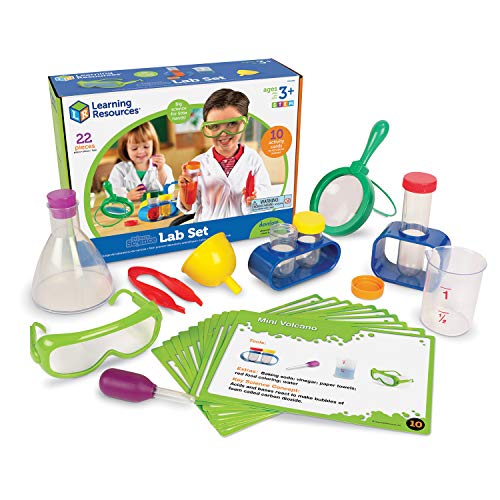
- Sized for young children ages 4 to 7
- Includes sturdy tools plus 10 activity cards
- Supports observation, hypotheses, and pretend play
Best For: Early elementary learners and classroom science centers
Best for Classic STEM Reactions
National Geographic 45-Experiment Chemistry Set

- Includes 45 guided chemistry experiments
- Features volcano, geyser, rocket, and reaction projects
- Illustrated instructions explain steps and chemistry
Best For: Ages 8 to 12 who enjoy visible STEM reactions
Most Comprehensive
100 Experiments That Wow Science Kit

- 100 activities spanning chemistry, biology, physics, and Earth science
- Includes 60+ tools and materials, goggles, and a science journal
- Designed for children ages 6 and up
Best For: Young learners who want a broad, repeat-use science kit
Best for Experiment Variety
UNGLINGA 150 Experiments Science Kit

- Includes 150 projects across chemistry, physics, Earth science, and more
- Step-by-step illustrated manual supports at-home learning
- Recommended for children ages 8 and up
Best For: Kids who want a high volume of varied DIY experiments
Best Earth Science Focus
National Geographic Earth Science Kit

- Includes volcano, crystal, tornado, and geologic dig activities
- Full-color guide explains the science behind the projects
- Recommended for children ages 8–12 and sharing with groups
Best For: Kids who enjoy geology, rocks, crystals, and volcanoes
Best All-Around Variety
70 Lab Experiments Science Kit

- 70 experiments include volcanoes, crystals, circuits, and chemical reactions
- Illustrated guide explains procedures and the science behind them
- Supports STEM, critical thinking, and problem-solving skills
Best For: Families or classrooms wanting a broad selection of activities for ages 8 and up
Best for Guided Learning
Doctor Jupiter Ultimate Science Kit

- Includes more than 50 hands-on science experiments
- Illustrated manuals provide step-by-step guidance and explanations
- Designed for STEM learning and extended gift-worthy use
Best For: Ages 8 and up who prefer structured experiments with adult participation
Best Simple Pick
Discovery Planet Earth Science Kit
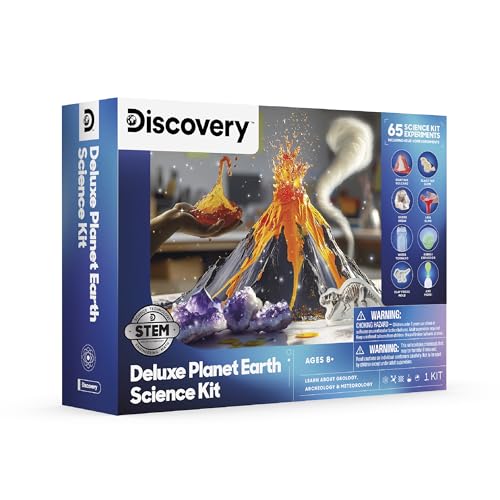
- Includes 65 experiments and DIY activities
- Covers volcanoes, fossils, crystals, weather, geology, and archaeology
- Comes with molds, excavation bricks, tools, ingredients, and instructions
Best For: Ages 8 and up who enjoy earth science, hands-on building, and discovery
Most Versatile Experiment Variety – 80-Experiment Science Lab Kit
For families comparing science experiment sets for elementary students, this kit stands out for its broad mix of activities and supplies. Children can explore projects such as rainbow rain, volcanoes, fountains, balloon experiments, and color changes while practicing hands-on observation and problem-solving.
Best For: Children ages 6 and up who want a large variety of guided science activities and scientist-themed role play.
Pros:
- Includes materials and tools for up to 80 laboratory-style experiments.
- Comes with goggles, gloves, test tubes, petri dishes, droppers, measuring tools, balloons, and other accessories.
- Guidance cards explain experiment steps and scientific principles from simple to more challenging.
- Resealable bottles help keep included chemical materials usable for later experiments.
Cons:
- The wide range of activities may require adult help with setup and supervision.
- The manufacturer’s age information varies between the product details and recommended-age listing.
This is a strong choice when variety matters most. Its large assortment of tools and experiments can support repeated activity sessions, though families should follow the included guidance and supervise children during use.
Best for Chemistry Exploration – National Geographic Amazing Chemistry Set
This National Geographic set is a focused option among science experiment sets for elementary students, especially for children ready to explore chemistry. It combines supplied materials for 15 experiments with a guide for 85 additional activities using common household items.
Best For: Children ages 8 to 12 who want chemistry-focused projects involving reactions, crystals, color changes, and glowing effects.
Pros:
- Offers more than 100 total experiment ideas.
- Includes materials for 15 featured activities, including crystal growing and chemical reactions.
- Uses real-style tools such as test tubes, beakers, and pipettes.
- Bonus experiments use common household items, extending the kit’s activity range.
Cons:
- Only 15 experiments include the kit’s supplied materials; the additional 85 require household items.
- Recommended for ages 8 and up, so it may not suit younger elementary students.
Choose this set for a chemistry-forward experience with plenty of follow-up ideas. It offers a good balance between ready-to-run experiments and household-material projects, making it useful for children who want to continue experimenting after the included supplies are used.
Best Starter Lab Set – Learning Resources Primary Science Lab Set
For younger children, this Primary Science Lab Set offers a simpler introduction than many science experiment sets for elementary students. Its sturdy, child-sized tools and activity cards support basic observation, hypothesis-building, and pretend-play experiments with common household ingredients.
Best For: Children ages 4 to 7 who are beginning structured science play at home or in the classroom.
Pros:
- Designed with real science tools sized for small hands.
- Includes a flask, beaker, magnifying glass, funnel, eyedropper, tweezers, test tubes, stands, and goggles.
- Ten double-sided activity cards provide structured experiment prompts.
- Thick plastic construction is designed to withstand drops, spills, and enthusiastic play.
Cons:
- It is primarily a tool-and-activity set, so many experiments use common household ingredients rather than included chemicals.
- The listed details describe different piece counts, so shoppers should confirm the package contents before buying.
This is the most approachable option for early science learners. It emphasizes durable equipment, simple activities, and open-ended exploration rather than advanced chemical reactions, making it especially practical for classrooms and supervised home play.
Best for Classic STEM Reactions – National Geographic 45-Experiment Chemistry Set
This National Geographic kit is a compact, chemistry-centered choice among science experiment sets for elementary students. Its 45 guided activities include familiar projects such as volcanoes, geysers, rockets, and fizzy reactions, with illustrated instructions designed for children ages 8 and up.
Best For: Children ages 8 to 12 who enjoy visible chemical reactions and classic science demonstrations.
Pros:
- Includes 45 experiments covering volcanoes, geysers, rockets, and other reactions.
- Kid-friendly illustrated instructions explain each step and the related chemistry.
- Introduces the scientific process and safe experiment practices.
- Requires no batteries.
Cons:
- Recommended for ages 8 and up, limiting its suitability for younger elementary students.
- The supplied notes do not specify the individual materials included for every experiment.
This set works well for children who want engaging, easy-to-follow demonstrations without the larger scope of a 100-plus-experiment kit. Its emphasis on classic reactions and illustrated guidance makes it a straightforward STEM activity choice.
Most Comprehensive – 100 Experiments That Wow Science Kit
For families seeking science experiment sets for elementary students, this Thames & Kosmos kit stands out for its broad mix of chemistry, biology, physics, and Earth science activities. It includes more than 60 tools and materials, plus a guided journal for recording discoveries.
Best For: Curious children ages 6 and up who want a large variety of hands-on STEM activities.
Pros:
- Includes 100 experiments across four major science areas.
- Provides useful lab-style equipment, including goggles, test tubes, and a beaker.
- The illustrated 96-page guide doubles as a science journal with observation prompts.
- Progress stickers, a poster, and exclusive audio content add engagement.
Cons:
- The extensive activity count may require adult help with organization and pacing.
- Some experiments use household items in addition to the included materials.
This is a strong all-around choice when variety and extended learning matter more than focusing on one scientific theme. Its journal and progress-tracking features also make it suitable for repeated use over time.
Best for Experiment Variety – UNGLINGA 150 Experiments Science Kit
This UNGLINGA set is one of the more activity-packed science experiment sets for elementary students, offering 150 projects involving chemistry, physics, Earth science, and surface tension. Its illustrated, step-by-step manual helps children and parents work through the experiments at home.
Best For: Children ages 8 and up who enjoy frequent DIY projects and varied science topics.
Pros:
- Offers 150 experiments, including volcano, crystal, digging, and physics activities.
- Instructions are presented in an easy-to-follow, well-illustrated format.
- Includes kid-friendly tools and materials, including safety goggles.
- Many projects can be supplemented with common household items.
Cons:
- It is recommended for ages 8 and up, making it less suitable for younger elementary students.
- Some experiments require household supplies beyond the included components.
Choose this kit if the number of available projects is your main priority. It can provide flexible weekend, school-break, or family activities, though planning for extra household materials may be helpful.
Best Earth Science Focus – National Geographic Earth Science Kit
For children drawn to rocks, crystals, volcanoes, and other natural phenomena, this National Geographic set is a focused option among science experiment sets for elementary students. It includes more than 15 experiment activities, two geologic dig kits, and a full-color guide explaining the science behind each project.
Best For: Kids ages 8–12 who prefer Earth science activities and collaborative discovery.
Pros:
- Features activities such as water tornadoes, an erupting volcano, crystal growing, and geologic digs.
- The detailed, full-color guide explains the scientific concepts behind the experiments.
- Designed to support sharing with family, friends, or classmates.
- Includes more than 100 listed science experiments and activities.
Cons:
- The activity focus is primarily Earth science rather than a balanced mix of science fields.
- It is recommended for ages 8–12, so it may not suit younger elementary children.
This kit is a practical pick for learners who are especially interested in geology and Earth processes. Its group-friendly format and explanatory guide make it useful for family projects, classrooms, or science-themed gatherings.
Best All-Around Variety – 70 Lab Experiments Science Kit
For shoppers comparing science experiment sets for elementary students, the UNGLINGA kit stands out for its broad mix of activities. With 70 experiments—including volcanoes, crystal growing, balloon rockets, and fruit circuits—it offers plenty of opportunities for hands-on STEM exploration. The illustrated guide also explains the science behind each activity.
Best For: Families, classrooms, or gift buyers seeking a large variety of chemistry and STEM activities for children ages 8 and up.
Pros:
- Includes 70 experiments covering chemical reactions, crystals, volcanoes, and circuits.
- Illustrated, step-by-step instructions support independent learning with adult guidance.
- Encourages critical thinking, problem-solving, science, and math skills.
- Ingredients are described as safe and child-friendly.
Cons:
- The wide range of experiments may require planning and supervision.
- The manufacturer recommends the kit for ages 8 and up.
Choose this set when variety is your priority. It combines classic science-project appeal with enough activities to support repeated use rather than a single afternoon of experimentation.
Best for Guided Learning – Doctor Jupiter Ultimate Science Kit
Doctor Jupiter is a practical option for shoppers seeking science experiment sets for elementary students with clear structure. The kit includes more than 50 experiments, such as color-changing volcanoes and rainbow crystals, plus illustrated, step-by-step manuals that explain the science involved.
Best For: Children ages 8 and up who benefit from guided activities and families looking for an educational birthday or holiday gift.
Pros:
- Offers 50-plus experiments for extended hands-on STEM engagement.
- Illustrated instructions are designed for children and adults to follow together.
- Activities are intended to build problem-solving skills and scientific curiosity.
- Product notes cite compliance with U.S. ASTM F963-17 toy safety standards.
Cons:
- Recommended for ages 8 and up, so it may not suit younger elementary students.
- The listed included components focus on several ingredients, so some activities may require additional household materials.
This kit is a strong fit when easy-to-follow directions matter as much as the experiment count. Its day-by-day activity potential makes it particularly appealing as a gift or structured home-learning resource.
Best Simple Pick – Discovery Planet Earth Science Kit
Among science experiment sets for elementary students, the Discovery Planet Earth kit is the choice for children drawn to geology, weather, and archaeology. It combines 25 hands-on experiments with 40 at-home DIY activities, including volcanoes, fossils, crystals, erosion, tornadoes, instant snow, and slime.
Best For: Curious children ages 8 and up who want an earth-science-themed kit for home labs, family activities, or science-fair exploration.
Pros:
- Provides 65 experiments and activities across geology, meteorology, chemistry, and archaeology.
- Includes specialized materials such as fossil molds, excavation bricks, a volcano mold, and a tornado connector.
- Offers varied projects, from growing crystals and uncovering fossils to modeling erosion and weather.
- Instructions and materials are included, with adult supervision recommended.
Cons:
- Some activities involve messy materials such as slime, plaster, and excavation projects.
- The manufacturer recommends adult supervision and use by children ages 8 and up.
Pick this set if a traditional chemistry kit feels too narrow. Its strong earth-science theme and included tools make it especially suitable for children who enjoy building, observing, excavating, and experimenting.
How We Picked These Science Experiment Sets for Elementary Students
We focused on kits that offer meaningful, hands-on activities rather than simple demonstrations alone. The selection includes broad experiment collections, subject-focused sets, and introductory lab kits from established educational brands and popular STEM makers. We considered the stated age range, number and variety of activities, included tools and materials, clarity of the instructions, storage practicality, and the amount of adult help likely to be required.
Experiment counts can be presented differently from one kit to another: some count every small activity, while others describe a smaller number of substantial experiments. Treat the advertised total as a starting point and check the contents and instructions before buying.
Quick Comparison
- Best for broad exploration: Large multi-subject kits with chemistry, physics, biology, or earth science activities.
- Best for chemistry fans: Chemistry-focused sets with experiments involving reactions, mixtures, crystals, or pH concepts.
- Best for earth science: Kits covering volcanoes, fossils, rocks, crystals, weather, or planetary processes.
- Best for younger beginners: Primary-level lab sets with simpler tools, accessible instructions, and fewer complicated procedures.
- Best for extended use: High-count kits that include reusable equipment and activities using common household supplies.
Key Buying Factors
Age, Supervision, and Safety
Choose the kit’s recommended age range as a baseline, not a guarantee of independent use. Elementary-age children may need an adult to measure ingredients, handle hot water, supervise reactions, explain labels, or clean up. Look for goggles, clear warnings, safe storage, and instructions that identify which materials are included and which must be supplied at home.
Subject Coverage and Learning Goals
A general kit is useful for children who want to sample several STEM fields. A chemistry kit suits kids interested in reactions and materials, while earth-science sets are better for geology, weather, fossils, and natural processes. If the child has a school project or a specific interest, choose focused content over the largest experiment count.
Contents, Instructions, and Repeatability
Compare the tools and consumable materials, not just the number printed on the box. Reusable beakers, droppers, measuring tools, trays, and test tubes can support repeated activities. Check whether the directions explain the scientific idea, include expected results, and suggest ways to vary or extend an experiment. Kits that rely on ordinary household supplies may provide better long-term value.
Storage and Cleanup
A kit with many small components is more useful when it includes organized packaging or a storage case. Consider whether experiments involve spills, stains, powders, or sticky materials, and set up a washable workspace before beginning.
Who Should Buy Which Science Experiment Sets for Elementary Students?
Choose a broad, high-count science kit for a curious child who enjoys switching between topics or needs activities for repeated project sessions. Pick a chemistry set for a child drawn to color changes, reactions, crystals, and laboratory-style tools. Earth-science kits are a strong match for children fascinated by rocks, volcanoes, fossils, weather, or the planet. For younger elementary students or first-time experimenters, a primary-level lab set with straightforward activities may be less frustrating than an advanced collection.
For gifts, prioritize age fit, clear instructions, and included equipment over the biggest advertised experiment total. For classroom, homeschool, or sibling use, favor kits with varied activities, reusable tools, and enough supplies to support multiple sessions. Whichever option you choose, review the instructions first and provide active adult supervision whenever the manufacturer recommends it.