Accurate moisture testing helps protect grain quality, reduce storage risk, and support consistent pricing. The right instrument depends on whether you need quick field readings or repeatable laboratory analysis.
We compared 10 moisture balances and analyzers across portability, readability, drying performance, capacity, controls, and connectivity to help you choose with confidence.
Best 10 Moisture Balances for Grains Picks for 2026
Portable Field Choice
AgraTronix MT-PRO+ Grain Moisture Meter

- Reads across 40 grain scales
- Averages selectable tests automatically
- Backlit multilingual display and carrying case
Best For: Portable grain checks in farm, storage, and inspection settings
Rapid Countertop Testing
GS110 Halogen Moisture Analyzer

- Heats samples from 40°C to 160°C
- Stores up to 20 test records
- Includes pans and calibration weight
Best For: Laboratories and production testing across grains and other materials
Touchscreen Lab Precision
JOANLAB MBA1102A Moisture Analyzer
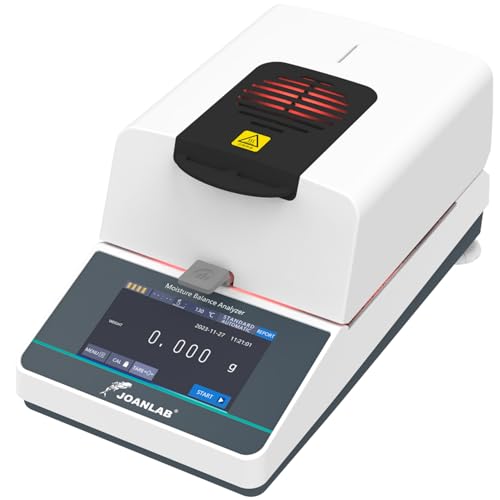
- 5-inch touchscreen with multiple drying modes
- Stores up to 20 testing methods
- RS232 output for printers or computers
Best For: Laboratories needing repeatable grain and material testing
High-Capacity Research Option
UXILAII 200g Halogen Moisture Analyzer

- Handles samples up to 200 grams
- Stores up to 32 research methods
- Offers three drying and three ending modes
Best For: Flexible laboratory testing of grains and agricultural samples
Precise Grain Testing
U.S. Solid 110 g Moisture Analyzer

- 0.005 g weight readability and 0.05% moisture readability
- Three drying modes with heating up to 160°C
- RS-232 output and 50 sample pans included
Best For: Laboratories prioritizing fine readability and repeatable grain testing
High-Resolution Lab Choice
JOANLAB MBA1103 Moisture Analyzer

- 0.001 g weight readability and 0.01% moisture readability
- Stores 20 methods with RS232 data transfer
- Two calibration modes and one-touch preheating
Best For: Agricultural and laboratory users needing detailed recurring tests
Flexible Rapid Testing
120 g Halogen Moisture Analyzer
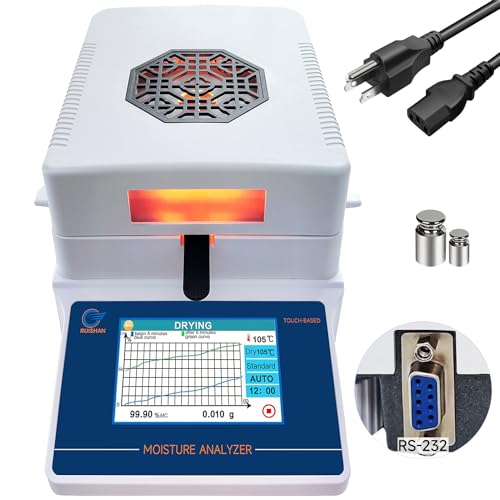
- 120 g capacity with 0.01% moisture readability
- 50–180°C halogen heating and three drying modes
- Stores up to 32 methods with RS232 connectivity
Best For: Multi-material testing where capacity and rapid workflows matter
Most Precise Readings
110 g Halogen Moisture Analyzer

- 1 mg weight readability and 0.01% moisture readability
- 450 W heating with three drying modes
- 15 methods, RS-232, and 50 sample pans included
Best For: Grain and lab testing where fine readings and repeatable methods matter
Best Touchscreen Workflow
120 g Halogen Moisture Analyzer
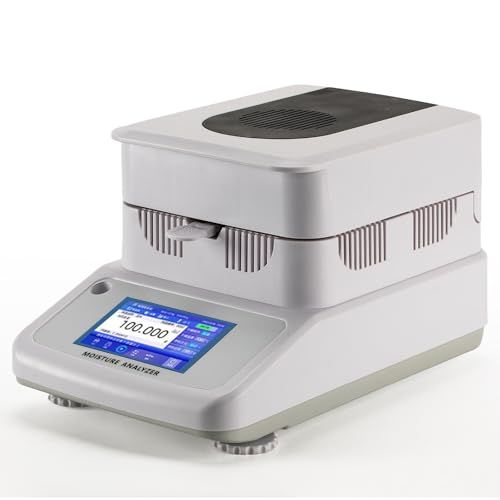
- 0.002 g weight and 0.01% moisture readability
- 5-inch touchscreen with four drying programs
- 100-record database and RS-232 output
Best For: Organized lab or industrial testing with stored records
Best Value for Routine Testing
110 g Halogen Moisture Analyzer
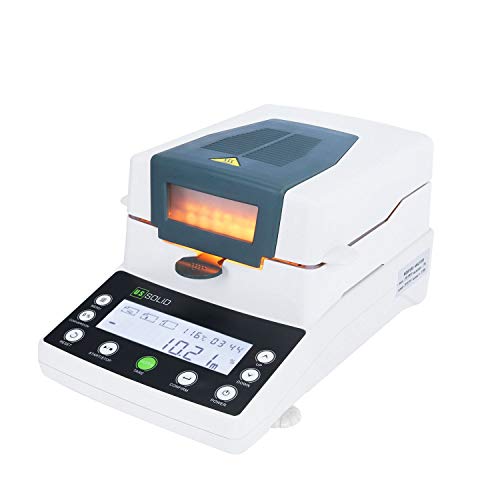
- 110 g capacity with 0.1% moisture readability
- 450 W heating and three drying modes
- 15 method groups, RS-232, and 50 sample pans
Best For: Routine grain and food checks where 0.1% readability is sufficient
Portable Field Choice – AgraTronix MT-PRO+ Grain Moisture Meter
The AgraTronix MT-PRO+ is a practical option when moisture balances for grains need to be portable and easy to use in the field. It provides direct readings across 40 grain scales, automatically averages selectable tests, and includes a carrying case.
Best For: Farmers, grain handlers, and inspectors who need portable grain moisture checks across multiple grain types.
Pros:
- Supports direct readings for 40 grain scales.
- Automatically averages a selectable number of tests.
- Backlit, multilingual display with large-font option.
- Includes carrying case, replacement cap, and USB cable.
Cons:
- Designed for grain testing rather than general laboratory moisture analysis.
- Battery-powered portability requires attention to battery life.
Choose this meter when mobility and straightforward grain-specific readings matter more than laboratory drying controls or extensive data storage.
Rapid Countertop Testing – GS110 Halogen Moisture Analyzer
The GS110 halogen moisture analyzer suits buyers who need moisture balances for grains alongside broader material testing. Its halogen lamp heats samples quickly while sensors track weight loss, with adjustable temperatures from 40°C to 160°C and test times from 1 to 99 minutes.
Best For: Small laboratories and production environments testing grains, food, plants, chemicals, soil, wood, and other materials.
Pros:
- Rapid halogen heating and real-time weight monitoring.
- Adjustable temperature and heating duration.
- Stores up to 20 historical data sets.
- Includes 20 aluminum weighing pans and a calibration weight.
Cons:
- Countertop form factor is less convenient for field use.
- Requires sample preparation and controlled testing rather than direct in-bin readings.
This analyzer is a flexible choice for users who want faster alternatives to oven drying and need basic storage or printing support for test records.
Touchscreen Lab Precision – JOANLAB MBA1102A Moisture Analyzer
The JOANLAB MBA1102A is built for controlled testing when moisture balances for grains must also handle powdered, sheet-like, or liquid samples. It combines halogen heating with a 5-inch touchscreen, selectable drying modes, stored methods, and RS232 data output.
Best For: Agriculture, food, chemical, and pharmaceutical laboratories needing repeatable, method-based moisture testing.
Pros:
- Offers automatic and timed operating modes.
- Includes standard, fast, and soft drying modes.
- Stores up to 20 testing methods.
- Supports RS232 connections for printers or computers.
Cons:
- At 3.5 kg, it is intended for bench use rather than portability.
- Its laboratory workflow is more involved than a handheld grain meter.
For users who value touchscreen operation and repeatable stored procedures, the MBA1102A provides a more structured approach than a simple portable grain tester.
High-Capacity Research Option – UXILAII 200g Halogen Moisture Analyzer
The UXILAII halogen analyzer is a strong option for moisture balances for grains when a larger 200-gram sample capacity and configurable test routines are useful. It offers 40°C to 185°C heating, three drying modes, three ending modes, and RS232 connectivity.
Best For: Food, agriculture, chemical, and pharmaceutical laboratories that need flexible methods and higher sample capacity.
Pros:
- Supports samples up to 200 grams.
- Provides standard, fast, and soft drying modes.
- Offers automatic, manual, and timed ending modes.
- Stores up to 32 research methods and includes calibration weights.
Cons:
- The heating unit and container become hot after testing and require careful handling.
- Calibration with weights is required before testing.
- Aluminum pans may need to be purchased separately.
This model makes sense for users who need more method storage and sample capacity, provided they are comfortable with laboratory calibration and heat-safety procedures.
Precise Grain Testing – U.S. Solid 110 g Moisture Analyzer
For moisture balances for grains and other laboratory samples, the U.S. Solid analyzer combines a 110 g capacity with 0.005 g weight readability and 0.05% moisture readability. Its halogen heating system, touchscreen controls, and included sample pans make it a practical choice for repeatable bench testing.
Best For: Laboratories testing grain, food, plastics, textiles, chemicals, and other samples that benefit from fine weighing readability.
Pros:
- Provides 0.005 g weight readability and 0.05% moisture readability.
- Offers standard, fast, and soft drying modes with temperatures up to 160°C.
- Stores up to 20 methods and supports automatic, manual, and timed ending modes.
- Includes RS-232 connectivity and 50 sample pans.
Cons:
- Its 110 g capacity may not suit larger batch samples.
- Manual calibration requires a 100 g weight.
This is the strongest fit of the three when weighing precision and a large supply of sample pans are priorities. It is designed for laboratory use rather than portable field testing.
High-Resolution Lab Choice – JOANLAB MBA1103 Moisture Analyzer
The JOANLAB MBA1103 is a capable option for moisture balances for grains when detailed measurements and flexible test setup matter. It provides 0.001 g weight readability, 0.01% moisture readability, a 110 g capacity, and halogen heating from 40°C to 160°C.
Best For: Food, agriculture, grain, chemical, pharmaceutical, powdered, granular, sheet-like, and non-volatile liquid testing in a laboratory.
Pros:
- Offers 0.001 g weight readability and 0.01% moisture readability.
- Includes standard, fast, and soft drying modes.
- Stores up to 20 testing methods and supports RS232 data transfer.
- Provides two calibration modes and one-touch preheating.
Cons:
- The 110 g capacity limits the size of each test sample.
- Its listed heating range begins at 40°C, which may be less flexible for some low-temperature procedures.
With its highly precise weight readability, method storage, and connectivity, the MBA1103 suits users who want a structured workflow for recurring grain and agricultural tests. The included one-year warranty adds manufacturer-backed support.
Flexible Rapid Testing – 120 g Halogen Moisture Analyzer
For moisture balances for grains across varied materials, this 120 g analyzer emphasizes fast halogen drying and flexible test programming. It supports 0–100% moisture measurement, three drying modes, touchscreen operation, and temperatures from 50°C to 180°C.
Best For: Users testing grain, food, plants, minerals, soil, wood, paper, textiles, and chemicals who want a broader material range and slightly higher capacity.
Pros:
- Provides a 120 g capacity and 0.01% moisture readability.
- Offers standard, fast, and soft drying modes with automatic and timed endings.
- Stores up to 32 research methods, more than the other listed models.
- Includes RS232 connectivity, calibration weights, and sample-handling accessories.
Cons:
- Only 10 disposable aluminum sample pans are included.
- Its stated 0.01 g readout accuracy is less fine than the JOANLAB’s listed 0.001 g weight readability.
This model stands out for capacity, method storage, and broad material compatibility. It is a practical choice when grain testing is part of a wider testing workload and rapid results are important.
Most Precise Readings – 110 g Halogen Moisture Analyzer
For moisture balances for grains that need fine measurement resolution and repeatable workflows, this U.S. Solid analyzer combines 1 mg weight readability with 0.01% moisture readability. Its halogen heater, preset methods, and multiple result displays make it practical for grain and other laboratory or production samples.
Best For: Grain testing and general lab, food, plastics, textile, or chemical applications where detailed moisture readings and method storage are useful.
Pros:
- Measures up to 110 g with 1 mg weight readability and 0.01% moisture readability.
- 450 W halogen heating with standard, fast, and soft drying modes up to 199°C.
- Stores 15 methods and displays moisture percentage, dry weight, or dry-weight percentage.
- Includes 50 sample pans and RS-232 connectivity for PC or printer output.
Cons:
- Uses a 110V, 60Hz power supply.
- Its included 90 mm pan may require careful sample preparation for larger grain portions.
This is the strongest fit of the three for buyers prioritizing the finest stated readability. The preset methods and included pans also support recurring grain checks without adding much setup complexity.
Best Touchscreen Workflow – 120 g Halogen Moisture Analyzer
Among moisture balances for grains, this model stands out for its 5-inch color touchscreen and built-in record keeping. It offers 0.002 g weight readability, 0.01% moisture readability, and several drying programs for users who want guided operation and stored test data.
Best For: Laboratories and industrial settings that need touchscreen controls, multiple drying options, and an internal database for up to 100 moisture records.
Pros:
- Supports samples up to 120 g with 0.002 g weight readability and 0.01% moisture readability.
- 5-inch full-color touchscreen provides control over temperature, timing, and drying mode.
- Stores up to 100 test records and supports RS-232 data output.
- Offers standard, mild, fast, and slow programs from 40–180°C with automatic, timed, or manual stopping.
Cons:
- Only one sample tray is listed in the packing list.
- The supplied notes do not specify that sample pans are included in a larger quantity.
This analyzer is a practical choice when data management is as important as measurement. Its larger capacity and touchscreen interface make it especially appealing for organized, repeated testing, while the four drying programs provide flexibility for different samples.
Best Value for Routine Testing – 110 g Halogen Moisture Analyzer
For routine moisture balances for grains, this U.S. Solid model provides halogen drying, 110 g capacity, and straightforward method storage at a lower measurement resolution than the more precise options. It is designed for food, grain, chemical, and laboratory testing with practical connectivity and included consumables.
Best For: Routine grain and food checks where 0.1% moisture readability is adequate and having 50 sample dishes ready to use is valuable.
Pros:
- 110 g capacity with 5 mg weight readability and 0.1% moisture readability.
- 450 W halogen heating reaches up to 199°C and offers standard, fast, and soft modes.
- Stores 15 preset method groups and displays three result formats.
- Includes 50 sample pans and RS-232 output for PC or printer connection.
Cons:
- Its 0.1% moisture readability is less fine than the other listed analyzers.
- Manual calibration requires a 100 g weight, which is not identified as included in the supplied notes.
This model makes sense for buyers who want a capable grain-testing workflow without paying for the finest stated readability. The included dishes, method presets, and broad drying range support frequent routine measurements.
How We Picked the Best Moisture Balances for Grains
We focused on instruments suited to common grain-testing workflows, from fast checks at harvest or receiving points to controlled analysis in quality-control laboratories. Our comparison considered measurement resolution, sample capacity, temperature range, heating method, operating speed, display and controls, repeatability, and practical accessories.
We also separated portable grain meters from heated moisture analyzers. These tools are not interchangeable: a portable meter is convenient for screening multiple loads, while a laboratory balance generally uses heat and weight loss to produce a more controlled moisture result.
Quick Comparison
- Best for field checks: AgraTronix MT-PRO+ Portable Grain Moisture Meter.
- Best for routine lab testing: JOANLAB and U.S. Solid analyzers with clear digital controls and defined readability.
- Best for higher precision: Models offering 0.001 g resolution or 0.01% readability.
- Best for streamlined workflows: Units with touchscreens, built-in databases, RS232, or included sample dishes.
Key Buying Factors for Moisture Balances for Grains
Measurement Method and Use Environment
Choose a portable meter when speed, mobility, and on-site decisions matter most. Select a halogen moisture analyzer when you need a repeatable heat-and-dry test, documented settings, and greater control over sample preparation.
Readability, Accuracy, and Repeatability
Readability is the smallest displayed increment; it is not automatically the same as accuracy. Finer resolution can be valuable for laboratory comparisons, but consistent sampling, calibration, and temperature settings often have a larger effect on useful results.
Capacity and Sample Handling
Check the maximum sample weight and pan size against your normal test portions. A larger capacity can be convenient, while a smaller standardized sample may deliver faster, more consistent drying. Included dishes or disposable pans can simplify repeated testing.
Heating Range and Drying Controls
Compare temperature range, drying modes, endpoint settings, and heating speed. Flexible controls help accommodate different grains and test procedures, but a wide range is only useful when the instrument can maintain stable, repeatable conditions.
Data Access and Usability
Touchscreens, stored methods, built-in databases, and RS232 connectivity can reduce transcription errors and make results easier to document. For occasional testing, simple controls may be preferable to advanced features that add cost and setup time.
Who Should Buy Which Moisture Balances for Grains?
Farmers, crop scouts, and grain buyers should prioritize a portable meter that is quick to operate and easy to carry between bins, trucks, and fields. Small processors and feed operations may prefer a straightforward halogen analyzer with adequate capacity and simple drying controls for routine checks.
Commercial mills, elevators, and quality-control teams should look for repeatability, method storage, connectivity, and included accessories. Research and testing laboratories should favor the finest practical readability, stable temperature control, clear documentation, and compatibility with their established testing procedures.
Before purchasing, confirm the instrument’s intended grain types, calibration requirements, power supply, pan availability, and any applicable standard operating procedure. The best Moisture Balances for Grains are the ones that match your sampling process and produce results your team can consistently interpret.