Choosing the right laboratory pressure data logger can make a big difference in accuracy, traceability, and day-to-day lab workflow. The best models help you capture pressure data consistently without adding unnecessary complexity.
In this roundup, we focus on practical buying factors like measurement range, portability, display options, environmental durability, and data export so you can match the right logger to your application.
Best 10 Laboratory Pressure Data Logger Picks for 2026
Rugged live-monitoring logger
Monarch Track-It Pressure/Temp Data Logger: 150 psig

- Live PC streaming and stored downloads
- Logs pressure and temperature together
- IP67 316L stainless steel housing
Best For: Rugged lab and industrial monitoring with PC analysis
Environmental barometer logger
Daigger Traceable Excursion-Trac Datalogging Barometer

- Logs pressure, humidity, and temperature
- Rolling memory holds 525,600 observations
- USB flash drive transfer, no software needed
Best For: Environmental lab monitoring and alarmed logging
Quick-view display logger
5396-0371, Track-It with Display Pressure/Temp Logger

- Integrated display for quick viewing
- Logs gauge pressure and temperature
- Compact polycarbonate design
Best For: Quick checks in compact lab setups
Compact wide-range logger
Supco LPT LOGiT Pressure and Temperature Data Logger
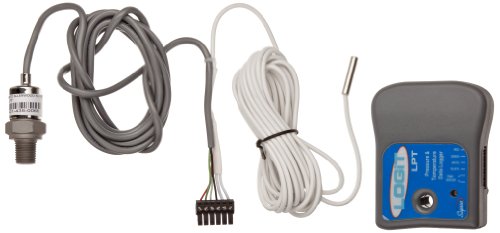
- Pressure range up to 500 psi
- Adjustable sample rate from 1 second to 18 hours
- Visual alarms for over/under thresholds
Best For: Compact monitoring with a wider pressure range
Compact Display Logger
- Logs pressure, temperature, or both
- Up to 130,000 samples with LCD readout
- USB setup with Track-It software
Best For: Compact standalone pressure/temperature logging with display
3-in-1 Environmental Logger
Barometric Pressure, Temp & RH

- Logs pressure, temperature, and humidity
- Auto-generates PDF and Excel reports
- Large LCD with 16,000 readings per parameter
Best For: Easy USB logging with automatic report output
High-Temp Submersible Logger

- Pressure and high-temperature logging
- IP68 submersible construction
- Includes ISO17025 calibration certificate
Best For: Harsh-environment pressure logging with calibration support
Laboratory Pressure Logger Pick
Digital Manometer with 15,996-Point Logging

- Logs 15,996 groups on-device
- Unlimited storage via PC software
- 13 pressure units plus alarms
Best For: pressure-focused logging with software analysis
Multi-Parameter Lab Logger Choice
USB Temp, Humidity, and Pressure Recorder

- Tracks temperature, humidity, and pressure
- Stores 16,000 groups of data
- Exports PDF and Excel reports
Best For: environmental logging with barometric pressure records
Industrial Input Logging Option
16-Channel Logger for Pressure Gauge Setups

- 16-channel simultaneous measurement
- Suitable for digital pressure gauges
- Rugged design for harsh environments
Best For: multi-channel monitoring in industrial workflows
Rugged live-monitoring logger – Monarch Track-It Pressure/Temp Data Logger: 150 psig
If you need a laboratory pressure data logger that can also handle harsher field conditions, this Monarch Track-It model is built for both live monitoring and stored-data review. It records pressure and temperature, streams data to a PC in real time, and uses nonvolatile memory so you can download readings later for analysis.
Best For: Labs, test setups, and industrial environments that need a rugged pressure/temperature logger with PC-based reporting.
Pros:
- Streams live data to a PC for real-time monitoring
- Stores readings in nonvolatile memory for later download
- Records pressure and temperature, or one parameter to save space
- 316L stainless steel housing is submersible and rated IP67
Cons:
- Designed for a 150 psig range, so it is not the highest-pressure option here
- Requires PC software for programming and deeper analysis
- Bulkier than simpler handheld logging tools
Overall, this is a strong pick if durability and data flexibility matter as much as measurement itself. The combination of live streaming, Excel export, and rugged construction makes it especially practical for demanding monitoring tasks.
Environmental barometer logger – Daigger Traceable Excursion-Trac Datalogging Barometer
This laboratory pressure data logger is aimed at general environmental monitoring rather than high-pressure process work. It measures barometric pressure, humidity, and temperature, while also offering datalogging, alarms, and altitude compensation for more complete room or storage checks.
Best For: Labs that need a barometer with humidity and temperature logging for environmental oversight.
Pros:
- Measures barometric pressure, relative humidity, and temperature
- Rolling memory stores up to 525,600 observations
- User-defined logging interval from 1 minute to 12 hours
- Transfers data via USB flash drive with no special software needed
Cons:
- Barometric pressure range is limited to 500 to 1030 mbar
- Not designed for process-line pressure connections
- Focuses on environmental readings rather than high-pressure measurement
For labs that want straightforward environmental logging, this model is easy to work with and stores a large volume of readings. Its built-in alarms and simple USB transfer make it practical when you want usable data without extra software complexity.
Quick-view display logger – 5396-0371, Track-It with Display Pressure/Temp Logger
If you want a laboratory pressure data logger with a built-in display, this Track-It unit keeps the essentials visible at a glance. It measures gauge pressure and temperature up to 150 PSIG, making it a practical choice for setups that benefit from on-device readout.
Best For: Users who want a compact pressure/temperature logger with an integrated display for quick checks.
Pros:
- Built-in display for direct viewing
- Logs gauge pressure and temperature
- Compact design with polycarbonate housing
- Rated for 0 to 150 PSIG
Cons:
- Pressure range is limited to 150 PSIG
- Fewer detailed feature notes are provided than on some other models
- Not described as submersible or ruggedized for harsh environments
This is a sensible pick when visibility matters and you want a simpler logger for everyday lab monitoring. It keeps the focus on pressure and temperature readings without adding unnecessary complexity.
Compact wide-range logger – Supco LPT LOGiT Pressure and Temperature Data Logger
This laboratory pressure data logger is a compact option for users who need broader pressure coverage. It logs pressure and temperature, offers adjustable sample timing, and includes visual alarm indication for over/under threshold conditions.
Best For: Labs and maintenance teams that need a small logger with a wider pressure range and alarm thresholds.
Pros:
- Pressure range extends to 0 to 500 psi
- Sample rate can be set from 1 second to 18 hours
- Includes over/under alarm threshold settings and visual alarm indication
- Compact polycarbonate and stainless steel construction
Cons:
- Temperature range is narrower than some general-purpose environmental loggers
- Very small unit size may not suit users who want a larger display
- PC software is required for use with LOGiT loggers
For buyers prioritizing pressure range and flexible sampling, this Supco logger is a practical fit. Its small footprint and alarm features make it easy to deploy where space is tight but monitoring still needs to be reliable.
Compact Display Logger – Track-It 0-35 PSIA with USB
If you need a laboratory pressure data logger that can also track temperature, this Track-It model is built for straightforward standalone monitoring. It records up to 130,000 samples, supports pressure, temperature, or both, and uses a multi-line LCD to show real-time data, alarms, and min/max values.
Best For: Users who want a compact, battery-powered pressure/temperature logger with on-device display and flexible sampling.
Pros:
- Records pressure, temperature, or both to preserve storage space
- Multi-line LCD shows real-time data, alarms, and min/max information
- Sample storage rate ranges from 2 seconds to 24 hours
- Non-volatile storage helps protect data if the battery is depleted
Cons:
- Max pressure range is limited to 0-35 PSIA
- Configuration depends on the included Track-It software and USB connection
- Designed as a compact logger rather than a full bench instrument
For practical lab logging jobs that need a display, flexible start options, and no-fuss PC setup, this model covers the essentials well. It is especially useful when you want both pressure and temperature tracking in a single compact unit.
3-in-1 Environmental Logger – Barometric Pressure, Temp & RH
This laboratory pressure data logger adds barometric pressure to temperature and relative humidity in a compact, battery-powered design. It is plug-and-play over USB, can automatically generate PDF and Excel reports when connected to a computer, and offers a large LCD for checking logged values quickly.
Best For: Users who want a 3-in-1 environmental logger with easy USB access and automatic reporting.
Pros:
- Logs barometric pressure, temperature, and %RH in one unit
- Automatically creates PDF and Excel reports when plugged in
- Large memory supports 16,000 readings per parameter
- IP65 housing and large LCD improve everyday handling and viewing
Cons:
- IP65 protection does not include the sensor area
- Compact design may not suit users needing advanced lab instrumentation
- Best features depend on USB connection for report generation and setup
For labs and storage areas that need a simple environmental record with pressure included, this logger is very practical. The built-in reporting and configurable alarm settings make it a strong fit when you want a versatile logger without extra software overhead.
High-Temp Submersible Logger – PRTemp140 NPT Port Top
For demanding laboratory pressure data logger applications, the PRTemp140 focuses on pressure plus high-temperature monitoring in a rugged submersible body. It is rated IP68, operates from -20 °C to +140 °C, and includes an ISO17025 accredited calibration certificate.
Best For: Harsh-environment users who need a submersible pressure and high-temperature logger with calibration documentation.
Pros:
- Combines pressure logging with high-temperature measurement
- IP68 submersible construction suits wet or immersed conditions
- Includes ISO17025 accredited calibration certificate
- Available with an NPT pressure port top
Cons:
- No display or reporting features are listed in the supplied notes
- Primarily focused on harsh conditions rather than general desktop use
- Pressure port top configuration must be matched to the application
This is the most specialized option here, aimed at users who care more about durability and calibration than convenience features. If your pressure logging needs involve hot or submerged environments, the PRTemp140 is the strongest fit.
Laboratory Pressure Logger Pick – Digital Manometer with 15,996-Point Logging
If you need a laboratory pressure data logger for differential pressure work, this digital manometer is built around logging and analysis rather than basic spot checks. It records up to 15,996 data groups on the device, and can store unlimited data through PC software, making it a practical choice for repeatable pressure tracking and trend review.
Best For: Users who want a pressure-focused logger with onboard storage, PC analysis, and lots of unit options.
Pros:
- Stores up to 15,996 data groups on the device, with unlimited logging when connected to PC software.
- Supports 13 selectable units, including Pa, kPa, psi, inH2O, and ftH2O.
- Includes useful functions like MAX/MIN/average, data hold, high/low alarm, and backlit LCD.
- Offers trend analysis and customizable shutdown and alarm settings through software.
Cons:
- Designed for pressure measurement rather than temperature or humidity monitoring.
- PC software features may be the main value, so it is less appealing if you want only standalone use.
This is a solid fit when your pressure logging needs go beyond a simple gauge and you want built-in data recording plus computer-based review. It is especially useful if you work across different pressure units and want one instrument that can handle them all.
Multi-Parameter Lab Logger Choice – USB Temp, Humidity, and Pressure Recorder
This USB temperature data logger is a practical option when a laboratory pressure data logger also needs to track temperature and humidity. It measures atmospheric pressure from 300 to 1100 hPa, stores up to 16,000 groups of raw data, and generates PDF and Excel reports through built-in Windows software.
Best For: Lab users who need pressure logging alongside temperature and humidity records in one compact unit.
Pros:
- Records temperature, humidity, and atmospheric pressure in real time.
- Stores up to 16,000 groups of raw data.
- Exports reports in PDF and Excel formats with built-in software.
- Lets you adjust sampling interval, alarm range, measurement unit, and password.
Cons:
- Built-in software requires Windows.
- Pressure range is limited to atmospheric monitoring, not specialized differential pressure work.
For labs that want one logger to cover environmental conditions and barometric pressure, this model offers a balanced feature set. Its reporting tools and configurable settings make it especially useful for documentation and comparison tasks.
Industrial Input Logging Option – 16-Channel Logger for Pressure Gauge Setups
If your laboratory pressure data logger setup involves multiple sensors or gauge channels, this 16-channel temperature logger is aimed at broader industrial data collection. The product notes say it is suitable for digital pressure gauges and chart loggers, and its simultaneous 16-channel measurement makes it useful where multiple inputs need to be monitored together.
Best For: Multi-channel industrial setups that need a logger compatible with pressure gauge and chart logger workflows.
Pros:
- Supports 16-channel simultaneous measurement.
- Noted as suitable for digital pressure gauges and chart loggers.
- User-friendly interface helps with data logging and retrieval.
- Rugged, durable design is intended for harsh environments.
Cons:
- The supplied notes focus on temperature measurement, not detailed pressure specs.
- Sensor compatibility is broad, but exact supported pressure configurations are not listed.
This is the most specialized pick for multi-channel monitoring rather than a standalone pressure meter. If your workflow depends on collecting several inputs at once and durability matters, it has the right industrial emphasis.
How We Picked These Laboratory Pressure Data Loggers
We selected options based on pressure measurement capability, logging reliability, environmental suitability, and ease of reviewing or exporting data. We also favored models that cover common lab needs, from compact field-style units to more specialized pressure and temperature recorders.
Because laboratory workflows vary, the list includes tools for routine monitoring, higher-temperature applications, and multipurpose environmental logging where pressure is only one part of the job.
Quick Comparison
Before buying, compare the logger’s pressure range, sensor type, memory capacity, sampling flexibility, and output formats. A basic unit may be enough for general monitoring, while regulated or validation-focused work often benefits from better documentation and more robust reporting.
Also check whether the device measures absolute, gauge, barometric, or differential pressure, since that determines whether it will fit your test setup.
Key Buying Factors for a Laboratory Pressure Data Logger
Measurement Range and Pressure Type
Make sure the logger matches your expected pressure band. A model designed for barometric readings is not interchangeable with a differential pressure tool or a high-pressure process logger.
Accuracy and Resolution
In laboratory settings, small deviations matter. Look for adequate resolution and a published accuracy spec that fits your validation, monitoring, or troubleshooting requirements.
Data Access and Reporting
USB export, CSV/PDF support, display readouts, and compatible software can save time when documenting results. If multiple people need the data, choose a logger that makes sharing and archiving straightforward.
Durability and Environmental Protection
If the logger will be used in humid rooms, washdown areas, or portable setups, consider housing quality and ingress protection. Temperature and humidity logging can also be useful when environmental conditions affect pressure readings.
Size, Mounting, and Port Configuration
Compact devices are easier to place near equipment, but port orientation and connector style matter just as much. For some applications, a top-mounted NPT port or display-equipped unit will be easier to install and monitor.
Who Should Buy Which Laboratory Pressure Data Logger?
Choose a compact, general-purpose Laboratory Pressure Data Logger if you need routine monitoring and simple download workflows. Pick a higher-spec or high-temperature model if your setup involves harsh conditions or process validation.
If you need broader environmental context, a 3-in-1 logger that also records temperature and humidity may be the better fit. For specialized pressure testing, differential or manometer-style loggers are usually the most practical choice.