Managing multiple computers from one desk is easier with the right KVM switch. These picks let you share monitors, keyboards, mice, and USB accessories while reducing cable clutter and simplifying computer switching.
We’ve included options for single- and dual-monitor setups, desktop-and-laptop workflows, high-refresh gaming, 8K video, and multi-computer offices.
Best 10 Kvm Switches for Desktops Picks for 2026
Best Dual-Display Value

- Dual-monitor copy or extended display modes
- 8K@60Hz and 4K@120Hz support
- Four-port USB 3.0 peripheral sharing
Best For: Two-computer desktop setups with dual HDMI monitors
Best Premium Docking Station

- USB-C laptop docking with up to 100W charging
- Dual-monitor support with high-refresh modes
- 11-in-1 hub, Ethernet, audio, and SD connectivity
Best For: Hybrid workstations combining a laptop and desktop
Best for Four Computers
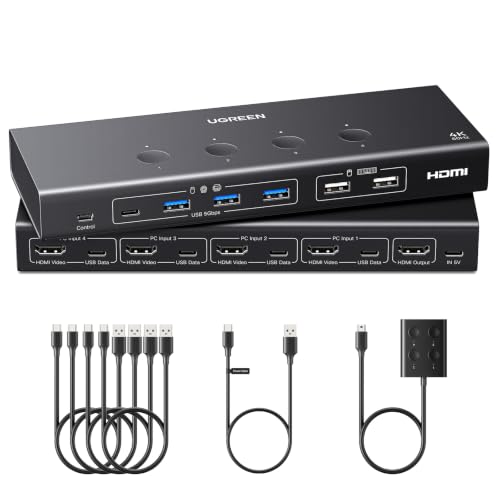
- Switches four computers through one monitor
- Six shared USB ports, including four USB 3.0
- 4K@60Hz with EDID emulation
Best For: Multi-computer offices, labs, and shared workstations
Best DisplayPort Performance
Dual-Monitor 4K DisplayPort KVM

- 4K@144Hz dual-monitor support
- Extended or copy display modes
- Four shared USB 3.0 peripherals
Best For: DisplayPort desktops with high-refresh dual monitors
Best Compact 4K Pick
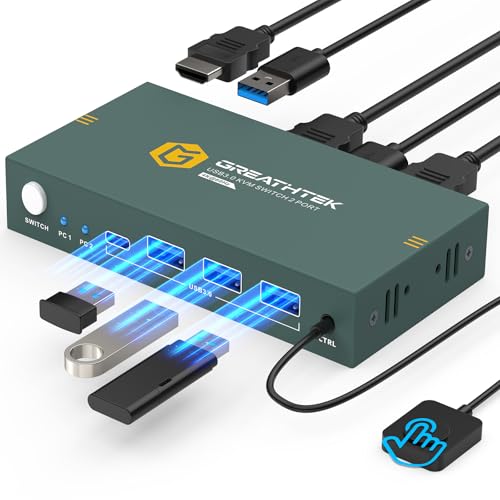
- 4K at 60Hz with HDMI 2.0 support
- Three USB 3.0 peripheral ports
- Button and wired-remote switching
Best For: Two computers sharing one 4K monitor
Best USB-C Dual-Monitor Dock

- Two monitors for one laptop and one desktop
- HDMI and DisplayPort outputs
- 100W PD input with about 80W laptop charging
Best For: Mixed USB-C laptop and desktop workstations
Best Complete Dual-Screen Kit

- Dual 4K60 HDMI monitor support
- Four USB 3.0 ports for shared accessories
- Includes HDMI, USB, power, and controller cables
Best For: Two-computer HDMI dual-monitor offices
Best Dual-Monitor USB-C Pick
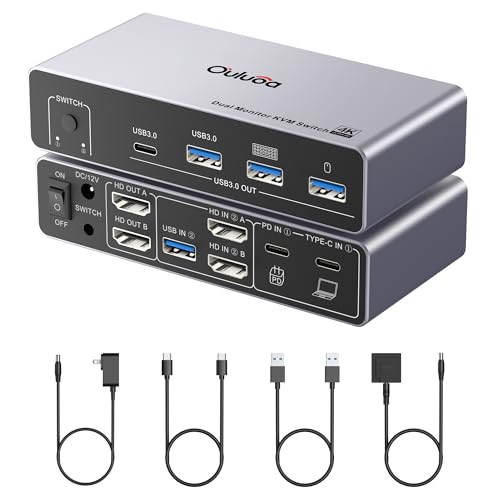
- Dual HDMI monitor support for a desktop and laptop
- 8K at 60Hz output and 100W PD charging
- Three USB 3.0 ports plus USB-C expansion
Best For: Dual-monitor desktop-and-laptop workstations
Best Simple HDMI Switch

- Shares one 4K monitor between two computers
- Four USB 3.0 ports for peripherals
- Wired controller and LED source indicators
Best For: Single-monitor office and home workstations
Best Mixed-Display Setup

- Dual-monitor support with DisplayPort and HDMI
- 8K at 60Hz and up to 4K at 144Hz
- 100W PD charging and four USB expansion ports
Best For: Desktop-and-laptop setups using DP and HDMI monitors
Best Dual-Display Value – 8K HDMI KVM for Two Computers
If you need kvm switches for desktops that can share two monitors and USB accessories between two computers, this HDMI model is a capable option. It supports copy and extended display modes, provided each computer has two HDMI outputs and supports dual-monitor operation.
Best For: Desktop users who need dual-monitor switching, high-resolution HDMI output, and shared USB peripherals.
Pros:
- Supports up to 8K at 60Hz and 4K at 120Hz, with backward compatibility for lower resolutions.
- Shares two displays and four USB 3.0 devices between two computers.
- Includes a wired desktop controller and 12V power adapter for stable operation.
- Supports Windows, Mac OS, Linux, Unix, and older Windows systems.
Cons:
- Requires two HDMI outputs on each computer for extended dual-display use.
- Does not support keyboard hotkey switching.
- High-power USB devices may require the included external power supply.
This is a strong fit for a straightforward two-computer, two-monitor desktop setup, but confirm your graphics outputs and display mode support before buying.
Best Premium Docking Station – AV Access Dual-Monitor KVM
For shoppers comparing kvm switches for desktops with a laptop-friendly docking station, the AV Access model combines KVM switching with extensive connectivity. It can connect a USB-C laptop and a desktop to two monitors while sharing networking, audio, USB devices, and other desk peripherals.
Best For: Hybrid workers, creators, and power users who want one-cable laptop docking alongside desktop switching.
Pros:
- Supports dual 8K at 60Hz or dual 4K at 165Hz on the desktop side, with high-refresh 1080p modes.
- One USB-C connection can provide dual-display video, data, and up to 100W charging for compatible laptops.
- Includes an 11-in-1 docking hub with Ethernet, SD card, audio, and multiple USB ports.
- Both computers can remain connected to Gigabit Ethernet while switching.
Cons:
- Windows and Linux hardware support extended dual displays; macOS uses mirrored displays with MST.
- Some Mac mini and USB-C display setups require additional cables that are not included.
- Laptop resolution and refresh rates depend on the computer’s USB-C video capabilities.
This is the most versatile choice in the group for a consolidated hybrid-work desk, though Mac users should verify the intended display arrangement before purchase.
Best for Four Computers – UGREEN 4-Port HDMI KVM
If your desk includes several desktops, this UGREEN model stands out among kvm switches for desktops because it lets four computers share one monitor and multiple USB accessories. It is designed for centralized control in offices, labs, meeting rooms, and other multi-system workspaces.
Best For: Users who need to switch one HDMI display, keyboard, mouse, and USB equipment among four computers.
Pros:
- Connects four computers to one monitor with up to 4K at 60Hz output.
- Provides four USB 3.0 and two USB 2.0 ports for peripherals and storage devices.
- Offers front-button and wired-controller switching.
- EDID emulation can help retain display identification, resolution, and window arrangement during switching.
Cons:
- Each computer needs an HDMI cable and a USB-A-to-C data cable; cables and power adapter are not included.
- It is not supported for use with a docking station.
- Computers should be awake before switching, and external power is recommended for stable use.
Choose this model when four-host capacity matters more than dual-monitor support, and budget for the required cables and power accessories.
Best DisplayPort Performance – Dual-Monitor 4K DisplayPort KVM
This DisplayPort model is a practical choice among kvm switches for desktops when high-refresh dual-monitor output is more important than HDMI compatibility. It switches two computers across two DisplayPort monitors and shares four USB devices through a wired desktop controller or the front button.
Best For: DisplayPort desktop users who want dual 4K monitors at up to 144Hz for work or compatible gaming setups.
Pros:
- Supports up to 4K at 144Hz and is backward compatible with DisplayPort 1.2.
- Handles two monitors and four USB 3.0 peripherals between two computers.
- Supports extended and copy display modes.
- Includes two USB-A 3.0 cables, a wired controller, and a 12V adapter.
Cons:
- Each computer requires two DisplayPort connections and a USB cable for full dual-screen operation.
- DisplayPort cables are not included.
- Keyboard hotkey switching is not supported.
This is a focused pick for DisplayPort-based desktops and high-refresh monitors; verify your graphics card, cables, and displays can support the desired resolution and refresh rate.
Best Compact 4K Pick – 2-Port HDMI KVM Switch
For shoppers comparing kvm switches for desktops, this compact 2-port HDMI model is a practical choice for controlling two computers from one monitor, keyboard, and mouse. It supports 4K at 60Hz, USB 3.0 peripheral sharing, and switching by physical button or wired remote.
Best For: Desktop users who need one-monitor control of two computers with 4K video and shared USB devices.
Pros:
- Supports up to 3840×2160 at 60Hz and is backward compatible with lower resolutions.
- Provides three USB 3.0 ports for devices such as keyboards, mice, printers, scanners, and flash drives.
- Includes a wired remote and push-button switching, with plug-and-play setup and no driver software.
- Works with Windows, Linux, Mac, and compatible devices including PCs, laptops, and PS4 systems.
Cons:
- Does not support hotkey switching.
- Three HDMI cables are required but are not included.
- All cables need to be connected for proper operation.
This model keeps a two-computer, one-monitor setup straightforward while adding useful USB 3.0 sharing and 4K60 support. It is a strong fit when you prefer physical or wired-remote switching rather than keyboard shortcuts.
Best USB-C Dual-Monitor Dock – Laptop and Desktop KVM
Among kvm switches for desktops, this USB-C model stands out for mixed laptop-and-desktop workstations. It connects one laptop and one desktop to two monitors, offers HDMI and DisplayPort outputs, and includes USB 3.0 sharing plus laptop power delivery.
Best For: Users who switch between a USB-C laptop and desktop while working across two monitors.
Pros:
- Supports two computers sharing two monitors and four USB 3.0 devices.
- Offers extended or mirrored display modes on Windows systems.
- Provides a 100W PD charging connection, with approximately 80W delivered to the laptop.
- Includes a wired controller, USB 3.0 cable, 12V power adapter, and plug-and-play operation.
Cons:
- On macOS, it supports mirrored output only rather than extended displays.
- The listed package includes one USB 3.0 cable, so additional connections may be needed depending on the setup.
- It requires external power through the included 12V adapter.
This is the more workstation-oriented option in the group, combining dual-monitor KVM functionality with USB-C laptop charging. Confirm your operating system and display requirements before buying, especially if you use macOS extended mode.
Best Complete Dual-Screen Kit – UGREEN HDMI Dual-Monitor KVM
This UGREEN switch is a well-equipped option for kvm switches for desktops when two computers need to share two HDMI monitors. It supports 4K at 60Hz, four USB 3.0 ports, and switching through either the main button or a separate desktop controller.
Best For: HDMI-based home or professional offices using two computers and two monitors with shared USB accessories.
Pros:
- Supports dual-monitor extend or mirror modes at resolutions up to 4K at 60Hz.
- Includes four USB 3.0 ports, including three USB-A ports and one USB-C port.
- Package includes four HDMI cables, two USB-A cables, power adapters, and a desktop controller.
- Works with Windows, macOS, Linux, and a broad range of HDMI source devices.
Cons:
- Does not support EDID emulation or keyboard hotkey switching.
- Both monitors must display the selected computer; they cannot show PC1 and PC2 simultaneously.
- Each computer requires two HDMI cables and one USB-A connection, and the monitors need suitable cable lengths for reliable operation.
With cables and controllers included, this UGREEN model can simplify a dual-monitor installation. Its limitations are important for advanced users: it is HDMI-only, lacks hotkeys and EDID emulation, and switches both displays together.
Best Dual-Monitor USB-C Pick – 8K USB-C KVM Dock
For shoppers comparing kvm switches for desktops, this dual-monitor USB-C model is designed to connect one desktop and one laptop to two HDMI displays while sharing a keyboard, mouse, and other USB devices. It supports Windows MST extended mode, while macOS uses SST mode.
Best For: Desktop-and-laptop workstations that need dual HDMI monitors, laptop charging, and shared peripherals.
Pros:
- Supports up to 8K at 60Hz from the desktop, with compatibility for 4K at 144Hz.
- Includes 100W USB-C PD charging and an external 12V power adapter.
- Provides three USB 3.0 ports and one USB-C port for shared peripherals.
- Includes a wired remote and a 12-month warranty.
Cons:
- MacOS supports SST mode only rather than Windows-style MST extended mode.
- Stable signal transmission requires HDMI cables no longer than 6.56 feet.
This is a feature-rich option for a modern dual-screen setup, especially if laptop charging and USB expansion matter. Check your operating system, cable lengths, and display inputs before buying.
Best Simple HDMI Switch – 4K HDMI KVM for Two PCs
This 2-port HDMI model is a straightforward choice among kvm switches for desktops, letting two computers share one monitor, keyboard, mouse, and other USB peripherals. Switching is handled by the main button or the included wired desktop controller.
Best For: Office users who want to share one 4K monitor and a group of USB peripherals between two computers.
Pros:
- Supports HDMI output up to 4K at 60Hz when the connected equipment supports it.
- Offers four USB 3.0 ports with speeds up to 5Gbps and backward compatibility.
- Includes a wired controller and LED indicators for convenient source switching.
- Comes with a 12V adapter, two USB cables, and 24-month after-sales service.
Cons:
- Keyboard hotkey switching is not supported.
- It supports one monitor rather than a dual-monitor arrangement.
Choose this switch if simplicity and one-screen sharing are more important than multi-monitor features. Its external controller can also help keep the main unit out of the way on a busy desk.
Best Mixed-Display Setup – 8K DP and HDMI KVM
For kvm switches for desktops that need mixed display connections, this model combines DisplayPort and HDMI outputs for two monitors shared between a desktop and laptop. It also adds 100W laptop charging and USB expansion for a consolidated workstation.
Best For: Users with a DisplayPort-and-HDMI dual-monitor setup who switch between a desktop and USB-C laptop.
Pros:
- Supports dual monitors through DP and HDMI, with up to 8K at 60Hz from the desktop.
- Handles refresh rates up to 4K at 144Hz and supports 4K at 60Hz from the laptop.
- Includes 100W PD charging, an external 12V adapter, and four USB expansion ports.
- Includes a wired remote and a 12-month warranty.
Cons:
- Windows is required for MST display mode; macOS operates in SST mode only.
- HDMI cables within 6.56 feet are recommended for stable signal transmission.
This is the most flexible choice here for a dual-monitor setup using different video standards. Confirm that your desktop, laptop, monitors, and USB-C connection match the listed requirements before committing.
How We Picked the Best Kvm Switches for Desktops
We compared these Kvm Switches for Desktops by looking at display support, computer capacity, video bandwidth, USB connectivity, device compatibility, and the practical needs of modern workstations. Priority went to models that clearly support common resolutions and refresh rates, offer convenient switching, and match a specific setup rather than trying to serve every buyer with one design.
Because KVM performance depends on the computers, cables, monitors, and operating systems connected to it, verify the specifications of the complete system before buying. A switch advertised as 8K may require compatible HDMI or DisplayPort cables and graphics hardware to reach that output.
Quick Comparison
- Single-monitor, two-computer setups: Choose a basic HDMI KVM with 4K at 60Hz support for office work and everyday productivity.
- Dual-monitor workstations: Look for dedicated dual-display models, with HDMI, DisplayPort, or a combination of both.
- Desktop-and-laptop users: USB-C KVM docking stations can reduce adapters and consolidate display and peripheral connections.
- Gaming and creative work: Prioritize 4K at 120Hz or 144Hz, 8K at 60Hz, and sufficient bandwidth for your preferred display configuration.
- Several computers: A four-port KVM is more practical than repeatedly disconnecting cables when sharing one monitor among multiple systems.
Key Buying Factors for Kvm Switches for Desktops
Display Inputs and Outputs
Start with the number and type of displays you use. A single-monitor KVM cannot replace a dual-monitor model, while HDMI-only hardware may not suit a DisplayPort workstation. Confirm whether the switch supports extended desktops rather than merely duplicating the same image.
Resolution and Refresh Rate
Match the advertised specification to your needs. 4K at 60Hz is sufficient for most productivity work, while 4K at 120Hz or 144Hz is better for gaming and smooth motion. 8K support provides additional headroom but may involve cable, GPU, and monitor limitations.
USB and Peripheral Support
Check the number and speed of USB ports. USB 3.0 is useful for storage drives, webcams, printers, and other bandwidth-hungry accessories, while keyboards and mice generally need far less. Also confirm whether the switch shares audio, microphones, or other devices.
Switching Method and Compatibility
Buttons, wired remotes, hotkeys, and software controls each suit different desks. Check operating-system compatibility and whether keyboard hotkeys work reliably with your peripherals. USB-C models also require attention to power delivery and host-device compatibility.
Who Should Buy Which Kvm Switches for Desktops?
Home-office users should generally choose a simple two-computer, single-monitor HDMI model. Dual-monitor professionals need a switch with true extended-display support and matching outputs. Hybrid workers may prefer a USB-C docking KVM for quickly connecting a laptop and desktop. Gamers and video editors should favor high-refresh or 8K-capable models, provided their graphics hardware supports those modes. Small offices and test labs benefit from four-computer KVMs that share one monitor and a common set of peripherals across several systems.