The best engineering building sets for science fairs turn complex ideas into visible, testable projects. The right kit can help students explore forces, motion, hydraulics, structures, electronics, or robotics while creating a demonstration they can explain with confidence.
These 10 picks cover a range of ages, skill levels, project formats, and budgets. Use the guide below to match the kit’s engineering focus and level of experimentation to your student’s science-fair goals.
Best 10 Engineering Building Sets for Science Fairs Picks for 2026
Architectural Design Lab

- Builds 26 architectural and structural models
- Includes flexible steel-frame-style pieces
- Full-color 44-page design manual
Best For: Ages 8–14 exploring architecture and structural design
Forces in Motion

- Builds 26 models using classic simple machines
- Includes a force-measuring spring scale
- Manual explains gears, levers, and pulleys
Best For: Ages 8+ conducting hands-on force experiments
Da Vinci Inventions Workshop

- Builds a ballista, bombard, and catapult
- Includes laser-cut wood and project materials
- No special tools or batteries required
Best For: Ages 12+ exploring historical mechanical engineering
Structural Challenge Lab

- Builds 20 bridge and skyscraper models
- Includes over 285 interchangeable pieces
- Explores tension, compression, force, and load
Best For: Ages 8–14 conducting intermediate structure experiments
Hands-On Hydraulics

- Build a six-axis hydraulic robotic arm
- Water-powered operation needs no batteries
- Designed for ages 12+ and multi-hour assembly
Best For: Older students demonstrating hydraulics, robotics, and mechanical control
Visible Engine Mechanics
National Geographic 4-Cylinder Engine
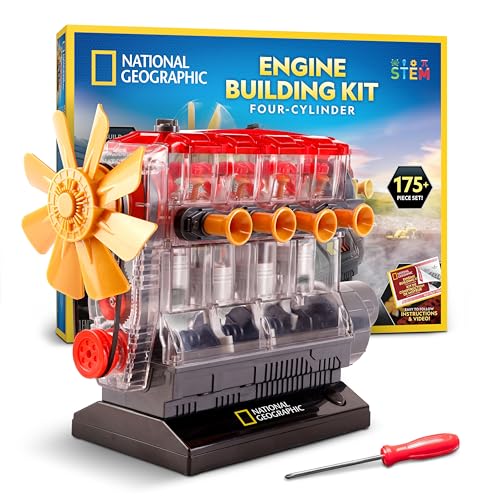
- Assemble a clear working engine model
- Shows moving pistons, valves, and gears
- Includes 175+ pieces, tools, and a guide
Best For: Students presenting engine mechanics and visible moving parts
Open-Ended Machine Design
PATHFINDERS Engineering Maker Set

- Build 10 guided machines and tackle 15 challenges
- Uses wood, hydraulics, gears, levers, and pulleys
- Designed for repeated builds and experimentation
Best For: Young makers developing and testing their own engineering prototypes
Best Structural Engineering Set
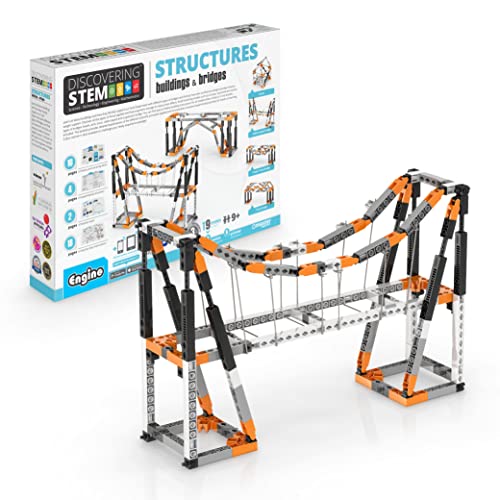
- Build nine structure and bridge models
- Includes theory, experiments, and a quiz
- Designed for ages 9 and up
Best For: Hands-on structural engineering exploration
Best Robotics Engineering Kit

- Build a wooden motorized robot arm
- Introduces circuits and mechanical movement
- No soldering required
Best For: Introductory robotics and mechanical engineering projects
Best Electronics Project Kit
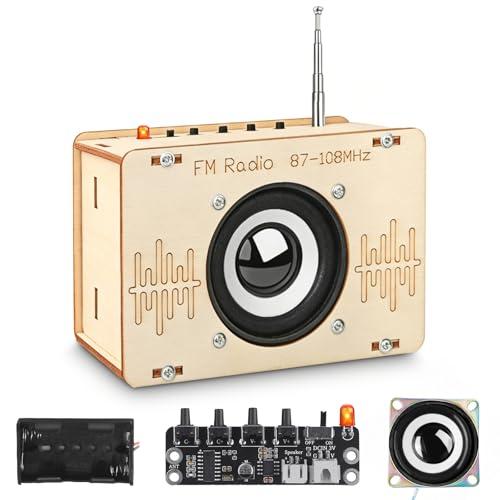
- Assemble a working FM radio
- Includes parts, screwdriver, and instructions
- Supports coloring and display after building
Best For: Beginner circuit and radio projects
Architectural Design Lab – Architectural Engineering
For families looking for engineering building sets for science fairs, this architectural kit offers a broad introduction to structural design. Children ages 8 and up can build 26 models, beginning with trusses, arches, and domes before progressing to scaled-down real-world buildings.
Best For: Young builders interested in architecture, structural elements, and open-ended design challenges.
Pros:
- Includes exercises for more than 20 structural and building models.
- Flexible pieces mimic steel frames and are compatible with other Thames & Kosmos engineering and physics kits.
- The 44-page, full-color manual provides guided activities and design inspiration.
Cons:
- Its architectural focus may be less suitable for children seeking machines or moving mechanisms.
- The kit is recommended for ages 8 to 14, limiting its appeal for older students.
This is a versatile choice for a science-fair project centered on comparing structural forms or exploring building materials. Its guided progression also leaves room for students to develop their own designs.
Forces in Motion – Simple Machines
This simple-machines set is a practical option among engineering building sets for science fairs because it combines model construction with measurable force experiments. Builders ages 8 and up assemble 26 models covering gears and all six classic simple machines, using the included spring scale to investigate force changes.
Best For: Students who want a hands-on physics project involving levers, pulleys, gears, and force measurements.
Pros:
- Covers wheels and axles, levers, pulleys, inclined planes, screws, and wedges.
- Includes a spring scale for measuring the direction and magnitude of forces.
- The modular pieces work with other Thames & Kosmos construction, physics, and engineering kits.
- A 32-page illustrated manual supplies step-by-step instructions and scientific explanations.
Cons:
- The recommended starting age is 8, so younger children may need another option.
- The set centers on simple machines rather than architectural structures.
With its built-in force-measuring component, this kit can support a clear science-fair investigation rather than a display-only model. It is especially useful when students need to demonstrate how machines make tasks easier.
Da Vinci Inventions Workshop – Catapult STEM Kit
For older students seeking engineering building sets for science fairs, this wood kit focuses on three working historical machines. The National Geographic set includes materials and instructions to assemble a ballista, bombard, and catapult, with each project taking approximately one to three hours.
Best For: Builders ages 12 and up interested in mechanical engineering, historical inventions, and construction-focused STEM projects.
Pros:
- Builds three distinct machines inspired by Leonardo da Vinci’s inventions.
- Includes laser-cut wooden components, rubber bands, sandpaper, and instructions.
- Requires no special tools or batteries.
- Supports construction skills, engineering skills, and hand-eye coordination.
Cons:
- The age recommendation is 12 and up, making it unsuitable for younger builders.
- It offers three main projects rather than a large selection of interchangeable models.
This kit makes a strong choice for a science-fair demonstration about projectile machines or historical engineering. Its manual operation and wooden construction can make the finished models especially engaging to present.
Structural Challenge Lab – Bridges & Skyscrapers
This intermediate engineering set is well suited to engineering building sets for science fairs focused on how structures handle forces. Builders ages 8 to 14 can construct 20 bridge and skyscraper models while exploring load, compression, tension, force, and building materials.
Best For: Students comparing structural designs and investigating how bridges and tall buildings manage loads.
Pros:
- Offers 20 structural models, including bridges and skyscrapers.
- Includes more than 285 interchangeable plastic building pieces.
- The 36-page illustrated manual combines assembly guidance with experiments.
- Targets core concepts such as compression, tension, force, and load.
Cons:
- The listed skill level is intermediate, so beginners may need extra support.
- Its focus is structural engineering rather than machines or propulsion.
This is one of the stronger options for a project that compares model performance under different loads or examines structural choices. The large interchangeable parts collection also supports repeated model building and testing.
Hands-On Hydraulics – Teach Tech Hydrobot Arm
For students seeking engineering building sets for science fairs, the Teach Tech Hydrobot Arm offers a substantial project centered on fluid power and mechanical movement. Builders ages 12 and up assemble a working robotic arm, then use water-powered controls to rotate, move, and grip objects.
Best For: Older kids exploring hydraulics, robotics, mechanical engineering, and hands-on physics demonstrations.
Pros:
- Builds a working hydraulic arm with six axes and up to 270-degree rotation.
- Includes interchangeable gripper and suction components for hands-on experiments.
- Detailed assembly instructions support a multi-hour STEM building experience.
Cons:
- Recommended for ages 12 and up, so it may be too advanced for younger students.
- Requires careful assembly and proper setup before the arm operates as intended.
- Plastic construction may offer less physical substance than a wood-based maker kit.
This kit is a strong choice when a science-fair project needs a visible working mechanism rather than a simple display model. Its water-powered operation also creates opportunities to discuss hydraulic pressure, levers, and control.
Visible Engine Mechanics – National Geographic 4-Cylinder Engine
The National Geographic 4-Cylinder Engine is a clear working model for engineering building sets for science fairs, especially when the goal is to show internal motion. With more than 175 pieces, students assemble a model that demonstrates moving pistons, valves, and gears.
Best For: Builders ages 10 and up who want a structured introduction to engines, mechanical motion, and model construction.
Pros:
- Clear housing makes the pistons, valves, and gears visible during operation.
- Includes 175-plus pieces, tools, illustrated instructions, and a Learning Guide.
- Battery-powered movement lets students demonstrate the assembled engine in action.
Cons:
- Three AA batteries are required but are not included.
- The kit focuses on assembling one four-cylinder engine model rather than repeated redesigns.
- Its recommended age of 10 and up may limit suitability for younger science-fair participants.
Choose this model when visibility and straightforward demonstration matter most. The transparent engine layout can help students explain how several internal components work together, while the included tools and guide provide a more complete project package.
Open-Ended Machine Design – PATHFINDERS Engineering Maker Set
The PATHFINDERS Engineering Maker Set is a flexible option among engineering building sets for science fairs. Its wood components, hydraulic system, gears, levers, and pulleys support ten guided builds, followed by 15 challenge cards that encourage students to develop and test their own machine solutions.
Best For: Kids ages 8 and up who benefit from repeated building, open-ended experimentation, and engineering-design challenges.
Pros:
- Includes 10 step-by-step challenges and 15 open-ended Challenge Cards.
- Explores hydraulics, gear ratios, mechanical advantage, levers, and pulleys.
- Wood beams, MDF boards, gears, and dowels are designed for repeated builds.
- Supports projects such as a catapult, robotic arm, scissor lift, and dump truck.
Cons:
- The manual operation uses water-powered mechanisms rather than batteries or motors.
- Open-ended challenges may require more troubleshooting and planning than a fixed model.
- The 156-piece set may need careful organization during repeated rebuilds.
This is the most adaptable choice of the three for a science-fair investigation because students can move from following instructions to designing their own solution. Its reusable format is particularly useful for comparing prototypes, testing mechanical advantage, and documenting revisions.
Best Structural Engineering Set – STEM Buildings & Bridges
For shoppers comparing engineering building sets for science fairs, this Engino kit offers a focused way to explore how structures handle different designs. Kids ages 9 and up can build nine models, including houses, pyramids, beam bridges, arch bridges, truss bridges, cable-stayed bridges, and suspension bridges.
Best For: Young builders who want a guided introduction to structural engineering and bridge design.
Pros:
- Includes nine real-world structure and bridge models.
- Provides theory, facts, experiments, and a quiz alongside the instructions.
- Snap-fit components support multi-directional 3D construction.
- Designed for ages 9 and up and used by schools and STEM programs.
Cons:
- The kit focuses on construction models rather than electronics or robotics.
- AA batteries are listed as required, which may add a separate setup step.
Its combination of guided building and structural concepts makes it a strong choice when a science-fair project needs a clear engineering theme and several possible models to investigate.
Best Robotics Engineering Kit – DIY Mechanical Robot Arm
This robot arm is a hands-on option among engineering building sets for science fairs, combining wooden construction with basic circuits and motorized movement. The assembly introduces children and older builders to mechanical engineering, wiring, and control without requiring soldering.
Best For: Kids, teens, and families interested in building a moving mechanism and learning introductory robotics.
Pros:
- Combines a wooden build with motors, a PCB microcontroller board, and wires.
- Introduces circuit operation and mechanical movement through assembly.
- Includes accessories and a detailed assembly tutorial.
- Supports problem-solving, logical thinking, and motor skills.
Cons:
- Requires six AA batteries, which are not included.
- The assembly may be challenging for younger builders without supervision.
Compared with static construction sets, this kit gives a science-fair project a moving, interactive element, although its electronics and mechanical assembly may require extra time and patience.
Best Electronics Project Kit – Build Your Own FM Radio
For a science-fair project centered on electronics, this Poraxy kit lets kids assemble a working FM radio from precision-cut wooden pieces and included components. It offers a practical introduction to circuits, tuning, and radio reception while also leaving room for coloring and decoration.
Best For: Beginners ages 8 and up who want an approachable electronics build with a functional result.
Pros:
- Explores circuits and how FM radio works.
- Automatically searches the 87–108 MHz FM frequency range.
- Includes pre-cut wooden parts, a mini screwdriver, and step-by-step instructions.
- Can be colored and displayed after assembly.
Cons:
- Requires two AA batteries, which are not included.
- It is focused on FM radio rather than broader electronics experimentation.
This is a useful pick when students want their project to demonstrate a recognizable working device. Its guided construction makes it accessible, while the finished radio provides a concrete result to explain.
How We Picked the Best Engineering Building Sets for Science Fairs
We focused on kits that provide more than a one-time assembly. Strong science-fair options should offer a working mechanism, measurable results, or enough flexibility for students to change variables and compare outcomes. We considered engineering topic, build complexity, included challenges, reusability, age guidance, and how clearly a student can demonstrate the underlying concept.
The selection includes structural engineering sets, simple machines, catapults, hydraulic arms, engines, robotics, construction systems, and electronic experiments. Because project requirements vary, no single kit is ideal for every student.
Quick Comparison
| Project focus | Good fit for | What students can investigate |
|---|---|---|
| Structures and bridges | Beginning to intermediate builders | Stability, load, span, and design changes |
| Simple machines and catapults | Physics-focused projects | Leverage, force, distance, and accuracy |
| Hydraulics and robot arms | Hands-on mechanical builders | Pressure, control, movement, and lifting |
| Engines and electronics | Older or technically curious students | Energy transfer, circuits, and operating systems |
| Open-ended maker sets | Students who want design freedom | Prototyping, iteration, and problem-solving |
Key Buying Factors for Engineering Building Sets
Match the Engineering Topic to the Experiment
Choose a kit that supports a clear question. A bridge set may test how beam shape affects load capacity, while a catapult can compare launch angle and distance. Hydraulic and robotic kits work well for motion, control, and mechanical advantage. Electronic sets are better for circuit behavior and signal-based projects.
Look for Measurable, Repeatable Results
A model is more useful for a science fair when students can change one variable, repeat trials, record data, and explain the results. Check whether the kit includes challenge cards, multiple configurations, or parts that make controlled comparisons possible.
Check Age, Build Time, and Supervision
Age ranges are useful starting points, but reading ability, patience, and prior building experience matter just as much. Wooden construction kits may require careful assembly, while hydraulic or electronic projects can need close adult supervision. Also confirm whether tools, batteries, glue, or extra materials are required.
Consider Presentation Quality and Reusability
For a fair display, prioritize models that operate reliably and can be demonstrated safely. Reusable parts and multiple builds provide better long-term value than a kit with only one finished model.
Who Should Buy Which Engineering Building Sets for Science Fairs?
For a broad introduction to engineering, architectural and structural model kits are strong choices because they support multiple builds and easy-to-explain design comparisons. Students interested in physics should consider simple machines or catapult projects. Builders who enjoy moving mechanisms may prefer a hydraulic arm, robot arm, or working engine kit.
Choose a maker set for a student who wants more freedom to invent rather than follow fixed instructions. For older students ready for a more technical project, an electronics or engine kit can create a compelling demonstration, provided they have enough time to troubleshoot. Before buying, confirm the student’s age, available workspace, project deadline, and the science-fair rules for prebuilt components.