The best engineering building sets for homeschool turn abstract STEM concepts into projects students can build, test, revise, and explain. This roundup compares kits covering structures, simple machines, gears, bridges, hydraulics, and open-ended design.
Use the guide below to match each set with your learner’s age, skill level, available lesson time, and preferred balance of guided challenges and creative building.
Best 10 Engineering Building Sets for Homeschool Picks for 2026
Architectural Design Lab

- Build 26 structure and building models
- Explores trusses, arches, domes, and steel frames
- Includes a 44-page illustrated manual
Best For: Homeschool architecture and structural-design lessons
Everyday Mechanics Workshop

- Build 26 models with gears and simple machines
- Includes a force-measuring spring scale
- Covers levers, pulleys, axles, screws, and more
Best For: Hands-on homeschool physics and mechanics
Motorized Construction Challenge
Meccano Super Construction Set

- Build 25 construction-vehicle models
- Includes a 6V motorized crane
- 638 parts, tools, and storage case included
Best For: Older students exploring mechanical and vehicle engineering
Structural Forces Studio
Bridges & Skyscrapers Engineering Set

- Build 20 bridge and skyscraper models
- Explores compression, tension, force, and load
- Includes 285+ pieces and a 36-page manual
Best For: Intermediate homeschool structural-engineering studies
Hands-On Mechanics Pick

- 100-piece manual gear-building kit
- Explores motion and cause and effect
- Good for early STEM and fine motor practice
Best For: Younger homeschool learners exploring introductory mechanics
Structural Engineering Study Pick
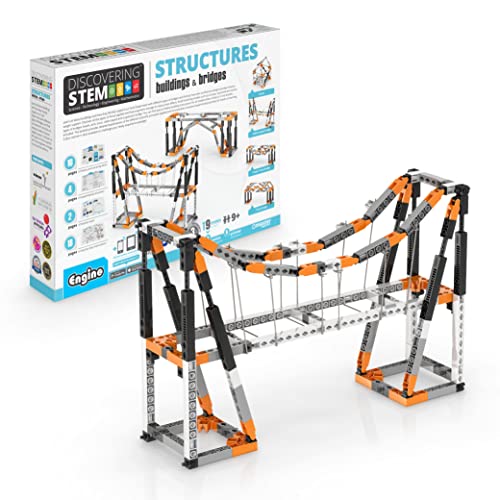
- Builds nine structures and bridge models
- Includes theory, experiments, and quizzes
- Designed for learners ages 9 and up
Best For: Structured homeschool lessons on buildings and bridges
Guided City Design Pick
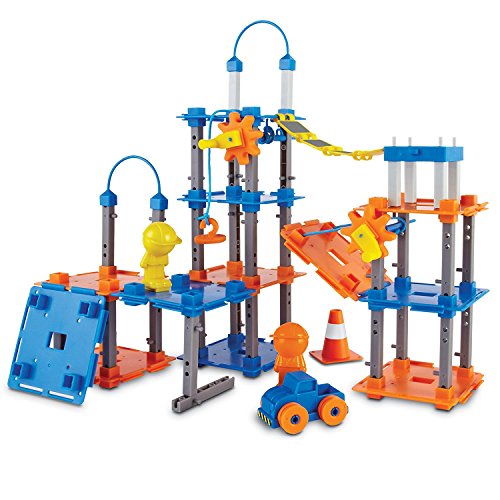
- 89-piece city-themed engineering kit
- Includes design-process activity cards
- Suitable for ages 5 to 8
Best For: Young homeschoolers practicing guided design challenges
Versatile Builder

- 522 reusable rods and connectors
- Instructions for 35 models
- Includes storage tub and moving parts
Best For: Ages 7+ exploring open-ended construction and basic engineering
Collaborative Starter

- 600 colorful straws and connectors
- Designed for group construction play
- Includes wheels and storage box
Best For: Ages 3–8 learning basic structures through collaborative building
Hands-On Mechanisms
PATHFINDERS Engineering Maker Set

- Builds working hydraulic and mechanical models
- Includes 10 challenges and 15 cards
- Made with wood, gears, levers, and pulleys
Best For: Ages 8+ studying mechanisms through guided and open-ended projects
Architectural Design Lab – Architectural Engineering
For homeschoolers seeking engineering building sets for homeschool, this kit offers a guided introduction to architectural design through hands-on model building. Children ages 8 and up can construct 26 models, beginning with trusses, arches, and domes before progressing to scaled-down real-world buildings.
Best For: Young learners interested in architecture, structural elements, and open-ended design challenges.
Pros:
- Includes 26 building exercises covering basic structures and real-world buildings.
- Flexible pieces mimic steel frames and connect with other Thames & Kosmos engineering kits.
- 44-page, full-color manual supports step-by-step learning and original designs.
Cons:
- Recommended for ages 8–14, so it may not suit younger children.
- Focuses on architectural structures rather than powered or motorized projects.
This is a strong choice when you want a structured architecture unit with room for creative experimentation. Its manual and variety of models make it especially useful for planned homeschool lessons.
Everyday Mechanics Workshop – Simple Machines Physics Set
This Simple Machines set is a practical option among engineering building sets for homeschool, combining model construction with measurable physics activities. Designed for ages 8 and up, it covers all six classic simple machines and includes a spring scale for exploring force.
Best For: Homeschool students learning foundational physics through levers, pulleys, gears, and force measurements.
Pros:
- Offers 26 model-building exercises focused on six classic simple machines.
- Includes a spring scale to measure changes in force direction and magnitude.
- 32-page illustrated manual connects machines to familiar everyday examples.
- Modular parts are compatible with other Thames & Kosmos kits.
Cons:
- Its emphasis is on mechanical physics rather than architecture or large structures.
- Recommended for ages 8 and up, limiting use with younger learners.
Choose this set for a homeschool unit that benefits from both building and observation. The included measuring tool adds a useful experimental element beyond simply following construction instructions.
Motorized Construction Challenge – Meccano Super Construction Set
For older learners comparing engineering building sets for homeschool, this Meccano set adds metal construction, vehicles, and motorized operation. The 638-piece system supports 25 vehicle models, including a working crane powered by a 6V motor.
Best For: Learners ages 10 and up who enjoy vehicle engineering, mechanical assembly, and powered builds.
Pros:
- Provides 25 construction-vehicle model options.
- Includes a 6V motor for a working crane with a rotary body and extendable hook.
- Large 638-piece set supports rebuilding and original combinations.
- Comes with tools and a carrying case with storage compartments.
Cons:
- Requires 4 AA batteries for motorized operation.
- The supplied instruction sheet covers 11 models, despite the 25-model capability.
- Metal-part assembly may be more demanding than plastic snap-together sets.
This set is a good fit for project-based homeschool work centered on machines and transportation. Its motorized crane gives students a tangible result after the mechanical assembly is complete.
Structural Forces Studio – Bridges & Skyscrapers Engineering Set
This intermediate Structural Engineering set is one of the more focused engineering building sets for homeschool, using bridges and skyscrapers to introduce force, load, compression, and tension. It includes 20 models, more than 285 interchangeable pieces, and an illustrated experiment manual for ages 8 and up.
Best For: Students ready to study structural engineering and mechanical physics through bridge and skyscraper models.
Pros:
- Builds 20 models that demonstrate force, load, compression, and tension.
- Includes more than 285 interchangeable building pieces.
- 36-page manual combines assembly guidance with illustrated experiments.
- Intermediate skill level provides a step up from basic construction activities.
Cons:
- Intermediate projects may require more guidance for beginners.
- Its structural focus may be less appealing to children primarily interested in vehicles or motors.
This kit works well as a dedicated bridge-and-building science unit. It offers enough interchangeable parts and model variety to revisit structural concepts across multiple lessons.
Hands-On Mechanics Pick – Gears Deluxe Building Set
For younger learners exploring engineering building sets for homeschool, this 100-piece gear kit offers an approachable way to investigate motion, cause and effect, and simple mechanics. Children can assemble gears, axles, pillars, bases, and a crank to create moving models without batteries.
Best For: Preschool and early elementary homeschool activities focused on gears, fine motor practice, and open-ended STEM play.
Pros:
- Includes 100 pieces for building spinning machines, towers, and other moving creations.
- Supports exploration of motion, simple mechanics, spatial reasoning, and problem-solving.
- Colorful, manually operated parts are suitable for home, classroom, or independent play.
Cons:
- The set focuses on introductory mechanics rather than advanced structural engineering.
- Its recommended age range begins at 36 months, so older students may need more complex challenges.
This is a practical choice when you want tactile engineering activities that are easy to start and flexible enough for repeated experimentation. The included activity guide can help provide structure while the open-ended parts leave room for creative builds.
Structural Engineering Study Pick – STEM Structures & Bridges Kit
For families seeking engineering building sets for homeschool with a more formal lesson component, this kit lets learners build nine structures, including houses, pyramids, beam bridges, arch bridges, truss bridges, cable-stayed bridges, and suspension bridges. Theory pages, experiments, a quiz book, instructions, and a free app extend the building into a guided STEM study.
Best For: Learners ages 9 and up who are ready to connect hands-on construction with structural engineering concepts and bridge design.
Pros:
- Offers nine model options covering several building and bridge designs.
- Includes theory, facts, experiments, instructions, and a three-page quiz for structured learning.
- Snap-fit components connect in multiple directions for more complex three-dimensional models.
- Designed for use by schools and STEM programs as well as at home.
Cons:
- The recommended age starts at 9 years, making it unsuitable for preschool learners.
- The kit is more lesson-oriented than completely open-ended construction sets.
This is the strongest fit of the three for a focused homeschool engineering unit. Its range of bridge models and supporting educational materials can turn construction into a progression of comparison, experimentation, and review.
Guided City Design Pick – City Engineering Building Set
This 89-piece city-themed kit is a useful option for homeschool families looking for engineering building sets for homeschool at the preschool and early elementary level. Children can design towers, bridges, and city structures while activity cards introduce the engineering design process: ask, imagine, plan, create, and improve.
Best For: Children ages 5 to 8 who benefit from guided design challenges alongside open-ended building play.
Pros:
- Activity cards give young learners a clear, repeatable design process to follow.
- Supports introductory engineering, problem-solving, creativity, and critical thinking.
- City theme encourages builds such as towers, bridges, and other community structures.
- Works for home, classroom, or homeschool table activities.
Cons:
- It targets early STEM concepts rather than advanced engineering principles.
- The supplied notes do not specify the individual piece types in detail beyond the included building-set components, cards, and stickers.
Choose this set when your learner enjoys imaginative city play but still needs prompts to plan and revise a build. The cards add useful structure without removing the option to create independent designs.
Versatile Builder – K'NEX Click & Construct Set
K'NEX - Click & Construct Value Building Set - 522 Pieces, STEM Building, Creative Play Set‚ Ages 7+
Check Price On AmazonFor families looking for engineering building sets for homeschool, the K’NEX Click & Construct Value Building Set offers a broad, hands-on introduction to design and construction. Its 522 rods and connectors can be assembled, taken apart, and reused to create guided or original models.
Best For: Homeschool learners ages 7 and up who enjoy open-ended building, moving models, and repeated practice with spatial reasoning.
Pros:
- Includes 522 classic and micro K’NEX pieces for a wide range of builds.
- Provides instructions for 35 models, including vehicles, animals, and other creations.
- Supports fine motor skills, spatial relations, and introductory engineering concepts.
- Storage tub helps keep loose parts and unfinished models together.
Cons:
- The manufacturer-recommended age range starts at 7, so it may be unsuitable for younger homeschoolers.
- Its instruction booklet offers guided models, but lessons and experiments must be developed separately.
This is a flexible general-purpose construction set rather than a formal curriculum. The secure click-together parts, moving components, and large piece count make it a practical choice for recurring homeschool building sessions.
Collaborative Starter – Straw Constructor STEM Kit
The Straw Constructor STEM Building Toy is a colorful, accessible option for engineering building sets for homeschool, especially when several children will build together. With 600 straws, connectors, wheels, and multidirectional pieces, learners can explore structures, shapes, and imaginative designs.
Best For: Preschool and early-elementary learners ages 3 and up who benefit from collaborative, hands-on practice with construction, reasoning, and coordination.
Pros:
- Includes 600 pieces for group play and multiple simultaneous builds.
- Supports engineering skills, mathematics, structural reasoning, imagination, and hand-eye coordination.
- Wheels and multidirectional connectors expand the types of models children can create.
- Comes with a storage box and is described as CPSIA- and ASTM-certified.
Cons:
- The kit is aimed at ages 3 to 8, so older students may outgrow its preschool-oriented format.
- It encourages open-ended building but does not list guided lesson challenges or project instructions.
For younger homeschool groups, this set combines a generous piece count with simple, social construction play. It works best as a flexible activity for exploring shapes and structures rather than as a structured engineering course.
Hands-On Mechanisms – PATHFINDERS Engineering Maker Set
For older learners seeking engineering building sets for homeschool, the PATHFINDERS Engineering Maker Set provides a more mechanism-focused experience. Its wood components, working gears, levers, pulleys, and water-powered hydraulics turn abstract concepts into machines children can build, test, and revise.
Best For: Homeschool students ages 8 and up who are ready to investigate mechanical advantage, gear ratios, hydraulic pressure, and the engineering design process.
Pros:
- Includes 10 guided challenges featuring builds such as a catapult, robotic arm, scissor lift, and dump truck.
- Adds 15 challenge cards for open-ended problem-solving after the guided projects.
- Uses real wood components and functional water-powered hydraulics for tactile experimentation.
- Supports repeated building, rebuilding, tinkering, and troubleshooting.
Cons:
- With 156 pieces and a recommended age of 8+, it is less suitable for preschool learners or very simple freeform building.
- Hydraulic projects require water and may need adult help with setup and troubleshooting.
This is the most lesson-ready option of the three, thanks to its guided challenges and challenge cards. It offers meaningful mechanical exploration while still leaving room for independent invention and design iteration.
How We Picked These Engineering Building Sets for Homeschool
We focused on kits that support hands-on learning rather than simple assembly alone. The selection represents several engineering areas, including structural design, mechanical advantage, gears, motorized construction, hydraulics, and creative prototyping. We also considered project variety, piece count, challenge quality, age suitability, and how easily each set can fit into a homeschool lesson.
Because learners develop at different rates, age labels are useful starting points rather than strict rules. Younger children may need supervision and simplified builds, while older students can extend projects by measuring performance, documenting design changes, or applying math and physics concepts.
Quick Comparison
| Best For | Look For |
|---|---|
| Early construction practice | Large, easy-to-connect parts and open-ended builds |
| Structures and architecture | Models involving load, balance, stability, and materials |
| Physics lessons | Levers, pulleys, gears, simple machines, and motion |
| Advanced STEM projects | Multiple challenges, technical mechanisms, and room for experimentation |
| Independent study | Clear instructions, varied projects, and organized components |
Key Buying Factors for Engineering Building Sets for Homeschool
Age, Skill Level, and Supervision
Choose a kit that is challenging without being frustrating. Sets for younger children should have straightforward connections and manageable builds. More advanced kits may include small parts, motors, technical vocabulary, or multi-step mechanisms and are better suited to guided instruction.
Learning Goals
Match the kit to your curriculum. Structural sets work well for lessons on forces, shapes, and architecture. Mechanical kits reinforce motion, energy transfer, and mechanical advantage. Open-ended construction sets are especially useful for design thinking, problem-solving, and iterative testing.
Project Variety and Reusability
Check how many distinct models or challenges the instructions provide, then consider whether the parts support student-created designs. A reusable kit with several difficulty levels can serve a homeschool family longer than a set built around one finished model.
Parts, Storage, and Lesson Practicality
Large sets can offer more creative potential but may require sorting and storage. Confirm that the kit includes the necessary connectors, tools, motors, or accessories. Organized parts and clear diagrams can make a meaningful difference when fitting projects into a limited lesson block.
Documentation and Extension Work
The strongest homeschool projects invite students to predict, build, test, record results, and improve a design. Look for opportunities to compare materials, alter dimensions, calculate ratios, or explain why a structure or mechanism succeeds.
Who Should Buy Which Engineering Building Sets for Homeschool?
Choose an architectural or structural engineering kit for learners interested in buildings, bridges, towers, and load-bearing designs. A simple-machines, gears, or hydraulics set is a better fit for physics-focused lessons involving movement and force. Motorized construction sets suit older children who enjoy mechanisms and larger builds.
For flexible sibling use, select a general construction system with many pieces and open-ended possibilities. Families prioritizing guided independent work should favor kits with clearly sequenced models and challenge cards. If your homeschool emphasizes creativity and iteration, choose a set that leaves enough parts available for students to design beyond the included instructions.