Choosing the right conductivity meter can make routine water testing faster, more consistent, and easier to document. For lab work, the best pick depends on measurement range, accuracy, probe design, and whether you need a simple pocket tester or a full monitoring system.
Below, we’ve narrowed the field to 10 strong options for lab and research use, with a focus on practical accuracy, usability, and value.
Best 10 Digital Conductivity Tester for Laboratory Picks for 2026
Auto-Calibrating Benchtop Option
Oakton CON 550 Benchtop Conductivity Meter Kit

- Automatically recognizes calibration solutions
- Benchtop kit for lab use
- Convenient setup for routine testing
Best For: Lab users who want a benchtop conductivity meter with easier calibration handling
Extended-Range Controller
HM Digital PSC-150 EC/TDS Controller

- 0-9999 µS measurement range
- Digital calibration and temperature display
- Tri-color display for quick status checks
Best For: Users needing an extended-range EC/TDS controller with digital calibration and temperature display
Simple Visual Tester
United Scientific Electric Conductivity Tester

- Ten-level green LED display
- Tests solids and immersed liquids
- No calibration needed
Best For: Classroom and lab users who want a simple qualitative conductivity tester
Waterproof Multi-Parameter Meter
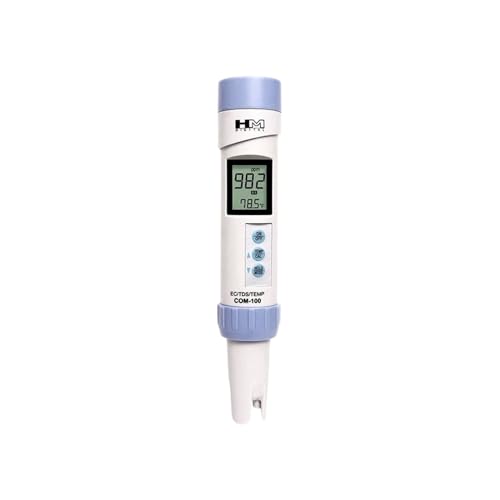
- Measures EC, TDS, and temperature
- IP67 waterproof housing
- Digital calibration and data-hold
Best For: Users who want a waterproof EC/TDS meter with temperature display and multiple scales
Portable Low-Range Tester
Hach Pocket Pro Low Range Conductivity Meter

- 0 to 1990 µS/cm measurement range
- Easy calibration and temperature reading
- Backlit large LCD with included batteries
Best For: Groundwater, municipal water, and surface water testing
Premium Pocket Combo
Apera EC60 Waterproof Conductivity Tester Kit

- Measures EC, TDS, salinity, and temperature
- ±1% F.S. accuracy with auto calibration
- IP67 waterproof kit with replaceable probe
Best For: Portable multi-parameter testing with strong accuracy
Wi-Fi Nutrient Monitor
Bluelab Guardian Conductivity Monitor
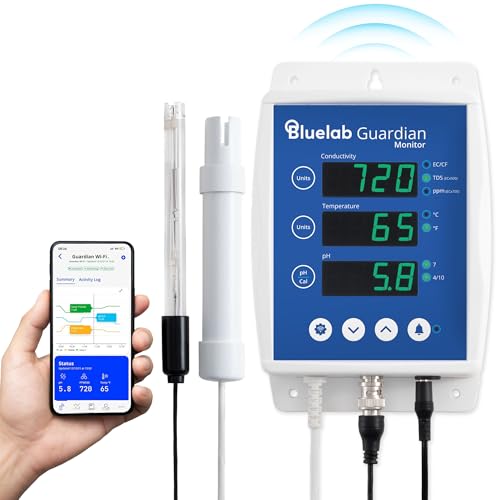
- Real-time pH, conductivity, and temperature monitoring
- Wi-Fi alerts and history via app
- Wall-mounted design with replaceable pH probe
Best For: Hydroponic reservoirs and indoor plant systems
Premium Multi-Parameter Pocket Tester Kit
Apera PC60 5-in-1 Waterproof Tester

- Measures pH, EC, TDS, salinity, and temp
- Large backlit LCD with dual display
- Complete kit with calibration solutions and case
Best For: Portable multi-parameter testing in labs and water quality checks
Reliable 3-in-1 Water Tester
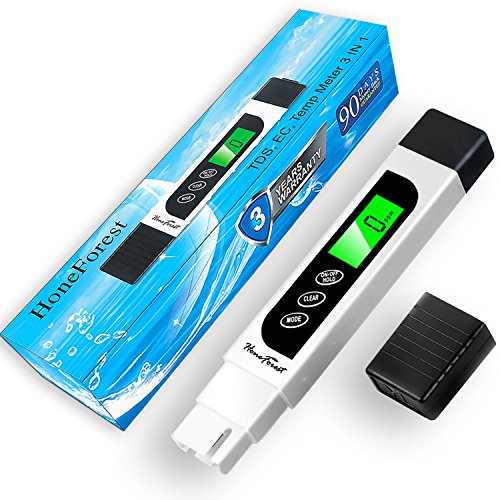
- Measures TDS, EC, and temperature
- Backlit LCD with auto-lock function
- Titanium alloy probe for stable readings
Best For: Simple conductivity and TDS checks in water testing
Hydro Tester Series
HM Digital COM-80 EC/TDS Meter

- Measures EC and TDS with four scales
- ATC, data-hold, and auto-off features
- Water-resistant and easy to read LCD
Best For: Routine nutrient and conductivity testing with a focused meter
Auto-Calibrating Benchtop Option – Oakton CON 550 Benchtop Conductivity Meter Kit
If you want a digital conductivity tester for laboratory use that feels straightforward on the bench, this benchtop kit is built around convenience. The standout feature is automatic recognition of calibration solutions, which helps streamline setup when you need repeatable readings without extra guessing.
Best For: Lab users who want a benchtop conductivity meter with easier calibration handling.
Pros:
- Automatically recognizes calibration solutions for simpler calibration steps.
- Benchtop format suits routine lab testing workflows.
- Kit format is useful when you want a ready-to-use setup.
Cons:
- No additional performance details were provided in the supplied notes.
- Less portable than handheld tester styles.
For labs that value a stable bench instrument and less manual calibration handling, this Oakton unit is a practical fit. It is best chosen for convenience-focused routine work rather than highly portable testing.
Extended-Range Controller – HM Digital PSC-150 EC/TDS Controller
This digital conductivity tester for laboratory and control applications offers a wide 0-9999 µS measurement range, making it a strong fit when you need extended-range EC monitoring. It also includes digital calibration, on-screen temperature, and a tri-color display for quick status checks.
Best For: Users needing an extended-range EC/TDS controller with digital calibration and temperature display.
Pros:
- 0-9999 µS measurement range supports extended-range conductivity monitoring.
- 0.1 µS/ppm resolution and +/-2% readout accuracy are specified in the product title.
- Digital calibration simplifies adjustment compared with manual methods.
- On-screen temperature and tri-color display improve at-a-glance reading.
Cons:
- Controller-style design may be less convenient than a simple handheld tester.
- Requires a proper setup, so it is not a grab-and-go tool.
If your priority is range and status visibility, the PSC-150 is positioned as a capable controller for EC/TDS monitoring. Its digital calibration and temperature readout make it especially useful where ongoing oversight matters.
Simple Visual Tester – United Scientific Electric Conductivity Tester
If you need a digital conductivity tester for laboratory or classroom demonstrations, this model focuses on instant visual results instead of numeric precision. The ten-level green LED display gives a quick conductivity indication, and the dual brass probes let you test both solids and immersed liquids.
Best For: Classroom and lab users who want a simple qualitative conductivity tester.
Pros:
- Ten-level green LED display provides instant visual conductivity results.
- Dual brass probes can test solids or liquids.
- Includes a 12V battery and operating instructions for immediate use.
- No calibration is required, which keeps setup simple.
Cons:
- Designed for qualitative readings rather than detailed numeric measurement.
- Uses an ohmmeter-style measurement type, so it is not a full-featured EC meter.
This is a practical pick when speed, simplicity, and demonstration value matter more than advanced calibration controls. It fits well in teaching environments and basic lab workflows where you want a fast conductivity check.
Waterproof Multi-Parameter Meter – HM Digital HMDCOM100 COM-100
For buyers comparing a digital conductivity tester for laboratory or field use, this waterproof combo meter stands out because it measures EC, TDS, and temperature in one device. It adds four scales, multiple EC-to-TDS conversion factors, and a large LCD with simultaneous temperature reading.
Best For: Users who want a waterproof EC/TDS meter with temperature display and multiple scales.
Pros:
- Measures electrical conductivity, total dissolved solids, and temperature.
- Four scales include S, mS, ppm, and ppt.
- IP67 waterproof housing supports use where moisture exposure is a concern.
- Digital calibration and data-hold features add convenience.
Cons:
- Battery-powered operation means eventual battery replacement is required.
- More feature-rich than a basic conductivity tester, so it may be more than some users need.
The COM-100 is a strong choice when you want one rugged meter for multiple readings instead of separate instruments. Its waterproof design and combined display make it especially useful for labs that also need durability.
Portable Low-Range Tester – Hach Pocket Pro Low Range Conductivity Meter
If you need a digital conductivity tester for laboratory-style field checks, this Hach Pocket Pro model is built for straightforward low-range measurements. It reads conductivity from 0 to 1990 µS/cm and also measures temperature, with an easy calibration process and a large LCD that’s simple to read.
Best For: Groundwater, municipal water, and surface water testing where a compact low-range meter is preferred.
Pros:
- Measures low-range conductivity plus temperature in one handheld tester
- Easy calibration steps help reduce guesswork
- Large LCD with backlighting improves readability in different lighting
- Includes 4 AAA batteries, lanyard, and quick start guide
Cons:
- Designed for low-range conductivity, so it may not suit broader measurement needs
- Sample cup and battery-based operation may feel basic for more advanced workflows
For labs or field teams that want a simple, readable meter focused on low-conductivity samples, this Hach tester keeps the workflow practical. Its strength is ease of use rather than feature depth, which makes it a sensible pick for routine checks.
Premium Pocket Combo – Apera EC60 Waterproof Conductivity Tester Kit
This digital conductivity tester for laboratory and field use is aimed at buyers who want more versatility in a pocket format. The Apera EC60 measures conductivity, TDS, salinity, and temperature, with auto calibration, automatic temperature compensation, and a waterproof IP67 build.
Best For: Users who want a portable multi-parameter tester with strong accuracy and a replaceable probe.
Pros:
- Measures EC, TDS, salinity, and temperature in one device
- ±1% F.S. accuracy with auto calibration and ATC
- Replaceable platinum black sensor supports consistency over time
- IP67 waterproof design and complete kit with calibration solutions
Cons:
- More of a premium handheld kit than a simple basic tester
- Some users may only need conductivity, not the extra modes
As a portable option, this Apera kit stands out for accuracy, convenience, and multiparameter flexibility. If you want a lab-friendly tester that also works well in the field, it offers a strong balance of features and portability.
Wi-Fi Nutrient Monitor – Bluelab Guardian Conductivity Monitor
For a digital conductivity tester for laboratory-adjacent grow systems that need continuous oversight, the Bluelab Guardian Monitor Wi-Fi focuses on real-time monitoring rather than handheld spot checks. It tracks pH, conductivity, and temperature, sends alerts to your smartphone, and supports viewing conductivity in EC/CF and TDS scales.
Best For: Hydroponic reservoirs and indoor plant systems that benefit from always-on monitoring and smartphone alerts.
Pros:
- Real-time monitoring of pH, conductivity, and temperature
- Built-in Wi-Fi with app-based alerts and history reporting
- Conductivity can be viewed in EC/CF, TDS 500, and ppm 700 scales
- Plant-safe display with adjustable brightness and long probe cables
Cons:
- Wall-mounted monitor is less portable than handheld testers
- Requires power rather than battery operation
This Bluelab unit is best when you want continuous data instead of occasional readings. It’s a strong choice for growers who value alerts, app connectivity, and stable reservoir monitoring over pocket-sized convenience.
Premium Multi-Parameter Pocket Tester Kit – Apera PC60 5-in-1 Waterproof Tester
If you need a digital conductivity tester for laboratory work that can also handle pH, TDS, salinity, and temperature, the Apera PC60 is built for fast multi-parameter checks in one handheld unit. Its replaceable probe, large backlit LCD, and calibration status icons make it practical when you want clear readings and easy maintenance.
Best For: Labs, educators, and technicians who want a portable all-in-one meter for conductivity-related testing.
Pros:
- Measures pH, EC, TDS, salinity, and temperature in one tester
- Large clear LCD with dual display and backlit color modes
- Replaceable probe and complete kit with calibration and storage solutions
- Portable carrying case, batteries, and lanyard included
Cons:
- More features than a basic conductivity-only meter
- Electrode warranty is shorter than the instrument warranty
For buyers who want one compact tool instead of several separate instruments, this tester offers strong versatility and lab-friendly usability. It is especially appealing when you need conductivity readings alongside other common water-quality measurements.
Reliable 3-in-1 Water Tester – HoneForest TDS Meter 3-in-1
The HoneForest meter is a straightforward digital conductivity tester for laboratory-style water checks when you want TDS, EC, and temperature in a compact, easy-to-read format. It uses a titanium alloy probe, backlit LCD, and auto-lock function to make spot testing faster and simpler.
Best For: Drinking water, RO/DI systems, aquariums, hydroponics, and general water testing.
Pros:
- Tests TDS, EC, and temperature in one 3-in-1 meter
- Premium titanium alloy probe and intelligent chip for stable readings
- Big backlit LCD plus auto-lock for easier use
- Compact kit includes instruction manual and portable bag
Cons:
- Does not measure pH or salinity
- Designed for basic water testing rather than a full lab multiparameter setup
This is a solid pick if you mainly need conductivity and dissolved solids readings without extra complexity. It keeps the workflow simple while still covering the essentials for common water-quality monitoring tasks.
Hydro Tester Series – HM Digital COM-80 EC/TDS Meter
The HM Digital COM-80 is a focused digital conductivity tester for laboratory and nutrient-testing tasks where you want EC and TDS in a rugged, water-resistant format. It offers four scales, automatic temperature compensation, and a data-hold function for quick reading capture.
Best For: Nutrient testing, hydroponics, and users who want a simple EC/TDS tester with strong baseline features.
Pros:
- Measures electrical conductivity and total dissolved solids
- Four scales for EC and TDS readings
- Automatic temperature compensation and data-hold function
- Water-resistant design with auto-off and low-battery indicator
Cons:
- Does not measure pH or temperature directly
- Higher-resolution lab needs may require a more specialized meter
If your priority is dependable EC/TDS testing without extra features, this unit stays nicely focused. It is a practical choice for routine nutrient and water-quality monitoring where speed and simplicity matter.
How We Picked the Best Digital Conductivity Tester for Laboratory Use
We focused on instruments that balance measurement range, readability, calibration support, and durability. For a Digital Conductivity Tester for Laboratory workflows, accuracy and repeatability matter more than flashy extras, so we favored products with clear specs, temperature compensation, and trusted meter styles for bench or portable use.
We also looked at whether each option suits common lab tasks such as solution checks, sample screening, teaching demonstrations, hydroponics testing, and water quality monitoring. Models with waterproof housings, multiple parameter readings, and easy calibration scored well because they tend to be more flexible in real-world lab settings.
Quick Comparison: What Matters Most
If you want the simplest setup, pocket meters are usually the fastest way to get readings. If you need continuous monitoring or more stable workflow integration, a benchtop meter or controller may be the better fit. Multi-parameter instruments are helpful when you want conductivity alongside TDS, salinity, pH, or temperature without switching devices.
Benchtop Vs. Pocket Vs. Monitor
Benchtop meters are best for frequent testing and better control. Pocket testers are ideal for field sampling, classroom use, and quick checks. Real-time monitors suit labs or grow rooms where conductivity needs to stay visible throughout the day.
Key Buying Factors for Digital Conductivity Tester for Laboratory
Measurement range: Match the meter to your expected sample levels. Low-range meters are better for purified water and sensitive lab work, while extended-range units are useful for nutrient solutions and higher-concentration samples.
Accuracy and resolution: Look for tight accuracy claims and fine resolution if you need reliable comparisons between samples. A meter with poor resolution can miss small but important changes.
Temperature compensation: Because conductivity changes with temperature, automatic temperature compensation is important for more consistent readings.
Calibration and maintenance: Easy calibration, replaceable probes, and clear maintenance steps reduce downtime and help preserve accuracy over time.
Durability and form factor: Waterproof or splash-resistant meters are a smart choice in busy labs. Consider whether you need a handheld tester, a bench unit, or a continuous monitor based on your workflow.
Who Should Buy Which Digital Conductivity Tester for Laboratory?
For classrooms and basic demonstrations: Choose a straightforward tester with simple display feedback and easy handling.
For routine lab testing: A calibrated pocket or benchtop Digital Conductivity Tester for Laboratory use is usually the best balance of accuracy and convenience.
For water quality or hydroponics monitoring: A multi-parameter meter or real-time monitor is often more practical because it tracks conductivity alongside temperature and related water metrics.
For higher-volume or more technical workflows: Look for stronger accuracy specs, broader measurement ranges, and probe designs that support frequent use without constant adjustment.
In short, the best choice depends on whether you need portability, continuous monitoring, or the most stable lab-style measurement setup. Matching the meter to your sample type and workflow will matter more than choosing the highest-spec model on paper.